
Over 60 percent of american consumers say a business sign directly influences their decision to visit a store. Signs are not just decorations on storefronts. They are powerful marketing tools that shape first impressions and build brand identity. Understanding how business signs work gives entrepreneurs a real advantage in attracting customers and making their business stand out.
Table of Contents
- Defining Business Signs And Their Purpose
- Types Of Business Signs And Variations
- Branding And Visibility Benefits Explained
- Legal Requirements And Compliance Factors
- Common Mistakes And Cost Implications
Key Takeaways
| Point | Details |
|---|---|
| Signage as a Strategic Tool | Business signs serve as critical communication platforms that enhance visibility and convey brand identity, acting as a 24/7 marketing tool. |
| Types of Business Signs | There are various sign types, such as promotional, location, institutional, and informational, each serving unique purposes in visibility and customer engagement. |
| Legal Compliance is Essential | Businesses must navigate local regulations regarding sign size, placement, and illumination to avoid costly mistakes and ensure compliance. |
| Avoid Common Mistakes | Common errors include poor material selection and visibility issues, which can lead to financial losses and negative brand perception. |
Defining Business Signs and Their Purpose
Business signs are visual communication tools that serve far more than just identifying a commercial space. According to Sign Research, these critical components enhance the public realm and support business success by increasing the perception of a place and contributing to local identities.
At their core, business signs function as strategic communication platforms designed to capture attention, convey essential information, and create an immediate visual impression. They are not merely placeholders with company names, but complex messaging systems that communicate brand personality, professionalism, and commercial intent. Signage acts as a silent yet powerful marketing tool that operates 24/7, communicating with potential customers even when businesses are closed.
Research from Journals ShareOK reveals that signage serves as a critical component of communication systems, particularly in commercial spaces. Beyond their immediate commercial function, signs convey socio-cultural messages that help establish a business’s unique identity and connect with its target audience. Key purposes of business signs include:
- Providing directional guidance
- Establishing brand recognition
- Attracting potential customers
- Communicating business hours and contact information
- Creating a professional visual presence
By understanding the multifaceted role of business signs, entrepreneurs can leverage these visual assets to enhance their marketing strategy and create a memorable first impression. Whether you’re a small local shop or a large corporate entity, strategically designed signs can significantly impact your business’s visibility and perceived value.
Types of Business Signs and Variations
Business signs are not one-size-fits-all solutions but a diverse ecosystem of visual communication tools. According to Sign Research, on-premise commercial signs include various types such as roof signs, animated signs, pole signs, and window signs, each serving distinct purposes in advertising and wayfinding.
The strategic selection of sign types can dramatically impact a business’s visibility and customer engagement. For instance, window signs might attract walk-by traffic, while pole signs can capture attention from passing vehicles. Animated signs provide dynamic visual interest, and roof signs offer maximum visibility from a distance. Each sign type communicates differently, making thoughtful selection crucial for effective marketing.

Research from IISTE further categorizes signage into four primary classifications: promotional signs, location signs, institutional signs, and informational signs. These categories help businesses create a competitive and unique atmosphere. Here’s a breakdown of each sign type:
- Promotional Signs: Designed to advertise products, sales, or special offers
- Location Signs: Help customers find and identify business premises
- Institutional Signs: Communicate brand identity and company values
- Informational Signs: Provide essential details like hours, contact information, and services
By understanding these variations, businesses can craft a comprehensive signage strategy that not only attracts attention but also effectively communicates their brand message. For more inspiration on implementing these sign types, check out our guide on examples of custom signage that can transform your business’s visual communication approach.
Branding and Visibility Benefits Explained
Business signage is far more than a simple identifier – it’s a powerful strategic tool for brand communication and market presence. According to research from Journals ShareOK, signage contributes significantly to visual identity, representing the complex interplay of social, political, cultural, and economic values that enhance brand recognition.
The visual impact of well-designed signs cannot be overstated. Businesses can leverage signage to create immediate visual impressions that communicate professionalism, personality, and unique brand positioning. A strategically crafted sign does more than attract attention – it tells a story about your business, communicating core values and distinguishing your brand from competitors in a crowded marketplace.
Research from Sign Research highlights that effective signage increases the perception of a place and serves as a key driver of local business identities. Key branding and visibility benefits include:
- Instant brand recognition
- Enhanced street-level visibility
- Communicating business personality
- Creating memorable visual experiences
- Differentiating from competitors
To maximize these benefits, businesses should focus on creating signs that are not just informative, but compelling visual representations of their brand. For practical guidance on achieving this, check out our guide on designing business signs that boost visibility, which offers expert strategies for transforming your signage into a powerful marketing asset.
Legal Requirements and Compliance Factors
Business signage is not just a marketing tool but a complex legal landscape that requires careful navigation. According to Sign Research, Form-Based Codes (FBCs) regulate signage to ensure holistic success, focusing on creating visually and functionally efficient signage through specific guidelines about building awnings, window signs, and temporary placards.
Navigating the legal requirements for business signs involves understanding multiple layers of regulations. Local municipalities, zoning boards, and historic districts often have specific rules about sign size, placement, illumination, and content. These regulations can vary dramatically between urban, suburban, and rural areas, making it crucial for businesses to research and comply with local ordinances before installing any signage.
Research from Journals ShareOK emphasizes that signage acts as material traces providing spatial semiotics, with design and placement subject to regulatory and sensory visual considerations. Key compliance factors businesses must consider include:
- Sign size and dimension restrictions
- Placement proximity to public rights of way
- Illumination and lighting regulations
- Historical district design guidelines
- Accessibility requirements for visual communication
- Permitting processes and associated fees
- Zoning district specific signage rules
To avoid potential legal complications and expensive redesigns, businesses should consult local authorities and potentially engage a professional sign designer familiar with regional compliance standards. For more detailed guidance on navigating these complex requirements, check out our tutorial on designing compliant business signs.
Common Mistakes and Cost Implications
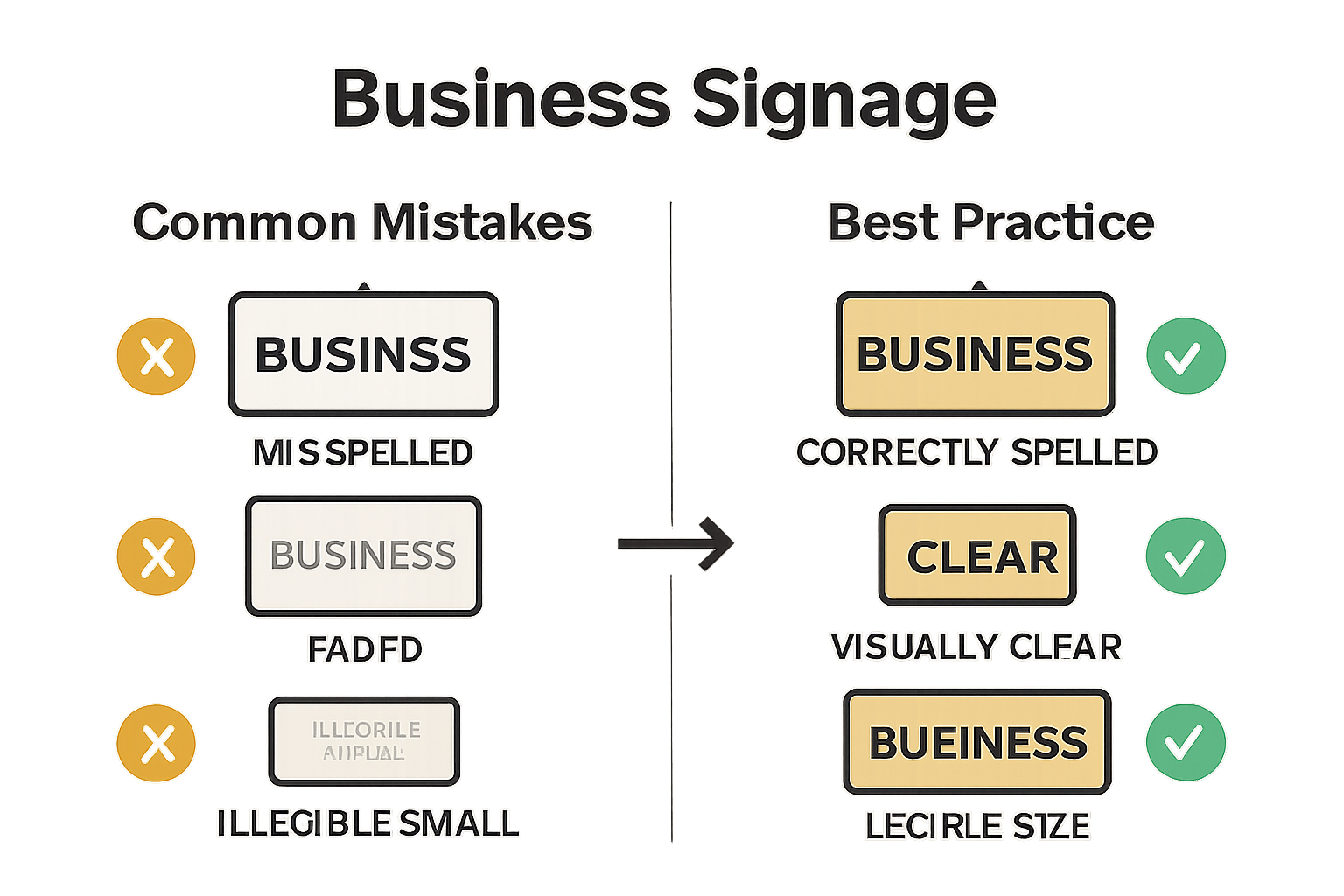
Business signage represents a significant investment that can quickly turn costly when critical errors are overlooked. According to research from RSIS International, grammatical errors in public signage can confuse readers, distort intended meanings, and potentially harm a business’s reputation, leading to substantial financial losses.
The most expensive mistakes often stem from poor planning and design decisions. Common pitfalls include selecting inappropriate sign materials that deteriorate quickly, miscalculating sign dimensions, overlooking local zoning regulations, and failing to consider visibility from different angles and distances. These errors can result in costly replacements, fines, or mandatory redesigns that drain financial resources and create unnecessary operational disruptions.
Research from Journals ShareOK highlights the risk of creating homogeneous signage that diminishes neighborhood character, potentially reducing business appeal and customer engagement. Key costly mistakes businesses frequently encounter include:
- Grammatical or spelling errors
- Incorrect sign sizing
- Poor material selection
- Inadequate visibility
- Noncompliance with local regulations
- Misaligned branding elements
- Ineffective color and design choices
To mitigate these risks and optimize your signage investment, businesses should consider professional design consultation and thorough regulatory review. For expert strategies on avoiding common pitfalls, check out our guide on designing business signs effectively, which offers comprehensive insights into creating impactful, compliant signage.
Transform Your Business Visibility with Custom Signage Solutions
The complete guide on why you should use business signs highlights common challenges businesses face such as creating impactful visual identity, navigating complex legal requirements, and avoiding costly design mistakes. If you want signs that deliver clear brand messaging and attract the right customers, then professional, custom-made signage is essential. Addressing key pain points like size restrictions, compliance, and poor visibility requires experienced craftsmanship and tailored sign options.
At Custom Signs Today, we specialize in bringing your brand to life through a wide range of durable and eye-catching signs crafted to your exact needs. Whether you are looking for promotional banners, directional signs, window lettering, or vehicle wraps, our team helps you avoid common pitfalls and maximizes your signage impact. Discover sign ideas and solutions in our Uncategorized category that showcase how we solve typical business sign problems with quality materials and expert design.
Ready to elevate your business presence with signage that works around the clock? Visit Custom Signs Today now to request your free quote and explore custom options. Make your first impression count and stand out with signs designed for lasting success.
Frequently Asked Questions
What are the primary purposes of business signs?
Business signs serve multiple essential purposes, including providing directional guidance, establishing brand recognition, attracting potential customers, communicating business hours and contact information, and creating a professional visual presence.
How do different types of business signs impact visibility and customer engagement?
Different types of business signs, such as promotional, location, institutional, and informational signs, each serve specific functions. For example, window signs attract walk-by traffic, while pole signs capture attention from vehicles, enhancing visibility and encouraging customer engagement.
What legal requirements should businesses consider when designing signs?
Businesses must consider various legal requirements, including restrictions on sign size and dimensions, placement proximity to public rights of way, illumination regulations, historical district guidelines, accessibility requirements, and local zoning rules to ensure compliance and avoid fines.
What common mistakes should businesses avoid when creating signage?
Common mistakes include grammatical errors, incorrect sizing or material selection, inadequate visibility, non-compliance with local regulations, and ineffective design choices. These can lead to costly replacements or fines, making careful planning and professional consultation essential.
Recommended
- Blog –
- Role of Business Signs: Complete Guide for 2025 –
- How to Design Business Signs That Boost Visibility –
- 7 Essential Signage Design Tips for Business Success –
- Food Safety Signs Required: Guide for Canadian Restaurants and Schools 2025 – Probe IT
- Understanding Digital Signage for Offices: Key Insights – Projector Display