

{
“@type”: “Article”,
“image”: {
“url”: “https://csuxjmfbwmkxiegfpljm.supabase.co/storage/v1/object/public/blog-images/organization-6408/1765246188658_image_1765246188423.png”,
“@type”: “ImageObject”,
“description”: “Store owner adjusting streetfront open sign”
},
“author”: {
“url”: “https://customsignstoday.us”,
“name”: “Customsignstoday”,
“@type”: “Organization”
},
“@context”: “https://schema.org”,
“headline”: “Why Signage Boosts Sales for Local Businesses”,
“publisher”: {
“url”: “https://customsignstoday.us”,
“name”: “Customsignstoday”,
“@type”: “Organization”
},
“inLanguage”: “en”,
“articleBody”: “Discover why signage boosts sales, types of signs that drive results, buying behavior impacts, legal compliance tips, and common mistakes to avoid.”,
“description”: “Discover why signage boosts sales, types of signs that drive results, buying behavior impacts, legal compliance tips, and common mistakes to avoid.”,
“datePublished”: “2025-12-09T02:10:18.144Z”
}
More than 60 percent of American consumers say that signage influences their buying decisions inside a store. For businesses, a single sign can be the difference between capturing attention or losing a sale to a competitor. With so many choices facing shoppers every day, understanding how signage shapes behavior provides a clear advantage for any American business aiming to convert foot traffic into loyal customers.
Table of Contents
- How Signage Influences Consumer Behavior
- Types of Signs That Drive Business Results
- Visual Communication Strategies That Convert
- Legal and Zoning Rules for Business Signs
- Avoiding Common Signage Mistakes
Key Takeaways
| Point | Details |
|---|---|
| Effective Signage Drives Decisions | Clear and strategically designed signage simplifies consumer decision-making by facilitating cognitive comprehension. |
| Visual Elements Influence Behavior | Engaging visual designs can create emotional connections that enhance customer loyalty and drive purchasing intentions. |
| Adhere to Legal Regulations | Businesses must navigate complex zoning laws to ensure compliance, avoiding potential fines or legal issues from poorly designed signage. |
| Avoid Common Design Mistakes | Strategic planning and understanding design elements like typography and color can prevent costly errors that hinder customer engagement. |
How Signage Influences Consumer Behavior
Signage serves as a powerful psychological trigger that directly impacts consumer decision-making processes. Scientific research reveals that clear and strategically designed signs can guide consumer actions by facilitating cognitive comprehension and simplifying complex decision pathways.
Visual communication through signage operates on multiple psychological levels. Digital signage with sensory-rich content can evoke emotional responses, particularly among first-time shoppers. Studies demonstrate that engaging visual displays create affective experiences that enhance customer approach behaviors and potentially foster long-term brand loyalty.
The mechanism behind signage’s behavioral influence involves several key psychological principles. Cognitive processing plays a critical role – when consumers encounter clear, well-designed signs, their brains rapidly interpret visual information, reducing cognitive load and making purchasing decisions feel more intuitive. This process happens subconsciously, guiding shoppers through physical spaces and influencing their purchasing choices without overt persuasion.
Practical applications of these insights suggest businesses should focus on creating signs that are not just informative, but psychologically engaging. Considerations like color psychology, typography, placement, and visual hierarchy can transform simple signage into powerful communication tools that subtly nudge consumer behavior. By understanding these nuanced psychological mechanisms, local businesses can design signage that doesn’t just communicate information, but actively shapes customer interactions and purchase decisions.
Types of Signs That Drive Business Results
Businesses can leverage various sign types to strategically boost sales and customer engagement. Visual design research demonstrates that carefully crafted signage elements like color, graphics, and layout directly influence consumer purchase intentions, making sign selection critically important for driving business results.

Promotional Signs represent a powerful category that communicates brand messaging and attracts potential customers. These signs include window displays, storefront banners, and outdoor advertising panels that create immediate visual impact. Logo complexity studies suggest that intricate design elements can enhance brand perception, particularly for less familiar businesses seeking to establish credibility.
The most effective business signs typically fall into several key categories:
- Wayfinding Signs: Guide customers through physical spaces
- Informational Signs: Communicate pricing, services, and product details
- Branding Signs: Establish visual identity and company personality
- Promotional Signs: Highlight special offers and attract customer attention
Digital signage has emerged as a particularly powerful tool for modern businesses. These dynamic displays allow real-time content updates, interactive elements, and personalized messaging that can dramatically increase customer engagement. By understanding the psychological impact of different sign types, local businesses can transform simple visual communication into a strategic sales driver that speaks directly to customer needs and preferences.
Visual Communication Strategies That Convert
Brand visual identity research demonstrates that strategic visual communication can profoundly influence consumer attitudes and purchasing behaviors. Businesses must carefully craft their visual messaging to create compelling narratives that resonate with target audiences, transforming simple visual elements into powerful marketing tools.
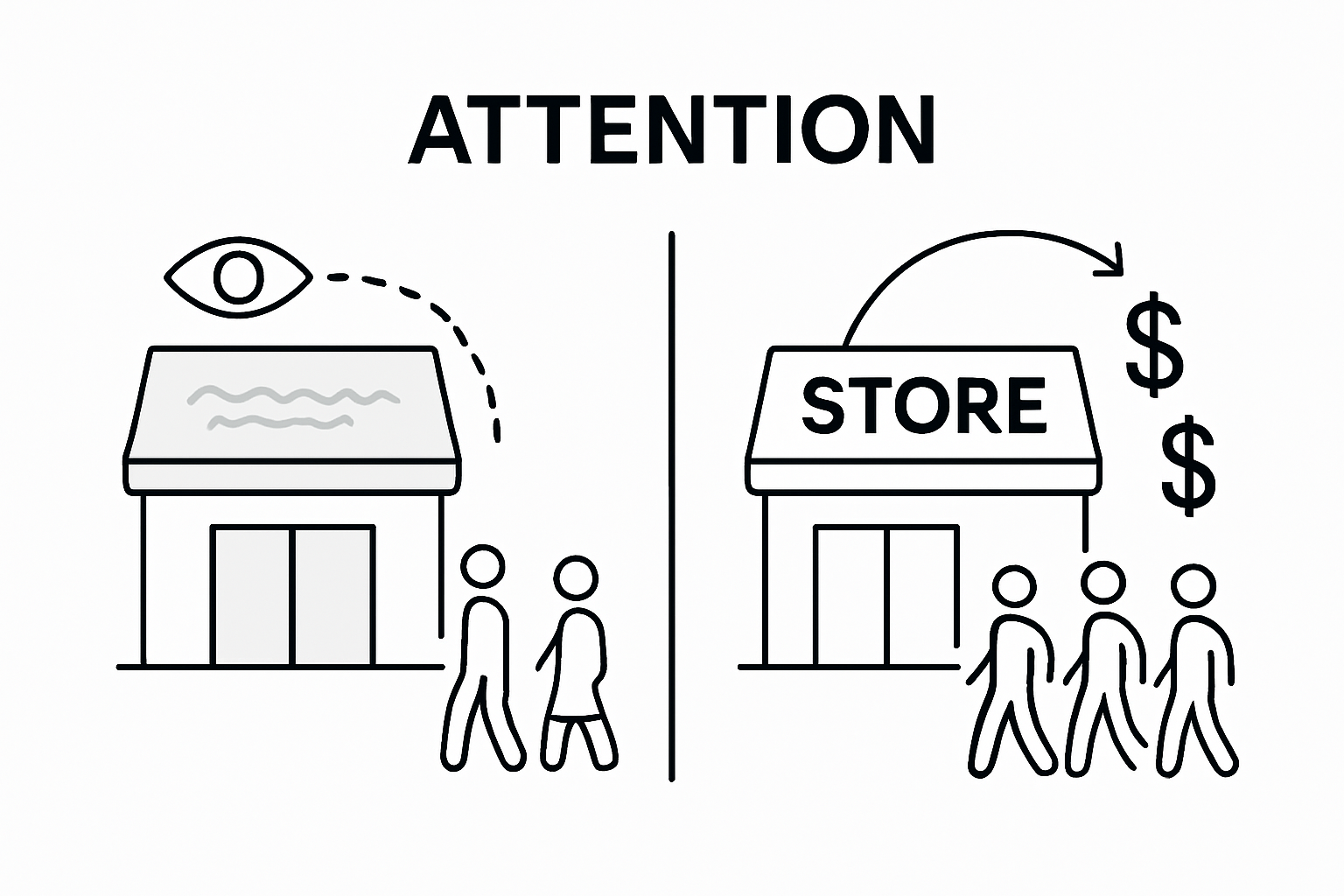
Key visual communication strategies involve understanding the psychological impact of design elements. Color psychology plays a critical role in consumer perception, with different hues triggering specific emotional responses. Behavioral branding studies reveal that consistent visual branding can significantly enhance brand equity by aligning consumer perceptions with brand personality.
Effective visual communication strategies include:
- Maintaining consistent color schemes across all marketing materials
- Using typography that reflects brand personality
- Creating visual hierarchies that guide consumer attention
- Developing memorable visual narratives
- Implementing cohesive design elements across platforms
Digital and physical signage represent powerful channels for visual communication. By understanding the nuanced ways visual elements interact with consumer psychology, businesses can design signs that do more than simply convey information. These strategic visual communications can create emotional connections, build brand recognition, and ultimately drive consumer action by speaking directly to the subconscious motivations and preferences of their target audience.
Legal and Zoning Rules for Business Signs
Comprehensive sign regulation research reveals that business signage is subject to complex legal frameworks designed to balance commercial interests with community aesthetic standards. Local municipalities develop specific sign codes that govern everything from sign size and placement to illumination and content, making it crucial for businesses to understand these intricate regulatory requirements.
Zoning Regulations represent the primary legal mechanism controlling business signage. Different commercial zones often have distinct rules that specify:
- Maximum sign dimensions
- Permitted sign types
- Height restrictions
- Placement guidelines
- Illumination standards
- Material specifications
Businesses must navigate multiple layers of legal compliance when designing exterior signage. This includes obtaining necessary permits from local government offices, ensuring Americans with Disabilities Act (ADA) accessibility requirements are met, and respecting historical district guidelines where applicable. Violations can result in substantial fines, mandatory sign removal, or potential legal action from municipal authorities.
Successful sign implementation requires proactive engagement with local zoning departments. Business owners should schedule preliminary consultations, carefully review zoning maps, and submit detailed sign plans that demonstrate compliance with all local ordinances. By understanding these regulatory nuances, businesses can design signage that not only attracts customers but also meets all legal requirements, avoiding potential costly penalties and ensuring smooth operational continuity.
Avoiding Common Signage Mistakes
Effective sign design strategies require careful planning to prevent costly errors that can undermine a business’s visual communication. Many local businesses inadvertently create signs that fail to attract customers, blend into the background, or even actively repel potential clients through poor design choices.
Common signage mistakes that businesses must avoid include:
- Overcrowded Design: Cramming too much information into a single sign
- Poor Color Choices: Using clashing or hard-to-read color combinations
- Inappropriate Font Selection: Choosing decorative or difficult-to-read typefaces
- Incorrect Size Proportions: Creating signs that are too small or overwhelmingly large
- Inconsistent Branding: Misaligning sign design with overall brand identity
- Neglecting Visibility: Positioning signs where they cannot be easily seen
Typography and Readability play crucial roles in effective signage. Businesses should select clear, legible fonts that can be read quickly from a distance. Sans-serif fonts typically work best for outdoor and storefront signs, with high-contrast color combinations that ensure maximum visibility. The goal is to create a sign that communicates its message instantly, capturing potential customer attention within seconds of being viewed.
Successful signage requires a strategic approach that balances aesthetic appeal with functional communication. Business owners should invest time in testing sign designs, seeking feedback from potential customers, and continually refining their visual communication strategy. By understanding and avoiding these common mistakes, local businesses can create signs that not only attract attention but also effectively communicate their brand message and drive customer engagement.
Boost Your Local Business Sales with Custom Signage Solutions
The article highlights the critical role signage plays in influencing consumer behavior by reducing cognitive load and creating emotional connections. For local businesses struggling with ineffective or overlooked signs, the challenge is clear. You need signage that is not only visually appealing but strategically designed to guide customers and build brand loyalty. At Uncategorized, we understand these psychological principles and specialize in creating custom signs that captivate attention and convert foot traffic into sales.
Take advantage of our full range of custom signage—from banners and storefront signs to vehicle wraps and decals—that combine color psychology, clear typography, and strategic placement. Don’t wait to transform your business visibility. Visit customsignstoday.us to explore how our durable, high-quality signs can activate your brand presence today. Ready to elevate your signage? Request a free quote now and start turning signs into powerful sales drivers.
Frequently Asked Questions
How does signage impact consumer behavior?
Signage acts as a psychological trigger that can enhance cognitive processing and simplify decision-making for consumers, guiding their purchasing choices subconsciously.
What types of signs are most effective for driving sales?
Effective signage includes promotional signs, wayfinding signs, informational signs, and branding signs. Each of these types serves specific purposes that can attract and engage customers.
What design elements should I consider for my business signage?
Key design elements include color psychology, typography, placement, and visual hierarchy. These contribute to creating engaging and effective signage that resonates with customers.
How can I ensure compliance with signage regulations?
To ensure compliance, businesses should familiarize themselves with local zoning regulations, obtain necessary permits, and adhere to guidelines regarding size, placement, and illumination of signs.
Recommended
- Understanding Types of Promotional Signage for Businesses –
- Why Personalized Signage: Complete Guide for Businesses –
- 7 Essential Promotional Signage Examples for Businesses –
- 7 Inspiring Storefront Sign Examples for Business Success –
- 7 Essential Safety Signs Every Canadian Restaurant Needs – Probe IT