Nearly 40 percent of American local businesses report replacing outdoor signs every two years due to weather damage. For business owners and marketing managers, choosing the right signage goes beyond picking something that looks good for a season. Without durable solutions, fading graphics and broken fixtures can quickly erode brand credibility. This article delivers practical insights that help you protect your investment and keep your American business looking sharp year-round.
Table of Contents
- Durable Signage Defined And Common Misconceptions
- Types Of Durable Signage And Their Distinctions
- Key Features Of Long-Lasting Signs
- Legal, Safety, And Compliance Implications
- Financial Risks And Cost Of Poor Durability
- Comparisons With Temporary Signage Solutions
Key Takeaways
| Point | Details |
|---|---|
| Durable Signage is Strategic | It serves as an effective communication tool that withstands environmental challenges while preserving visibility and professionalism. |
| Material Selection is Key | Choosing appropriate materials is essential for longevity and performance, balancing costs with effectiveness. |
| Compliance is Mandatory | Adhering to legal standards such as OSHA and ADA is crucial to avoid penalties and ensure accessibility. |
| Investing in Quality Matters | High-quality, durable signage reduces long-term costs and enhances brand perception, making it a strategic investment. |
Durable Signage Defined and Common Misconceptions
Durable signage represents much more than simply creating a sign that survives a few seasons. At its core, durable signage is a strategic communication tool designed to withstand environmental challenges while maintaining visual clarity and professional appearance. Signage encompasses visual graphics created to display information to a specific audience, with durability being a critical component of effective design.
Contrary to popular misconceptions, durable signage isn’t just about purchasing the most expensive materials or creating permanent installations. Instead, it involves selecting appropriate materials, understanding environmental stressors, and designing signs that can reliably communicate your business message under diverse conditions. Local businesses often mistakenly believe that durability means higher costs or complex manufacturing processes. However, modern signage solutions offer cost-effective options that balance performance, aesthetics, and budget.
The key characteristics of truly durable signage include resistance to multiple environmental factors such as:
- UV radiation exposure
- Temperature fluctuations
- Humidity and moisture
- Physical wear and impact
- Color fading and material degradation
Successful durable signage requires understanding these potential challenges and selecting materials and design techniques that address them proactively. For local businesses, this means choosing sign materials and production methods that protect your visual branding investment and ensure consistent, professional representation.
Pro tip: Consult with professional sign manufacturers who can provide specific material recommendations tailored to your local environmental conditions and business needs.
Types of Durable Signage and Their Distinctions
Durable signage encompasses a wide range of visual communication solutions designed to meet specific business needs and environmental challenges. Signage types include building-mounted signs, digital displays, awnings, canopies, and window signs, each offering unique advantages for local businesses seeking reliable and effective communication strategies.

The landscape of durable signage is characterized by multiple distinct categories, each with specific performance characteristics. Monument signs, pole signs, channel letters, and digital displays represent key options for businesses looking to establish a strong visual presence. These sign types differ significantly in construction materials, environmental resistance, and maintenance requirements, making careful selection crucial for long-term branding success.
Key distinctions among durable signage types include:
- Monument Signs: Ground-level installations providing substantial visibility
- Pole Signs: Elevated signs ideal for high-traffic areas
- Channel Letters: Three-dimensional individual letters often used for storefront branding
- Digital Displays: Modern, adaptable signs with dynamic content capabilities
- Window Graphics: Cost-effective solutions for interior and exterior messaging
Choosing the right signage involves evaluating factors like location, budget, environmental conditions, and specific communication objectives. Local businesses must consider visibility, durability, and alignment with their overall brand strategy when selecting signage solutions.
Here’s a quick reference outlining how different durable signage types serve business needs:
| Signage Type | Best Use Case | Durability Focus | Typical Placement |
|---|---|---|---|
| Monument Signs | Brand awareness | Structural endurance | Entrances, driveways |
| Pole Signs | High visibility | Wind and weather resistance | Busy streets, highways |
| Channel Letters | Storefront identity | Fade-resistant graphics | Building facades |
| Digital Displays | Dynamic communication | Electronic reliability | Indoor/outdoor locations |
| Window Graphics | Seasonal promotions | Removable without damage | Storefront windows |
Pro tip: Consult with professional sign designers who can assess your specific business environment and recommend the most appropriate durable signage type for maximum impact and longevity.
Key Features of Long-Lasting Signs
Durability is the cornerstone of effective signage for local businesses, with critical features extending far beyond simple visual appeal. Professional signs must withstand environmental challenges while maintaining their structural integrity and communicative power. High-quality materials, strategic design, and thoughtful construction determine whether a sign will serve a business effectively for years or deteriorate quickly.
The essential components of long-lasting signs include multiple interconnected performance characteristics. Effective outdoor signage requires sturdy mounting, weather-resilient materials, and graphics that resist fading, ensuring consistent brand representation under diverse environmental conditions. Businesses must consider factors like material selection, protective coatings, and installation techniques that contribute to extended sign lifespan.
Key features of durable signs encompass:
- Material Quality: Weatherproof substrates resistant to UV degradation
- Protective Coatings: Anti-corrosion and anti-graffiti finishes
- Mounting Systems: Robust hardware preventing structural movement
- Graphic Durability: Fade-resistant printing and color technologies
- Maintenance Accessibility: Design allowing easy repairs and updates
Successful signage strategies involve anticipating potential wear and implementing proactive design solutions. Local businesses should view signs as long-term investments, selecting materials and construction methods that balance initial costs with sustained performance and visual impact.
Pro tip: Schedule professional sign inspections annually to identify potential wear issues and maintain your sign’s structural and visual integrity.
Legal, Safety, and Compliance Implications
Local businesses face complex regulatory requirements when designing and maintaining signage, with legal implications extending far beyond aesthetic considerations. OSHA standards mandate specific design, color, and placement requirements for signs that communicate safety information, creating a critical framework for businesses to navigate. Noncompliance can result in significant legal vulnerabilities, potential fines, and increased risk of workplace accidents.
Accessibility regulations represent another crucial dimension of signage compliance. ADA guidelines establish stringent requirements for sign visibility, tactile readability, and appropriate mounting to ensure accessibility for individuals with disabilities. These standards go beyond mere recommendations, representing legal mandates that businesses must carefully implement to avoid potential discrimination claims and regulatory penalties.
Key legal and safety considerations for business signage include:
- OSHA Hazard Communication: Clear warning signs with standardized color codes
- ADA Compliance: Tactile lettering, appropriate mounting heights, and contrast requirements
- Visibility Standards: Signs must remain legible and structurally sound
- Location-Specific Regulations: Zoning and local ordinance compliance
- Emergency Signage: Specific requirements for exit markers and safety instructions
Successful businesses approach signage as a critical component of their risk management strategy, understanding that compliance is not optional but a fundamental operational requirement. Proactive investment in legally compliant, durable signage protects against potential legal challenges and demonstrates commitment to safety and accessibility.
Pro tip: Consult with a local regulatory compliance expert annually to ensure your signage meets current legal standards and accessibility requirements.
Financial Risks and Cost of Poor Durability
Signage durability represents a critical financial consideration for local businesses, far beyond simple aesthetic concerns. Durability directly impacts the economic life of business assets, with poor signage leading to increased repair, replacement, and maintenance costs. The long-term financial implications of substandard signage can dramatically erode a business’s operational efficiency and brand perception.
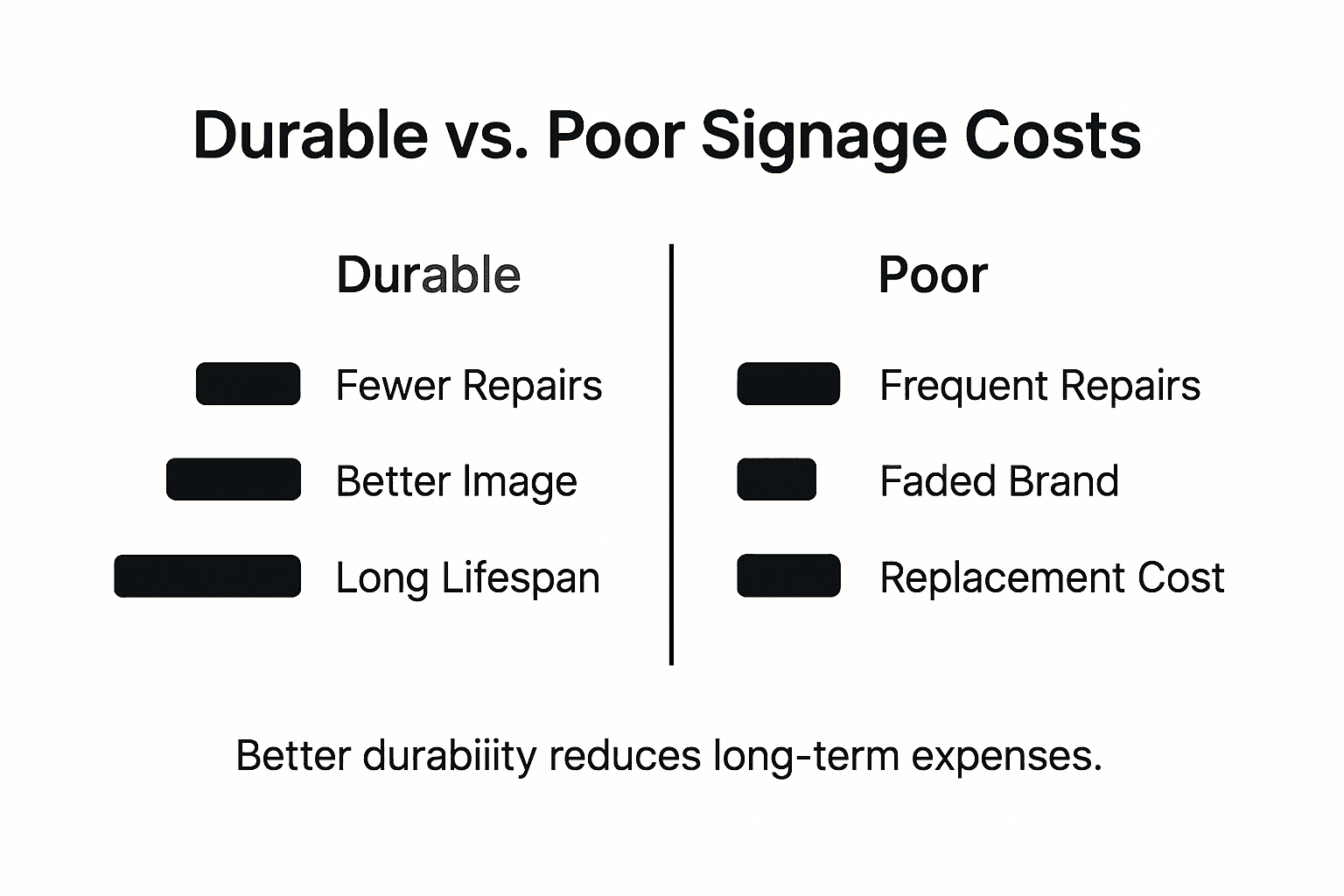
Economic studies consistently demonstrate that investing in high-quality, durable on-premise signage enhances business performance by increasing visibility and lowering ongoing costs. Poorly maintained or low-quality signs create a cascade of financial risks that extend well beyond the initial replacement expense, potentially undermining customer trust and local market positioning.
Key financial risks associated with nondurable signage include:
- Frequent Replacement Costs: Repeated sign manufacturing and installation expenses
- Reduced Customer Perception: Degraded signage suggesting business instability
- Lost Marketing Effectiveness: Diminished visibility and brand communication
- Potential Regulatory Fines: Noncompliance penalties from deteriorated signs
- Opportunity Cost: Resources diverted from core business activities
Local businesses must view signage as a strategic investment, understanding that initial quality directly correlates with long-term financial performance. Proactive selection of durable materials and professional design can transform signs from mere expenses into powerful marketing assets that generate sustainable value.
The table below summarizes how poor durability affects business finances over time:
| Financial Impact | Short-Term Effect | Long-Term Risk |
|---|---|---|
| Replacement Costs | Immediate expense | Increased total ownership costs |
| Customer Perception | Loss of confidence | Decline in brand reputation |
| Regulatory Fines | Penalty payments | Repeat legal liabilities |
| Lost Marketing Value | Reduced effectiveness | Missed growth opportunities |
Pro tip: Calculate your total sign lifecycle cost, including maintenance and replacement, to make more informed investment decisions about signage quality.
Comparisons with Temporary Signage Solutions
Local businesses often face challenging decisions when selecting signage, with temporary solutions presenting seemingly attractive initial alternatives. Temporary signs are inherently prone to instability, particularly under environmental stressors like wind or heavy traffic, creating significant long-term performance limitations compared to durable signage solutions.
Regulatory frameworks further complicate the temporary signage landscape. Local governments maintain distinct legal standards for temporary versus permanent signs, imposing specific restrictions on display duration, location, size, and content. These nuanced regulations transform temporary signage from a simple marketing tool into a complex compliance challenge for businesses.
Key comparative differences between temporary and durable signage include:
- Durability: Permanent signs withstand environmental challenges
- Compliance: Durable signs meet long-term regulatory requirements
- Cost Efficiency: Lower replacement and maintenance expenses
- Brand Perception: More professional, consistent visual representation
- Visibility: Sustained clarity and legibility over extended periods
Successful businesses recognize that signage represents more than a transient communication method. By investing in durable solutions, companies create consistent visual identities that communicate reliability, professionalism, and commitment to their local market.
Pro tip: Evaluate your signage needs holistically, considering total lifecycle costs and regulatory compliance beyond initial installation expenses.
Strengthen Your Local Business with Durable Custom Signage
Every local business understands the frustration of investing in signage that fades, warps, or fails to make a lasting impression. This article highlights the importance of durability in signage and how it directly influences brand perception, legal compliance, and financial outcomes. If you seek to overcome challenges like environmental stressors, regulatory mandates, and ongoing maintenance costs, choosing the right materials and designs is crucial. Durable signage is not only about lasting longer but ensuring your message remains clear, vibrant, and professional over time.
Take control of your business visibility today with trusted, custom solutions from Uncategorized – at CustomSignsToday.us.
Unlock the power of premium materials and expert craftsmanship to transform your local business signage into a long-term asset. Contact CustomSignsToday.us now for tailored consultation and free quotes. Don’t let low-quality signs undermine your success. Act now to enhance your brand’s impact with durable, eye-catching signage designed for your unique environment.
Frequently Asked Questions
What are the key characteristics of durable signage?
Durable signage is characterized by resistance to environmental factors such as UV radiation, temperature fluctuations, humidity, physical wear, and color fading. These features ensure that the signage maintains its visual clarity and professional appearance over time.
Why is signage durability important for local businesses?
Durable signage is critical for local businesses as it protects their branding investment, minimizes replacement and maintenance costs, and enhances customer perception. Well-maintained, durable signs communicate professionalism and reliability to customers, boosting brand trust.
What are the main types of durable signage available?
The main types of durable signage include monument signs, pole signs, channel letters, digital displays, and window graphics. Each type serves specific branding and communication needs, offering varied visibility, placement options, and durability characteristics.
How can I ensure my signage complies with legal requirements?
To ensure compliance, familiarize yourself with local regulations regarding signage design, placement, and accessibility standards, such as OSHA and ADA guidelines. Consulting with a regulatory compliance expert can help verify that your signage meets these legal standards.