
Over ninety percent of American shoppers say that clear outdoor signage influences where they spend their money. With competition fierce on every corner, your business sign is often the first thing potential customers notice. Defining your branding goals and understanding your audience paves the way for powerful signage that stands out, speaks directly to your market, and drives real results.
Table of Contents
- Step 1: Identify Branding Goals And Target Customers
- Step 2: Select The Right Outdoor Sign Types And Materials
- Step 3: Design Visually Impactful Custom Signage
- Step 4: Install Signs For Maximum Visibility And Durability
- Step 5: Evaluate Effectiveness And Refine Your Signage Strategy
Quick Summary
| Key Insight | Explanation |
|---|---|
| 1. Define branding goals and target audience | Clear branding goals and understanding your audience are essential for effective outdoor signage. Align your sign design strategy with these objectives. |
| 2. Choose appropriate sign types and materials | Select sign types and materials based on functionality, environmental conditions, and budget to enhance visibility and durability. |
| 3. Design visually impactful signage | Create designs that balance aesthetics with clear communication, using readable fonts and colors that resonate with your brand identity. |
| 4. Install signs strategically | Proper installation maximizes visibility and longevity, focusing on site conditions, mounting height, and visibility angles. |
| 5. Evaluate and refine signage effectiveness | Ongoing assessment of signage performance through metrics and customer feedback ensures continued alignment with branding goals. |
Step 1: Identify branding goals and target customers
Successful outdoor signage starts with crystal clear branding goals and a precise understanding of your target audience. When strategically designed, signs become powerful communication tools that transform casual observers into potential customers.
Begin by mapping out your specific business objectives. Are you aiming to increase foot traffic, enhance brand recognition, or differentiate yourself from competitors? Your sign design strategy must directly support these goals. Simultaneously, develop an intimate profile of your target customers considering demographics like age, income level, professional background, and local geographic characteristics.
Practical tip: Create a detailed customer persona that represents your ideal client. Think beyond basic demographics and consider their motivations, challenges, and preferences. For example, a real estate agency targeting young professionals would design signs very differently than a local restaurant appealing to families. The more precisely you understand your audience, the more effectively your outdoor signage can capture their attention through strategic visual communication.
The next critical step involves translating these insights into a compelling visual brand language that speaks directly to your target market’s expectations and desires.
Step 2: Select the right outdoor sign types and materials
Choosing the perfect outdoor sign involves carefully matching materials and types to your specific business needs and environmental conditions. Your selection will directly impact visibility, durability, and overall brand perception.

Start by evaluating the primary function of your sign. Different environments and purposes demand specific material characteristics. Sign materials range from aluminum and acrylic to corrugated plastic and PVC, each offering unique advantages. Aluminum composite materials provide exceptional weather resistance and long lasting performance for exterior applications, while lightweight options like corrugated plastic work well for temporary signage or budget conscious projects.
Your material selection should consider critical factors such as local climate, mounting location, expected longevity, and budget. Retroreflective sheeting and aluminum backing can significantly enhance visibility and durability for outdoor signs exposed to varied weather conditions. Professional tip: Always request material samples and review their performance specifications before making a final decision. Consulting with a sign design professional can help you navigate the complex landscape of material options and find the perfect match for your branding objectives.
With the right materials selected, you are now ready to move forward and translate your design concept into a compelling visual communication tool.
Step 3: Design visually impactful custom signage
Creating a visually compelling sign requires strategic design that captures attention and communicates your brand message instantly. Your visual design serves as a critical first impression for potential customers passing by your business.
Focus on developing a design that balances aesthetic appeal with clear communication. Sign design guidelines recommend using dark backgrounds and avoiding large illuminated white areas to enhance visual impact and readability. Select a color palette that reflects your brand identity and ensures maximum visibility. Typography plays a crucial role select fonts that are both readable from a distance and consistent with your brand personality. Incorporate your logo prominently and ensure sufficient contrast between background and text to guarantee legibility.
Durable design considerations are essential for creating signs that withstand environmental challenges. Professional tip: Always create multiple design drafts and seek feedback from colleagues or potential customers before finalizing your sign. Consider how your design will look in different lighting conditions and from various viewing angles. By prioritizing both visual appeal and functional durability, you will create a sign that effectively communicates your brand message and attracts potential customers.
With a powerful design in hand, you are now prepared to bring your visual branding strategy to life.
Step 4: Install signs for maximum visibility and durability
Installing your sign strategically is crucial to ensuring maximum impact and long term performance. The right installation approach can dramatically extend your sign’s lifespan and visibility.
Professional sign installation requires careful attention to foundational specifications, with particular focus on creating stable mounting platforms. Consider ground conditions carefully concrete foundations should extend beneath the frost line to prevent shifting or tilting. Select mounting locations that provide clear sightlines and minimize potential obstructions from landscaping or architectural features. Pay special attention to height and angle to ensure optimal readability from multiple approach directions.
Utilizing extruded aluminum panels with retroreflective sheeting can significantly enhance sign visibility and durability in various environmental conditions. Professional tip: Always conduct a site survey before installation to assess potential challenges like wind exposure, sunlight intensity, and potential interference from surrounding structures. Proper installation involves not just mounting your sign but creating a robust system that protects your investment and communicates your brand message effectively. Ensure all mounting hardware is corrosion resistant and rated for outdoor use to prevent premature degradation.
With your sign now professionally installed you are ready to make a powerful visual statement about your business.
Step 5: Evaluate effectiveness and refine your signage strategy
Successful branding requires ongoing assessment and strategic refinement of your outdoor signage. Continuous evaluation helps ensure your visual communication remains impactful and aligned with your business objectives.
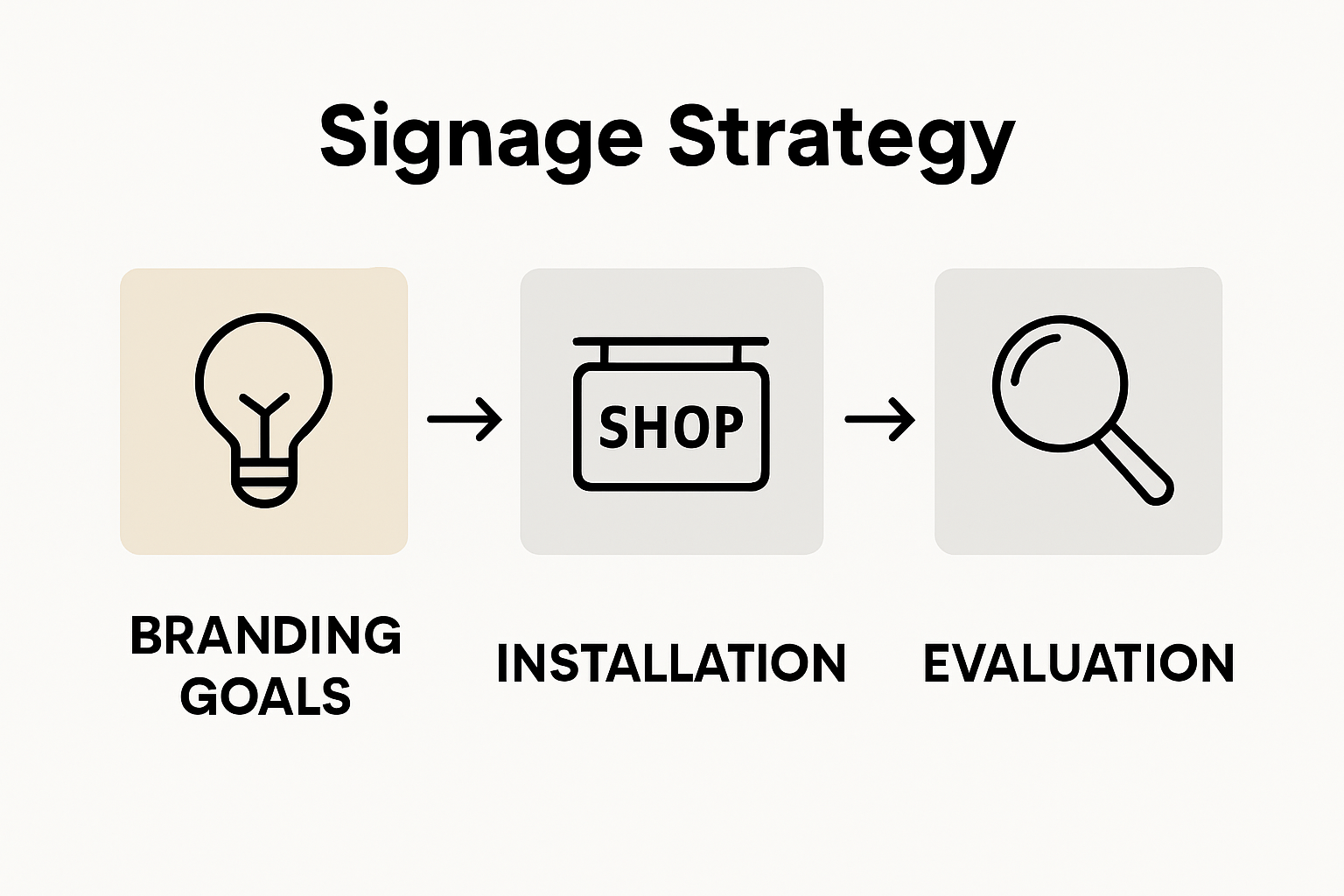
Comprehensive signage strategies demand systematic analysis of design performance and structural integrity, focusing on multiple critical factors. Track key metrics such as visibility from different distances, readability during various lighting conditions, and customer recognition rates. Conduct periodic surveys to gather direct feedback from potential customers about their perception of your sign. Analyze traffic patterns and observe how passersby interact with your signage to understand its real world effectiveness.
Professional signage maintenance guidelines recommend regular assessments of design functionality and structural performance. Professional tip: Schedule quarterly reviews of your sign’s physical condition and visual appeal. Check for wear and tear, color fading, structural stability, and alignment with current branding guidelines. Be prepared to make incremental adjustments that keep your signage looking fresh and communicating your brand message powerfully. Remember that your sign is often the first point of contact between your business and potential customers.
With a refined signage strategy in place you have completed the critical steps toward creating a compelling visual brand presence.
Elevate Your Brand With Custom Outdoor Signs
Creating outdoor signage that truly connects with your ideal customers requires not only clear branding goals but also expert execution in design and materials. If you want your business to stand out and make a lasting impression, overcoming challenges like sign visibility, durability, and strategic placement is essential. By focusing on these critical factors you turn your signage into a powerful marketing tool that drives foot traffic and builds brand recognition.

Discover how Custom Signs Today can help you achieve these goals with professional custom signage solutions tailored to your unique needs. Explore our wide selection of durable outdoor signs and innovative design services crafted to engage your target audience effectively. Start your journey toward impactful visual branding now by visiting our Uncategorized category to see examples and request a free quote. Don’t wait to make your business more visible and memorable with expert signage crafted just for you.
Frequently Asked Questions
How do I identify effective branding goals for outdoor signs?
Start by clarifying your business objectives, such as increasing foot traffic or enhancing brand recognition. Then, align your sign design strategy with these goals for maximum impact.
What factors should I consider when selecting materials for outdoor signs?
Evaluate the sign’s purpose, expected lifespan, and local climate when choosing materials. For example, aluminum offers durability for long-term installations, while corrugated plastic is great for temporary signage projects.
How can I ensure my outdoor sign design is visually impactful?
Focus on a design that balances aesthetics with clear communication. Use a color palette consistent with your brand and ensure high contrast between text and background for better legibility.
What are the best practices for installing outdoor signs for visibility?
Choose installation locations that offer clear sightlines and mount the sign at an optimal height for readability. Additionally, ensure the mounting hardware is suitable for the environment to enhance durability.
How often should I evaluate the effectiveness of my outdoor signage?
Conduct regular assessments, ideally quarterly, to check the sign’s visibility and physical condition. This includes monitoring for wear and tear and gathering feedback from potential customers to make necessary adjustments.
What should I include in a customer persona for my target market?
Develop a detailed persona that includes demographics, preferences, and motivations of your ideal client. Consider what challenges they face and how your business can address their needs effectively.
Recommended
- How to Design Business Signs That Boost Visibility –
- Why Invest in Outdoor Signs: Complete Guide –
- 7 Essential Signage Design Tips for Business Success –
- 7 Essential Business Sign Design Tips for Lasting Impact –
- Custom Outdoor Rugs With Logo: Boost Brand Visibility – Mats4U USA
- Understanding the Role of Visual Branding in Business – Blog
- How to Order Custom Outdoor Mats with Logo for Business – Mats4U