
Nearly 68 percent of American customers notice store signage before entering, making it a powerful driver of local foot traffic. For small retail businesses, getting your visual communications right means more than just decoration—it is essential for building brand awareness and guiding shopper decisions. This overview reveals how modern signage strategies transform basic storefronts into memorable marketing platforms that attract and engage your target audience.
Table of Contents
- Defining Signage In Modern Marketing
- Key Types Of Retail Signage Solutions
- How Signage Supports Branding And Sales
- Legal, Safety, And Compliance Essentials
- Common Mistakes And Maximizing Signage Roi
Key Takeaways
| Point | Details |
|---|---|
| Signage as a Marketing Tool | Signage is essential for engaging customers and enhancing brand identity, serving functions beyond advertising, such as guiding and informing. |
| Types of Signage | Retailers utilize various signage solutions, including informational, promotional, digital, and exterior signs, to effectively communicate with consumers. |
| Legal Compliance | Businesses must adhere to legal standards, including ADA and OSHA requirements, to ensure accessibility and safety in signage. |
| Common Mistakes in Signage | To maximize ROI, retailers should avoid overcrowding signs with information and ensure consistent branding while maintaining high visibility and legibility. |
Defining Signage in Modern Marketing
Signage represents a strategic visual communication tool that businesses utilize to engage, inform, and persuade potential customers. Historically used by commercial establishments to advertise goods and services, signage has evolved dramatically from traditional painted signs to sophisticated digital displays.
Modern marketing signage encompasses a wide range of visual communication methods, including physical signs, digital displays, window graphics, banners, and interactive screens. Signs communicate complex messages through symbols and visual design, serving multiple purposes beyond simple advertising – they guide customers, reinforce brand identity, and create memorable visual experiences that drive consumer engagement.
The primary functions of contemporary signage in retail marketing include brand awareness, wayfinding, promotional messaging, and creating an immersive customer experience. Effective signage integrates design principles with strategic communication, using color, typography, and imagery to capture attention and convey critical information quickly. Retailers leverage these visual tools to transform physical spaces into dynamic marketing platforms that speak directly to consumer emotions and purchasing motivations.
Pro tip: Invest in high-quality, professionally designed signage that reflects your brand’s unique personality and speaks directly to your target customer demographic.
Key Types of Retail Signage Solutions
Retail signage solutions have dramatically transformed from traditional static displays to sophisticated communication platforms. Digital signage technologies now enable retailers to create dynamic, interactive marketing experiences that capture customer attention and drive engagement more effectively than ever before.
The primary categories of retail signage solutions include traditional and digital formats. Traditional signage encompasses physical signs like banners, window graphics, dimensional letters, and storefront displays that provide essential brand visibility. Digital signage solutions range from standalone electronic displays to complex networked systems with centralized content management, offering unprecedented flexibility in marketing communication.
Specific types of retail signage solutions include:
- Informational Signs: Wayfinding markers, store directory boards, product information displays
- Promotional Signs: Sale announcements, product highlight boards, seasonal campaign graphics
- Digital Displays: Interactive touchscreens, video walls, menu boards, real-time pricing screens
- Exterior Signage: Storefront signs, monument signs, window graphics, sandwich boards
These diverse signage solutions enable retailers to create immersive environments that communicate brand stories, guide customer journeys, and stimulate purchasing decisions through strategic visual communication.
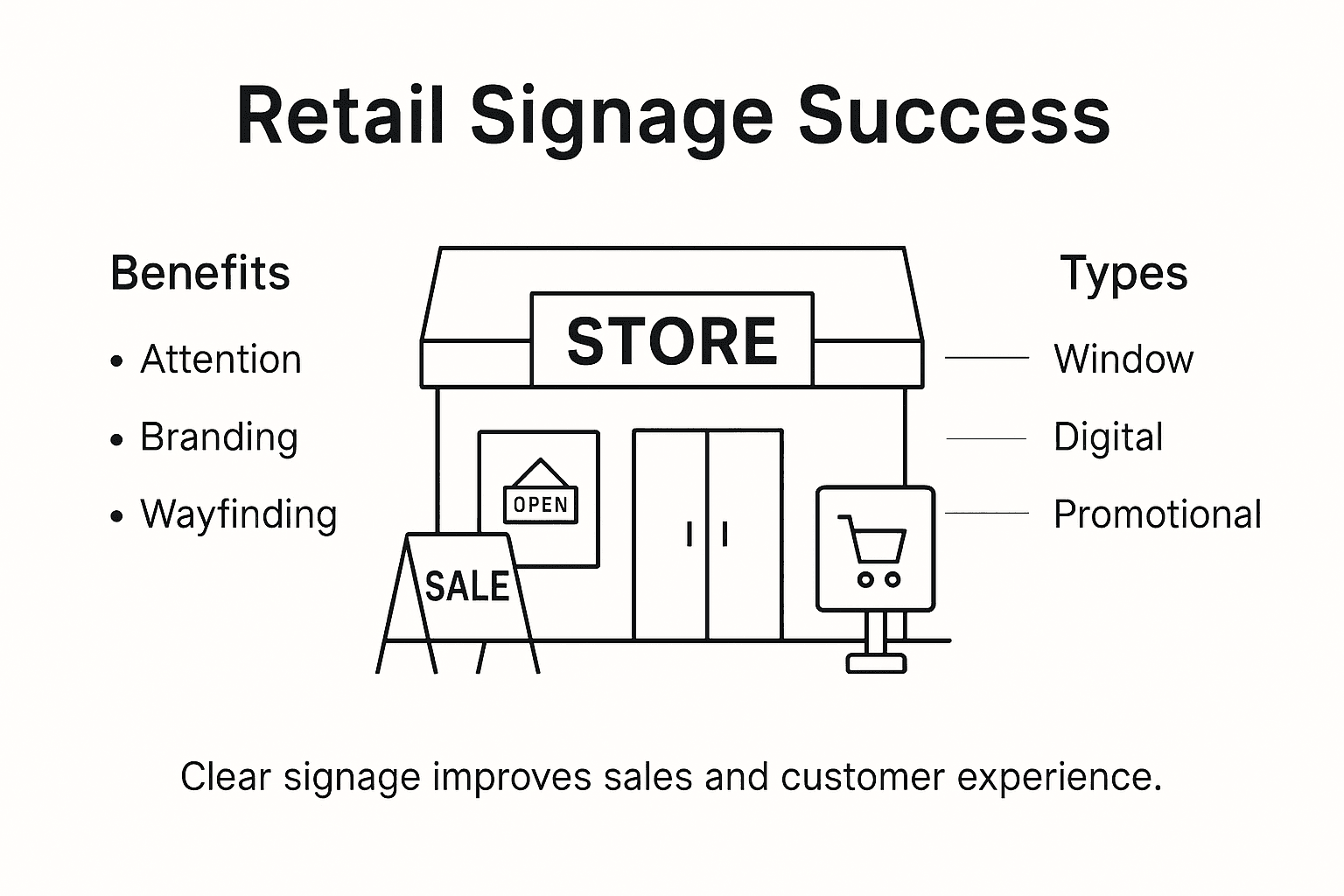
Here’s a summary of core signage types and their unique business advantages:
| Signage Type | Primary Purpose | Distinctive Benefit | Example Use Case |
|---|---|---|---|
| Informational Signs | Guide and inform customers | Enhances navigation efficiency | Store directory at entrance |
| Promotional Signs | Advertise offers and products | Boosts sales during campaigns | Seasonal sale graphics |
| Digital Displays | Engage and interact visually | Allows real-time content updates | Interactive menu board |
| Exterior Signage | Attract passersby | Increases foot traffic and awareness | Illuminated storefront sign |
Pro tip: Select signage solutions that align with your brand aesthetic and can be easily updated to reflect changing marketing strategies and seasonal promotions.
How Signage Supports Branding and Sales
Effective signage plays a critical role in supporting business branding and driving sales, serving as a powerful visual communication tool that connects businesses directly with potential customers. By strategically designing and positioning signs, retailers can create immediate visual impressions that communicate brand identity, attract attention, and influence purchasing decisions.

Signage serves multiple essential functions in supporting brand messaging and sales performance. Well-designed signs communicate a business’s core identity through carefully crafted visual elements, including color schemes, typography, and graphic design that reflect the brand’s personality. These visual cues help establish brand recognition, differentiate businesses from competitors, and create memorable customer experiences that extend beyond traditional advertising methods.
The impact of strategic signage on sales is significant and measurable. Research indicates that businesses implementing improved signage can experience average sales increases of approximately 10%, demonstrating the direct correlation between effective visual communication and revenue generation. Key sales-supporting elements include:
- Visibility: Attracting customer attention
- Information: Providing clear product details
- Directional Guidance: Helping customers navigate store spaces
- Promotional Communication: Highlighting special offers and discounts
- Brand Storytelling: Conveying brand values and identity
These multifaceted signage strategies transform physical retail spaces into dynamic marketing platforms that engage customers and drive purchasing behavior.
Pro tip: Invest in professional sign design that balances aesthetic appeal with clear, concise messaging to maximize your brand’s visual communication effectiveness.
Legal, Safety, and Compliance Essentials
Retail businesses must navigate complex legal requirements surrounding signage, ensuring compliance with federal regulations that protect employee rights and public safety. These legal obligations extend beyond simple visual communication, encompassing critical aspects of workplace safety, accessibility, and regulatory adherence.
The Americans with Disabilities Act (ADA) Accessibility Standards establish precise guidelines for signage design and placement, mandating specific requirements to ensure inclusivity and accessibility for individuals with disabilities. These standards cover multiple critical dimensions, including:
- Visual Contrast: Ensuring readability for low-vision individuals
- Tactile Elements: Providing raised characters and Braille for touch-based communication
- Placement Specifications: Determining optimal sign height and location
- Content Clarity: Requiring clear, comprehensible informational design
Beyond accessibility, retailers must also comply with workplace safety regulations. OSHA mandates that businesses display specific workplace posters informing employees of their rights, safety protocols, and potential workplace hazards. Failure to meet these legal requirements can result in significant financial penalties, legal complications, and potential disruptions to business operations.
Below is a quick reference to essential legal and safety standards for retail signage:
| Regulation | Key Requirement | Business Impact |
|---|---|---|
| ADA Accessibility | High contrast and Braille | Increases inclusivity |
| OSHA Safety | Employee rights posters | Reduces legal risk |
| Local Zoning Laws | Permitted size and placement | Avoids costly violations |
Pro tip: Conduct an annual comprehensive review of your signage to ensure full compliance with current ADA standards and workplace safety regulations.
Common Mistakes and Maximizing Signage ROI
Retailers often encounter critical challenges when designing and implementing signage strategies that impact their marketing effectiveness and return on investment. Understanding these common pitfalls and how to overcome them can significantly enhance a business’s visual communication and customer engagement.
Strategic signage design requires careful consideration of multiple factors, including size, color contrast, legibility, and placement. Common mistakes that diminish signage effectiveness include overcrowded information, poor font choices, inadequate contrast, and inconsistent branding. Retailers must avoid:
- Illegible Text: Using small or complex fonts
- Information Overload: Cramming too much content into a single sign
- Inconsistent Branding: Misaligning sign design with brand identity
- Poor Placement: Positioning signs where they cannot be easily seen
- Neglecting Maintenance: Allowing signs to become worn or outdated
To maximize signage ROI, businesses should invest in professional design, high-quality materials, and strategic placement. This approach involves creating clear, concise messaging that communicates brand values, attracts customer attention, and provides essential information quickly and effectively. Regular content updates and periodic sign evaluations can help maintain visual impact and relevance.
Pro tip: Conduct quarterly audits of your signage performance, measuring visibility, customer engagement, and alignment with current marketing objectives.
Elevate Your Retail Brand With Custom Signage Solutions
Struggling to make your retail space stand out amidst fierce competition Try transforming your marketing strategy with high-impact, professionally crafted signage that captures attention and drives sales With the right visual communication tools like banners, vehicle wraps, and promotional signs you can create immersive customer experiences that reinforce your brand identity and boost foot traffic Explore how our customizable options at Uncategorized directly address challenges like visibility, informational clarity, and promotional messaging detailed in the article.
Take control of your retail success by partnering with experts who understand the power of strategic signage for your business Discover our full range of high-quality, durable sign solutions at https://customsignstoday.us today and request a free quote to stay ahead of your competition Don’t wait until your signage is outdated or overlooked Reach out now to ensure your visual messages connect with customers and propel your sales forward.
Frequently Asked Questions
What are the key types of retail signage?
Retail signage includes informational signs, promotional signs, digital displays, and exterior signage. Each type serves a distinct purpose such as guiding customers, advertising offers, engaging users interactively, and attracting foot traffic.
How does signage impact brand visibility and customer engagement?
Effective signage enhances brand visibility by communicating core identity and values. It captures customer attention and influences their purchasing decisions, contributing to an immersive shopping experience that encourages engagement.
What are common mistakes to avoid when designing retail signage?
Common mistakes include using illegible text, overcrowding signs with information, inconsistent branding, poor placement, and neglecting maintenance. These errors can reduce the effectiveness of signage and diminish its impact on customer engagement.
Why is compliance with legal standards important for retail signage?
Compliance with legal standards such as the ADA Accessibility Standards and OSHA regulations ensures inclusivity, safety, and protection against financial penalties. Adhering to these guidelines fosters a welcoming environment and enhances the brand’s reputation.