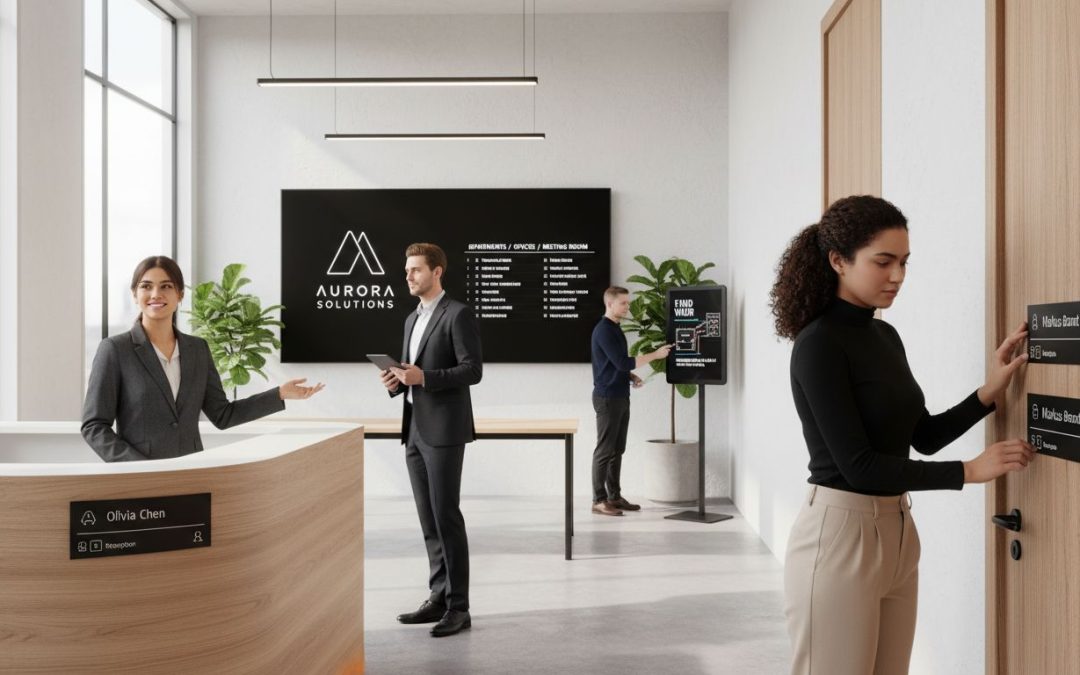
Every american business owner knows that first impressions matter, yet many overlook the power of well designed office signage. Consistent branding across signage can increase brand recognition by over 80 percent, making it an essential investment rather than an afterthought. Thoughtful signs do more than guide visitors and employees. They communicate professionalism, create a welcoming environment, and show your commitment to accessibility and safety for everyone who walks through the door.
Table of Contents
- 1. Choose Clear and Consistent Branding Elements
- 2. Install Directional Signs for Easy Navigation
- 3. Use Ada-Compliant Signs for Accessibility
- 4. Enhance Safety With Regulatory Office Signage
- 5. Employ Door and Nameplate Signs for Identification
- 6. Select High-Quality Materials for Long-Term Use
- 7. Update and Maintain Office Signage Regularly
Quick Summary
| Takeaway | Explanation |
|---|---|
| 1. Create a comprehensive brand style guide. | This document ensures visual consistency, enhancing brand identity across all signage. |
| 2. Prioritize ADA compliance in signage. | Ensuring accessibility demonstrates inclusivity and adherence to legal standards, enhancing user experience for all visitors. |
| 3. Use high-quality materials for signage. | Investing in durable, professional materials reflects your brand’s quality and commitment to excellence over time. |
| 4. Regularly maintain and update signage. | Routine checks help keep signs relevant and aligned with current branding, ensuring effective communication. |
| 5. Implement clear directional signage. | Intuitive wayfinding reduces confusion and enhances user experience, reflecting positively on your organization’s professionalism. |
1. Choose Clear and Consistent Branding Elements
Your office signage serves as a visual ambassador for your business brand. Consistency is the secret weapon that transforms ordinary signs into powerful communication tools that instantly convey your company’s identity.
Branding goes far beyond just a logo or color scheme. According to research from Raznameh, developing a comprehensive style guide that outlines all brand elements ensures your visual communication remains uniform across all materials.
To achieve this consistency, focus on several key branding elements:
- Color Palette: Select 2-3 primary colors that represent your brand
- Typography: Choose consistent fonts for all signage and print materials
- Logo Placement: Determine standard sizing and positioning rules
- Design Language: Create guidelines for graphic styles and visual treatments
Start by creating a detailed brand style guide that team members can reference. This document will help maintain visual harmony whether you are designing reception area signs, conference room markers, or external building signage. By implementing a systematic approach, you transform your signs from mere functional objects into strategic branding instruments that communicate professionalism and attention to detail.
Real success comes from treating your signage as an extension of your brand storytelling. Each sign becomes an opportunity to reinforce your company’s visual identity and create a memorable impression on clients, partners, and employees.
2. Install Directional Signs for Easy Navigation
Navigating an office space should feel intuitive and stress free. Effective directional signage transforms complex environments into user friendly spaces that help visitors and employees move smoothly and confidently.
According to accessibility guidelines from the Americans with Disabilities Act, directional signs must meet specific requirements for character proportion, finish, and contrast to ensure readability. Research reveals that signs should be positioned strategically where people can easily see them without turning their heads.
Key Placement Strategies:
- Position signs perpendicular to primary travel paths
- Ensure signs are visible within 30 degrees of eye level
- Use high contrast colors for maximum legibility
- Place signs at key decision points like intersections and entrances
When designing your directional signage system, think about the journey someone might take through your space. Clear arrows, concise text, and logical placement help reduce confusion and create a welcoming environment. Consider creating a comprehensive sign map that tracks all directional markers to maintain consistency and coverage.
Remember that great directional signs do more than guide people they communicate your organization’s commitment to user experience and professional attention to detail. A well designed wayfinding system speaks volumes about your brand before anyone even reaches their destination.
3. Use ADA-Compliant Signs for Accessibility
Accessibility is not just a legal requirement it is a fundamental commitment to inclusivity. ADA-compliant signage ensures that every person, regardless of physical ability, can navigate your workspace with dignity and independence.
According to the Americans with Disabilities Act, signs identifying permanent rooms and spaces must meet specific tactile character requirements. These guidelines focus on creating signs with non-glare finishes and high contrast between characters and backgrounds to enhance legibility for individuals with visual impairments.
Key ADA Signage Requirements:
- Use high contrast color combinations
- Implement raised tactile lettering
- Ensure characters are sized appropriately
- Position signs at consistent heights
- Include braille translations for permanent room signs
When designing ADA-compliant signs, consider them as more than just regulatory checkboxes. These signs communicate your organization’s commitment to welcoming and supporting all individuals. By prioritizing accessibility, you create an environment that demonstrates respect and consideration for diverse needs.
Remember that thoughtful signage goes beyond legal compliance. It reflects your brand’s values and creates a more inclusive workplace where everyone feels valued and empowered.
4. Enhance Safety With Regulatory Office Signage
Safety is not just a priority it is a responsibility. Regulatory office signage plays a critical role in protecting employees, visitors, and creating a secure workplace environment.
According to guidelines from the Americans with Disabilities Act, emergency warning systems must include both audible and visual alarms. These alarms require specific requirements for lamp type, color, flash rate, and intensity to ensure safety for all occupants, regardless of their physical abilities.
Critical Safety Signage Components:
- Emergency exit route markers
- Fire extinguisher location signs
- Hazard warning indicators
- First aid station identifiers
- Electrical panel warning signs
- Slip and fall prevention notices
Tactile warning surfaces can provide additional safety benefits. These detectable warnings alert individuals with visual impairments to potential hazards, creating an inclusive approach to workplace safety. By implementing comprehensive regulatory signage, you demonstrate a commitment to protecting every person who enters your workspace.
Remember that effective safety signage is more than a legal requirement. It communicates your organization’s core values of care, responsibility, and proactive protection for everyone in your environment.
5. Employ Door and Nameplate Signs for Identification
Your office environment speaks volumes before anyone says a word. Door and nameplate signs are silent communicators that provide instant information about spaces, roles, and organizational structure.
According to Americans with Disabilities Act guidelines, interior signs identifying permanent rooms must have specific design standards. These include raised and Brailled letters, precise finish and contrast requirements, and strategic mounting locations to ensure accessibility for all individuals.
Essential Nameplate and Door Sign Elements:
- Clear professional typography
- High contrast color combinations
- Consistent sizing and formatting
- Raised tactile lettering
- Braille translations for permanent spaces
- Department or role identification
- Professional mounting at standard eye level
Research indicates that signs should be positioned perpendicular to travel paths, allowing people to distinguish information within a 30 degree visual range without head movement. This strategic placement ensures maximum readability and minimizes confusion.
Thoughtful identification signage does more than provide information. It creates a welcoming environment, demonstrates organizational professionalism, and helps visitors navigate your space with confidence and ease.
6. Select High-Quality Materials for Long-Term Use
Not all signs are created equal. Material selection represents a critical investment in your business image and long-term communication strategy.
According to research from the Retail Sign and Signage Association, well-crafted signage made from high-quality materials significantly enhances customer perception and engagement, directly reflecting the reliability and professionalism of your business.
Key Material Considerations:
- Durability for indoor and outdoor environments
- Resistance to fading and weathering
- Professional appearance and finish
- Cost effectiveness over time
- Environmental sustainability
- Compatibility with design requirements
Consider materials like aluminum, acrylic, and high grade plastics that offer superior longevity and aesthetic appeal. These options provide excellent durability while maintaining a crisp professional look that communicates your brand standards. Cheaper alternatives might save money initially but will require frequent replacement and can make your business appear less professional.
Your signage is a visual representation of your brand promise. Investing in quality materials transforms signs from simple information markers into powerful communication tools that speak volumes about your commitment to excellence.
7. Update and Maintain Office Signage Regularly
Signage is a living communication system that requires ongoing attention and care. Regular maintenance keeps your visual messaging current, professional, and aligned with your evolving business identity.
According to research from the Retail Sign and Signage Association, conducting periodic audits helps maintain brand standards and ensures that all signs effectively communicate the intended message.
Signage Maintenance Checklist:
- Inspect signs quarterly for physical damage
- Update information reflecting organizational changes
- Check for color fading or material degradation
- Verify compliance with current accessibility standards
- Align signage with current branding guidelines
- Remove outdated or irrelevant signs
As recommended by Raznameh, regularly reviewing and updating your style guide ensures that all brand elements remain consistent. Think of your signage as a dynamic representation of your business story that needs periodic refreshing.
Proactive maintenance communicates professionalism and demonstrates your commitment to presenting a polished, current image to everyone who enters your space.
Below is a comprehensive table summarizing the strategies and considerations for effective office signage discussed throughout the article.
| Strategy | Key Points & Actions | Benefits/Outcomes |
|---|---|---|
| Clear and Consistent Branding | Develop a style guide, use a consistent color palette, typography, logo placement, and design language. | Enhances brand identity and creates professional impressions. |
| Directional Signage | Position signs strategically, use high contrast colors, and place at decision points. | Facilitates smooth navigation and improves user experience. |
| ADA-Compliant Signage | Use high contrast materials, tactile lettering, and braille. Maintain consistent placement. | Ensures accessibility and demonstrates inclusivity and respect. |
| Regulatory Safety Signage | Include emergency exits, fire extinguisher locations, and hazard warnings. | Protects all occupants and reflects commitment to safety. |
| Door and Nameplate Signs | Use professional typography, consistent formatting, and raised tactile features. | Enhances organizational structure and ease of navigation. |
| High-Quality Materials | Choose durable, weather-resistant materials, like aluminum or acrylic. | Improves longevity and reflects business professionalism. |
| Regular Updates and Maintenance | Conduct audits, ensure compliance, update information. | Maintains brand alignment and communicates professionalism. |
Elevate Your Office Signage for Lasting Business Impact
Your office signage is more than just information. It embodies your brand identity, enhances navigation, and ensures accessibility and safety for everyone who enters your space. If you are facing challenges like maintaining design consistency, meeting ADA standards, or choosing durable materials, you are not alone. These are critical elements for crafting signs that leave a professional and welcoming impression.
At Custom Signs Today, we understand these needs deeply. Our expertise in creating high-quality custom signage means you can transform your environment with easy-to-navigate directional signs, ADA-compliant displays, and stylish branding elements crafted for longevity.
Ready to turn your office signage into a strategic asset? Discover tailored solutions in our Uncategorized services designed for diverse business needs. Visit our homepage to explore our full range of offerings and request a free quote to get started today. Make your signs work harder for your brand and create a safer, more accessible workspace now.
Frequently Asked Questions
How can I create consistent office signage that reflects my brand?
To create consistent office signage that reflects your brand, develop a comprehensive style guide that includes your color palette, typography, logo placement, and design language. Start by outlining 2-3 primary colors and choosing consistent fonts for all signage materials to ensure a uniform look across your office environment.
What are the best practices for placing directional signs in an office?
The best practices for placing directional signs include positioning them perpendicular to primary travel paths and ensuring they are visible within 30 degrees of eye level. Implement clear arrows and concise text at key decision points to enhance navigation and create a welcoming experience for visitors and employees alike.
What are the key requirements for ADA-compliant signage?
Key requirements for ADA-compliant signage include using high-contrast color combinations, raised tactile lettering, and braille translations for permanent room signs. Ensure that signs are mounted at consistent heights to facilitate accessibility for all individuals and comply with legal standards.
How do I maintain my office signage effectively?
To maintain your office signage effectively, conduct quarterly inspections for physical damage and update information as your organizational structure changes. Regularly check for fading or degradation and remove outdated signs to present a polished, current image to anyone entering your space.
Why is using high-quality materials important for office signage?
Using high-quality materials for office signage is important because it enhances your business’s professional image and ensures longevity. Opt for durable materials like aluminum or acrylic to reduce replacement frequency and maintain visual appeal, ultimately supporting your commitment to excellence in communication.
Recommended
- Office Signage Design Guide for Effective Branding –
- 7 Essential Examples of Indoor Signs for Business Success –
- 7 Essential Signage Design Tips for Business Success –
- 7 Practical Examples of Custom Signage for Businesses –
- 7 Essential Safety Signs Every Canadian Restaurant Needs – Probe IT
- Understanding Digital Signage for Offices: Key Insights – Projector Display