
Nearly every American office relies on visual cues, yet research shows that employees waste up to 30 percent more time in workplaces with poor signage. Clear, strategically crafted office signs do more than point the way—they shape first impressions, boost efficiency, and reinforce brand identity every day. Understanding the true role of office signage helps businesses create environments where communication, safety, and company culture thrive together.
Table of Contents
- Office Signage Defined And Core Purposes
- Major Types Of Office Signage Solutions
- How Signage Impacts Branding And Navigation
- Legal And Accessibility Requirements For Office Signs
- Cost, Customization, And Common Mistakes
Key Takeaways
| Point | Details |
|---|---|
| Importance of Signage | Office signage is a strategic tool for navigation, branding, and enhancing workplace professionalism. |
| Types of Signage | Key signage types include directional, identification, informational, and branding signs, each serving specific organizational functions. |
| Legal Compliance | Office signage must adhere to legal standards, including ADA requirements, to ensure accessibility and avoid potential legal risks. |
| Cost and Design | Investing in quality signage customization enhances communication effectiveness and brand perception, while avoiding common design mistakes can improve overall impact. |
Office Signage Defined and Core Purposes
Office signage represents a strategic visual communication tool that goes far beyond simple identification. At its core, these graphic displays serve multiple critical functions for businesses, ranging from navigation and branding to establishing professional workplace environments. Office signage guidelines from the U.S. Department of Commerce emphasize the importance of clear, purposeful visual communication within professional spaces.
Typically, office signage encompasses various types of visual markers designed to perform specific organizational objectives. These include directional signs that help visitors and employees navigate complex workplace layouts, identification signs marking departments and individual workspaces, informational signs providing critical guidance or safety instructions, and branding signs that reinforce company identity and visual culture. Each sign type serves a distinct purpose: wayfinding signs reduce confusion, departmental signs improve internal organization, and branded signs communicate organizational professionalism.
The strategic implementation of office signage offers significant benefits beyond mere visual communication. Well-designed signs can enhance workplace efficiency by reducing time spent searching for locations, improve first impressions for visitors and potential clients, and create a cohesive visual environment that reflects organizational values. Companies that invest in thoughtful signage solutions demonstrate attention to detail and commitment to creating functional, welcoming workplace environments.
Pro Tip: Conduct a comprehensive workplace signage audit every 18 months to ensure your visual communication remains current, clear, and aligned with your organization’s evolving branding and spatial needs.
Major Types of Office Signage Solutions
Office signage solutions encompass a diverse range of visual communication tools designed to meet specific organizational needs. Essential interior office signage options include dimensional letter signs, acrylic signs, and other specialized formats that serve crucial branding and identification purposes for businesses.
The primary categories of office signage solutions can be broadly classified into several key types:
- Directional Signs: Help employees and visitors navigate complex office layouts
- Identification Signs: Mark departments, workspaces, and individual office areas
- Informational Signs: Provide critical guidance, safety instructions, and policy notifications
- Branding Signs: Reinforce company identity and visual corporate culture
Digital signage technologies have revolutionized traditional office communication approaches, offering dynamic and interactive visual communication platforms. These advanced solutions enable real-time information updates, interactive wayfinding, and multimedia presentations that traditional static signs cannot match.
Modern office environments increasingly blend physical and digital signage strategies to create comprehensive communication ecosystems. Physical signs provide permanent, reliable information, while digital displays offer flexibility for rapidly changing messages, corporate announcements, performance metrics, and engaging visual content that can transform workplace communication dynamics.
Here is a summary comparing physical and digital office signage approaches:
| Aspect | Physical Signage | Digital Signage |
|---|---|---|
| Information Update | Requires manual replacement | Real-time and remote changes |
| Visual Impact | Permanent, fixed graphics | Dynamic, multimedia displays |
| Initial Investment | Usually lower upfront cost | Higher initial installation |
| Flexibility | Limited to existing content | Easily updated, interactive |
| Best Use Case | Wayfinding, compliance markers | Announcements, rotating content |
Pro Tip: Integrate a mix of traditional and digital signage solutions to create a versatile, adaptive workplace communication strategy that balances permanence with real-time information needs.
How Signage Impacts Branding and Navigation
Effective signage strategies play a crucial role in transforming workplace environments by simultaneously addressing visual communication, brand representation, and operational efficiency. Organizations leverage signage not just as directional tools, but as strategic assets that communicate corporate identity, guide human behavior, and create intuitive workplace experiences.

Branding through signage extends far beyond simple visual markers. It represents a comprehensive communication strategy that impacts how employees and visitors perceive an organization. Consistent typography, color schemes, and design elements in office signs create a cohesive visual narrative that reinforces corporate identity. These visual cues subtly communicate an organization’s professionalism, culture, and values through carefully crafted design elements.
Workplace safety signage serves multiple critical functions beyond mere navigation. Well-designed signs provide clear directional guidance, communicate potential hazards, and establish organizational protocols. They transform physical spaces into intuitive environments where movement becomes seamless and potential risks are immediately communicated, creating a safer and more efficient workplace ecosystem.
Navigational signage acts as a silent organizational guide, reducing confusion and enhancing workplace productivity. By providing clear, consistent visual information, businesses can minimize time wasted searching for locations, decrease employee frustration, and create a more welcoming environment for both staff and visitors. Effective navigation signage transforms complex office layouts into easily understood spatial experiences.
Pro Tip: Conduct periodic signage audits to ensure your visual communication remains aligned with current organizational branding, spatial changes, and evolving workplace safety requirements.
Legal and Accessibility Requirements for Office Signs
Sign standards and legal requirements represent a critical framework that businesses must navigate to ensure their office signage meets both regulatory compliance and functional effectiveness. These regulations encompass multiple dimensions, including aesthetic standards, communication clarity, and accessibility provisions that protect diverse workplace populations.
The Americans with Disabilities Act (ADA) mandates specific guidelines for office signage, focusing on creating inclusive environments. Key accessibility requirements include:
- Tactile character height between 48-60 inches from the floor
- High contrast color schemes for improved readability
- Braille translations for critical informational signs
- Clear, sans-serif fonts that maximize legibility
- Consistent mounting heights and placement strategies
Interior door signage standards provide additional nuanced requirements that businesses must consider. These regulations specify precise dimensional guidelines, ensuring that signs not only communicate information effectively but also accommodate individuals with visual or mobility challenges. Compliance involves careful consideration of character size, mounting heights, and visual contrast to create universally accessible communication tools.
Legal requirements for office signage extend beyond accessibility, encompassing zoning regulations, building codes, and organizational safety standards. Businesses must balance aesthetic design with functional communication, ensuring that signs serve multiple purposes: guiding visitors, representing brand identity, communicating critical information, and meeting regulatory standards. Proactive approach to signage design minimizes potential legal risks and demonstrates organizational commitment to inclusive workplace environments.
Pro Tip: Conduct annual accessibility audits of your office signage to ensure ongoing compliance with evolving ADA guidelines and organizational changes.
Cost, Customization, and Common Mistakes
Signage design standards reveal that effective office signage requires strategic planning that balances budget considerations, customization needs, and potential implementation pitfalls. Understanding the nuanced landscape of sign development helps businesses make informed decisions that maximize visual communication while minimizing unnecessary expenses.
Customization options for office signage span multiple dimensions, with cost variations depending on complexity and materials:
- Material Choices:
- Acrylic: Cost-effective, modern appearance
- Metal: Durable, premium aesthetic
- Vinyl: Flexible, budget-friendly option
- Design Complexity:
- Simple text-based signs: Lower cost
- Multilayered graphics: Higher investment
- Integrated digital elements: Premium pricing
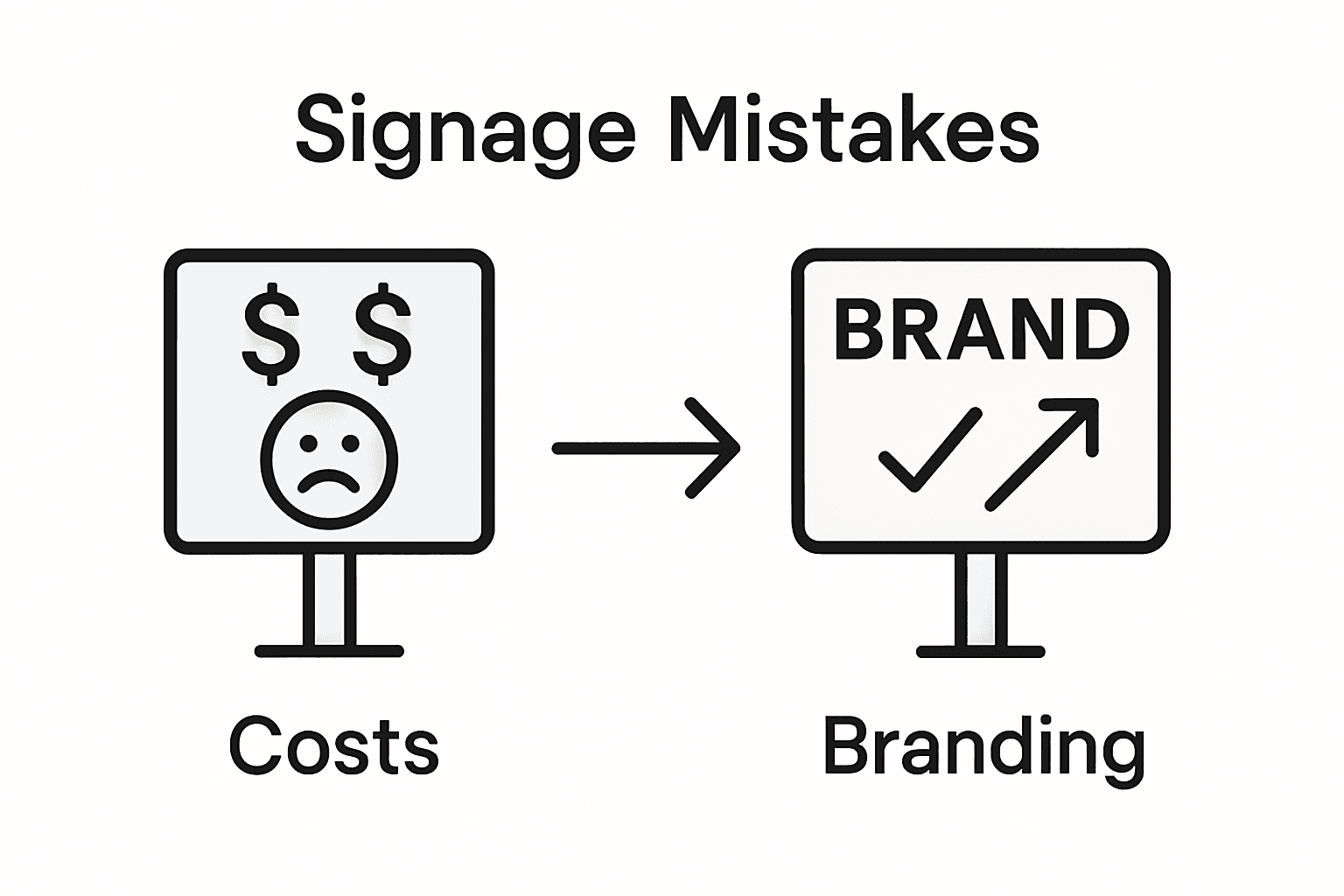
Office signage guidelines highlight common mistakes that significantly impact both budget and effectiveness. These include inconsistent design language, poor font selections, inadequate color contrast, and improper mounting techniques. Businesses often underestimate the importance of professional design standards, leading to signage that appears unprofessional or fails to communicate intended messages effectively.
This table outlines common office signage mistakes and their consequences:
| Common Mistake | Impact on Business | Solution Recommendation |
|---|---|---|
| Poor color contrast | Reduced readability, confusion | Use high-contrast color schemes |
| Inconsistent fonts | Unprofessional brand image | Establish font/style guidelines |
| Improper mounting | Signs difficult to locate | Follow standard height protocols |
| Lacking ADA features | Non-compliance, legal issues | Include braille, tactile elements |
Cost management in office signage requires a holistic approach that considers long-term value over initial investment. While budget-conscious organizations might initially gravitate toward cheaper solutions, strategic customization can deliver superior returns through enhanced brand perception, improved workplace navigation, and more effective communication. Smart businesses evaluate signage as an investment in organizational communication infrastructure rather than a mere aesthetic expense.
Pro Tip: Develop a comprehensive signage budget that allocates funds for initial design, professional installation, and potential future modifications to ensure adaptability and long-term value.
Elevate Your Office Signage to Boost Branding and Navigation
The article highlights the challenge many businesses face in creating clear, cohesive, and compliant office signage that improves navigation and strengthens brand identity. Key pain points include ineffective wayfinding causing visitor confusion, inconsistent design undermining professionalism, and non-compliance with accessibility standards. Custom office signage that is both visually impactful and functional makes a powerful difference in enhancing workplace efficiency and leaving positive impressions.
At Custom Signs Today, we understand these challenges and offer tailored solutions crafted to meet your specific needs. Whether you are looking for vibrant directional signs, branded office plaques, or ADA-compliant accessibility signage, our expert team delivers durable, customizable options designed for your space. Explore our full range of services at Uncategorized – and start transforming your office environment today.
Ready to create office signage that truly matters for your business success Make the smart move now and request a free quote at Custom Signs Today. Our client-focused approach ensures you get signage that looks professional, meets legal standards, and improves navigation—helping your workplace communicate clearly and confidently.
Frequently Asked Questions
What are the main types of office signage?
Office signage typically includes directional signs, identification signs, informational signs, and branding signs. Each type serves specific organizational objectives, such as helping with navigation, marking departments, providing guidance, and reinforcing company identity.
How does signage impact workplace branding?
Signage impacts workplace branding by creating a cohesive visual narrative that communicates an organization’s professionalism, culture, and values. Consistent design elements, such as typography and color schemes, help reinforce corporate identity and enhance the overall visual appeal of the workplace.
What are the legal requirements for office signage?
Legal requirements for office signage often include compliance with the Americans with Disabilities Act (ADA), which mandates features such as tactile character height, high contrast color schemes, and braille translations. Organizations must also consider zoning regulations and building codes to ensure compliance and avoid legal issues.
What are the benefits of using digital signage in an office?
Digital signage offers benefits such as real-time information updates, interactive wayfinding, and dynamic visual content that can engage employees and visitors. This flexibility allows organizations to easily update messages and enhance communication compared to traditional static signs.