
Most American real estate agents overlook just how much a single yard sign can influence a sale. Studies reveal that over 60 percent of buyers first learn about a home through signage, making these displays far more than simple directionals. Understanding what realtor signage really communicates can help agents stand out and avoid common mistakes that hurt their reputation and wallet. This article uncovers the real power of signage, breaks down misconceptions, and reveals smarter choices for every American agent.
Table of Contents
- Defining Realtor Signage and Common Misconceptions
- Types of Realtor Signage Used in the U.S.
- Design Elements That Maximize Visibility
- Legal Regulations and Compliance for Realtor Signs
- Cost Factors and Common Mistakes to Avoid
Key Takeaways
| Point | Details |
|---|---|
| Realtor Signage as a Marketing Tool | Realtor signage goes beyond informing; it is a strategic vehicle for branding and attracting potential buyers. |
| Design Matters | Effective signage requires high-contrast colors and readable typography to maximize visibility and impact. |
| Legal Compliance is Critical | Real estate professionals must navigate local sign regulations to avoid penalties and ensure compliance with fair housing laws. |
| Investment and Maintenance | Budgeting for quality materials and regular updates is essential to maintain professionalism and avoid costly mistakes. |
Defining Realtor Signage and Common Misconceptions
Realtor signage represents far more than a simple marker indicating a property is for sale. It serves as a strategic marketing tool that communicates critical information and creates first impressions for potential buyers. Unfortunately, many real estate professionals misunderstand its true potential and effectiveness.
At its core, realtor signage functions as a silent yet powerful communication platform. These signs do more than display basic property details like address and contact information. Effective real estate advertising requires presenting accurate representations that engage potential buyers and reflect professional standards. High-quality signs communicate property features, create visual appeal, and establish a real estate agent’s brand identity.
Common misconceptions about realtor signage often prevent agents from maximizing their marketing potential. Many believe signs are simply informational markers, when in reality, they are sophisticated marketing instruments. Some agents underestimate the psychological impact of design, color, and placement. A well-crafted sign can attract attention, convey professionalism, and differentiate a property in competitive markets. Real estate professionals must carefully navigate advertising guidelines to ensure their signage remains both compelling and compliant.
Pro Tip: Design Impact: Select sign designs that are clean, professional, and reflective of your personal brand while ensuring all critical property information remains clear and easily readable from a distance.
Key Sign Elements to Consider:
- Property address
- Agent contact information
- Professional logo
- High-contrast color scheme
- Readable typography
Types of Realtor Signage Used in the U.S.
Realtor signage encompasses a diverse array of visual communication tools designed to market properties and showcase professional branding. Comprehensive sign identification reveals multiple strategic options for real estate professionals seeking to maximize their marketing potential.
The primary categories of realtor signage include yard signs, which are ubiquitous marketing tools placed directly on property premises. These small but impactful signs typically feature the agent’s contact information, agency name, and property status. Open house signs represent another critical signage type, strategically placed at intersections and neighborhood entry points to direct potential buyers to property viewing events. Directional signs complement these by guiding interested parties from main roads to specific property locations.
Property listing signs provide more comprehensive information, often featuring larger dimensions and more detailed property specifics. These signs might include square footage, price, number of bedrooms and bathrooms, and QR codes linking to virtual tours. Vehicle signage has also become increasingly popular, transforming real estate agents’ vehicles into mobile marketing platforms with agency branding, contact details, and professional messaging.

Pro Tip: Sign Visibility: Select high-contrast color schemes and clear, legible fonts that can be easily read from passing vehicles, ensuring maximum marketing impact with minimal visual effort.
Key Realtor Signage Types:
Here’s a comparison of common realtor signage types and their unique marketing advantages:
| Sign Type | Primary Purpose | Marketing Advantage |
|---|---|---|
| Yard Sign | Property identification | High local visibility, instant contact |
| Open House Sign | Event promotion | Drives event foot traffic |
| Directional Sign | Wayfinding to property | Expands reach beyond property frontage |
| Property Listing Sign | Detailed property information | Highlights features, supports sales |
| Vehicle Sign | Mobile branding | Promotes agent across broad area |
| Window Display Sign | Promotion to passersby | Utilizes office/storefront exposure |
| Construction Sign | Project or development notice | Attracts interest during development |
- Yard signs
- Open house signs
- Directional signs
- Property listing signs
- Vehicle magnetic signs
- Window display signs
- Temporary construction signs
Design Elements That Maximize Visibility
Creating effective realtor signage requires a strategic approach to visual design that captures attention and communicates information instantly. Professional typography and design guidelines play a critical role in developing signs that stand out in competitive real estate markets.
Color selection emerges as a fundamental design element that significantly impacts sign visibility and emotional response. High-contrast color combinations like navy blue and bright white or black text on yellow backgrounds create maximum readability from a distance. The psychology of color matters immensely professional realtors understand that certain color combinations can trigger emotional responses and attract potential buyers’ attention more effectively than generic designs.
Typography represents another crucial design component for maximizing signage effectiveness. Real estate professionals should prioritize clean, sans-serif fonts that remain readable at various distances and angles. Font size matters critically large enough to be seen from passing vehicles but not so overwhelming that it appears cluttered. Strategic use of font weights can help hierarchy information placement contact details should be prominent while property specifics can be slightly smaller but still clearly legible.
Pro Tip: Visual Hierarchy: Arrange sign information from most to least important, using font sizes and weights to guide the viewer’s eye naturally across the most critical details.
Key Design Visibility Strategies:
- Use high-contrast color combinations
- Select clean, readable sans-serif fonts
- Maintain appropriate font sizing
- Create clear information hierarchy
- Ensure maximum readability from multiple distances
- Use white space effectively
- Incorporate simple, recognizable design elements
Legal Regulations and Compliance for Realtor Signs
Navigation of legal requirements represents a critical aspect of real estate signage that many professionals overlook. Local sign ordinances establish complex restrictions that can significantly impact how and where realtors can place their marketing materials.
Sign placement regulations vary dramatically across different municipalities, creating a challenging landscape for real estate professionals. Some jurisdictions impose strict limitations on sign size, height, and duration of display. Residential neighborhoods often have most stringent requirements, limiting sign dimensions, restricting placement near street corners, and mandating specific materials or design elements. Zoning laws can create additional complexity, with commercial and residential areas having distinctly different signage rules that require careful navigation.
Compliance requirements extend beyond physical placement to include content regulations. Realtors must ensure their signs do not misrepresent property details, violate fair housing guidelines, or include potentially discriminatory language. Project sign guidelines emphasize the importance of meeting specific design and placement standards that protect both property owners and potential buyers. Professional real estate associations often provide detailed resources to help agents understand and navigate these intricate legal requirements.
Pro Tip: Legal Check: Consult local municipal offices or your real estate board to obtain the most current signage regulations before placing any marketing signs, as rules can change frequently.
Key Legal Compliance Considerations:
- Check local zoning restrictions
- Verify sign size limitations
- Understand placement regulations
- Ensure fair housing compliance
- Review content restrictions
- Obtain necessary permits
- Respect neighborhood covenants
Cost Factors and Common Mistakes to Avoid
Realtor signage represents a strategic investment that requires careful financial planning and awareness of potential pitfalls. Common advertising mistakes can lead to unexpected financial and professional consequences for real estate professionals who fail to approach sign design and placement strategically.
The cost of realtor signage varies widely depending on multiple factors, including material quality, size, complexity of design, and customization level. Standard yard signs might range from $20 to $100, while more elaborate property listing signs can cost between $150 and $500. Professional realtors should budget for multiple sign types, including yard signs, open house signs, and directional markers. Material choices significantly impact pricing aluminum signs tend to be more durable but costlier, while corrugated plastic offers a more budget-friendly alternative with decent longevity.
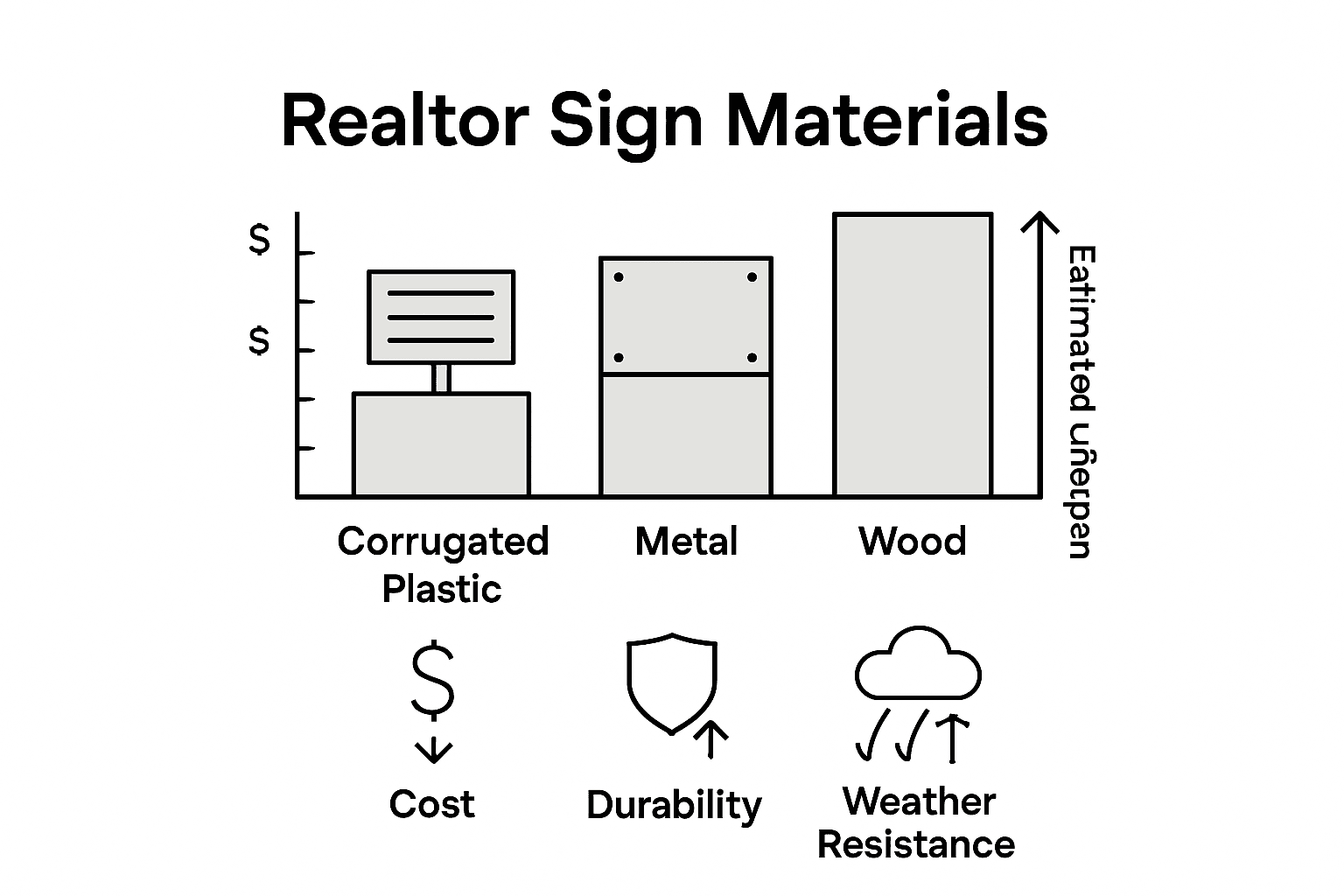
To help agents choose materials wisely, here is an overview of popular sign materials with their pros, cons, and typical lifespan:
| Material | Key Strength | Drawback | Typical Lifespan |
|---|---|---|---|
| Corrugated Plastic | Lightweight, low cost | Less durable, fades fast | 6-12 months |
| Aluminum | Weather resistant | Higher cost | 3-7 years |
| PVC | Resistant to moisture | Can warp in heat | 2-4 years |
| Acrylic | Sleek appearance | Prone to cracks if struck | 1-3 years |
Common mistakes in realtor signage can prove costly beyond mere financial investment. Legal pitfalls in advertising and signage can result in significant reputation damage and potential regulatory penalties. Frequent errors include using outdated contact information, neglecting to remove sold property signs promptly, and failing to comply with local zoning regulations. Real estate professionals must also be cautious about sign placement, ensuring they do not violate neighborhood covenants or municipal ordinances.
Pro Tip: Budget Smart: Invest in high-quality, versatile sign materials that can be easily updated, and always maintain a small emergency fund for unexpected signage replacements or design modifications.
Key Cost and Mistake Prevention Strategies:
- Research local sign regulations
- Budget for multiple sign types
- Choose durable, adaptable materials
- Update contact information regularly
- Remove outdated signs promptly
- Verify sign placement guidelines
- Consider long-term design flexibility
Elevate Your Property Marketing with Custom Realtor Signage Solutions
Realtors often face the challenge of maximizing the impact of their signage while navigating complex legal requirements and striving for professional and eye-catching design. This article highlights the importance of high-contrast colors, clear typography, and durable materials in capturing buyer attention and establishing strong branding. At the heart of successful property marketing is signage that not only meets local regulations but also reinforces your professional identity and stands out in competitive markets.
CustomSignsToday.us specializes in delivering tailored realtor signage crafted to meet these exact needs. Whether you require yard signs, open house markers, or vehicle decals, our high-quality materials and expert design support ensure your signs are both compliant and captivating. Explore our range of customizable signage options designed to boost your property visibility and drive buyer interest by visiting our Uncategorized category.

Ready to unlock the true marketing power of your real estate signs The time to act is now. Visit CustomSignsToday.us to request a free quote and transform your property marketing strategy with professional custom signage solutions that deliver results.
Frequently Asked Questions
What is realtor signage and its purpose?
Realtor signage serves as a marketing tool that communicates essential property information and helps create first impressions for potential buyers. It goes beyond being a mere marker, acting as a visual representation of a real estate agent’s brand and the property being sold.
What are the common types of realtor signage?
The common types of realtor signage include yard signs, open house signs, directional signs, property listing signs, vehicle signage, window display signs, and construction signs. Each type serves a unique purpose, from identifying properties to promoting open house events.
What design elements should be included on realtor signs to maximize visibility?
Key design elements for effective realtor signage include using high-contrast color combinations, clean and readable sans-serif fonts, appropriate font sizing, and a clear hierarchy of information. These elements help ensure that the sign is easily readable from a distance.
What legal regulations should realtors consider when placing signage?
Realtors must navigate local zoning restrictions, sign size limitations, placement regulations, and content guidelines to ensure compliance. It’s important to verify regulations with local municipal offices and respect fair housing laws to avoid legal pitfalls.