Launching a new listing should feel exciting, not stressful over compliance concerns. Real estate agents across the United States know that outdoor signs are powerful tools, but overlooking even minor local regulations can quickly lead to penalties or forced removal. With every city, county, and neighborhood setting its own rules on placement and design, understanding local government signage rules is key to protecting your reputation and promoting your listings smoothly.
Table of Contents
- Step 1: Research Local Real Estate Sign Regulations
- Step 2: Choose Sign Materials That Meet Standards
- Step 3: Design Signs to Include Required Information
- Step 4: Install Signs Following Zoning and Placement Rules
- Step 5: Verify Compliance and Maintain Signage
Quick Summary
| Key Insight | Explanation |
|---|---|
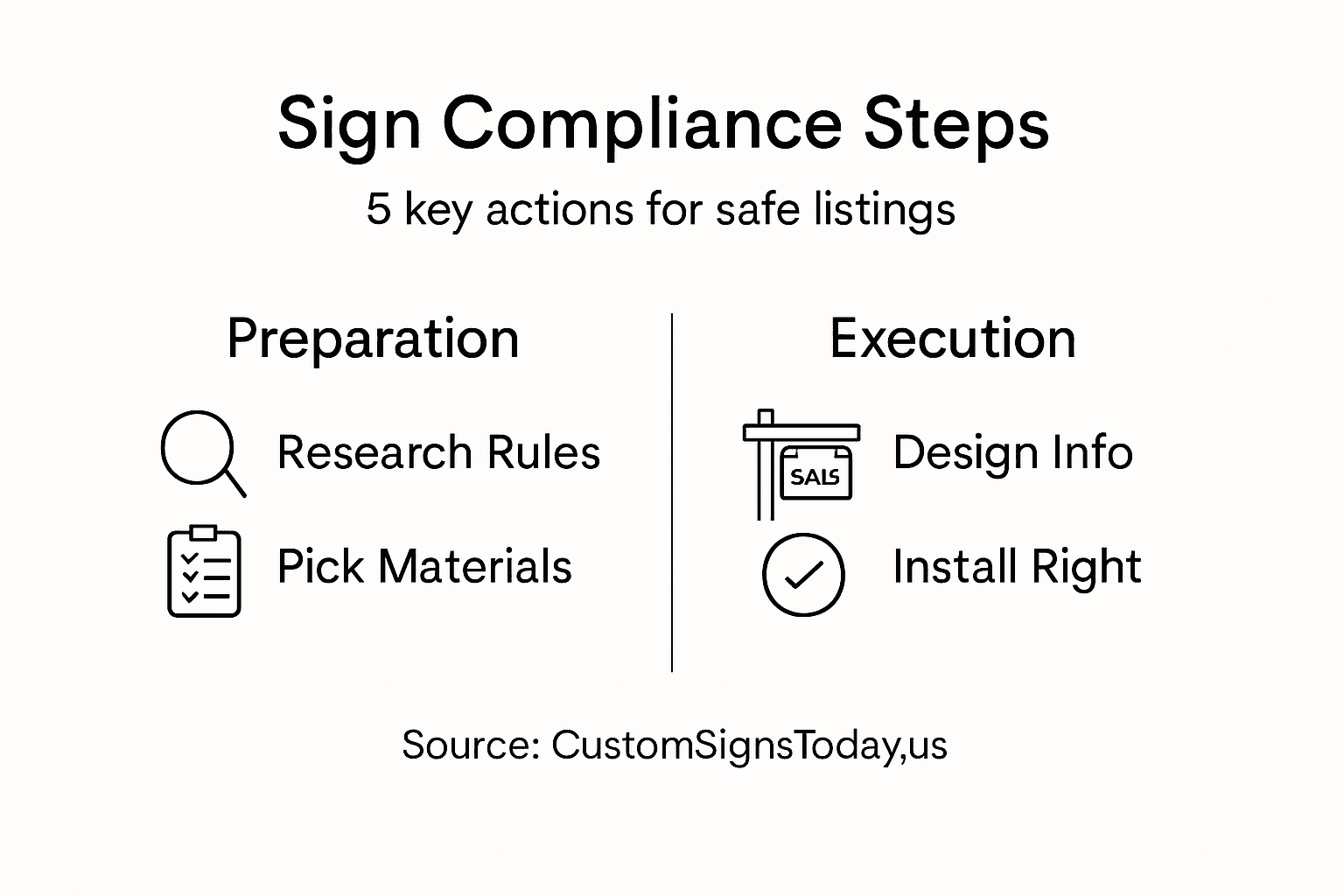
| 1. Research Local Sign Regulations | Understand and document local sign rules to avoid fines and ensure compliance during installations. |
| 2. Select Appropriate Sign Materials | Choose durable materials suited for your local climate and that meet regulatory standards. |
| 3. Clearly Design Required Information | Ensure essential details on signs are easily readable and meet local requirements for visibility. |
| 4. Follow Zoning and Placement Rules | Adhere strictly to local zoning laws for optimal sign visibility and legal compliance. |
| 5. Maintain Sign Compliance Regularly | Consistently inspect and update signs to maintain professional standards and comply with regulations. |
Step 1: Research Local Real Estate Sign Regulations
Successfully navigating real estate signage requirements begins with thorough local research. Understanding the specific regulations governing sign placement and content will help you avoid potential legal issues and costly mistakes.
Start by gathering information from multiple authoritative sources that outline your area’s sign regulations. Local government signage rules vary dramatically between municipalities, counties, and neighborhoods. Key research targets include:
- City or county zoning departments
- Local real estate boards
- Neighborhood association guidelines
- Municipal code enforcement offices
Each location may have distinct requirements covering:
- Maximum sign dimensions
- Permitted sign placement locations
- Duration signs can remain displayed
- Required informational content
- Restrictions on sign materials or designs
Consult these sources systematically to compile a comprehensive understanding of your specific area’s regulations. Document each requirement carefully to ensure full compliance.
Thorough research prevents fines and protects your professional reputation.
Pro Tip: Consider creating a digital checklist of local sign requirements to quickly reference before each listing placement.
Step 2: Choose Sign Materials That Meet Standards
Selecting the right materials for your real estate signs is crucial for durability, visibility, and compliance with local regulations. You’ll need to balance aesthetic appeal with practical performance that withstands various environmental conditions.
When evaluating sign materials, consider these key factors:
- Weather resistance
- Durability
- Local climate conditions
- Cost-effectiveness
- Compliance with local sign ordinances
Standard options for real estate signage include:
- Coroplast (corrugated plastic): Lightweight and affordable
- Aluminum: Durable and professional looking
- Vinyl: Flexible and cost-effective
- Dibond: Sturdy composite material with sleek finish
Exterior signage basics recommend choosing materials that can withstand local weather patterns. For instance, areas with high humidity or extreme temperatures require more robust materials that won’t warp, fade, or deteriorate quickly.
Here’s a quick comparison of common real estate sign materials:
| Material | Durability | Appearance | Best Use Case |
|---|---|---|---|
| Coroplast | Short-term, lightweight | Bright, basic look | Temporary listings, low cost |
| Aluminum | Long-lasting, rustproof | Sleek, professional | Year-round, upscale homes |
| Vinyl | Flexible, water-resistant | Smooth, customizable | Open houses, banners |
| Dibond | Impact-resistant | Modern, premium | High-end, long-term signage |
Choose materials that balance durability, appearance, and local regulatory requirements.
Pro Tip: Consider purchasing a small sample of your preferred sign material and conduct a weather resistance test before bulk ordering.
Step 3: Design Signs to Include Required Information
Creating a compliant real estate sign requires careful attention to both design aesthetics and mandatory informational elements. Your sign must communicate essential details clearly and professionally while meeting local regulatory requirements.
Real estate signage rules mandate specific information that must be prominently displayed. Essential elements typically include:
- Agent’s full name
- Brokerage name and contact information
- Professional license number
- Phone number or website
- Property status (For Sale, Open House, Pending)
Key design considerations for effective sign information:
- Use high-contrast color schemes
- Select sans-serif fonts for maximum readability
- Ensure text is large enough to read from street level
- Maintain clean, uncluttered layout
- Position critical information in most visible areas
When designing your sign, prioritize clarity and compliance. Choose a professional design that makes critical contact and property details immediately visible to potential buyers passing by.
Your sign is your first marketing touchpoint – make it count.
Pro Tip: Photograph your completed sign from a distance to verify that all text remains legible and professional.
Step 4: Install Signs Following Zoning and Placement Rules
Successfully installing real estate signs requires careful navigation of local zoning regulations and strategic placement to maximize visibility while avoiding potential legal complications. Understanding and respecting placement guidelines is crucial for effective marketing and maintaining professional standards.
Real estate sign placement demands meticulous attention to specific location requirements. Before installation, confirm these critical placement considerations:
- Distance from property boundaries
- Setback requirements from public rights of way
- Height restrictions for street-facing signs
- Permissions from homeowners associations
- Neighborhood-specific signage regulations
Key installation steps include:
- Measure precise distance from property lines
- Check underground utility locations
- Select ground anchoring method appropriate to terrain
- Ensure sign is vertically straight
- Verify sign visibility from multiple angles
Professional sign installation requires more than simply pushing a stake into the ground. You must understand local ordinances, respect property boundaries, and maintain a clean, professional appearance.
Precision in sign placement prevents potential legal and professional complications.
Pro Tip: Contact local municipal offices to obtain an official zoning map before installing any real estate signage.
Step 5: Verify Compliance and Maintain Signage
Continual verification of real estate sign compliance is crucial for maintaining your professional reputation and avoiding potential legal issues. Your signs represent your brand and must consistently meet local regulations and professional standards.
Real estate signage strategies recommend implementing a systematic maintenance approach. Critical verification steps include:
- Inspect signs for physical damage
- Check sign legibility and color integrity
- Verify current property status information
- Confirm ongoing municipal permit compliance
- Review homeowners association requirements
Key maintenance actions to protect your signage investment:
- Schedule monthly sign condition assessments
- Replace signs showing significant wear
- Update contact information promptly
- Remove signs immediately after property sale
- Store signs properly during off-seasons
Professional real estate agents understand that sign maintenance is an ongoing process requiring consistent attention and proactive management.
Below is a summary of ongoing real estate sign maintenance responsibilities:
| Task | Frequency | Importance |
|---|---|---|
| Condition inspection | Monthly | Prevent fines and complaints |
| Information updates | As needed | Accurate contact for buyers |
| Sign removal after sale | Immediately | Avoids code violations |
| Proper off-season storage | Each winter | Extends sign lifespan |
Consistent sign maintenance reflects your commitment to professional excellence.
Pro Tip: Create a digital tracking system to log sign installations, inspections, and replacement dates to streamline your compliance efforts.
Ensure Your Real Estate Signs Are Compliant and Impactful
Navigating local regulations and maintaining professional real estate signage can feel overwhelming. This guide highlights key challenges like choosing the right materials, including required information, and installing signs within zoning rules. Avoid costly fines and protect your reputation by trusting custom signs designed for durability and compliance.
At Custom Signs Today, we specialize in high-quality, weather-resistant real estate signs crafted to meet your specific local requirements. Whether you need professional aluminum signs or eye-catching vinyl banners, our solutions help you stay compliant and visible. Explore our Uncategorized category to discover versatile signage options that align with your unique listing needs.

Get started now with signs that elevate your brand and guarantee peace of mind. Visit customsignstoday.us to request your free quote today. Don’t wait to create signage that helps your listings stand out while meeting every compliance detail.
Frequently Asked Questions
What are the key local regulations for real estate signs?
Understanding local regulations is essential for real estate signs, as requirements can vary by municipality. Gather information from local zoning departments, neighborhood associations, and municipal codes to ensure compliance.
How do I choose the right materials for my real estate signs?
Select materials that are durable, weather-resistant, and compliant with local regulations. For instance, options like Aluminum provide a professional look and long-lasting durability, while Coroplast is a cost-effective choice for temporary signage.
What essential information must be displayed on my real estate sign?
Your real estate sign must prominently display your full name, brokerage details, license number, contact information, and property status. Ensure that all text is clear and legible from street level to effectively inform potential buyers.
How can I ensure proper placement of my real estate signs?
To ensure proper placement, verify local zoning laws that dictate sign location, height restrictions, and setback requirements from property lines. Measure distances accurately and obtain any necessary permissions before installation.
How often should I check and maintain my real estate signs?
Regularly inspect your signs at least once a month for physical damage and updating contact information as needed. Consistent maintenance helps you avoid fines and keeps your branding professional and effective.
What should I do after a property is sold regarding my signs?
Remove your sign immediately after a property sale to avoid potential code violations and maintain compliance with local regulations. Prompt removal reflects professionalism and respect for neighborhood standards.