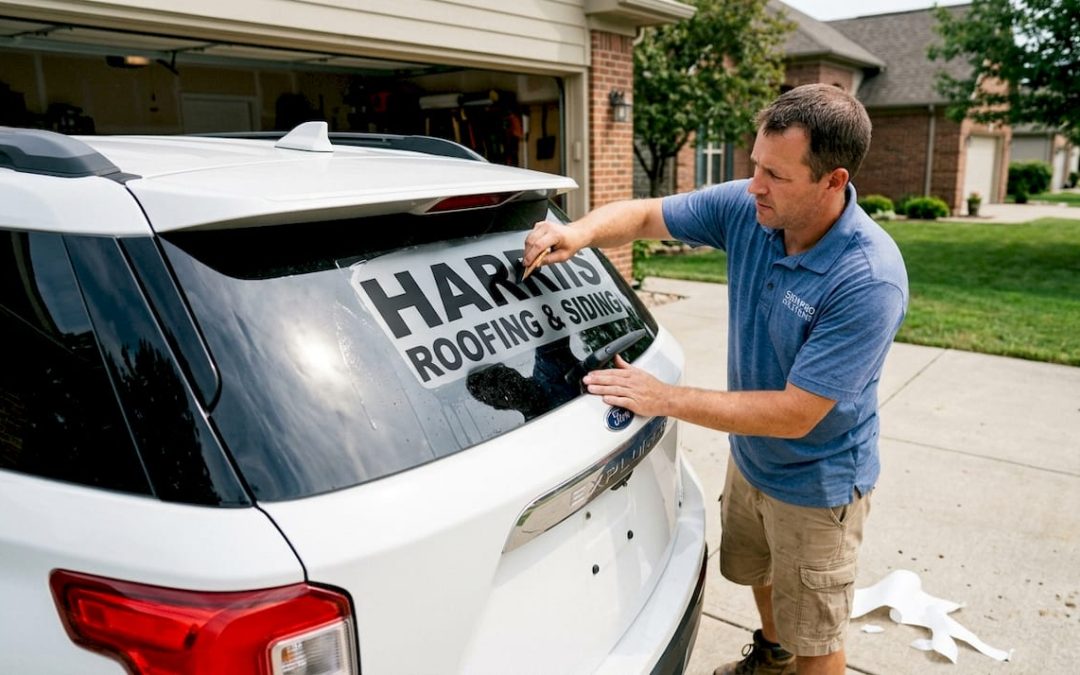
Not all vinyl is created equal, and choosing the wrong type for your car window decals can cost you far more than you expect. A decal that fades after one summer, peels at the edges, or cracks under pressure sends the wrong message about your business. Your vehicle is a moving billboard, and every mile it travels is either building your brand or quietly undermining it. This article walks you through the exact vinyl types that work, how they compare, and the practical steps to get decals that look sharp and last for years.
Table of Contents
- Why your vinyl choice matters for car window decals
- Vinyl types explained: Calendered vs. cast
- Top recommended vinyls: Features, brands, and specs
- Application tips: How to get lasting results
- Expert nuances and edge cases: Placement, finishes, regulations
- Bring your brand to life with professional vinyl decals
- Frequently asked questions
Key Takeaways
| Point | Details |
|---|---|
| Choose vinyl by surface | Use calendered vinyl for flat windows and cast vinyl for curves or complex shapes. |
| Prioritize durability | Premium cast vinyl can last up to 8 years, while lower-grade vinyl needs more frequent replacement. |
| Protect your investment | Consider optional laminate coatings to boost resistance against UV and abrasion. |
| Follow expert installation | Clean glass and apply in the recommended temperature range for maximum adhesion. |
Why your vinyl choice matters for car window decals
Your car window decal faces a brutal daily environment: UV rays, rain, car washes, road salt, and temperature swings. A vinyl that cannot handle these conditions will fade, crack, or peel within months. That means reprinting, reinstalling, and spending money you did not plan to spend.
The business impact goes beyond cost. A faded or bubbling decal on your company vehicle tells potential customers that you cut corners. Professional, lasting custom vinyl decals signal that your brand is reliable and worth trusting. First impressions happen fast, and your vehicle is making them constantly.
Here is what separates good vinyl from bad vinyl for car windows:
- UV resistance: Premium vinyl holds color under direct sun for years, not months.
- Flexibility: Quality vinyl conforms to glass curves without lifting at the edges.
- Adhesion strength: The right adhesive grips glass firmly through heat, cold, and washing.
- Dimensional stability: Poor vinyl shrinks over time, pulling edges away from the surface.
Oracal 651 withstands harsh weather without fading or peeling, making it a trusted benchmark for vehicle applications. When you invest in quality vinyl signs and decals, you are protecting your branding investment for the long run.
“Your vehicle decal is working 24 hours a day. Give it materials that can keep up.”
Now that you know why this choice is so important, let’s break down the types of vinyl you will actually consider.
Vinyl types explained: Calendered vs. cast
There are two main categories of vinyl used for car window decals, and understanding the difference will save you money and frustration. Each has a specific use case, and picking the wrong one for your application is one of the most common mistakes business owners make.
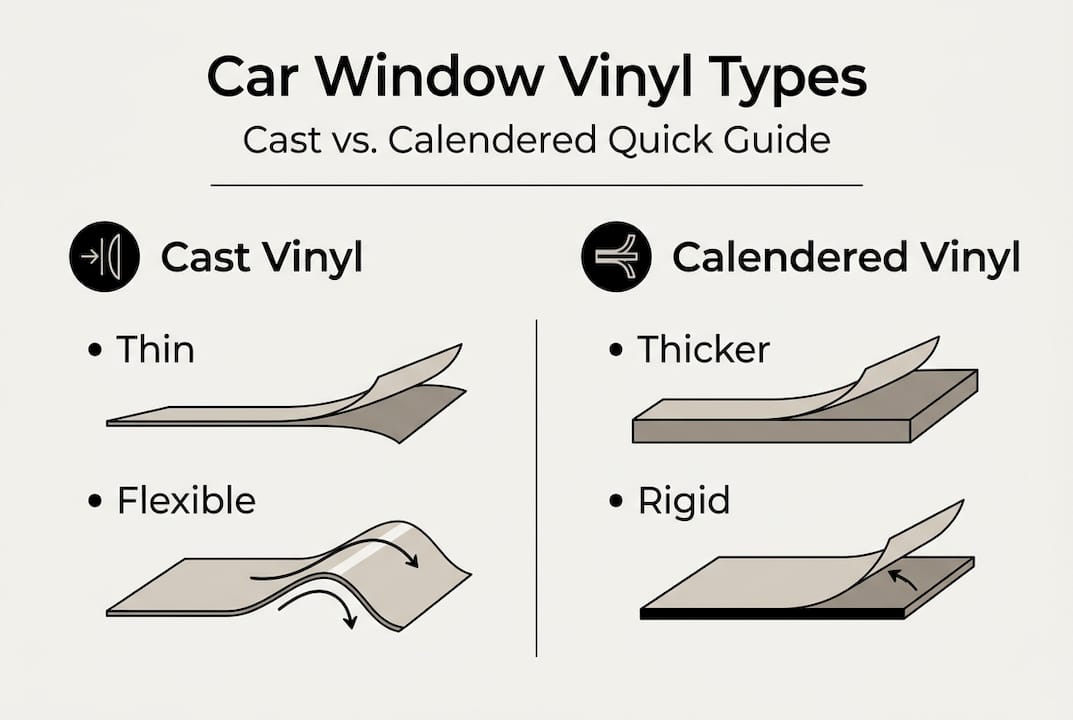
Calendered vinyl is made by pressing PVC through a series of rollers to create a flat sheet. It is thicker, more rigid, and more affordable. Oracal 651 is the most popular example. It works well on flat or slightly curved glass surfaces and typically lasts 3 to 6 years outdoors.
Cast vinyl is made by pouring liquid PVC onto a casting sheet and allowing it to cure. This process creates a thinner, more flexible film that conforms to complex curves, rivets, and recessed glass. Calendered vinyl for flat windows is the economical choice for short to medium term use, while cast vinyl like Oracal 751 and 3M series products are the premium option for curves and long-term durability.
| Feature | Calendered (Oracal 651) | Cast (Oracal 751 / 3M) |
|---|---|---|
| Thickness | 2.5 mil | 2 mil |
| Flexibility | Moderate | High |
| Lifespan | 3 to 6 years | Up to 8 years |
| Best surface | Flat glass | Curved or recessed glass |
| Cost | Lower | Higher |
| Shrinkage risk | Higher | Minimal |
| Color options | Gloss and matte | Gloss and matte |
Oracal 751 High-Performance Cast PVC at 2 mil thick is specifically designed for curved windows or applications requiring a longer service life. The flexibility difference between these two types is significant when you are wrapping around door glass or rear window curves.
Here is a quick guide to finish options:
- Gloss finish: Maximum color vibrancy and visibility, ideal for bold logos and bright colors.
- Matte finish: Reduced glare, modern look, works well in high-sun environments.
- Satin finish: A middle ground between gloss and matte, popular for fleet vehicles.
Pro Tip: If your vehicles have any curved rear glass or complex window shapes, always choose cast vinyl. The extra cost per decal is far less than the cost of a failed installation.
Knowing there are choices, here is a side-by-side look at what the types of decal signs available can do for your business vehicles.
Top recommended vinyls: Features, brands, and specs
With the main types in mind, let’s focus on the best-in-class product options business owners trust for car window decals. These are the products that professionals use on real fleets, not craft store alternatives.
Oracal 751 (cast vinyl) is the go-to for demanding applications. Oracal 751 offers up to 8 years of vertical durability with premium conformability, making it the top choice for company vehicles that face daily sun exposure and frequent washing. It handles tight curves without lifting and maintains color integrity for years.
Oracal 651 (calendered vinyl) is the smart budget choice for flat glass. At 2.5 mil thick with a 6-year outdoor rating, it delivers strong performance on side windows and rear glass that does not have significant curvature. It is the most widely used vinyl for short to medium term business decals.
3M cast vinyl series carries an excellent fleet reputation and performs comparably to Oracal 751 in lifespan and flexibility. Many large fleet operators specify 3M products for consistency across hundreds of vehicles.
| Product | Type | Thickness | Outdoor Life | Best For |
|---|---|---|---|---|
| Oracal 651 | Calendered | 2.5 mil | 6 years | Flat windows, budget projects |
| Oracal 751 | Cast | 2 mil | Up to 8 years | Curved glass, long-term use |
| 3M Series | Cast | 2 mil | Up to 8 years | Fleet vehicles, complex surfaces |
| Generic craft vinyl | N/A | Varies | Months | Not recommended for vehicles |
Avoid craft vinyl entirely for vehicle applications. These products are designed for indoor crafts and fade within months when exposed to sun and weather. The cost savings are not worth the rapid deterioration.
For vehicles operating in coastal areas or regions with heavy road salt, consider pairing your vinyl with an overlaminate. This clear protective film adds a physical barrier against abrasion and UV exposure. Ready to apply vinyl products with pre-applied laminates are also available for faster installation.
Pro Tip: Always ask your vinyl supplier for the specific outdoor durability rating before ordering. A product labeled “outdoor vinyl” could mean anything from 1 year to 8 years depending on the manufacturer.
Application tips: How to get lasting results
After choosing the right vinyl, here is how to make sure your decal will stay put and look sharp through every season.
- Clean the glass thoroughly. Use isopropyl alcohol (70% or higher) to remove all oils, wax, and residue. Even fingerprints can cause adhesion failure.
- Check the temperature. Apply vinyl between 50 and 85 degrees Fahrenheit for best adhesion. Cold glass causes the adhesive to stiffen, and hot glass can cause bubbling.
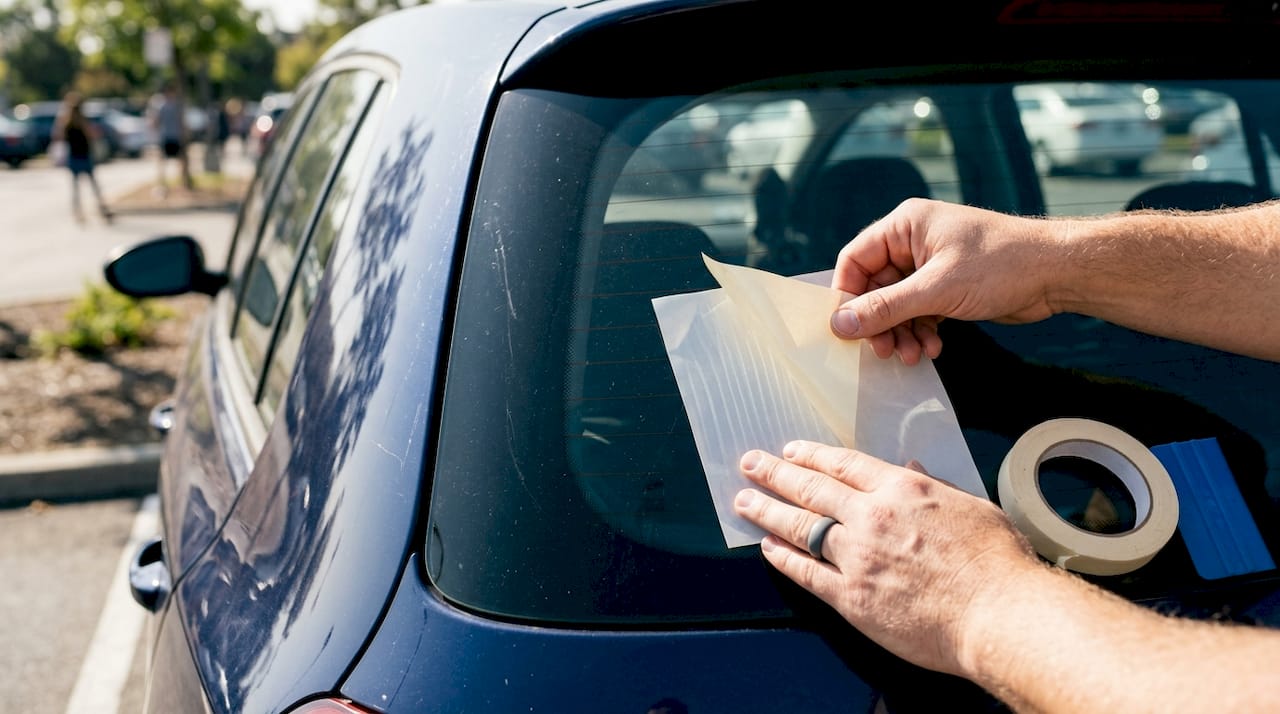
- Use the squeegee method. Start from the center and work outward in overlapping strokes to push air bubbles toward the edges.
- Allow curing time. Give the adhesive 24 to 48 hours to fully bond before the vehicle goes through a car wash or heavy rain.
- Trim edges carefully. Use a sharp blade to trim any excess vinyl close to the glass edge, reducing the chance of lifting over time.
Overlaminates are optional but worth considering. Adding a clear laminate film can extend decal life by 20 to 50%, particularly in regions with intense sun or road salt exposure. This is a low-cost upgrade that pays off over the life of the decal.
“A properly applied decal on clean glass with the right vinyl will outlast most people’s expectations. A rushed install on a dirty surface will fail in weeks.”
If you are new to vinyl installation, practice on a flat interior surface first using removable vinyl. This builds the muscle memory for squeegee technique before you commit to a permanent application on your vehicle. You can also explore wall and floor vinyl graphics as a lower-stakes way to build your installation skills.
For calendered vinyl, keep your key visuals and text away from the curved edges of the glass. Calendered vinyl has higher shrinkage potential, and placing critical design elements near curves increases the risk of distortion over time.
Expert nuances and edge cases: Placement, finishes, regulations
Beyond basic installation, consider these next-level factors for flawless, regulation-friendly decals.
Window placement rules vary by state and sometimes by vehicle type. Rear and side windows allow bolder coverage than front windows, but you must never obstruct the driver’s sightlines per traffic regulations. As a general rule, keep the front windshield and driver-side front window free of any decal material.
Here is a placement checklist for business vehicles:
- Rear window: Ideal for large logos, contact info, and bold graphics.
- Rear side windows: Great for secondary branding, taglines, or service lists.
- Front side windows (passenger side): Acceptable for smaller decals in most states.
- Front windshield: Avoid entirely for branding purposes.
- Driver-side front window: Keep clear for safety and legal compliance.
Finish selection also affects how your brand reads on the road. Gloss vinyl pops in low-light conditions and at distance, making it the stronger choice for logos and contact numbers. Matte vinyl reduces glare in direct sunlight, which can actually improve readability in certain environments.
“Match your vinyl finish to where your vehicles spend most of their time. Gloss for urban routes, matte for sun-heavy regions.”
Edge shrinkage is a real concern with calendered vinyl on complex glass shapes. If your vehicle has rear glass with significant curvature, cast vinyl is not just a preference but a practical necessity. The dimensional stability of cast vinyl prevents the slow edge lifting that eventually ruins a calendered decal on curved surfaces.
Always double-check your local and state regulations before finalizing your decal design. Some municipalities have specific rules about commercial vehicle markings, and a quick review can save you from fines or required removal.
Bring your brand to life with professional vinyl decals
You now know exactly which vinyl performs best, how to apply it correctly, and how to avoid the placement and regulatory pitfalls that trip up most business owners. The next step is getting your design produced with the right materials from the start.

At Custom Signs Today, we handle the material selection, printing, and production so you get decals that are matched to your specific vehicle and application. Our custom vinyl decals are produced with premium cast and calendered vinyl options, and our team can guide you toward the right product for your fleet size, climate, and budget. We also offer full vehicle lettering services for businesses that want a consistent, professional look across every company vehicle. Request a free quote today and get your brand moving.
Frequently asked questions
Can I use regular craft vinyl for car window decals?
No. Craft vinyl fades in months when exposed to outdoor conditions, making it unsuitable for vehicle applications. Use cast or premium calendered vinyl rated for exterior use.
How long does a quality window decal last outdoors?
Premium cast vinyl lasts up to 8 years on vertical surfaces, while calendered vinyl typically delivers 3 to 6 years of outdoor performance depending on climate and sun exposure.
Do I need to laminate my car window decal?
Lamination is optional, but overlaminates extend decal life by 20 to 50%, making them a smart investment for vehicles in high-sun or road salt environments.
Is cast vinyl worth the higher price for business fleets?
Yes. Cast vinyl for curves and rivets stays stable on complex glass shapes and lasts significantly longer than calendered alternatives, reducing replacement frequency across a full fleet.