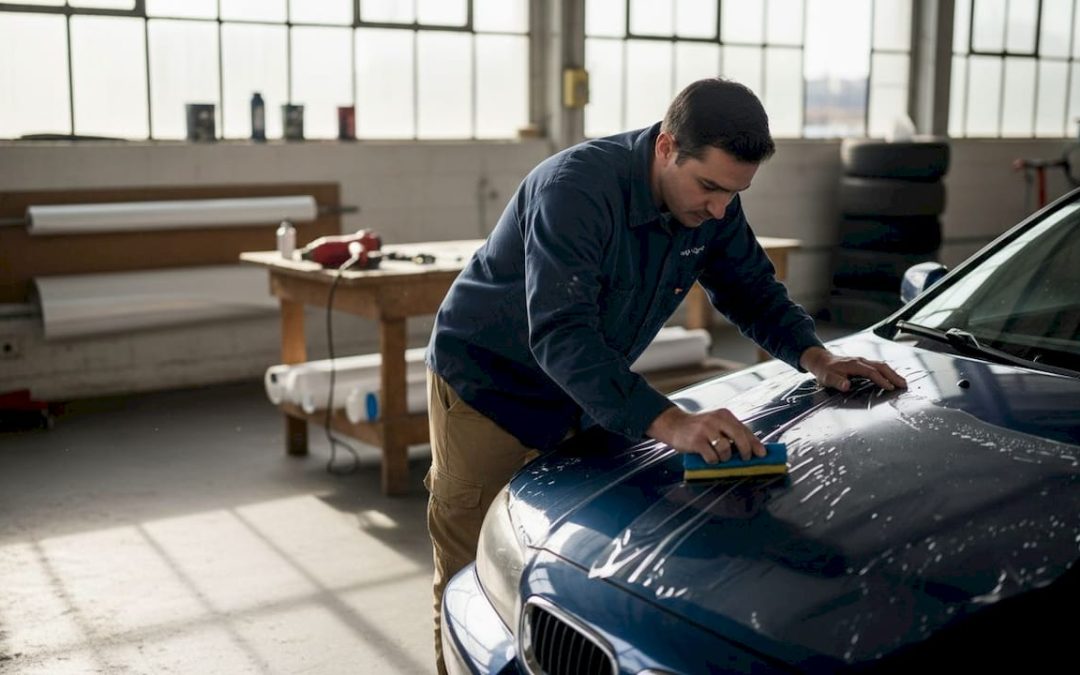
Most people think car vinyl is just for flashy color changes or racing stripes on sports cars. That assumption misses the bigger picture entirely. Vinyl is one of the most versatile materials in automotive customization, covering everything from paint protection and business branding to window graphics and personalized decals. Whether you’re a DIY enthusiast looking to refresh your ride or a fleet owner wanting consistent branding, vinyl offers a practical, cost-effective solution. This guide walks you through what automotive vinyl is, the types available, honest pros and cons, creative customization ideas, and how to keep it looking great for years.
Table of Contents
- What is vinyl in cars?
- Types of automotive vinyl and their uses
- Pros and cons: Why choose vinyl for your car?
- Customization ideas: How to use vinyl for your vehicle
- Maintenance and care for car vinyl
- Why car vinyl is smarter than you think: lessons from real-world use
- Unlock your vehicle’s potential with professional vinyl customization
- Frequently asked questions
Key Takeaways
| Point | Details |
|---|---|
| Vinyl versatility | Vinyl can be used for wraps, decals, and protection, offering flexibility and style for any vehicle. |
| Right vinyl matters | Choosing the correct type (cast, calendared) is essential to fit your project’s needs and ensure long-lasting results. |
| Care extends life | Regular maintenance protects your car’s vinyl and keeps it looking new for years. |
| Professional help offers best results | Complex or large-area wraps are best left to experts for a flawless finish and to avoid costly mistakes. |
What is vinyl in cars?
Automotive vinyl is a flexible, thin film applied directly to a vehicle’s surface. It’s not paint, and it’s not a permanent modification. Think of it as a second skin for your car that you can change, update, or remove without touching the factory finish underneath.
At its core, car vinyl characteristics confirm that vinyl is a synthetic plastic polymer, most commonly polyvinyl chloride (PVC), engineered for flexibility and durability. Manufacturers add adhesives, UV inhibitors, and protective coatings to make it suitable for outdoor use on vehicles. The result is a material that can stretch around curves, resist weather, and hold color for years.
Vinyl shows up in several forms on vehicles:
- Full wraps: Cover the entire exterior surface, changing the car’s color or finish
- Partial wraps: Cover specific panels or sections for a mixed look
- Decals and lettering: Smaller graphics for branding, personalization, or information
- Paint protection film (PPF): A clear vinyl layer that shields paint from chips and scratches
- Window graphics: Perforated or solid vinyl applied to glass surfaces
One of vinyl’s biggest advantages is its UV resistance. Prolonged sun exposure fades paint, but quality vinyl films include UV blockers that slow this process significantly. You can also explore vinyl signs overview to see how similar materials perform across different applications beyond vehicles.
Pro Tip: High-quality vinyl doesn’t just change how your car looks. It actively protects the factory paint beneath it, which can preserve resale value over time.
Types of automotive vinyl and their uses
Not all vinyl is created equal. Choosing the wrong type for your project is one of the most common and costly mistakes DIYers make. Automotive vinyl types break down into distinct categories, each suited for specific applications.
Here’s a quick comparison to guide your decision:
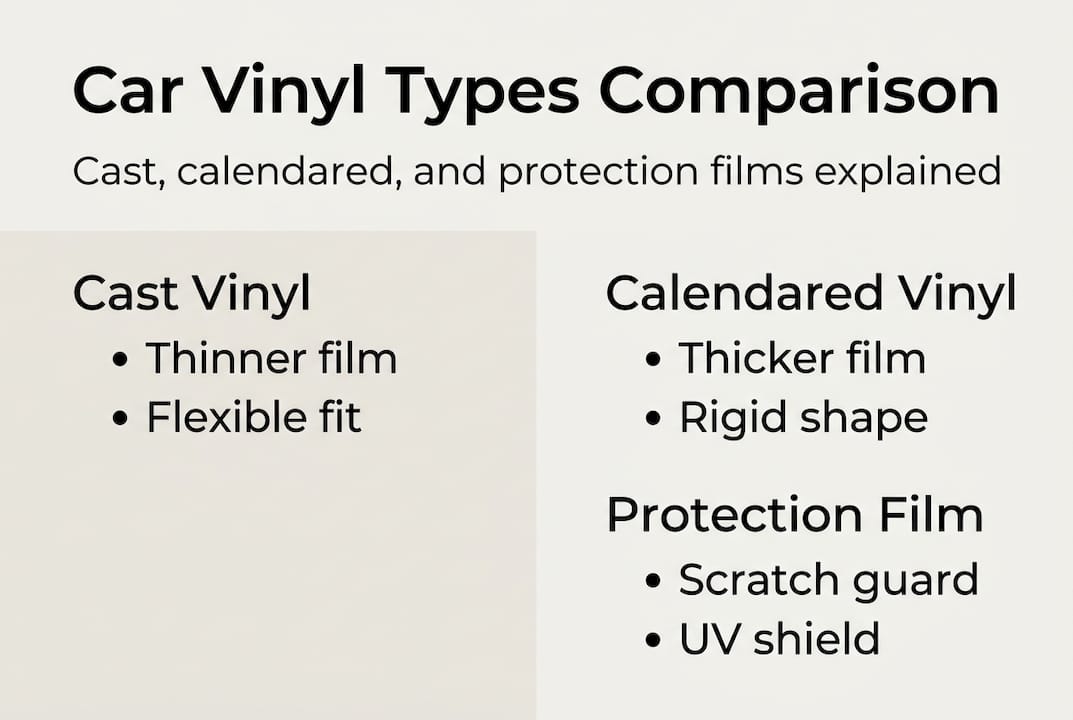
| Feature | Cast vinyl | Calendared vinyl | Protection film |
|---|---|---|---|
| Thickness | Thin (2 mil) | Thicker (3-4 mil) | Thick (6-8 mil) |
| Flexibility | High | Moderate | High |
| Best for | Complex curves | Flat panels | Paint protection |
| Lifespan | 7-10 years | 3-5 years | 5-10 years |
| Cost | Higher | Lower | Highest |
Cast vinyl is made by pouring liquid PVC onto a casting sheet, which gives it a thinner, more conformable structure. It hugs curves and contours without lifting or wrinkling, making it the go-to for full vehicle wraps.
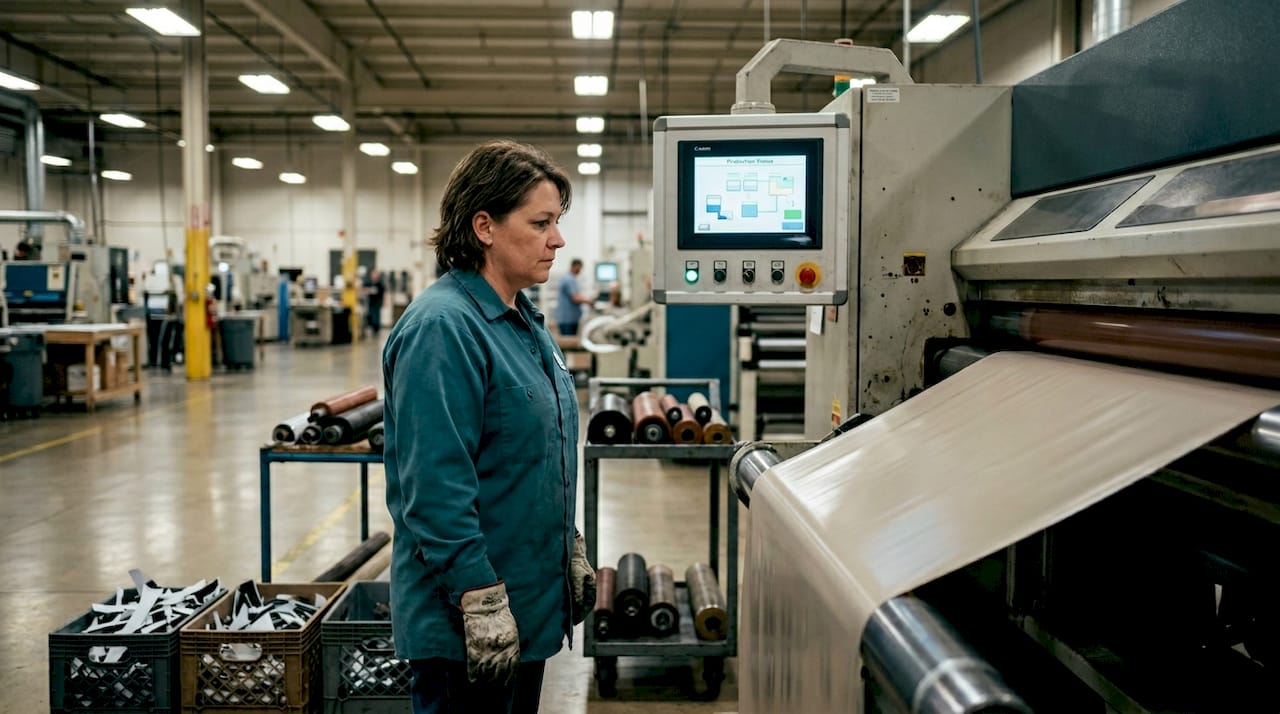
Calendared vinyl is made by pressing PVC through rollers, resulting in a thicker, stiffer film. It works well on flat or gently curved surfaces like door panels, hoods, or signage. It costs less than cast vinyl but doesn’t perform as well on complex shapes.
Paint protection film is a clear, self-healing vinyl designed specifically to absorb impacts and prevent scratches. It’s invisible when applied correctly and is popular on high-traffic areas like bumpers, mirrors, and door edges.
How to pick the right vinyl for your project:
- Identify the surface area and complexity of curves involved
- Determine your budget and how long you want the vinyl to last
- Decide whether you need color change, branding, or protection
- Match your choice to the correct vinyl category from the table above
- Source from reputable suppliers and check for outdoor-rated adhesives
For inspiration on custom vinyl decals or broader vinyl graphics options, seeing finished examples helps you visualize what each type can achieve.
Pro Tip: Cast vinyl is worth the extra cost if your vehicle has complex body lines. Calendared vinyl on a curved surface will lift at the edges within months.
Pros and cons: Why choose vinyl for your car?
Vinyl isn’t the right answer for every situation, but it beats traditional paint in more scenarios than most people realize.
Advantages of car vinyl:
- Cost: A full professional wrap typically costs a fraction of a high-quality custom paint job
- Reversibility: Vinyl wraps are reversible and far easier to update than custom paint, making them ideal for leased vehicles or frequent rebrands
- Paint protection: Vinyl shields OEM (original equipment manufacturer) paint from UV rays, minor abrasions, and environmental contaminants
- Style flexibility: Matte, gloss, satin, chrome, color-shift finishes are all available without committing permanently
- Speed: A wrap can be completed in days, not weeks
Disadvantages of car vinyl:
- Vinyl can scratch or scuff more easily than hard-baked automotive paint
- Poor installation leads to bubbles, lifting edges, and premature failure
- Extreme heat or cold can affect adhesion if low-quality materials are used
- Not ideal for vehicles with significant rust, dents, or paint damage underneath
Here’s a direct comparison:
| Factor | Vinyl wrap | Custom paint |
|---|---|---|
| Average cost | Lower | Higher |
| Reversible | Yes | No |
| Finish options | Extensive | Limited |
| Lifespan | 5-7 years | 10+ years |
| Repair ease | Easy panel swap | Difficult color match |
High-quality wraps last 5 to 7 years with proper care, which makes them a serious long-term investment, not just a temporary fix. For ready to apply vinyl products or information on vinyl sign longevity, you’ll find options that match both budget and durability goals.
Customization ideas: How to use vinyl for your vehicle
Vinyl’s real power shows up in how many ways you can use it. It’s not just about changing your car’s color. The creative range is genuinely wide.
“Vinyl lets you express your style or advertise your business at a fraction of the cost.”
Here are five popular customization ideas worth considering:
- Full color wrap: Transform your car’s entire look with a new color or finish, like matte black or brushed metal, without permanent commitment
- Racing stripes and accents: Add bold graphic elements to specific panels for a sporty, custom appearance
- Perforated window vinyl: Apply graphics to rear windows that look solid from outside but allow visibility from inside
- Business vehicle branding: Turn your work truck or van into a moving billboard with logos, contact info, and service descriptions
- Custom decals and lettering: Personalize with names, numbers, quotes, or artwork on any panel
Car customization ideas confirm that vinyl allows limitless customization, from personal expression to full commercial branding campaigns.
For DIY projects, stick to flat surfaces and pre-cut decals. Full wraps on curved body panels require heat guns, squeegees, and significant practice to avoid air pockets and misalignment. If you’re exploring broader design inspiration, custom vinyl wallpapers and vinyl banner ideas show how the same material principles apply across different creative projects.
Maintenance and care for car vinyl
Vinyl rewards owners who take care of it. Neglect it, and you’ll see fading, peeling, and lifting well before the material’s natural lifespan.
Proper care extends vinyl wrap life and keeps it looking sharp. Here’s a practical maintenance routine to follow:
- Wash by hand using a mild automotive soap and a soft microfiber cloth. Avoid abrasive sponges.
- Rinse thoroughly with low-pressure water to remove soap residue without forcing water under edges.
- Dry immediately with a clean microfiber towel to prevent water spots.
- Apply a vinyl-safe sealant every few months to add UV protection and maintain sheen.
- Inspect edges regularly for lifting, especially around mirrors, door handles, and bumpers.
- Address contamination quickly by removing bird droppings, tree sap, or fuel spills as soon as possible. These can stain or degrade vinyl if left to sit.
If you notice peeling at the edges, don’t ignore it. Gently press the edge back down with a heat gun on low setting. If the adhesive has failed completely, that section needs professional attention. Fading is usually a sign of UV exposure over time or low-quality vinyl from the start. Investing in durable signage info and quality materials from the beginning saves you from these headaches.
Pro Tip: Avoid automated car washes entirely. The stiff brushes and high-pressure jets are the fastest way to lift edges and dull your wrap’s finish.
Why car vinyl is smarter than you think: lessons from real-world use
Here’s something most guides won’t tell you: vinyl isn’t just a cosmetic shortcut. In many real-world situations, it’s actually the smarter long-term choice.
Consider fleet vehicles. A business that repaints its vans every time a logo changes spends enormous amounts on labor and downtime. Vinyl wraps can be replaced in a day, and the factory paint underneath stays pristine. When it’s time to sell those vehicles, the original paint is untouched, which supports resale value in a way a repaint never could.
The contrarian view worth holding: a professional wrap often protects resale value better than a custom paint job. Paint modifications are permanent and can actually reduce a car’s value if the buyer doesn’t share your taste. Vinyl removal leaves the original finish intact.
There’s also the style change factor. Enthusiasts who want to update their car’s look every few years aren’t being impulsive. They’re using vinyl exactly as it was designed to be used. The material was engineered for change. Most experts focus on vinyl as a one-time transformation, but its real strength is that it supports ongoing personalization without risk or regret.
Unlock your vehicle’s potential with professional vinyl customization
If this guide has you thinking seriously about your next vinyl project, working with experienced professionals makes a measurable difference in the final result.
At Custom Signs Today, we specialize in high-quality vehicle vinyl wraps and custom vinyl decals designed to perform and impress. Whether you’re branding a fleet, refreshing a personal vehicle, or exploring face change signs for commercial use, our team brings precision and expertise to every project. We use premium materials rated for outdoor durability and offer consultations to help you choose the right solution for your goals. Request a free quote today and see what professional vinyl customization can do for your vehicle.
Frequently asked questions
Is vinyl wrap safe for my car’s paint?
Yes, quality vinyl wraps protect paint and are removable without damage when installed correctly. Proper installation and removal leave OEM paint completely unharmed.
How long does car vinyl last?
High-quality car vinyl typically lasts 5 to 7 years with proper care and maintenance. Premium vinyl endurance ranges from five to seven years depending on climate and care habits.
Can I install vinyl on my car myself?
DIY installation works well for decals or small flat areas, but full wraps require professional expertise for the best results. Complex wraps are best left to professionals due to the risk of bubbles or misalignment on curved panels.
What is the difference between cast and calendared vinyl?
Cast vinyl is thinner and more flexible, making it ideal for complex curves, while calendared vinyl is thicker and better suited for flat surfaces. Cast vinyl handles complex shapes best, while calendared works well on simple flat panels.