TL;DR:
- Lobby signs set the first impression by communicating professionalism, accessibility, or confusion through their design. The main types include reception signs, dimensional letters, illuminated signs, ADA-compliant signs, and directional wayfinding signs, each serving unique functions. Proper material selection, adherence to ADA standards, and thoughtful placement are essential to maximize signage impact and avoid costly post-installation corrections.
Lobby signs are the first branded statement any visitor encounters, and the type you choose determines whether your space communicates professionalism, accessibility, or confusion. The term “lobby signage” covers a broad category of interior commercial signs, including reception signs, dimensional letter signs, illuminated signs, ADA-compliant signs, and directional wayfinding signs. Each type serves a distinct purpose and requires specific materials, finishes, and placement strategies. Business owners and event planners who understand these distinctions make smarter investments and avoid costly redesigns.
What are the main types of lobby signs?
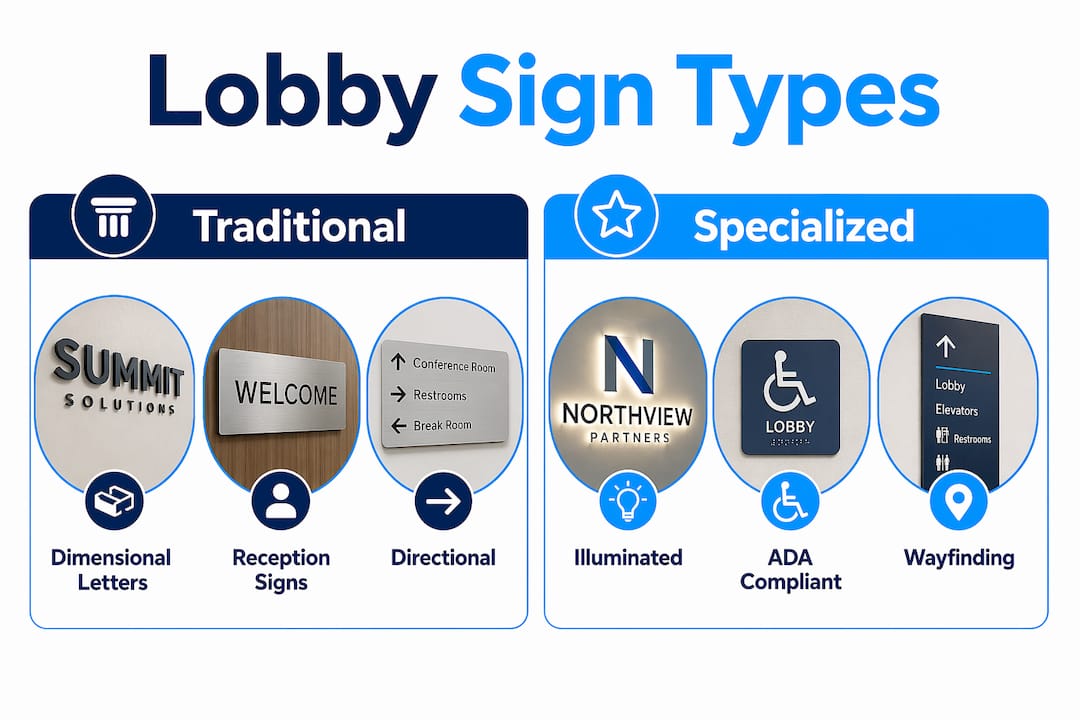
The five core types of lobby signs each solve a different communication problem in your reception or public space.
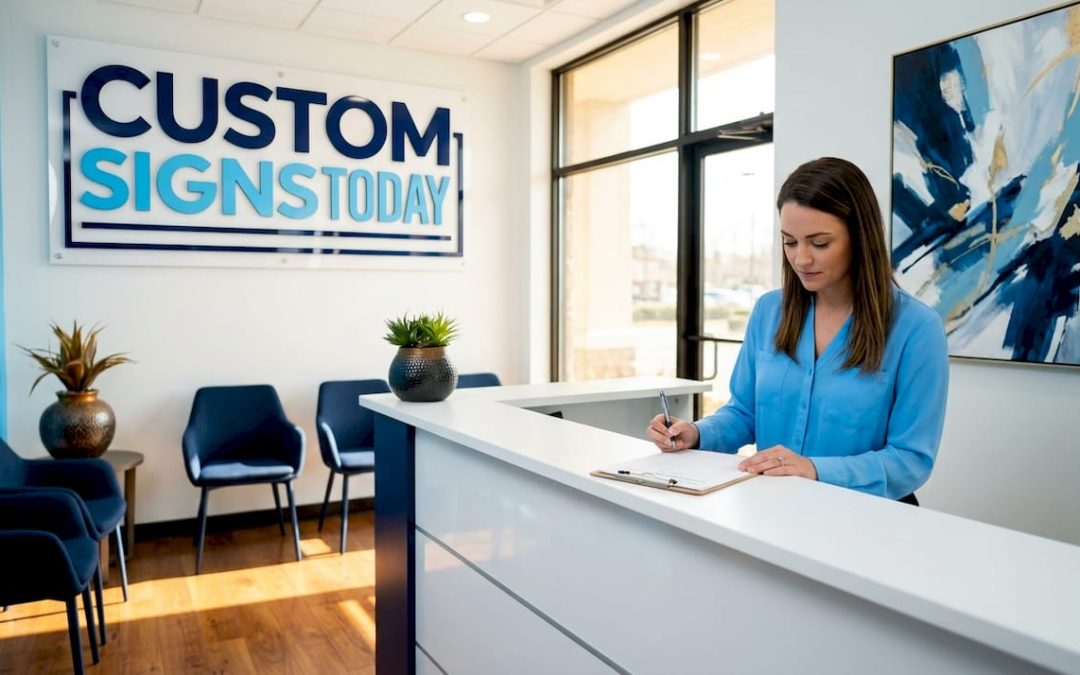
Reception and logo signs are the focal point of any lobby. Mounted directly behind the front desk or on the first wall a visitor sees, these signs carry your company name, logo, and brand colors. They set the tone for the entire visitor experience before a single word is spoken.
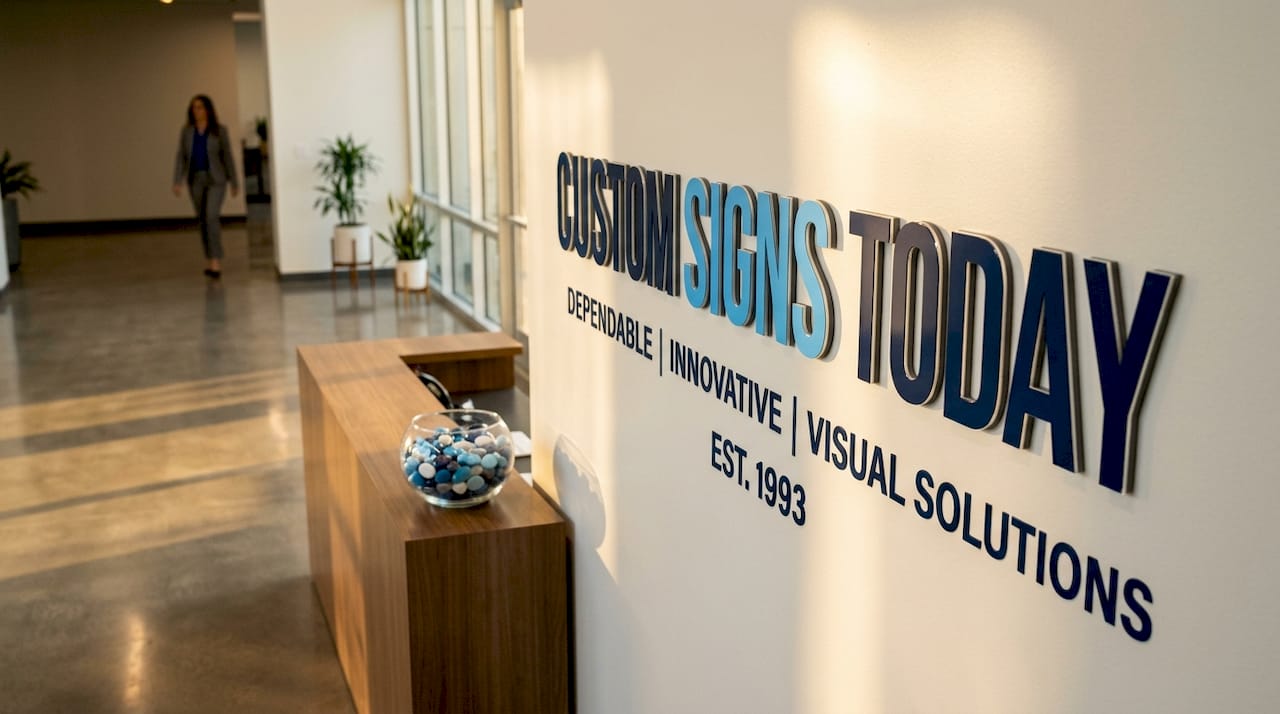
Dimensional letter signs consist of 3D individual letters made from acrylic, metal, or foam, mounted directly to a wall or surface. The physical depth of each letter casts a shadow that increases readability and gives the sign a premium, high-impact appearance. Law firms, financial institutions, and corporate headquarters favor this format because it reads as substantial and permanent.
Illuminated lobby signs use LED backlighting or front-lit panels to make your branding visible across large lobbies or in lower-light environments. Illuminated signs work especially well in hotel lobbies, entertainment venues, and medical centers where ambient light varies throughout the day. The glow also draws the eye naturally, which makes them effective for brand recall.
ADA-compliant signs are a legal requirement for permanent room identification in any public-facing space. These signs include raised characters, Grade 2 Braille, high-contrast color combinations, and non-glare finishes as mandated by the 2010 ADA Standards. They apply to restrooms, conference rooms, stairwells, and any door with a fixed function.
Directional and wayfinding signs guide visitors through your space without requiring staff assistance. Directional signage includes door signs, overhead hanging signs, wall-mounted arrows, and floor graphics. These signs reduce visitor confusion, improve traffic flow, and free up your reception team for higher-value interactions.
How do materials and finishes differ among lobby sign types?
Material selection is where lobby sign design gets practical. The wrong material in the wrong environment looks cheap, wears out fast, or fails compliance requirements.
| Material | Best use case | Finish options | Durability |
|---|---|---|---|
| Acrylic | Modern corporate, medical, retail | Gloss, frosted, backlit | High for indoor use |
| Brushed aluminum | Law firms, finance, luxury hospitality | Brushed, polished, anodized | Very high |
| PVC or foam board | Budget-conscious, temporary events | Painted, vinyl-wrapped | Moderate |
| Wood | Boutique hotels, creative agencies | Natural, stained, painted | Moderate with sealing |
| Vinyl | Wayfinding overlays, temporary signage | Matte, gloss, reflective | Low to moderate |
Acrylic offers a sleek modern look, metal provides industrial or high-end finishes, wood conveys warmth, and vinyl is versatile and cost-effective. That range means you can match your sign material directly to your brand personality without compromise. A tech startup and a luxury spa both need lobby signs, but they should not use the same material.
Finishes matter as much as the base material. Matte finishes reduce glare and are required for ADA-compliant signs. Gloss finishes amplify color vibrancy and work well for logo signs in well-lit spaces. Brushed metal finishes communicate precision and permanence, which is why they appear frequently in financial and legal offices. For illuminated signs, the diffusion quality of the acrylic face panel determines whether the light looks even and professional or blotchy and cheap.
Pro Tip: When selecting materials for a lobby renovation, bring physical samples into the actual space and observe them under your existing lighting conditions at different times of day. Colors and finishes shift dramatically between fluorescent, LED, and natural light.
What ADA compliance requirements affect lobby signs?
ADA compliance is not optional, and misunderstanding its requirements is one of the most expensive mistakes a business owner can make during a lobby renovation.
The ADA draws a clear line between two sign classifications. Permanent room identification signs, which label fixed spaces like restrooms, conference rooms, and stairwells, must include raised characters and Braille. Directional and informational signs, such as “Exit This Way” or “Elevator on Left,” follow different rules and do not require tactile elements. Misclassifying a sign type leads to rework, fines, and accessibility failures.
The specific requirements for permanent room identification signs include:
- Raised characters: Letters must be raised a minimum of 1/32 inch from the sign surface
- Grade 2 Braille: Positioned directly below the corresponding text
- High contrast: The sign must use light characters on a dark background or vice versa, with sufficient contrast ratio
- Non-glare finish: Contrast and non-glare finishes improve readability for visitors with low vision
- Installation height: The centerline of the sign must be mounted 60 inches above the floor
- Placement: Signs must be mounted on the latch side of the door, not on the door itself
Planning ADA compliance from the start of your design process saves costly revisions later. A sign fabricated in the wrong material or mounted at the wrong height must be replaced entirely, not adjusted. For businesses in hospitality, healthcare, or multi-tenant office buildings, the volume of required ADA signs adds up quickly, so getting the specifications right on the first order matters.
You can review the full requirements for your space at Customsignstoday’s ADA signs page, which covers raised character specs, Braille positioning, and finish requirements in detail.
How to select the right lobby sign for your environment
Choosing among the types of signage for lobbies comes down to four factors: your brand identity, your visitor flow, your lighting conditions, and your compliance obligations.
-
Define your brand visual goals first. A dimensional metal letter sign communicates permanence and authority. A backlit acrylic panel communicates modernity and energy. Before you specify any material or format, write down three adjectives that describe how you want visitors to feel when they walk in. Let those adjectives drive the sign type selection.
-
Map your visitor flow. Walk the path a first-time visitor takes from the entrance to the reception desk. Note every decision point where they might hesitate or turn the wrong way. Each hesitation point is a location for a directional or wayfinding sign. The main reception wall is the location for your primary logo or dimensional letter sign.
-
Assess your lighting. Lobbies with abundant natural light can support matte and brushed finishes without losing visibility. Dim lobbies, basement-level spaces, or large hotel atriums benefit from illuminated lobby signs that maintain brand presence regardless of ambient light levels. For commercial construction projects, lobby sign placement is most effective when planned alongside the architectural lighting design.
-
Account for compliance early. If your space has permanent rooms with fixed functions, ADA signs are not optional. Build them into your initial sign package rather than adding them as an afterthought. The cost of planning them correctly from the start is a fraction of the cost of replacing non-compliant signs after an inspection.
Pro Tip: For event venues that host multiple clients, consider a modular sign system with a permanent dimensional letter sign for your venue brand and interchangeable acrylic panels for event-specific names and directional information. This approach cuts per-event signage costs significantly.
What are the design and installation best practices?
Good design and poor installation produce a bad result. These practices protect your investment and maximize the visual impact of your custom lobby signage.
- Align signs with natural sightlines. Effective sign placement aligns with visitor sightlines, lighting, and overall interior design for maximum brand impact. A sign mounted too high or tucked beside a column fails regardless of its quality.
- Coordinate with your interior design. Your sign should feel like part of the space, not an addition to it. Match sign frame colors to architectural finishes, and align sign proportions with wall dimensions. A sign that is too small for its wall reads as an afterthought.
- Choose readable fonts at scale. Sans-serif typefaces like Helvetica, Futura, and Gotham maintain legibility at large sizes and from a distance. Script fonts and thin-weight typefaces lose definition when fabricated as dimensional letters or cut from metal.
- Plan for future updates. If your brand is likely to evolve, specify a sign system that allows panel swaps rather than full replacements. Modular acrylic systems and magnetic face panels make rebranding significantly less expensive.
- Work with professional fabricators. Custom sign fabrication requires precise tolerances, especially for dimensional letters and illuminated signs. A professional fabricator provides shop drawings for approval before production, which eliminates surprises during installation.
Key takeaways
The right type of lobby sign depends on your brand goals, visitor flow, lighting conditions, and ADA obligations, and selecting the correct format from the start prevents expensive rework.
| Point | Details |
|---|---|
| Five core sign types | Reception signs, dimensional letters, illuminated signs, ADA signs, and directional signs each serve a distinct purpose. |
| Material drives perception | Acrylic, metal, wood, and vinyl each communicate a different brand personality and suit different environments. |
| ADA classification matters | Permanent room ID signs require raised characters and Braille; directional signs follow different rules entirely. |
| Plan compliance early | Building ADA requirements into the initial sign package costs far less than replacing non-compliant signs after installation. |
| Placement is half the impact | Signs aligned with visitor sightlines and coordinated with interior lighting deliver measurably better brand impressions. |
What I’ve learned from watching businesses get lobby signs wrong
After years of working with business owners and event planners on signage projects, the most common mistake I see is treating the lobby sign as the last item on a renovation checklist. It gets ordered after the furniture is in, the paint is dry, and the budget is nearly gone. The result is a sign that is too small for the wall, made from a material that clashes with the finishes, and installed without any thought for lighting.
The second mistake is ignoring ADA requirements until an inspector flags them. I have seen businesses replace entire sign packages because they used the wrong finish, mounted signs at the wrong height, or skipped Braille on permanent room identification signs. The cost of that rework is always higher than the cost of getting it right initially.
What actually works is treating your lobby sign package as a design decision, not a procurement decision. The businesses with the most impressive lobbies, from boutique law firms to mid-size hotel brands, chose their sign types before they chose their furniture. They used the sign as the anchor point for the rest of the interior design, not as an accessory to it.
Accessibility is also a brand statement, not just a legal obligation. A lobby with well-executed ADA signs communicates that your organization thinks about every visitor. That impression is worth more than most businesses realize.
— Yossi
How Customsignstoday can help with your lobby signage
Customsignstoday specializes in custom lobby signs across every format covered in this guide, from dimensional metal letter signs to ADA-compliant room identification signs and LED-illuminated panels. The team works with business owners and event planners in West Palm Beach and beyond to match sign types, materials, and finishes to specific brand goals and compliance requirements.
Whether you need a single reception sign or a full wayfinding system for a multi-floor office, Customsignstoday provides design consultation, shop drawings, fabrication, and installation. For spaces that require illuminated solutions, the exterior lightbox signs catalog also offers formats adaptable for large lobby applications. Request a free quote and get a sign package built to your space, your brand, and your compliance requirements.
FAQ
What are the most common types of lobby signs?
The most common types are reception or logo signs, dimensional letter signs, illuminated signs, ADA-compliant room identification signs, and directional wayfinding signs. Each type serves a distinct branding or navigational function in a lobby or reception area.
Do all lobby signs need to be ADA compliant?
Not all lobby signs require ADA compliance. Permanent room identification signs, such as restroom and conference room labels, must meet ADA standards including raised characters, Braille, and non-glare finishes. Directional and informational signs follow different, less restrictive requirements.
What materials work best for indoor lobby signs?
Acrylic, brushed aluminum, and PVC are the most widely used materials for indoor lobby signs. Acrylic suits modern and medical environments, brushed aluminum works for corporate and luxury settings, and PVC or foam board serves budget-conscious or temporary applications.
How much does a custom lobby sign cost?
Cost varies significantly by sign type, material, size, and complexity. A basic vinyl reception sign may cost a few hundred dollars, while a large illuminated dimensional letter installation can reach several thousand. Getting a detailed quote from a fabricator like Customsignstoday is the most reliable way to budget accurately.
Where should a lobby sign be installed?
A lobby sign should be installed at the first wall a visitor naturally faces upon entering, aligned with their sightline at standing eye level. For ADA room identification signs, the centerline must be mounted exactly 60 inches above the floor on the latch side of the door.