
A white diamond painted in a traffic lane marks a preferential or restricted lane, most often an HOV or carpool lane, though the same symbol also shows up in bus, bike, and taxi lanes. The diamond by itself is not the full rule. It’s a flag telling you to look at the nearby regulatory signs, which spell out occupancy requirements, hours of operation, and any exceptions.
TL;DR:
- Diamond markings indicate preferential lanes but rely on adjacent signs to specify occupancy, hours, or payment requirements, not the symbol alone.
- The MUTCD mandates that the diamond be at least 2.5 feet wide and 12 feet long, painted in white with consistent placement to ensure visibility at high speeds.
- Drivers should always verify the regulatory sign before merging into a diamond lane, especially when markings are faded or unclear.
- Full-time and part-time lane restrictions vary by state and corridor, with enforcement penalties that can reach hundreds of dollars for violations.
- Misinterpretations often occur because drivers assume the diamond signifies a permanent rule, but many lanes operate only during specified peak hours.
Table of Contents
- What Do White Diamond Pavement Markings Indicate, and Why Do Agencies Use Them?
- The MUTCD Specifications: Size, Color, and Signage Pairing
- Other Lane Markings You’ll See Alongside the Diamond
- What to Do When You See a White Diamond
- Part-Time Lanes, Full-Time Lanes, and How Enforcement Works
- Common Misconceptions About Diamond Lanes
- A Signage Maker’s View on Visibility and Maintenance
- Where to Verify Local Rules and Specifications
- Why the Diamond Gets Misunderstood More Than It Should
- Sources
What Do White Diamond Pavement Markings Indicate, and Why Do Agencies Use Them?
A preferential lane is any travel lane set aside for a specific type of vehicle or a specific occupancy level. Transportation departments use them to move more people through the same stretch of pavement without adding concrete, and the diamond is the visual shorthand that flags the restriction from a distance. You’ll typically see the symbol in:
- HOV/carpool lanes, reserved for vehicles carrying two or more occupants
- Bus-only lanes in dense corridors
- Bicycle lanes, sometimes marked with a diamond rather than a bike icon
- Taxi or transit-priority lanes in some cities
The regulatory intent is straightforward: fewer single-occupant vehicles in that lane means better throughput and fewer bottlenecks during peak hours. But the diamond itself carries no legal weight on its own. The MUTCD treats it as a marking that works in tandem with posted signs, which is why a driver who sees only the pavement symbol and no sign nearby should slow down and look for signage before merging in. Treat the diamond as a prompt, not a verdict.
The MUTCD Specifications: Size, Color, and Signage Pairing
Every diamond you see painted on a public road answers to a federal standard. The Manual on Uniform Traffic Control Devices sets the baseline that state departments of transportation, from Caltrans to WSDOT to Arizona DOT, build their own guidance around.
Statistic Callout: The MUTCD requires the HOV diamond symbol to be at least 2.5 feet wide and 12 feet long, with lines at least 6 inches wide. That size is not arbitrary. A driver approaching at 65 miles per hour needs a symbol big enough to register in a split second, not a marking that only makes sense from a stopped car.
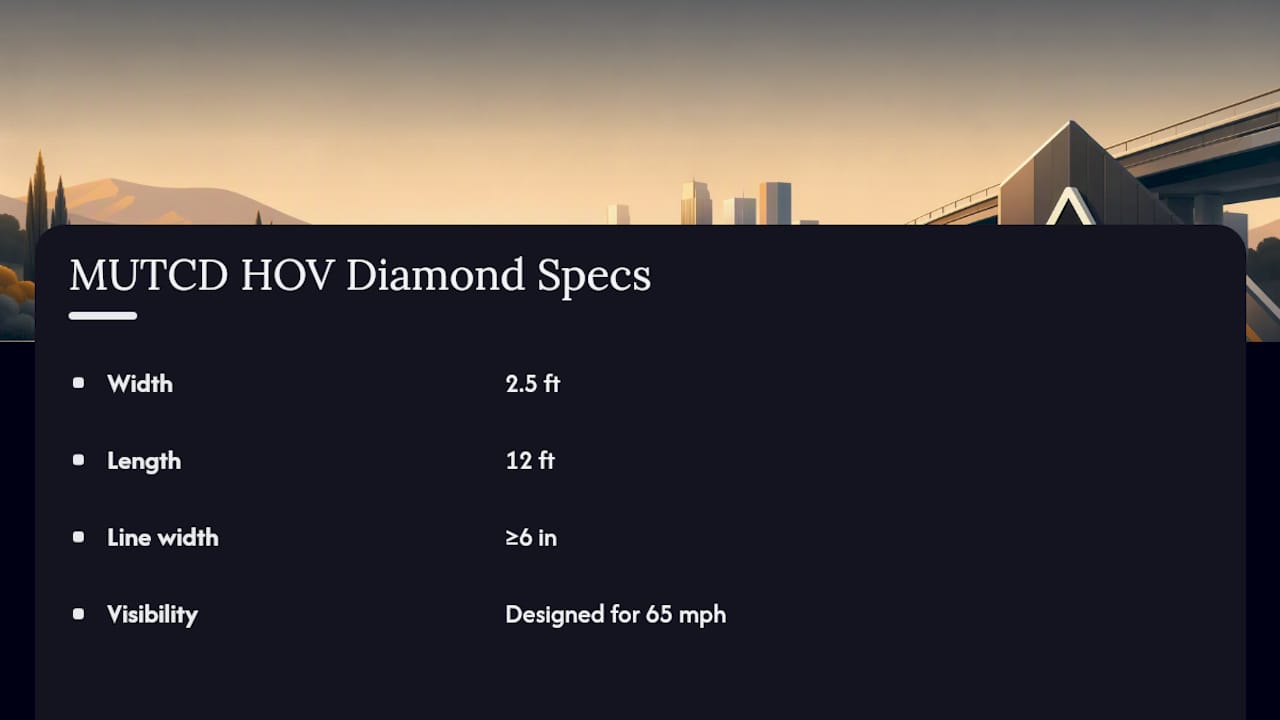
The marking must be painted white and centered in the lane, matching the white solid or dashed lines that typically border preferential lanes. Color and placement aren’t cosmetic choices. Consistency is what lets a driver crossing from one state into another recognize the same restriction without relearning the system.
None of this works without signage. MUTCD guidance is explicit that preferential lane markings pair with regulatory signs specifying occupancy minimums, active hours, or payment requirements. The pavement tells you a restriction exists. The sign controlling that lane tells you what the restriction actually is.
Other Lane Markings You’ll See Alongside the Diamond
The diamond isn’t the only symbol agencies use to reserve a lane, and it’s worth knowing the variations so you don’t mistake one restriction for another. Word markings and pictographs each serve a slightly different purpose:
- BUS ONLY — spelled out in block letters, usually paired with a red curb or red-painted lane surface in some cities
- BIKE LANE — often a bicycle icon rather than a diamond, though some jurisdictions use both
- HOV — the word itself, frequently stacked above or below the diamond symbol
- TAXI ONLY — common in dense downtown cores near airports and transit hubs
- Express or HOT (High Occupancy Toll) markings — word-based, since toll lanes need to communicate payment logic that a simple symbol can’t convey
Word messages tend to appear when the restriction involves a transaction or a specific vehicle class, while symbols handle broader categories like occupancy or bikes. It’s also common for one lane to carry combined markings and signs, since a single lane might permit buses, carpools, and motorcycles all at once.
What to Do When You See a White Diamond
Seeing the symbol ahead should trigger a quick three-step check, not a snap decision:
- Look for the regulatory sign. It will be posted overhead or on the shoulder near where the lane begins, and it’s the actual source of the rule.
- Confirm the occupancy, time, or payment requirement. Some lanes run restricted only during weekday rush hours; others operate around the clock.
- Merge only if you qualify and it’s safe. Cutting across a buffer-separated diamond lane at the wrong point can be both illegal and dangerous.
Exceptions vary by state, but motorcycles, transit vehicles, and emergency responders are commonly allowed in HOV lanes regardless of occupancy. Some states also grant access to certified low-emission or electric vehicles with a special permit. Always check the specific regulatory sign at that location rather than assuming a rule from a different state applies.
Pro Tip: If the paint is faded, cracked, or barely visible, don’t guess. Faded pavement markings lose their legal force long before they lose their visibility, so lean on the posted sign every time there’s a conflict between what you can see on the road and what’s on the pole.
Part-Time Lanes, Full-Time Lanes, and How Enforcement Works
Not every diamond lane behaves the same way around the clock. Caltrans notes that HOV lane operation can be part-time, active only during posted peak hours, or full-time, restricted at all hours depending on the corridor’s traffic volume.
- Part-time lanes typically open to general traffic outside rush hour, with signs showing the exact active hours.
- Full-time and buffer-separated or reversible lanes carry heavier fines because they’re treated as a more serious safety boundary, not a convenience lane.
- Enforcement ranges from officer patrols to dedicated cameras in some corridors, and penalties for solo drivers in a restricted lane can run into the hundreds of dollars depending on the jurisdiction.
Because rules shift state by state and even corridor by corridor, check your state DOT’s page or the signs at that specific stretch of road before assuming last week’s rule still applies.
Common Misconceptions About Diamond Lanes
A few mistaken assumptions trip up even experienced drivers. The diamond alone doesn’t define the rule. It’s the sign nearby that does. Diamonds also don’t automatically mean HOV. Bus and bike lanes use the same symbol in some regions. And a diamond you see today might only apply during rush hour, not around the clock, so don’t assume a restriction is permanent just because the paint is.
A Signage Maker’s View on Visibility and Maintenance
Painted markings fade faster than most drivers realize, and the material matters as much as the design. Thermoplastic holds up longer than standard paint, reflective beads embedded in the surface keep the diamond visible at night, and preformed tape offers a middle ground agencies use in lower-traffic zones. Weather, pavement color, and traffic volume all accelerate wear, which is why some diamonds you see look crisp and others look like ghosts of themselves.
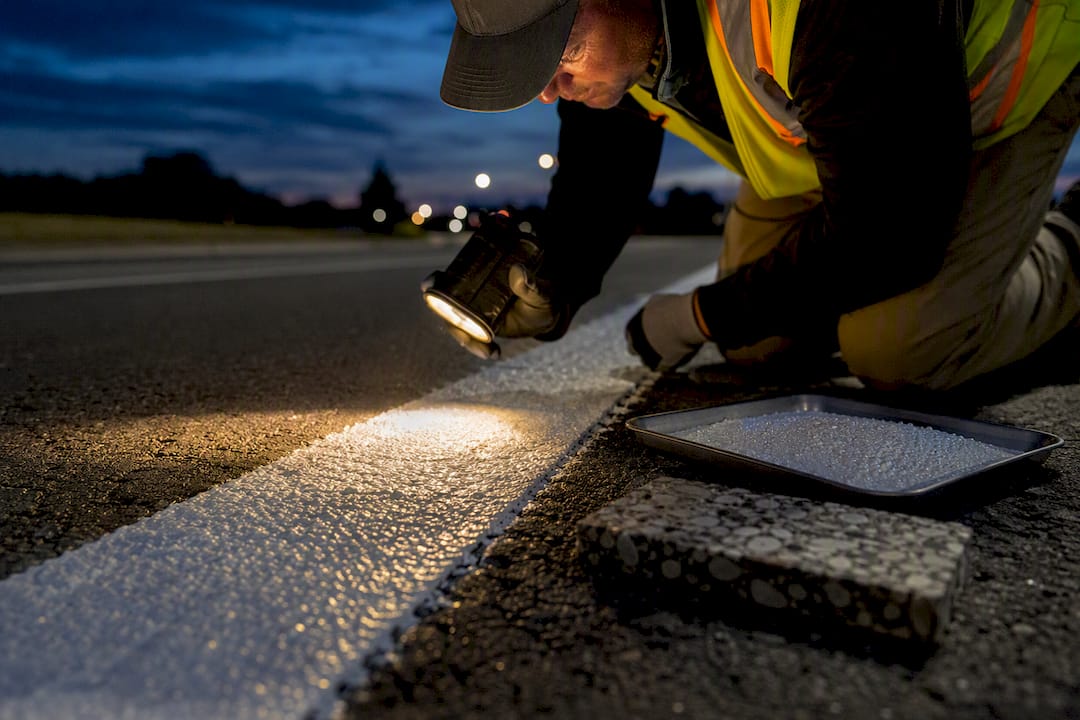
Spacing decisions, how far apart repeated diamond symbols appear along a lane, come down to engineering judgment rather than one fixed rule, balancing visibility against pavement clutter. Understanding durable signage material choices helps explain why some markings hold up through years of weather while others need repainting within a season.
Pro Tip: When pavement paint has worn thin, always defer to the posted sign. Agencies schedule repainting on a budget cycle, not a real-time one, so a faded diamond doesn’t mean the restriction has lapsed.
Where to Verify Local Rules and Specifications
Start with the federal standard, then check the state:
- MUTCD Part 3D for the national specification
- Caltrans, Arizona DOT, and WSDOT for regional guidance
- The regulatory sign posted at the actual lane in question, always the final word
Ordering custom regulatory or wayfinding signage for a property or job site follows the same logic these agencies use: the sign has to match posted rules exactly, or it creates confusion instead of clarity. Customsignstoday works with businesses, property managers, and event organizers who need durable, code-appropriate signage, whether that’s a custom sign for a private lot or site signage for a construction zone with its own traffic flow to manage. A free quote request is the fastest way to find out what material and size fit a specific location.
Why the Diamond Gets Misunderstood More Than It Should
The diamond symbol is one of the most misread pieces of infrastructure on American roads, and the reason isn’t complicated: drivers treat it as self-explanatory when it was never designed to be. It’s a pointer, not a policy. The actual rule always lives on a sign, and the MUTCD’s own language backs that up directly.
What’s underrated here is how much the “part-time vs. full-time” distinction trips people up. Most drivers assume a diamond lane behaves the same way every hour of every day, but Caltrans and other state agencies build flexibility into these lanes on purpose, opening them to general traffic outside peak windows. That flexibility is smart traffic engineering, but it only works if drivers actually read the posted hours instead of relying on habit from the last time they drove that route.
If there’s one thing worth prioritizing, it’s this: stop treating pavement paint as the final authority. Paint fades, gets resurfaced over, or simply becomes hard to see in bad weather. Signs get replaced and maintained. When the two disagree, or when the paint is too worn to trust, the sign wins every time.
— Yossi
Sources
- MUTCD Part 3D — Preferential lane markings for motor vehicles
- High-Occupancy Vehicle Systems | Caltrans
- WSDOT Design Manual Chapter 1030 — Delineation
- High Occupancy Vehicle (HOV): HOV lane rule changed | Arizona DOT