
Online marketing for a property means combining sharp visuals, an optimized listing, targeted social ads, and a lead-capture system that hands off fast. Start with professional photos, an accurate MLS listing, one small paid social boost, and a CRM ready to catch the first inquiry. Social media already generates more agent leads than any other channel, according to the 2025 REALTORS® Technology Survey, so that’s where your first dollar should go.
TL;DR:
- Social media advertising delivers the highest volume of leads and should receive the largest portion of the initial budget, especially in the first two weeks.
- Starting the campaign with professional photos, an accurate MLS listing, and a modest social boost of $50 to $100 ensures quick engagement and cost-effective results.
- To avoid discriminatory advertising, target audiences based on geography and interests rather than demographic proxies, and document each targeting decision.
- Optimizing listing pages with compressed images, descriptive titles, and structured data improves search rankings and conversion rates on mobile devices.
- Combining online efforts with matching signage and QR codes increases trust and accelerates the process from awareness to showing.
Table of Contents
- What Should You Do in the First Week?
- Which Channels Actually Move Property Listings?
- How Do You Optimize a Listing Page for Search?
- How Do You Run Social and Paid Ads Without Legal Risk?
- How Should You Capture and Nurture Online Leads?
- What Visuals Actually Get a Listing Noticed?
- What Should You Actually Track Each Week?
- What Compliance Rules Apply to Property Ads?
- What’s a Realistic 30/60/90 Day Plan?
- Why Signage Still Matters in a Digital Campaign
- Where Custom Signs Today Fits Your Online Campaign
- Sources
- FAQ
What Should You Do in the First Week?
Skip the overthinking. The first week of any listing campaign has a short list of tasks that matter more than everything else combined.
- Book a photographer within 48 hours of signing the listing agreement.
- Upload to the MLS and syndicate to major portals the same day photos land.
- Build a simple lead form with two fields: name and phone number.
- Run a $50 to $100 social boost targeted to the surrounding zip codes.
- Set up a CRM pipeline stage for “new listing” leads before the first inquiry arrives.
The best returns come from the cheapest steps: a $75 photo edit or a $50 boosted post routinely outperforms a $500 print ad. Plan on three to five days for prep, a same-day launch once assets are ready, and weekly tweaks after that based on what the data shows.
Which Channels Actually Move Property Listings?

Not every channel deserves equal attention, and the right mix depends on your goal. Selling fast, maximizing price, and filling a rental vacancy each favor a different weighting.
Social platforms, both organic posts and paid boosts, top the list. The 2025 REALTORS® Technology Survey found that social media ranks as the top lead source, ahead of CRM tools and the local MLS. That gap is wide enough to change how you allocate a first month’s budget.
- Social media (organic and paid): best for awareness and quick lead volume, especially in the first two weeks.
- SEO and listing portals: best for buyers already searching by neighborhood or property type.
- Paid search and display: best for high-intent traffic, like someone who typed “3 bedroom homes near [neighborhood].”
- Email and SMS through a CRM: best for nurturing leads who aren’t ready to tour yet.
- Video and virtual tours: best for out-of-town buyers or anyone screening properties before committing time to a showing.
If the goal is a fast sale, weight social and paid search heaviest. If it’s a rental vacancy with a tight timeline, lean on portals and SMS follow-up, since renters move faster and respond better to text than email.
How Do You Optimize a Listing Page for Search?
A listing page that loads slowly or reads like a data sheet won’t rank, and it won’t convert the traffic it does get. A few fixes handle most of the problem.
- Compress images before upload. Large, uncompressed photos are the single biggest cause of slow mobile load times, and most buyers now browse listings on a phone.
- Write a descriptive title and meta description. Skip “3BR/2BA for sale” and instead name the neighborhood, standout feature, and price range.
- Add structured data markup so search engines can pull price, square footage, and address directly into results.
- Claim and complete your Google Business Profile, and build simple neighborhood landing pages if you regularly work the same areas.
- Follow portal-specific syndication rules when pushing listings to the MLS and third-party sites. Formatting errors are a common reason listings get flagged or delayed.
- Track organic click-through rate and form fills as your two core SEO metrics, not just page views.
A specialized real estate SEO service can help with the technical layer if your brokerage doesn’t have in-house support, particularly for structured data and local landing pages.
How Do You Run Social and Paid Ads Without Legal Risk?
Creative for property ads works best simple: one hero image, a 15 to 30 second video walkthrough, and a direct call to action like “Book a tour today.” Overloaded carousels with ten photos tend to underperform a single strong image paired with a lead form.
- Lead-generation ad formats capture contact info without forcing a click to an external page, which usually raises conversion rates over standard link ads.
- Carousel ads work for showcasing multiple rooms; video-view campaigns work for building retargeting audiences later.
- A starter local campaign can run effectively on $10 to $20 a day, with geography set to a 5 to 10 mile radius around the property.
- Targeting must stay geography and interest based, never demographic. HUD guidance warns that platform targeting tools and algorithmic ad delivery can produce discriminatory outcomes even when an advertiser’s intentions are neutral, so audience categories like age, family status, or zip codes that proxy race are off limits under the Fair Housing Act.
Pro Tip: Save a screenshot of every ad’s targeting settings and creative preview before launch. If a platform’s delivery algorithm skews an audience in a way you didn’t intend, that record shows your original targeting was neutral.
How Should You Capture and Nurture Online Leads?
A lead form that asks for eight fields loses more prospects than it qualifies. Keep the form to name, phone, and one property question, add a one-line privacy notice, and trigger an instant confirmation text or email the moment someone submits.
- Send an immediate auto-reply within 60 seconds confirming receipt and offering a showing time.
- Follow with a 3 to 5 message sequence over the next five days: property details, neighborhood highlights, a financing or rental-terms reminder, and a direct booking link.
- Score leads by behavior, not just form completion. Someone who clicks through to a virtual tour twice ranks higher than someone who only viewed a photo.
- Route hot leads to an agent within 15 minutes, since response speed correlates directly with showing conversion.
Segmented, personalized email and SMS sequences outperform generic blasts, and Mailchimp’s research shows that generative-AI-assisted sends added further lift during high-volume periods. Watch two KPIs here above all others: lead response time and lead-to-showing rate.
What Visuals Actually Get a Listing Noticed?
Twenty-five to thirty-five photos is the sweet spot for a full listing gallery: enough to cover every room and the exterior without repeating angles. For ads and social posts, narrow that down to your best three to five shots, since platforms punish cluttered carousels with lower engagement.
- A 60 to 90 second walkthrough video works better than a slideshow for holding attention past the first five seconds.
- A 3D or virtual tour earns its cost on higher-priced listings or when buyers are relocating from out of town and can’t tour in person before making a decision.
- Export images at web-optimized file sizes (under 500KB per photo) and always add captions naming the room or feature.
- Reuse the same hero image across the MLS listing, social ads, and email so buyers recognize the property instantly across channels.
What Should You Actually Track Each Week?
A property campaign only needs a handful of numbers to judge whether it’s working. Impressions and clicks tell you if the creative is landing. Leads, showings, and offers tell you if it’s converting. Cost-per-lead tells you if the budget is efficient.
- Check impressions, clicks, and cost-per-lead weekly, since ad performance shifts fast in the first two weeks.
- Check leads, showings, and offers on a rolling basis, not just at month end.
- Set a 7 to 14 day attribution window for property ads, since buyers rarely convert on the first click.
- Run small budget experiments (swap one creative, test one new audience) rather than overhauling a whole campaign at once.
- Reallocate spend toward whichever channel is producing the lowest cost-per-showing, not just the lowest cost-per-lead.
What Compliance Rules Apply to Property Ads?
Two agencies govern most of what can go wrong here. The FTC requires truthful claims and clear disclosures, meaning no inflated square footage, no fake urgency (“last chance!” on a listing that’s been up for a week), and proper labeling of sponsored content or paid endorsements. Commercial email must also follow CAN-SPAM rules, including a working unsubscribe link.
The bigger risk zone is ad targeting. HUD’s guidance on digital platform advertising states plainly that algorithmic delivery can create discriminatory outcomes even from neutral-looking targeting choices, and HUD has previously charged a major platform over exactly this issue.
- Never exclude audiences by age, family status, or zip codes that function as race proxies.
- Use broad geography and interest signals like recent movers or home search intent instead of demographic filters.
- Document every targeting choice and save an ad preview before launch.
- Review delivery reports periodically to check who actually saw the ad, not just who you targeted.
What’s a Realistic 30/60/90 Day Plan?
- Days 1 to 10: Stage the property, book professional photos, confirm MLS readiness, and draft ad creative.
- Days 10 to 30: Launch paid social, email sequences, and promote any open house across your channels.
- Days 30 to 60: Review cost-per-lead and showing data, then shift budget toward whichever channel is converting best.
- Days 60 to 90: Scale the winning channel and retire underperforming creative.
A modest single-property budget of $300 to $600 usually splits roughly 60% to paid social, 25% to email/SMS tools, and 15% to photo or video production.
Why Signage Still Matters in a Digital Campaign
Coordinated visuals build trust faster than either channel alone. When the hero image on your Facebook ad matches the yard sign a buyer drives past, it registers as one campaign, not two disconnected efforts. Adding a QR code and a short campaign URL to a real estate sign turns a passerby into an online lead in seconds. Pairing professional listing visuals with matching on-site signage has been shown to reduce the friction between someone noticing a property and actually booking a tour, which is the entire point of running both channels together.
— Yossi
Where Custom Signs Today Fits Your Online Campaign
An on-site signage partner can make your digital ad spend work harder, not just add another line item competing with it. A yard sign, banner, or vehicle wrap that matches your listing photos and social creative closes the gap between a scroll-past and a scheduled showing.
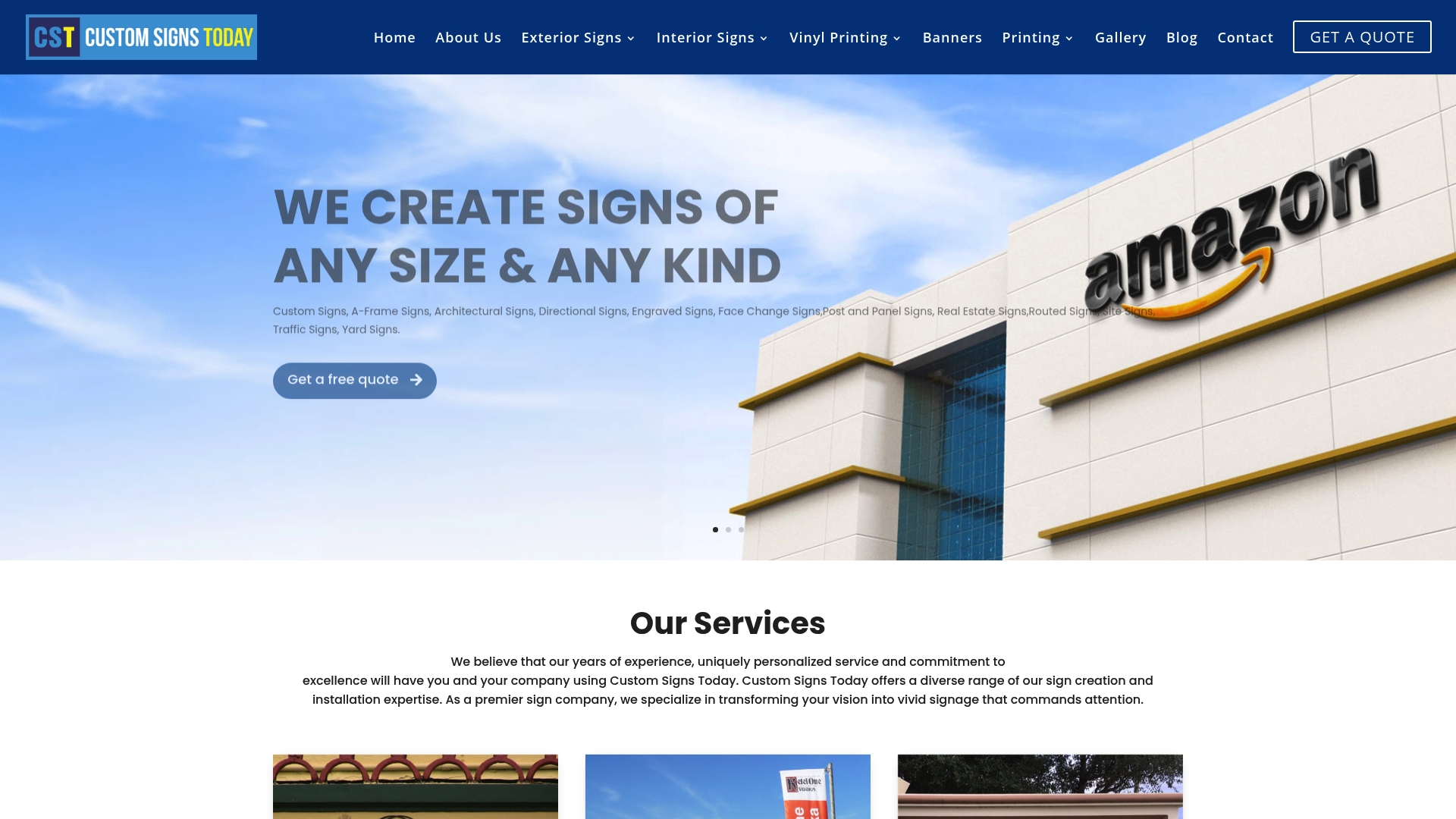
The lineup covers what a property campaign actually needs: real estate signs for the yard, banners for open houses, vehicle lettering for your car, and window graphics for a vacant storefront listing. Order signage as soon as photos are locked in, so the hero image, color scheme, and QR code stay identical across every touchpoint a buyer encounters. That consistency is what turns a curious drive-by into a form submission. Request a free quote and get your listing’s visuals into print before your next open house.
Sources
- 2025 REALTORS® Technology Survey
- Online Advertising and Marketing | Federal Trade Commission
- HUD guidance on advertising through digital platforms
- Breaking through peak season noise | Mailchimp
FAQ
What Is Digital Marketing in Real Estate?
Digital marketing in real estate is the use of online channels, social media, listing portals, search, email, and paid ads, to generate leads and close sales or leases. It centers on optimized listing pages, targeted ads, and CRM-driven follow-up rather than print alone.
What Is the 70/20/10 Rule in Marketing?
For property marketing, budget allocation often focuses heavily on social media and listing portals, with a smaller portion on email/SMS refinement, and some reserved for testing new ad formats or platforms.
Which Online Property Platform Is Best?
There’s no single best platform. The MLS remains essential for discoverability, but the 2025 REALTORS® Technology Survey found social media generates more leads (39%) than the MLS itself (17%), so the strongest results come from running both together.
What Is the Best Marketing for Real Estate?
The best approach pairs a fast-loading, well-optimized listing page with targeted social ads and a CRM nurture sequence that responds within minutes. On-site signage from a provider like Custom Signs Today reinforces that digital presence for anyone who drives past the property in person.