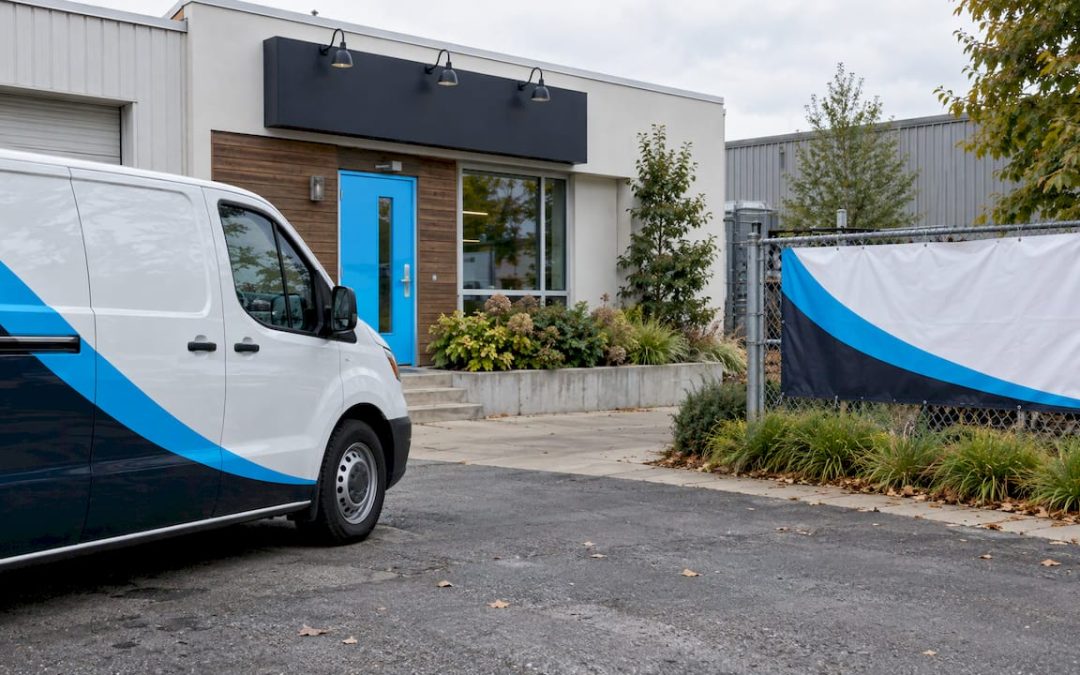
The advertising signs that earn their cost are the ones matched to where customers actually see them: a building sign for people who are looking for you, a vehicle or banner for people passing by, and an A-frame or window graphic for people already at your door. Pick the sign for the job, size the lettering for the viewing distance, check local sign rules before you order, and have one team handle design, production and installation. That is how a sign becomes an ad instead of an expense. We build custom signs, banners, vehicle graphics and window graphics, and this guide covers what a business owner needs to decide before requesting a quote.
TL;DR
- Match the sign to the job: building signs for identification, banners and A-frames for promotions, vehicle graphics for reach, interior signs for wayfinding and compliance.
- Readability decides results. The International Sign Association recommends at least 1 inch of letter height per 25 feet of viewing distance.
- Rules vary by city. Permits, size caps, setbacks and removal deadlines for temporary signs differ from one town to the next, so check before you print.
- Price depends on size, material, lighting, design work and installation, so a quote based on your exact location is more useful than a catalog number.
- Real estate agents, event organizers and property managers usually need a mix of temporary and permanent pieces ordered together.
Table of Contents
- The main types of advertising signs and what each does best
- How to choose the right sign for your business
- Make it readable: size, contrast and lettering
- Local rules: permits, yard signs and temporary signs
- Accessibility: signs inside your building
- What affects the price of advertising signs
- Ideas that work for local businesses
- Where we stand on advertising signs
- Get a quote for your signs
- FAQ
- Sources
The main types of advertising signs and what each does best
The International Sign Association groups business signs into a few families: building-mounted signs, freestanding signs, interior signs, dynamic digital signs and vehicle wraps. Each one answers a different question a customer has.
| Sign type | Best for | Typical setting |
|---|---|---|
| Wall, fascia and storefront signs | Telling people who you are and where you are | Building exterior |
| Freestanding and directional signs | Guiding drivers and visitors to your entrance or lot | Parking areas, roadside |
| A-frame signs | Daily offers, “we’re open” signals | Sidewalk, entrance |
| Banners, feather flags, retractable banners | Sales, grand openings, events, trade shows | Fences, booths, storefronts |
| Vehicle lettering, wraps, magnets | Reaching people across a service area | Vans, trucks, company cars |
| Window graphics and wall graphics | Branding and promotions at eye level | Glass, interior walls |
| Interior and regulatory signs | Wayfinding, room names, accessibility | Offices, lobbies, clinics |
A few of these deserve more detail.
Building and storefront signs
This is the sign people use to confirm they have found the right place. Adobe’s sign design guide describes the wall sign as basic identification on a flat surface, usually a logo plus essential information. Keep it that simple. If you are planning a new storefront sign, our storefront sign guide and overview of business storefront signage walk through the formats, and our exterior signage basics covers materials and mounting.
Banners and portable signs
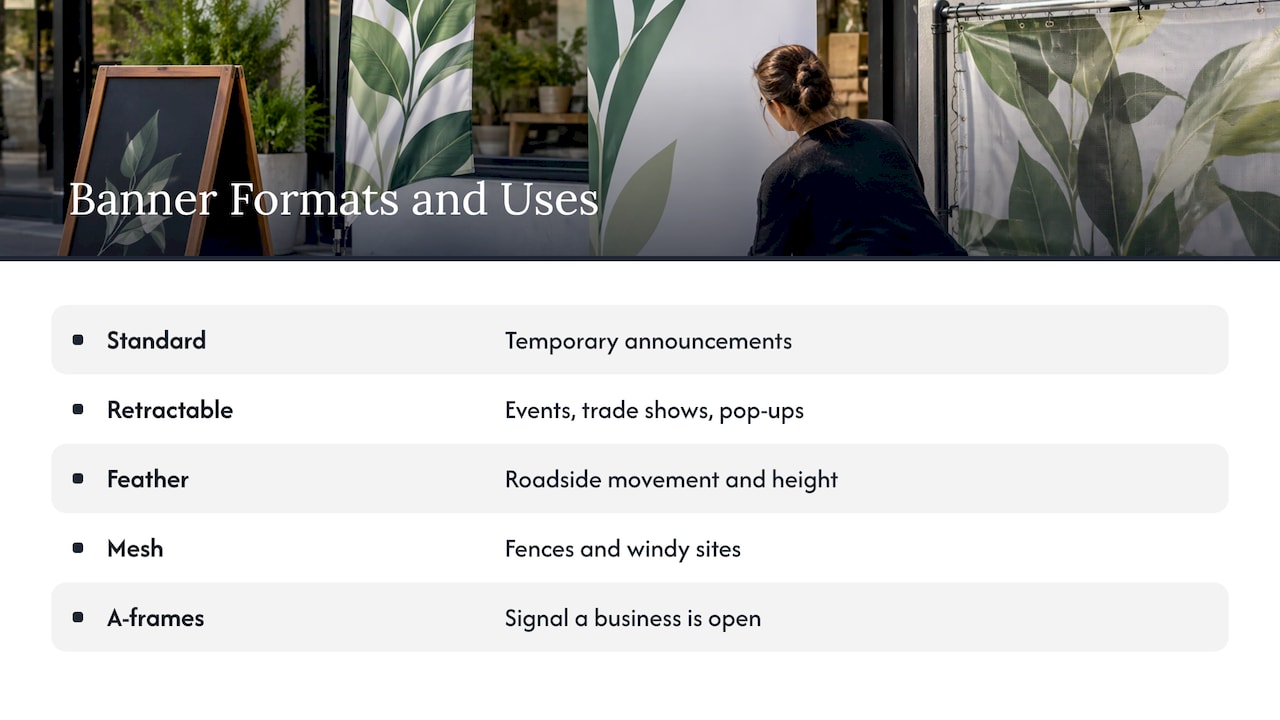
Banners are the fastest way to announce something temporary. Adobe notes that sidewalk A-frames are small portable signs that also signal a business is open, and that roll-up banners suit special events, trade shows and pop-up shops. Feather banners work along a road where you want movement and height, and mesh banners suit fences and windy sites. Our banner range includes standard, retractable, feather and mesh formats. For a closer look at why they pay off for local companies, see why invest in banners.
Vehicle graphics
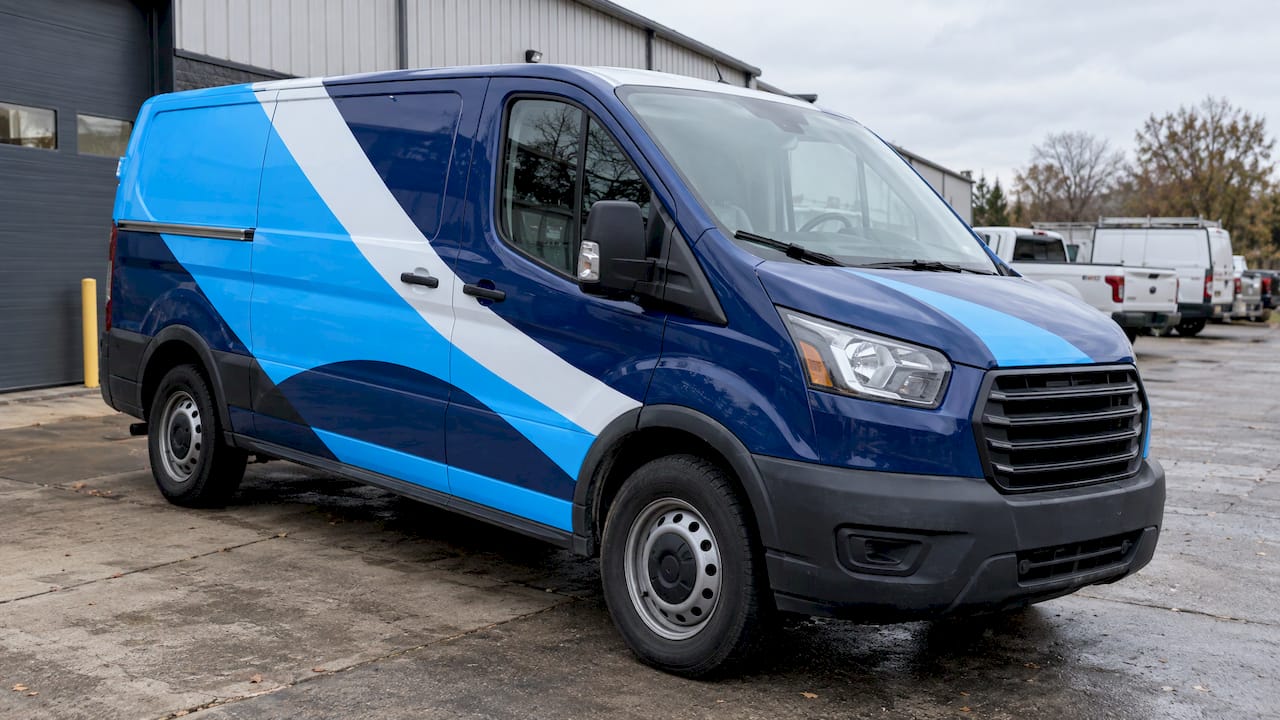
A company vehicle is a sign that travels all day. The International Sign Association points out that vehicle wraps are often among the lowest-cost forms of advertising and offer high recall. Lettering and magnets cover a simple name-and-phone-number message, and full or partial wraps turn the whole vehicle into a billboard. See our vehicle lettering and car magnets and vinyl wraps and graphics.
Digital signs
The same association describes dynamic digital signage as one of the newest sign technologies and cites studies in which grocery stores using it at the point of purchase saw a 33% increase in additional sales of the advertised product. It also suits restaurant menus where items or nutrition information change often. For most small businesses a printed sign is the starting point, and a digital display makes sense when your message changes weekly or daily.
How to choose the right sign for your business
Start with three questions.
- Who needs to see it, and from where? Drivers at 35 mph need something different from pedestrians on a sidewalk.
- How long will the message last? A permanent brand sign, a seasonal promotion and a one-day event need different materials and budgets.
- What does the location allow? Landlord rules, city codes and the building itself can limit size, height and lighting.
The answers point to a short list. A restaurant with a lot of walk-by traffic usually does well with a strong storefront sign plus an A-frame. A contractor or service company often gets more from vehicle graphics than from a fixed sign. An event organizer needs banners, directional signs and feather flags that can be produced quickly. A property manager needs exterior identification, directional signs for visitors and interior signs for each floor.
Format and material
Outdoor signs face sun, rain and wind, so material matters. Vinyl banners and mesh suit short-term use. Rigid substrates and metal suit permanent signs. Interior signs can use lighter materials, but they still need to look consistent with the exterior. In our experience as a signage provider, the cleanest results come when the sign, the building and the brand are designed together, which is why we handle consultation, design, fabrication and installation as one project.
Make it readable: size, contrast and lettering
A sign nobody can read is wasted money. The International Sign Association’s design and placement guidance gives a usable rule: at least 1 inch of letter height for every 25 feet of viewing distance. Its example is 16.4-inch letters for readability at 410 feet for a driver at 30 mph. It also advises avoiding fancy or script lettering and weighing typography, graphics, word familiarity, lighting and color together.
Here is a worked example. Your entrance is visible from a road 150 feet away. Dividing 150 by 25 gives 6, so the key words need letters at least 6 inches tall. Keep the message short enough that a driver can take it in at a glance: a name, one benefit, a phone number or web address.
A few practical habits follow from this and from the storefront-sign advice on FitSmallBusiness:
- Use strong contrast between lettering and background.
- Choose bold colors that match your brand, and leave space between elements.
- Scale the sign to the storefront so it neither disappears nor crowds the facade.
- Consider a projecting sign when people approach from the side, because it extends the viewing distance.
- If the sign is lit, ask for a light source with a high Color Rendering Index so brand colors look right after dark.
The association stresses that size, placement, lighting and the building must all work together, and that readability has to be balanced with appearance. Our tips for building signage that gets noticed go deeper on placement.
Local rules: permits, yard signs and temporary signs
Sign codes are set by cities and counties, not nationally, so the same banner can be fine in one town and a violation in the next. Check the rules for your exact address before you order. Two examples show how different they can be.
- In Fuquay-Varina, North Carolina, the town’s business guide to temporary signage allows yard signs on private property only, caps total surface area at 12 square feet and height at 42 inches, and requires removal within 14 calendar days after the event ends.
- In Hudson, New Hampshire, the zoning ordinance generally requires permits for building-mounted and freestanding signs, with exemptions. It bars signs in public rights-of-way, and it allows grand-opening signs up to 32 square feet (12 square feet in other districts) for 30 consecutive days.
These are local examples, not universal rules. The pattern is the same nearly everywhere: private property only, size and height limits, time limits for temporary signs, and a permit for permanent signs. Your city’s planning or zoning office is the authority that issues permits and confirms what applies. Landlords and property owners often have their own sign criteria on top of the city code.
For real estate signs the rules have an extra layer, since listing signs, open-house signs and site signs can each be treated differently. Our real estate sign compliance guide covers the points agents run into.
Accessibility: signs inside your building
Interior signs are not only decoration. The International Sign Association notes that the ADA (the Americans with Disabilities Act) calls for clearly marked accessible entrances, Braille on certain signs and minimum sign sizes, and it recommends working with a professional to get compliance right. Permanent room signs, restrooms and exits are the usual places this applies. Our guide to ADA exit sign requirements explains which doors need Braille, and our interior signs page lists what we make for offices, lobbies and clinics. If you run a fitness business, these ADA accessibility fixes for gyms show how the same rules play out in a real facility.
What affects the price of advertising signs
There is no single price for a business sign, because the range runs from a vinyl decal to a lit monument sign. These are the factors that move a quote:
- Size. Larger signs use more material and take longer to produce and install.
- Material. Vinyl, mesh, aluminum, acrylic and other substrates differ in cost and in how long they last outdoors.
- Lighting. Illuminated signs add electrical work and components.
- Design. A finished logo file is faster than a design built from scratch.
- Installation. Height, wall type, vehicle size and site access all matter.
- Permits and compliance. Permanent exterior signs often need paperwork.
- Quantity and timing. Several signs ordered together and a flexible deadline usually simplify production.
Because so many variables apply, we price each job from a quote request instead of a published list. Our explanation of how custom sign quotes work shows what to have ready: your location, sizes, artwork and deadline.
Ideas that work for local businesses
Creative signage does not have to be elaborate. Media and print-company guides suggest chalkboard-style signs for daily specials at cafés and boutiques, as in SmallBizTrends’ list of sign ideas, and QR cards on tables that lead to discounts or a VIP list, as in MOO’s creative signage guide. Both ideas work better when printed professionally and kept consistent with your brand.
Some combinations that suit our typical clients:
- Real estate agents: a branded yard sign, an A-frame for open houses, a banner for new listings and car magnets. See the types of real estate signs.
- Event organizers: feather banners at the entrance, directional signs in the parking area, a retractable banner at registration.
- Property managers: exterior ID, directional signs, interior wayfinding and window graphics for leasing.
- Local service companies: vehicle lettering, a storefront or office sign, and business cards and brochures that match.
For more storefront inspiration, browse these storefront sign examples.
Where we stand on advertising signs
Most signs fail for ordinary reasons. The lettering is too small for the distance, the colors fade into the background, or the sign goes up without a check on local rules. None of that is about budget. It is about planning the sign around the place where it will be seen.
That is why we start with a consultation instead of a catalog. We look at the building, the street, the audience and the message, then design and fabricate the sign in materials suited to indoor or outdoor use. Installation and compliance guidance are part of how we work, so you are not coordinating several vendors for a single storefront.
For a business with several needs, such as a sign for the building, banners for a promotion, graphics for the vehicles and printed pieces, one team keeps everything consistent. Customers see the same colors and the same name everywhere, and that repetition is what makes signs advertise.
Yossi
Get a quote for your signs
We design and produce custom signs, banners, vehicle graphics, window and wall graphics and printed materials for businesses, real estate agents, event organizers and property managers, with certified installation and fast turnaround for local and nationwide clients. Tell us the location, the size and the deadline, and we will work out the right sign for the job. Start from our custom signs page or request a quote on our site.
If you need a sign quickly, see our same-day options.
FAQ
How much do advertising signs cost?
It depends on size, material, lighting, design and installation, so prices run from small decals to large illuminated signs. The fastest way to a real number is a quote with your dimensions, location and artwork. We quote each project individually.
Where can I legally put yard signs to advertise my business?
Generally on private property with the owner’s permission, and not in public rights-of-way. Many towns also cap size, height and display time. In Fuquay-Varina, NC, for example, yard signs are limited to 12 square feet and 42 inches in height. Confirm your own city’s rules with its planning or zoning office.
What size should my business sign be?
Size it for the viewing distance. The International Sign Association recommends at least 1 inch of letter height per 25 feet, so a sign read from 100 feet needs letters of at least 4 inches. Then check that the total sign area fits your local code.
Which advertising sign gives the most visibility for the money?
That depends on your audience. For businesses that serve customers across an area, vehicle graphics reach many people daily. For walk-in businesses, a clear storefront sign and an A-frame do the most. For a short promotion, a banner is the quickest option.
Sources
- Identification of Sign Types, International Sign Association
- Design & Placement of Signs, International Sign Association
- Sign designs to bring in customers, Adobe
- How to Choose a Storefront Sign for Your Business in 6 Steps, FitSmallBusiness
- Businesses’ Guide to Temporary Signage and Accessory Lighting, Fuquay-Varina, NC
- Hudson, NH Zoning Ordinance, Zoneomics
- 25 Creative DIY Business Sign Ideas, SmallBizTrends
- Your guide to creative signage, MOO Blog