
More than 60 percent of American consumers decide where to shop based on the signs they see outside a business. For local entrepreneurs, the right branded sign is much more than decoration—it is a powerful tool for shaping public perception and bringing customers through the door. If you want to make a strong and memorable impression, this guide will help you understand how effective signage can transform your business’s visibility and success.
Table of Contents
- Defining Branded Signs And Their Purpose
- Major Types Of Branded Signs For Businesses
- Essential Features Of Effective Branded Signs
- Cost Factors And Design Tips For Your Sign
- Legal And Compliance Rules In The US
- Common Mistakes When Ordering Branded Signs
Key Takeaways
| Point | Details |
|---|---|
| Branded Signs Enhance Identity | Branded signs serve as visual communication tools that convey a business’s core personality and professionalism. |
| Design Elements Matter | Effective signs utilize typography, color psychology, and layout to create a compelling brand narrative. |
| Legal Compliance is Essential | Understanding local regulations and safety standards is crucial to avoid legal issues and ensure effective messaging. |
| Common Mistakes to Avoid | Focus on visibility and legibility; poor design choices can undermine the effectiveness of signage. |
Defining Branded Signs and Their Purpose
Branded signs represent strategic visual communication tools that transform how local businesses establish their identity and connect with customers. These specialized graphics do more than simply display a company name – they communicate a business’s core personality, values, and professional image. Semiotics research demonstrates that signs operate as powerful symbolic communication platforms that influence consumer perception and brand recognition.
At their core, branded signs serve multiple critical functions for small businesses. They act as silent ambassadors that provide instant visual information about a company’s character, professionalism, and unique market positioning. According to signage research, these signs go beyond mere identification – they communicate critical messages about a business’s quality, trustworthiness, and operational standards.
Successful branded signs incorporate strategic design elements that capture attention and create memorable visual experiences. Effective signs blend typography, color psychology, logo integration, and spatial design to craft a compelling narrative about the business. By thoughtfully combining these visual components, local business owners can transform a simple sign into a powerful marketing asset that speaks directly to their target audience.
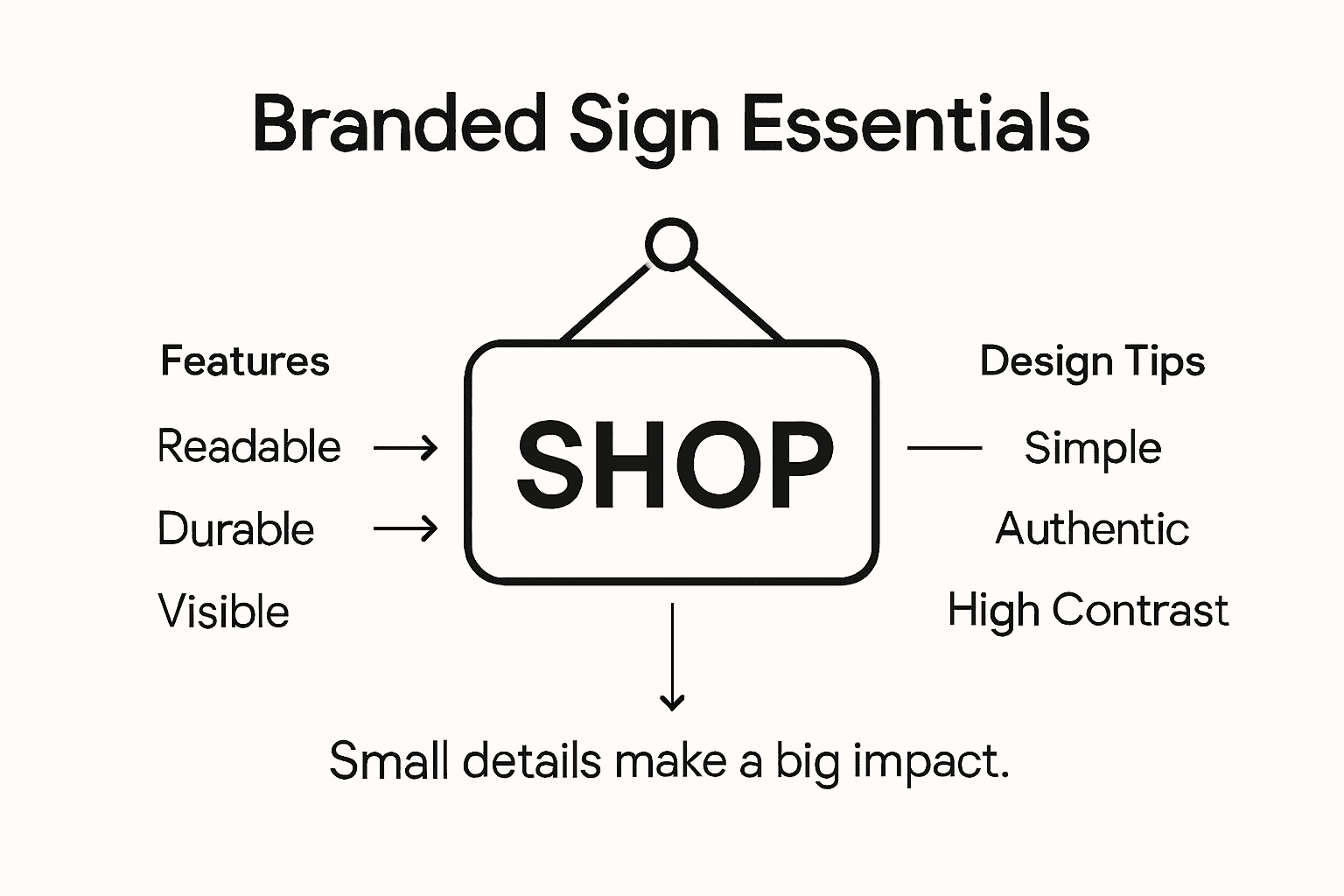
Pro Tip: When designing your branded sign, focus on clarity, simplicity, and authenticity to create a visual representation that genuinely reflects your business’s unique personality.
Major Types of Branded Signs for Businesses
Business signage encompasses diverse categories that serve unique purposes for local entrepreneurs. Building-mounted signs represent a fundamental approach to visual branding, offering businesses multiple options to communicate their identity. These signs include wall-mounted displays, window graphics, awning signs, projecting signs, and parapet signs – each providing distinctive opportunities for capturing customer attention and reinforcing brand messaging.
Digital and electronic signs have revolutionized modern business communication, enabling dynamic and flexible promotional strategies. Electronic signs allow businesses to update content rapidly, display real-time information, and create engaging visual experiences. These digital platforms range from outdoor video displays and LED message boards to interior lobby screens and point-of-purchase digital interfaces that can transform customer interactions.
External commercial signage remains a critical component of local business marketing. Outdoor signs like building-mounted graphics, storefront displays, and street-level banners create powerful first impressions and help businesses establish a strong physical presence. Wikipedia’s signage research highlights that these signs vary significantly in size and design, from large billboards to compact window graphics, each serving strategic branding and informational purposes.
Pro Tip: Combine multiple sign types strategically to create a cohesive visual brand experience that communicates your business’s unique personality across different customer touchpoints.
Here’s a summary of major types of branded signs and how they benefit businesses:
| Sign Type | Key Benefit | Ideal Use Case |
|---|---|---|
| Wall-mounted | Builds brand identity | Storefront branding |
| Window graphics | Promotes specials | Retail windows |
| Digital/LED signs | Immediate updates | Restaurants or real-time info |
| Awning/projecting | Attracts pedestrians | Busy shopping streets |
Essential Features of Effective Branded Signs
Sign effectiveness depends on carefully orchestrated design elements that transform visual communication into powerful marketing tools. Successful branded signs must balance multiple critical components to capture attention and convey a business’s core message quickly and memorably. Key considerations include strategic sizing, precise placement, high-contrast color selections, and clear typography that communicates professionalism and brand identity.
Visual readability stands as the cornerstone of impactful signage design. Businesses must prioritize elements that ensure their signs are legible from various distances and viewing angles. This means selecting fonts that are clean and easily comprehensible, using color combinations that provide maximum contrast, and ensuring appropriate scale relative to the viewing environment. Professional designers understand that a sign’s effectiveness is not just about looking attractive, but about communicating information efficiently.

Technical considerations play a crucial role in sign performance. Sign design research highlights that optimal positioning relative to traffic patterns, strategic illumination techniques, and thoughtful angle selection can dramatically improve a sign’s visibility and impact. Businesses should consider factors like ambient lighting conditions, potential visual obstructions, and typical customer approach vectors when developing their branded sign strategy.
Pro Tip: Invest time in professional design consultation to ensure your branded sign balances aesthetic appeal with maximum functional communication.
Cost Factors and Design Tips for Your Sign
Sign design investment requires strategic planning that balances budget considerations with maximum visual impact. Business owners must navigate multiple cost variables including material selection, sign size, complexity of design, and installation requirements. Factors like durability, weather resistance, and long-term maintenance potential can significantly influence the total cost of a branded sign, making thoughtful selection crucial for small business marketing budgets.
Material choices dramatically affect both sign performance and overall expense. Businesses can select from options ranging from affordable vinyl and basic painted materials to premium aluminum, acrylic, and illuminated sign solutions. Each material presents unique cost considerations – vinyl signs might offer lower upfront expenses, while metal and illuminated signs provide greater durability and visibility but require higher initial investment. Understanding the trade-offs between initial cost and long-term value helps entrepreneurs make informed decisions.
Compare key sign materials to select the right option:
| Material | Typical Cost | Durability | Visual Impact |
|---|---|---|---|
| Vinyl | Low | Moderate | Simple, low-glare |
| Aluminum | Medium | High | Modern, sleek |
| Acrylic | Medium-High | High | Glossy, premium look |
| Illuminated | High | Very High | Maximum visibility day/night |
Signage research emphasizes that effective sign design goes beyond pure aesthetics, incorporating strategic elements like appropriate letter sizing, optimal placement, and compliance with local regulations. Smart businesses work with professional designers who can recommend solutions that maximize visibility while controlling costs. Considerations like traffic speed, viewing distance, and local demographic characteristics play critical roles in determining the most cost-effective sign design strategy.
Pro Tip: Request detailed quotes from multiple sign providers, comparing not just initial costs but also estimated maintenance expenses and expected lifespan to make a truly informed investment decision.
Legal and Compliance Rules in the US
Sign regulations in the United States represent a complex landscape of local, state, and federal guidelines that businesses must carefully navigate. Municipal zoning laws, historic district regulations, and commercial signage ordinances can significantly impact where, how, and what type of signs businesses can install. These regulations vary dramatically between jurisdictions, making it critical for business owners to research specific requirements in their local area before investing in branded signage.
Safety compliance represents another crucial dimension of sign regulations. OSHA workplace safety standards establish precise requirements for signage design, particularly in industrial and commercial environments. These regulations specify detailed guidelines about sign color, dimensions, placement, and messaging to ensure clear communication of potential hazards and safety instructions. Businesses must understand these standards to avoid potential legal penalties and ensure workplace safety.
The permitting process for commercial signs involves multiple layers of bureaucratic review. Local authorities typically require detailed sign plans that demonstrate compliance with size restrictions, placement guidelines, illumination limitations, and aesthetic considerations. Some jurisdictions have additional requirements for businesses in certain zones or districts, such as historic downtown areas or specific commercial developments. Professional sign designers can help businesses successfully navigate these complex regulatory environments.
Pro Tip: Always consult your local city planning office and obtain written confirmation of sign ordinance requirements before finalizing your sign design and installation plans.
Common Mistakes When Ordering Branded Signs
Sign design mistakes can significantly undermine a business’s visual branding strategy, causing potential customers to misunderstand or overlook a company’s core message. Small business owners frequently fall into common traps that compromise their signage effectiveness, ranging from poor design choices to strategic miscalculations. Understanding these pitfalls is crucial for creating signs that genuinely communicate a business’s professional identity and attract the right audience.
Visibility and legibility represent critical areas where businesses often make costly errors. Many entrepreneurs choose fonts, colors, and designs that look attractive in concept but fail in real-world application. Branding research highlights that inconsistent visual communication can confuse potential customers and weaken brand recognition. Common mistakes include using complex typography that becomes illegible at a distance, selecting color combinations with insufficient contrast, and neglecting to consider viewing angles and traffic patterns when positioning signs.
Technical compliance represents another significant challenge for businesses ordering branded signs. Local zoning regulations, ADA requirements, and municipal sign codes create a complex landscape that can trip up inexperienced business owners. Many companies inadvertently violate local ordinances by selecting sign sizes, mounting locations, or illumination styles that do not meet specific municipal guidelines. These oversights can result in expensive redesigns, fines, or even mandatory sign removal, making professional consultation and thorough research essential.
Pro Tip: Always request multiple design mockups and view them in the actual intended environment to accurately assess visibility, readability, and overall impact before making a final sign investment.
Elevate Your Local Business With Custom Branded Signs
The article explains how effective branded signs are essential tools for building a strong local business identity and communicating your unique value. If you are struggling with creating clear, eye-catching signage that truly reflects your brand personality and meets legal requirements, you are not alone. Many businesses face challenges like choosing the right materials, optimizing design for readability, and navigating complex regulations. At Uncategorized, we specialize in transforming these challenges into opportunities by providing fully customized signage solutions designed to boost your visibility and enhance your professional image.
Take advantage of expert craftsmanship and tailored signs that combine durability with stunning design elements at https://customsignstoday.us. Request a free quote today and experience how our custom-made banners, vehicle wraps, lettering, and decals can turn your branded signage into your most powerful marketing asset. Start now to make your local business impossible to overlook and create lasting impressions that drive growth.
Frequently Asked Questions
What are branded signs and why are they important for local businesses?
Branded signs are visual communication tools that convey a business’s identity, values, and professionalism. They help establish brand recognition and connect with customers by acting as silent ambassadors that communicate critical information.
What are the major types of branded signs businesses can use?
The major types of branded signs include wall-mounted signs, window graphics, digital/LED signs, awning/projecting signs, and outdoor commercial signage. Each type serves unique purposes, such as capturing attention, promoting special offers, or providing real-time information to customers.
How can I ensure my branded sign is effective and attracts customers?
To create an effective branded sign, focus on clarity, simplicity, and authenticity. Use high-contrast colors, legible typography, and strategic placement based on traffic patterns. It’s also beneficial to consult with professional designers who can enhance your sign’s visibility and impact.
What factors should I consider when choosing materials for my branded sign?
When selecting materials for your branded sign, consider durability, weather resistance, and overall visual impact. Options range from affordable vinyl to premium aluminum and illuminated signs. Balancing your budget with the desired long-term value is essential for making an informed choice.
Recommended
- Why Signage Boosts Sales for Local Businesses –
- Understanding Types of Promotional Signage for Businesses –
- How to Design Business Signs That Boost Visibility –
- Why Personalized Signage: Complete Guide for Businesses –
- Unlocking Growth: The Strategic Edge of Offering Branded Email Services – Atriomail