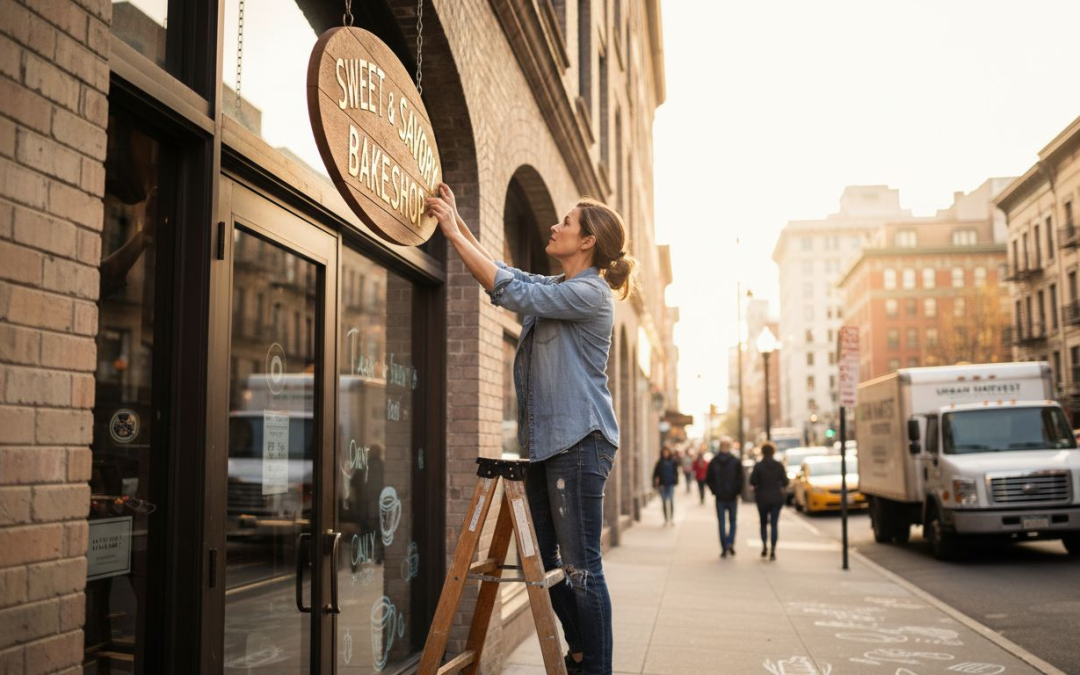
Over eighty percent of American businesses agree that effective signage is a key driver of customer engagement. The right sign can instantly connect a brand to its community and boost long-term visibility in ways that digital ads often cannot match. Whether opening a new storefront or refreshing an established company’s look, this guide shows how American business owners can make informed decisions to create custom signage that attracts attention and builds trust.
Table of Contents
- Step 1: Assess Branding Needs And Location
- Step 2: Design Custom Signage For Your Brand
- Step 3: Select Materials And Sign Types
- Step 4: Install Signage For Maximum Visibility
- Step 5: Verify Branding Consistency And Quality
Quick Summary
| Key Message | Explanation |
|---|---|
| 1. Assess Location Thoroughly | Evaluate pedestrian and vehicular traffic and local demographics to optimize sign placement and visibility. |
| 2. Design Reflects Brand Identity | Create signage that accurately represents your brand through thoughtful use of color, typography, and layout. |
| 3. Choose Durable Materials | Select materials based on environmental exposure and desired sign longevity to maintain visual appeal and functionality. |
| 4. Strategic Sign Installation | Ensure proper placement and visibility by analyzing sightlines and adhering to local regulations before mounting. |
| 5. Verify Consistency and Quality | Assess signage against brand guidelines for cohesive visual communication to reinforce brand identity across all touchpoints. |
Step 1: Assess Branding Needs and Location
Evaluating your branding needs and strategic location serves as the critical foundation for designing impactful custom signage. This assessment will help you understand how visual communication can transform your business visibility and connect with your target audience.
Start by conducting a comprehensive site analysis that goes beyond simple geographic placement. Strategic site selection influences corporate branding by aligning your physical presence with community values and public perception. Analyze key factors such as pedestrian and vehicular traffic patterns, local demographic characteristics, and potential visibility zones. Consider how your signage will interact with the surrounding environment and communicate your brand’s unique identity.
Your location assessment should include detailed observations of potential sign placements. Walk the area and note architectural features, lighting conditions, competing visual stimuli, and potential viewing angles. Understand how different times of day might impact sign visibility and readability. Measure exact distances and consider how viewers will perceive your signage from various perspectives.
Pro tip: Photograph potential sign locations during different times of day to understand how lighting and surrounding environments might impact your visual branding strategy.
Here’s a summary of key factors to evaluate during site and signage assessment:
| Factor | Why It Matters | What to Observe |
|---|---|---|
| Traffic Patterns | Maximizes exposure potential | Pedestrian and vehicle flow |
| Lighting Conditions | Affects visibility and impact | Sunlight, shadows, artificial lighting |
| Competing Visual Elements | Avoids visual clutter | Nearby signs and building features |
| Viewing Angles | Ensures readability | Perspectives from main approach routes |
| Environment Integration | Builds positive brand perception | Fit with architecture and surroundings |
Step 2: Design Custom Signage for Your Brand
Designing custom signage transforms your visual brand identity into a powerful communication tool that captures attention and communicates your business personality. This step focuses on creating signage that authentically represents your brand while maximizing visual impact.
Begin by establishing core design principles that align with your brand identity. Computational approaches in visual identity design demonstrate how strategic visual modules can create cohesive and memorable branding elements. Consider your color palette, typography, logo placement, and overall aesthetic that reflects your company’s unique character. Sketch initial concepts that incorporate your brand guidelines and experiment with different layouts that balance readability and visual appeal.

Refine your design by testing multiple iterations and gathering feedback from trusted colleagues or potential customers. Pay attention to scale, color contrast, and how your signage will appear from different viewing distances. Techniques for generating diverse logo designs suggest exploring multiple concept variations to find the most compelling visual representation of your brand. Ensure your final design remains clear and legible across various display environments and lighting conditions.
Pro tip: Create multiple size mockups of your signage design to understand how it performs at different scales and in various physical contexts.
Step 3: Select Materials and Sign Types
Selecting the right materials and sign types is crucial for creating durable, effective signage that communicates your brand message while withstanding environmental challenges. This step will help you make informed decisions that balance visual appeal with practical functionality.
Wayfinding principles emphasize the importance of selecting appropriate sign materials that enhance communication and user experience. Consider the specific environment where your sign will be placed aluminum for durability in outdoor settings, acrylic for sleek indoor displays, or weather resistant vinyl for high traffic areas. Evaluate factors like UV resistance, temperature fluctuations, and potential physical stress when choosing materials. Match your material selection to the sign type metal channel letters for storefronts, dimensional wall signs for corporate offices, or illuminated signs for nighttime visibility.
Pay close attention to material specifications and legal requirements. Comprehensive guidelines for material selection suggest analyzing cost effectiveness, design constraints, and performance characteristics. Consider the weight of materials relative to mounting surfaces, potential maintenance requirements, and long term durability. Test sample materials under conditions similar to your intended installation site to ensure they will perform as expected and maintain your brand aesthetic over time.
Pro tip: Request material samples and create small test mockups to assess real world performance before committing to a full sign production.
Compare common sign materials and their ideal uses:
| Material | Best For | Key Benefit | Limitation |
|---|---|---|---|
| Aluminum | Outdoor storefronts | Durable, weather resistant | Heavier, costlier |
| Acrylic | Indoor displays | Sleek appearance | Sensitive to scratches |
| Vinyl | High-traffic areas | Flexible, cost-effective | Less durable outdoor |
| Steel | Large installations | Extremely robust | Prone to corrosion |
Step 4: Install Signage for Maximum Visibility
Installing your custom signage strategically is essential for ensuring your brand message reaches and resonates with your target audience. This step focuses on precise placement and techniques that maximize your sign’s impact and visibility.
Optimized wayfinding approaches demonstrate the critical importance of strategic sign placement to guide viewer attention and enhance communication effectiveness. Conduct a thorough site assessment to identify optimal locations that provide clear sightlines and minimize visual obstructions. Consider viewing angles from multiple perspectives pedestrian walkways, vehicle traffic routes, and potential entry points. Measure exact distances and evaluate lighting conditions to ensure your sign remains readable throughout different times of day and weather conditions.
Pay careful attention to mounting techniques and local regulations that might impact sign installation. Wayfinding principles emphasize understanding the environmental context for effective navigation and communication. Check with local authorities about permissible sign heights, setback requirements, and any zoning restrictions. Use professional mounting hardware appropriate to your sign’s weight and material, ensuring secure attachment that maintains the sign’s structural integrity and professional appearance.
Pro tip: Always conduct a mockup installation to verify visibility and make precise adjustments before final mounting to guarantee optimal brand presentation.
Step 5: Verify Branding Consistency and Quality
Verifying branding consistency and quality ensures your custom signage represents your business with precision and professional integrity. This critical step transforms your visual design from a standalone element into a powerful communication tool that reinforces your brand identity.
Maintaining consistent visual communication across environmental branding requires systematic evaluation of design elements. Compare your new signage against existing brand guidelines examining color accuracy, font consistency, logo placement, and overall visual tone. Review each sign as part of a comprehensive system rather than an isolated piece. Check that typography matches your brand standards precisely color shades align with official brand palettes and messaging feels cohesive with your broader marketing approach.
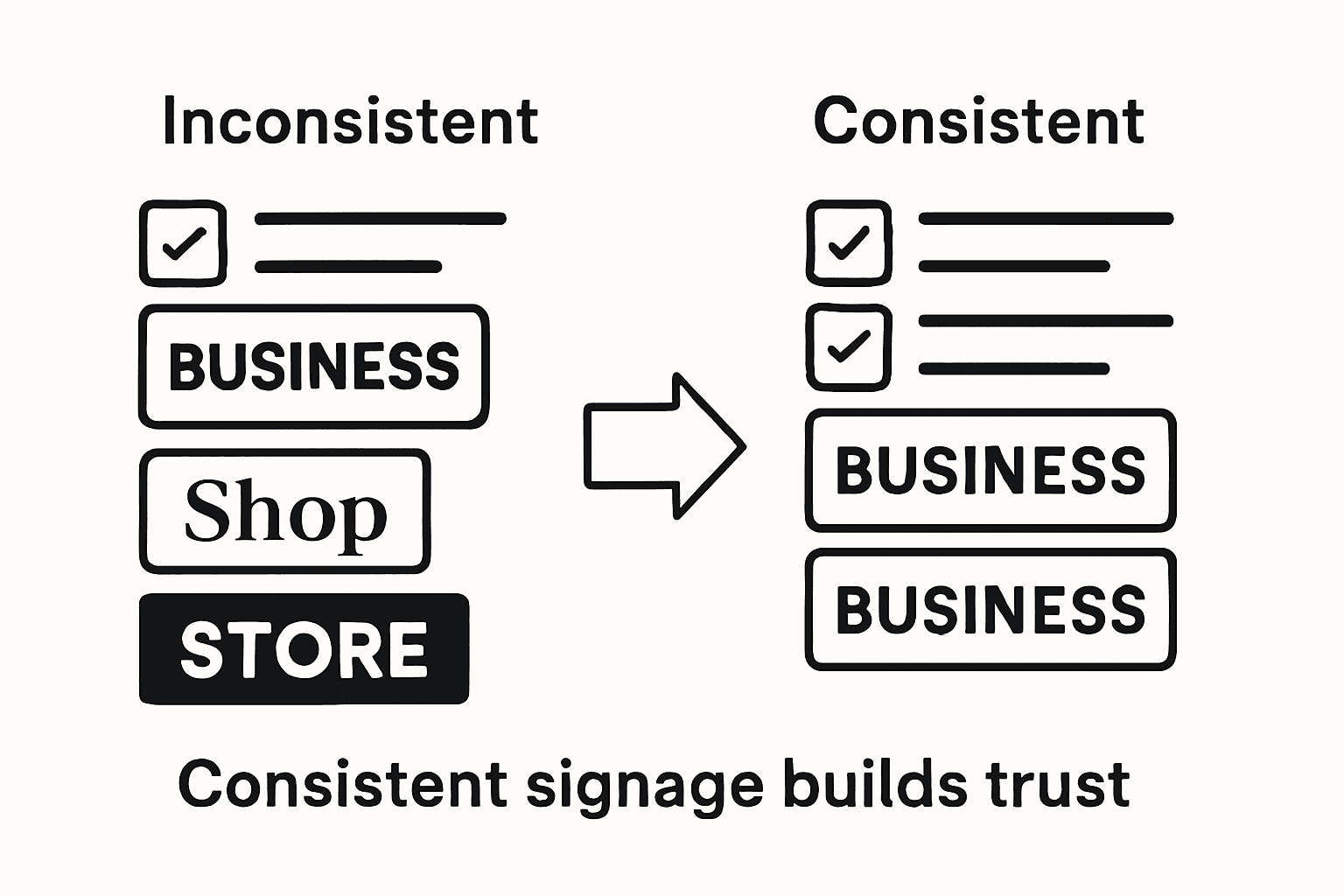
Wayfinding principles emphasize integrating signage as a holistic communication strategy that reinforces brand perception. Conduct a comprehensive visual audit by photographing your signs in context and reviewing them from multiple perspectives. Assess readability under different lighting conditions test viewing angles and ensure the signs communicate your intended message clearly. Invite objective feedback from colleagues or professional designers who can provide unbiased perspectives on your signage quality and brand alignment.
Pro tip: Create a standardized sign quality checklist with specific criteria to evaluate consistency systematically before final approval.
Elevate Your Brand Visibility With Custom Signage Solutions
Identifying the challenge of conveying your brand’s personality and maximizing visibility through strategic signage is critical for business success. This article highlights the importance of assessing your location, designing authentic custom signage, selecting durable materials, and ensuring consistent branding—all essential steps to boost your business impact. If you want to overcome the pain points of poor visibility or inconsistent visual identity, partnering with a professional signage provider can make all the difference.
Experience how Uncategorized signage solutions from Custom Signs Today transform your brand presentation. With a range of tailored signs including banners, vehicle wraps, and decals crafted using high-quality materials, we ensure your message reaches your audience clearly and effectively.
Take the first step to reinforce your brand’s presence now. Visit Custom Signs Today to explore how our versatile custom signage services can meet your unique business needs. Request a free quote today and make your brand unforgettable.
Frequently Asked Questions
How do I assess my branding needs before choosing custom signage?
To assess your branding needs, start by conducting a thorough site analysis that considers factors like traffic patterns and local demographics. Walk the area to note visibility zones and nearby visual elements, ensuring your signage aligns with community values and your brand’s identity.
What design elements should I focus on when creating custom signage?
Focus on core design elements like your color palette, typography, and logo placement to ensure your signage reflects your brand’s personality. Create initial sketches incorporating these elements and adjust based on feedback to achieve a balance of visibility and aesthetic appeal.
What materials are best for different types of custom signage?
Select materials based on the signage’s location and purpose. For example, use aluminum for outdoor signs due to its durability, while acrylic may work well for sleek indoor displays. Testing material samples ensures they meet your brand’s aesthetic and durability needs.
How can I ensure my custom signage is installed for maximum visibility?
To maximize visibility, conduct a detailed site assessment for optimal sign placement considering angles and lighting conditions. Use professional mounting techniques and verify that the sign complies with local regulations to ensure visibility from all main approach routes.
What steps should I take to verify the quality and consistency of my custom signage?
Review each sign against your brand guidelines to check for color accuracy, font consistency, and overall visual tone. Conduct a visual audit by photographing your signage in context and gathering feedback, ensuring each piece communicates your brand message effectively.