
{
“@type”: “Article”,
“image”: {
“url”: “https://csuxjmfbwmkxiegfpljm.supabase.co/storage/v1/object/public/blog-images/organization-6408/1771033604730_image.png”,
“@type”: “ImageObject”,
“caption”: “Event organizer with custom signage mockups”
},
“author”: {
“url”: “https://customsignstoday.us”,
“name”: “Customsignstoday”,
“@type”: “Organization”
},
“@context”: “https://schema.org”,
“headline”: “Complete Guide to Custom Event Signs for Organizers”,
“publisher”: {
“url”: “https://customsignstoday.us”,
“name”: “Customsignstoday”,
“@type”: “Organization”
},
“inLanguage”: “en-US”,
“articleBody”: “”,
“description”: “Explore a step-by-step guide to custom event signs for organizers, covering planning, design, ordering, installation, and quality checks to maximize event impact.”,
“datePublished”: “2026-02-14T01:47:14.769Z”
}
Planning a local event can quickly become complex when you realize how many details need to align for a memorable experience. Clear, effective signage plays a pivotal role in guiding guests and reinforcing your brand, yet it often demands careful strategy and tailored solutions. By focusing on high-quality custom event signs, organizers in the United States can create a welcoming environment that strengthens engagement and showcases their unique identity.
Table of Contents
- Step 1: Identify Event Sign Needs And Objectives
- Step 2: Select Materials And Sign Types For Impact
- Step 3: Design Custom Signs To Boost Branding
- Step 4: Request Quotes And Place Custom Orders
- Step 5: Install Signs For Maximum Visibility
- Step 6: Evaluate Sign Effectiveness And Quality
Quick Summary
| Key Message | Explanation |
|---|---|
| 1. Assess Sign Needs and Objectives | Understand the event’s purpose, audience, and venue to tailor the signage effectively. |
| 2. Choose Appropriate Materials | Select materials based on durability, visibility, and the specific requirements of the event. |
| 3. Design for Brand Impact | Create visually consistent signage that effectively communicates the brand’s identity and messaging. |
| 4. Streamline Quote and Order Process | Prepare detailed specifications to ensure accurate quotes and timely production of custom signs. |
| 5. Strategically Place Signs | Install signs at optimal locations for maximum visibility, ensuring they guide, inform, and enhance the attendee experience. |
Step 1: Identify event sign needs and objectives
Successful event signage starts with crystal-clear strategic planning. Your goal is to map out precise communication requirements that align with your event’s broader mission and audience engagement strategy.
Begin by conducting a comprehensive needs assessment for event signage. This critical initial step involves understanding several key dimensions:
- Event Purpose: Determine the core objectives of your gathering
- Audience Demographics: Profile who will attend and their informational requirements
- Venue Characteristics: Analyze physical space and potential sign placement areas
- Communication Goals: Define what messages must be effectively transmitted
Your sign objectives typically fall into several fundamental categories:
- Directional guidance
- Informational communication
- Branding and visual identity
- Promotional messaging
- Safety and compliance notifications
To systematically approach this process, consider mapping out a detailed inventory of where and how signs will be utilized. This might include registration areas, breakout rooms, hallways, entrance zones, and specific event spaces.
Strategic signage is not just about decoration – it’s a critical communication tool that guides, informs, and enhances attendee experience.
Pro Tip: Always create a visual mockup or digital sketch of your proposed sign placements to validate their effectiveness before final production.
Step 2: Select materials and sign types for impact
Choosing the right materials and sign types is crucial for creating event signage that captures attention and communicates effectively. Your selection will directly impact visibility, durability, and overall visual communication strategy.
When selecting sign materials, consider critical factors of sign effectiveness. Different materials offer unique advantages depending on your event’s specific requirements:
- Vinyl: Affordable and versatile for indoor and short-term outdoor use
- Metal: Extremely durable and professional-looking for long-term installations
- Plastic: Lightweight and cost-effective for temporary event signage
- Fabric: Excellent for banners and displays with vibrant color reproduction
Your sign type selection should align with several key considerations:
- Anticipated environmental conditions
- Expected foot traffic and interaction
- Budgetary constraints
- Branding and aesthetic requirements
- Specific communication objectives
Consider exploring various sign categories such as:
- Directional signs
- Informational displays
- Promotional banners
- Digital signage
- Standee and poster options
Effective event signage transforms information into a visual language that guides and engages your audience seamlessly.
Pro Tip: Always request material samples and conduct a durability test before committing to large-scale sign production.

Here’s a quick comparison of popular event sign materials and their ideal uses:
| Sign Material | Durability | Best Suited For | Visual Impact |
|---|---|---|---|
| Vinyl | Moderate | Temporary indoor/outdoor events | Good color reproduction |
| Metal | High | Permanent or long-term use | Polished, professional look |
| Plastic | Low | Short-term wayfinding or directions | Lightweight, easy setup |
| Fabric | Moderate | Banners, displays, stage backdrops | Vibrant, eye-catching colors |
Step 3: Design custom signs to boost branding
Creating custom event signs that powerfully communicate your brand requires strategic design thinking and careful attention to visual elements. Your goal is to transform standard signage into a compelling visual narrative that instantly connects with your audience.
When developing your sign design, focus on critical event branding principles. Your visual strategy should incorporate several key design components:
- Color Palette: Use your brand’s exact color codes consistently
- Typography: Select fonts that reflect your brand’s personality
- Logo Placement: Position your logo prominently and strategically
- Visual Hierarchy: Organize information for maximum readability
- Graphic Elements: Integrate brand-specific imagery or icons
Key design considerations for maximum branding impact include:
- Maintaining consistent visual identity
- Ensuring high contrast and legibility
- Matching sign design to event atmosphere
- Creating emotional connection through visuals
- Communicating core brand messages
Design techniques to elevate your event signage:
- Use white space strategically
- Select high-quality graphics
- Prioritize clear communication
- Match sign style to event theme
- Consider viewer’s perspective and distance
Exceptional event signage doesn’t just inform – it tells your brand’s story at a glance.
Pro Tip: Develop a small prototype of your sign design and view it from multiple distances to ensure optimal readability and visual impact.
Step 4: Request quotes and place custom orders
Navigating the quote and order process for custom event signs requires strategic planning and precise communication. Your objective is to secure high-quality signage that meets your event’s specific requirements while staying within budget.
To streamline the quote process, prepare comprehensive sign specification details. Your preparedness will significantly impact the accuracy and speed of receiving competitive quotes:
- Design Files: Submit high-resolution vector graphics
- Dimensions: Specify exact sign measurements
- Materials: Clearly outline preferred materials
- Quantity: Provide precise number of signs needed
- Installation Requirements: Detail mounting and placement needs
Key steps for requesting accurate quotes:
- Research multiple sign fabricators
- Compile detailed project specifications
- Request written quotes from 3-4 providers
- Compare pricing and production timelines
- Review sample portfolios and past work
Important documentation to prepare:
- Detailed design brief
- Event branding guidelines
- Specific sign placement requirements
- Budget constraints
- Preferred delivery and installation dates
Professional sign providers appreciate clients who communicate clearly and provide comprehensive project details.
Pro Tip: Always request physical material samples before committing to large sign production to ensure color accuracy and quality.
Step 5: Install signs for maximum visibility
Installing event signs strategically can dramatically enhance their communication effectiveness and overall visual impact. Your goal is to place signs where they will capture maximum attention while maintaining event flow and safety standards.
Pay close attention to strategic sign placement principles, which involve understanding critical positioning dynamics:
- Height: Position signs at optimal eye-level viewing angles
- Lighting: Ensure proper illumination for daytime and nighttime visibility
- Traffic Flow: Place signs to guide movement without obstructing pathways
- Visibility Angles: Consider multiple viewing perspectives
- Context: Integrate signs naturally within the event environment
Key installation considerations for maximum impact:
- Conduct a comprehensive venue walkthrough
- Map potential sign placement locations
- Test visibility from different attendee perspectives
- Verify compliance with venue safety regulations
- Create clear sightlines for critical information
Essential installation safety and effectiveness tips:
- Use appropriate mounting hardware
- Check structural integrity of mounting surfaces
- Avoid blocking emergency exits
- Maintain clear pathways
- Secure signs against potential wind or movement
Sign installation is more than placement – it’s about creating a seamless visual communication experience.
Pro Tip: Always conduct a final walkthrough with a fresh set of eyes to verify sign visibility and readability from multiple attendee perspectives.
Step 6: Evaluate sign effectiveness and quality
Assessing your event signs goes beyond visual appeal – it’s a strategic process of measuring communication impact and identifying areas for future improvement. Your goal is to understand how effectively your signage supported event objectives and attendee experience.
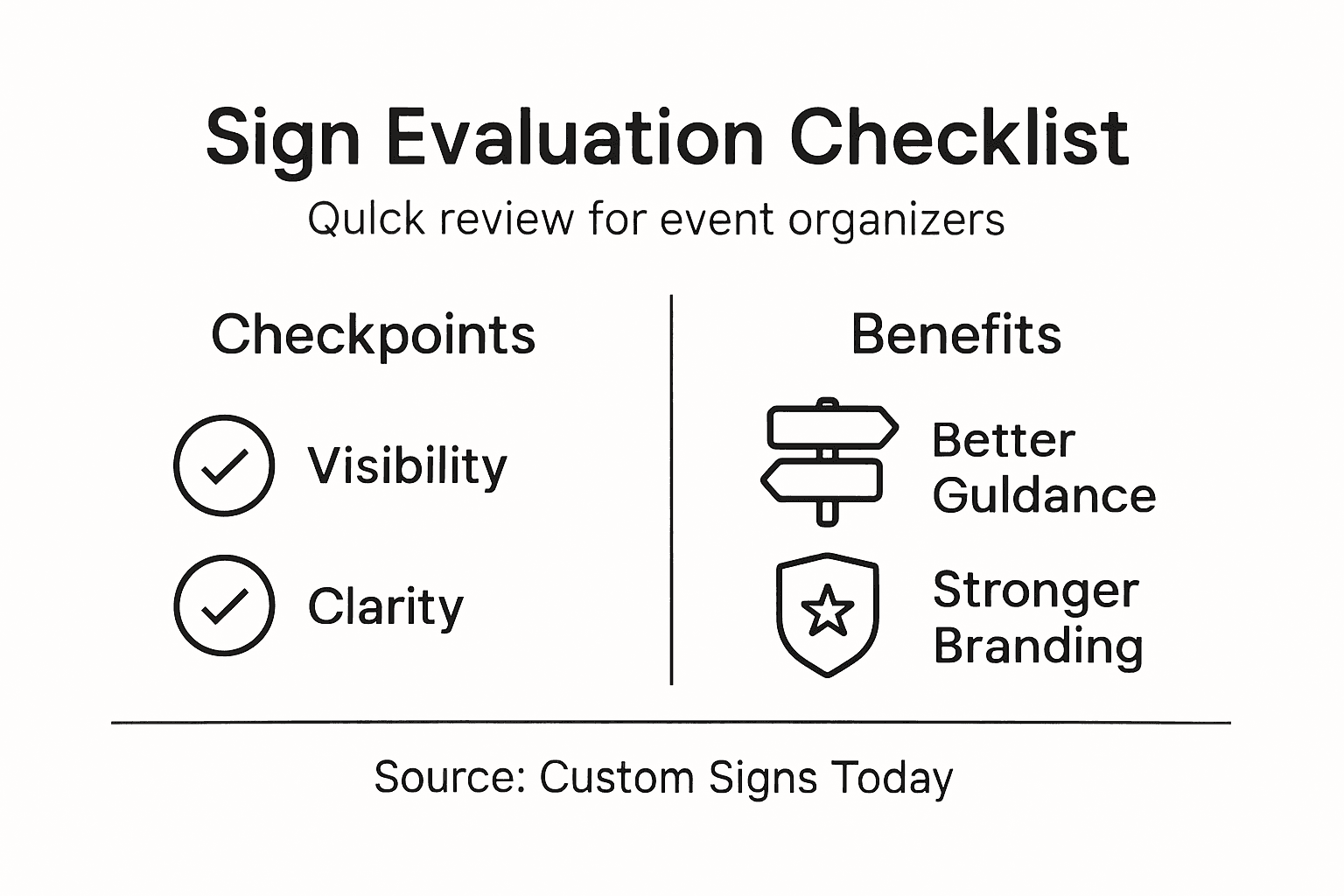
Utilize comprehensive sign effectiveness metrics to conduct a thorough post-event evaluation:
- Visibility: Analyze how easily signs were noticed
- Legibility: Assess readability from various distances
- Message Clarity: Review how well information was communicated
- Brand Consistency: Check alignment with event branding
- Audience Feedback: Collect attendee perceptions
Key evaluation methods for sign performance:
- Conduct post-event attendee surveys
- Review professional photographs of sign placements
- Analyze sign wear and physical condition
- Compare sign locations against original design intent
- Document successful and challenging placement scenarios
Important assessment criteria:
- Readability in different lighting conditions
- Navigation effectiveness
- Emotional impact on attendees
- Material durability
- Cost-effectiveness
Effective sign evaluation transforms your current event’s materials into strategic insights for future success.
Pro Tip: Create a standardized evaluation template before your event to ensure consistent and objective sign performance assessment.
Use this summary to understand key evaluation criteria for event signage:
| Evaluation Factor | What To Check | Benefit for Your Event |
|---|---|---|
| Visibility | Easily seen from a distance | Increases attendee engagement |
| Message Clarity | Information understood | Reduces confusion or misdirection |
| Brand Consistency | On-brand visuals and tone | Reinforces event identity |
| Material Durability | Withstands event conditions | Reduces maintenance/replacement |
Elevate Your Event with Custom Signs Tailored to Your Needs
Planning effective event signage can feel overwhelming when you need to capture attention, guide attendees, and reflect your unique brand all at once. This guide highlighted the importance of selecting the right materials, designing for maximum impact, and placing signs strategically to enhance your event’s success. If you want to overcome common challenges like unclear messaging and poor visibility, custom signs designed specifically for your event are the solution.
At Custom Signs Today, we specialize in helping event organizers like you create professional, durable, and visually striking signage. Whether you need banners, directional signs, or branded displays, our team delivers tailored solutions that bring your vision to life.
Ready to transform your event’s communication and branding with expertly crafted custom signs? Explore our full range of services on our Uncategorized page and start your free quote today at Custom Signs Today to ensure your next event stands out for all the right reasons.
Frequently Asked Questions
What initial steps should I take when planning custom event signs?
Begin by identifying your event’s goals and key audience demographics. Conduct a thorough needs assessment to understand how your signs will communicate information, guide attendees, and align with the overall event mission.
How do I select the right materials for my custom event signs?
Choose materials based on the environment and conditions where the signs will be displayed. Consider factors like durability, visibility, and budget; for example, opt for vinyl for temporary indoor signs and metal for more permanent installations.
What design elements are essential for effective event signage?
Focus on a consistent color palette, clear typography, and strategic logo placement to reinforce your brand. Organize information hierarchically to ensure readability and visual appeal, making your signs effective communication tools.
How can I ensure my custom event signs are installed for maximum visibility?
Position your signs at eye level and ensure they are well-lit and unobstructed. Perform a venue walkthrough prior to the event to test sightlines and make adjustments as needed for optimal visibility.
What metrics should I evaluate to assess the effectiveness of my event signs?
Measure visibility, legibility, message clarity, and brand consistency after the event. Collect feedback through attendee surveys and review photos to identify strengths and areas for improvement in your signage strategy.
How can I request quotes for custom signs effectively?
Prepare detailed specifications that include design files, dimensions, materials, and installation needs. Reach out to multiple sign fabricators to compare quotes, and be clear about your project requirements to ensure accurate pricing.