
Nearly 80 percent of american consumers make decisions based on signage clarity and design quality. Sign design holds more influence over how people navigate, perceive brands, and absorb critical information than most realize. Whether you run a business or manage a public space, mastering the principles of sign design helps turn ordinary signs into powerful visual messages that capture attention and guide action.
Table of Contents
- Defining Sign Design And Its Purpose
- Types Of Signs And Core Design Elements
- How Sign Design Influences Branding
- Legal Standards And Compliance In Signage
- Common Mistakes And How To Avoid Them
Key Takeaways
| Point | Details |
|---|---|
| Sign Design Purpose | Sign design combines artistic creativity with strategic communication to effectively convey information quickly and clearly. |
| Core Design Elements | Understanding and utilizing design elements, such as line, color, and typography, is essential for creating effective signage. |
| Branding Impact | Strategic sign design enhances branding by ensuring visual consistency and emotional connectivity, ultimately boosting brand recognition. |
|
| Legal Compliance | Adhering to legal standards, including ADA requirements and zoning regulations, is crucial for creating effective and safe signage. |
Defining Sign Design and Its Purpose
Sign design represents a sophisticated visual communication discipline that blends artistic creativity with strategic communication principles. According to signresearch.org, effective signage requires careful integration of design principles that prioritize readability, context, and audience engagement.
At its core, sign design is about creating visual messages that communicate information quickly, clearly, and memorably. Professional sign designers understand that their work goes far beyond aesthetic appeal – it involves crafting visual solutions that guide, inform, and persuade viewers within seconds of interaction. As research from signresearch.org highlights, successful sign design combines strong graphic elements with scientific understanding of human perception and communication.
The primary purposes of sign design encompass multiple critical functions:
- Wayfinding and Navigation: Helping people understand their environment and locate specific destinations
- Branding and Identity: Communicating an organization’s visual personality and professional image
- Information Transmission: Delivering clear, concise messages in complex environments
- Safety and Compliance: Providing essential warnings, instructions, and regulatory information
Professional sign design tips can help businesses create more effective visual communication strategies, ensuring that every sign serves its intended purpose with maximum impact and clarity.
Types of Signs and Core Design Elements
Signs represent a diverse array of visual communication tools, each serving unique purposes across different environments. According to architecturecourses.org, understanding the fundamental design elements is crucial for creating effective signage that captures attention and communicates messages clearly.
Types of Signs can be categorized based on their primary function and location:
- Exterior Signs: Building identification, directional markers, storefront signs
- Interior Signs: Wayfinding, room identification, safety instructions
- Regulatory Signs: Compliance, warning, and legal requirement indicators
- Informational Signs: Providing details about locations, services, or events
- Promotional Signs: Marketing and branding communication
Design elements play a critical role in sign effectiveness. As extension.iastate.edu explains, core design principles include:
- Line: Creating structure and guiding visual flow
- Shape: Defining overall sign composition
- Color: Attracting attention and conveying emotional response
- Texture: Adding visual depth and interest
- Typography: Ensuring readability and communication clarity
For businesses looking to create impactful visual communication, understanding custom sign design principles can significantly enhance branding efforts, transforming simple signs into powerful communication tools that engage and inform audiences.
How Sign Design Influences Branding
Branding extends far beyond logos and color palettes – it’s a comprehensive visual language that communicates a company’s identity and values. According to geeksforgeeks.org, visual cues in sign design play a critical role in evoking emotions and creating powerful brand associations that resonate with target audiences.
The strategic use of design elements can transform a simple sign into a compelling brand storytelling tool. Visual communication through signage involves carefully selecting colors, typography, and graphic elements that reflect a brand’s personality. Lewis University highlights how design elements like line, color, and texture directly influence brand perception and communication effectiveness.
Key ways sign design impacts branding include:
- Visual Consistency: Maintaining uniform design elements across all signage
- Emotional Connectivity: Using colors and graphics that trigger specific audience feelings
- Brand Personality: Communicating company values through design choices
- Memory Formation: Creating memorable visual experiences that stick in customers’ minds
- Differentiation: Standing out from competitors through unique design approaches
Businesses can significantly enhance their visual branding through strategic sign design techniques, transforming ordinary signs into powerful communication platforms that capture attention and build lasting brand recognition.
Legal Standards and Compliance in Signage
Navigating the complex landscape of legal requirements is a critical aspect of effective sign design. According to signresearch.org, sign design must integrate scientific principles and regulatory standards to ensure both effectiveness and safety for viewers and users.
Legal compliance in signage encompasses multiple critical dimensions that businesses must carefully consider. Signresearch.org emphasizes the importance of strategic considerations like viewing distance, size, and location to meet established legal standards and protect public safety.
Key legal compliance areas for sign design include:

- Americans with Disabilities Act (ADA) Requirements: Ensuring accessibility for all individuals
- Zoning Regulations: Adhering to local government sign placement and size restrictions
- Safety Standards: Implementing clear visibility and hazard prevention guidelines
- Building Code Compliance: Meeting structural and installation safety requirements
- Content Restrictions: Avoiding prohibited messaging or offensive visual elements
Understanding ADA sign requirements is crucial for businesses seeking to create legally compliant signage, ensuring that visual communication remains both effective and inclusive for all potential viewers.
Common Mistakes and How to Avoid Them
Sign design is a nuanced discipline where seemingly minor errors can significantly undermine communication effectiveness. According to signresearch.org, many businesses consistently overlook critical design principles that impact their signage’s overall performance and audience engagement.
Design mistakes can transform potentially powerful communication tools into ineffective visual noise. Signresearch.org emphasizes that successful sign design requires a careful balance between aesthetic appeal and practical functionality, highlighting the importance of avoiding common pitfalls that diminish message clarity.
Most frequent sign design mistakes include:
- Overcrowded Layouts: Cramming too much information into limited space
- Poor Color Contrast: Selecting color combinations that reduce readability
- Inappropriate Font Selection: Using decorative or hard-to-read typography
- Ignoring Viewing Distance: Designing signs without considering viewer perspective
- Inconsistent Branding: Failing to maintain visual consistency across different signs
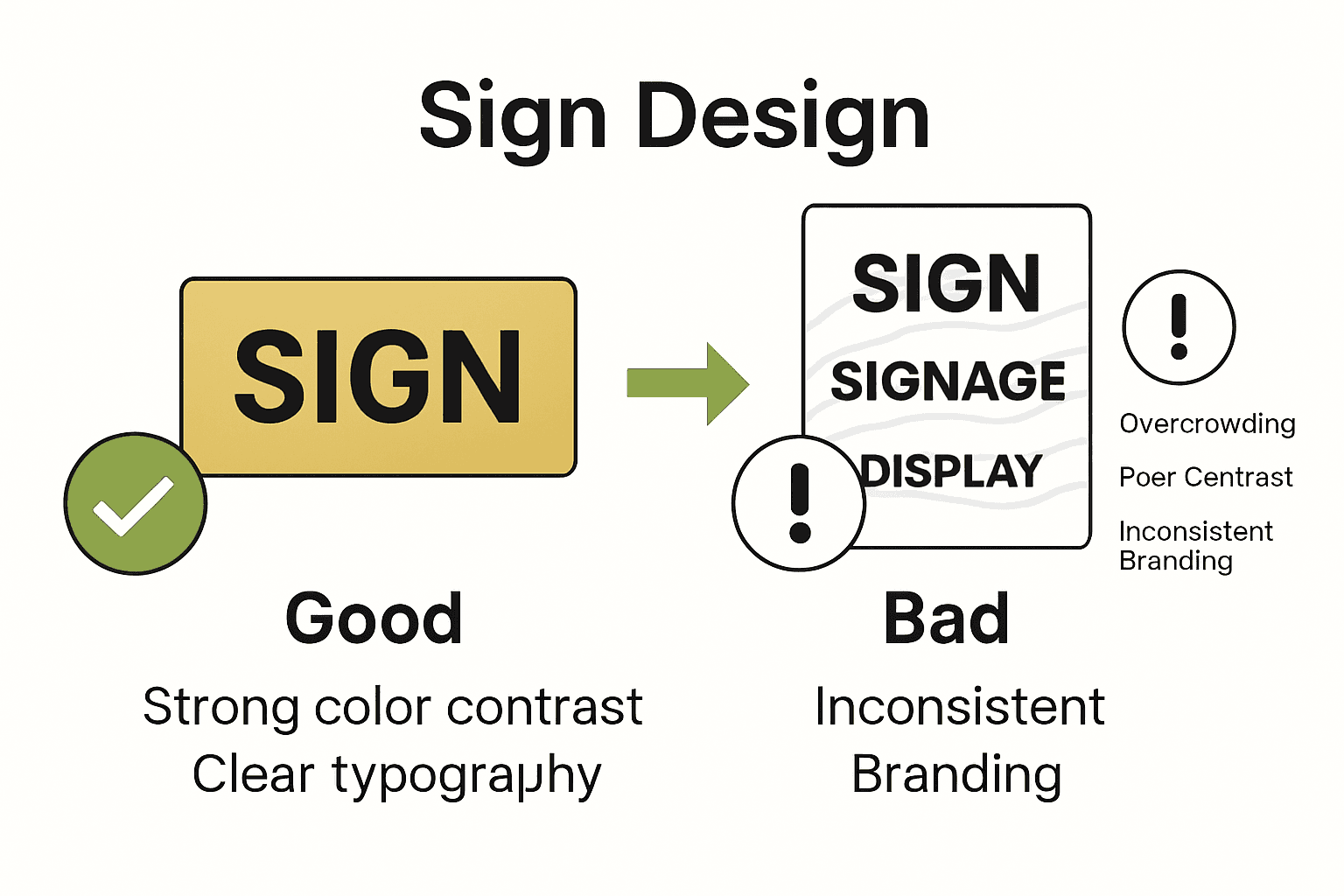
Businesses can dramatically improve their signage by understanding and avoiding these common design mistakes, transforming their visual communication from confusing to compelling.
Elevate Your Brand with Expert Sign Design Solutions
Understanding the importance of sign design means recognizing the challenges of creating clear, memorable, and legally compliant signage that truly represents your brand’s identity. The article highlights key pain points such as poor readability, inconsistent branding, and ignoring ADA compliance. These issues can cause confusion, reduce customer engagement, and even result in legal setbacks.
At Custom Signs Today, we specialize in turning these challenges into opportunities by crafting custom signs that combine effective visual communication principles with durable, high-quality materials. Whether you need attention-grabbing banners, vehicle wraps, or wayfinding signs, our wide range of services can help your business stand out and connect emotionally with your audience.
Ready to transform your signs into powerful branding tools?

Explore our full range of solutions in the Uncategorized category for expert guidance and custom options designed to maximize the impact of your signage. Visit Custom Signs Today now and take the next step toward signage that works as hard as you do.
Frequently Asked Questions
What is the purpose of sign design?
The purpose of sign design is to create visual messages that communicate information quickly, clearly, and memorably. It helps in wayfinding, branding, information transmission, and ensuring safety and compliance.
What are the key elements of effective sign design?
The key elements of effective sign design include line, shape, color, texture, and typography. Each element plays a critical role in attracting attention and communicating messages clearly.
How does sign design impact branding?
Sign design impacts branding by maintaining visual consistency, creating emotional connectivity with audiences, communicating brand personality, aiding memory formation, and differentiating a brand from competitors through unique design approaches.
What common mistakes should be avoided in sign design?
Common mistakes in sign design include overcrowded layouts, poor color contrast, inappropriate font selection, ignoring viewing distance, and inconsistent branding. Avoiding these pitfalls enhances communication effectiveness.