
Most American realtors underestimate the impact of precise sign terminology on property marketing success. In California, using the right industry terms can elevate listings and attract more buyers. Over 80 percent of property shoppers say clear, professional signage influences their perception of a home. This guide breaks down the specialized language and concepts real estate agents need to master for effective custom signage that gets noticed.
Table of Contents
- Defining Custom Signage Industry Terms
- Types of Signs Used in Real Estate
- Material and Design Terminology Explained
- Legal Requirements for California Signage
- Common Mistakes and Terminology Misuse
Key Takeaways
| Point | Details |
|---|---|
| Understand Signage Terminology | Familiarity with terms such as substrate, printing method, and resolution is critical for effective communication with sign manufacturers. |
| Leverage Different Sign Types | Utilize both traditional and digital signage to enhance property marketing strategies and reach broader audiences. |
| Comply with Legal Regulations | Ensure compliance with local zoning laws and ADA requirements to avoid legal complications when installing signs. |
| Avoid Common Mistakes | Be aware of terminology misuse, such as confusing temporary and permanent signs, to maintain professionalism and compliance. |
Defining Custom Signage Industry Terms
Custom signage is more than just printed material – it represents a complex communication landscape with specialized terminology that California Realtors must understand. The International Sign Association’s comprehensive glossary provides critical insights into the nuanced language of visual communication, revealing an intricate world behind what appears to be simple signage.
In the real estate context, several key industry terms are essential for professionals to master. Substrate refers to the base material on which signs are printed – which could range from vinyl and aluminum to coroplast and foam board. Printing method describes how graphics are transferred onto the sign surface, with options including digital printing, screen printing, and vinyl lettering. Understanding these technical specifications helps Realtors communicate precise requirements to sign manufacturers and select the most appropriate signage for property marketing.
Communication clarity requires familiarity with technical specifications like resolution (measured in dots per inch or DPI), color gamut (the range of colors reproducible on a specific system), and bleed area (the extra margin around design elements to prevent white borders during trimming). Sign Research Foundation’s regularly updated glossary highlights these nuanced terms that transform basic sign production into a sophisticated visual communication process.
Pro tip: Always request a digital proof from your sign manufacturer to confirm color accuracy and design placement before final production.
Types of Signs Used in Real Estate
Real estate signage represents a critical marketing tool that goes far beyond simple property identification. Sign types vary dramatically based on purpose and location, enabling realtors to communicate essential property information through strategic visual communication. The International Sign Association identifies multiple sign categories that California real estate professionals can leverage to maximize property visibility and attract potential buyers.
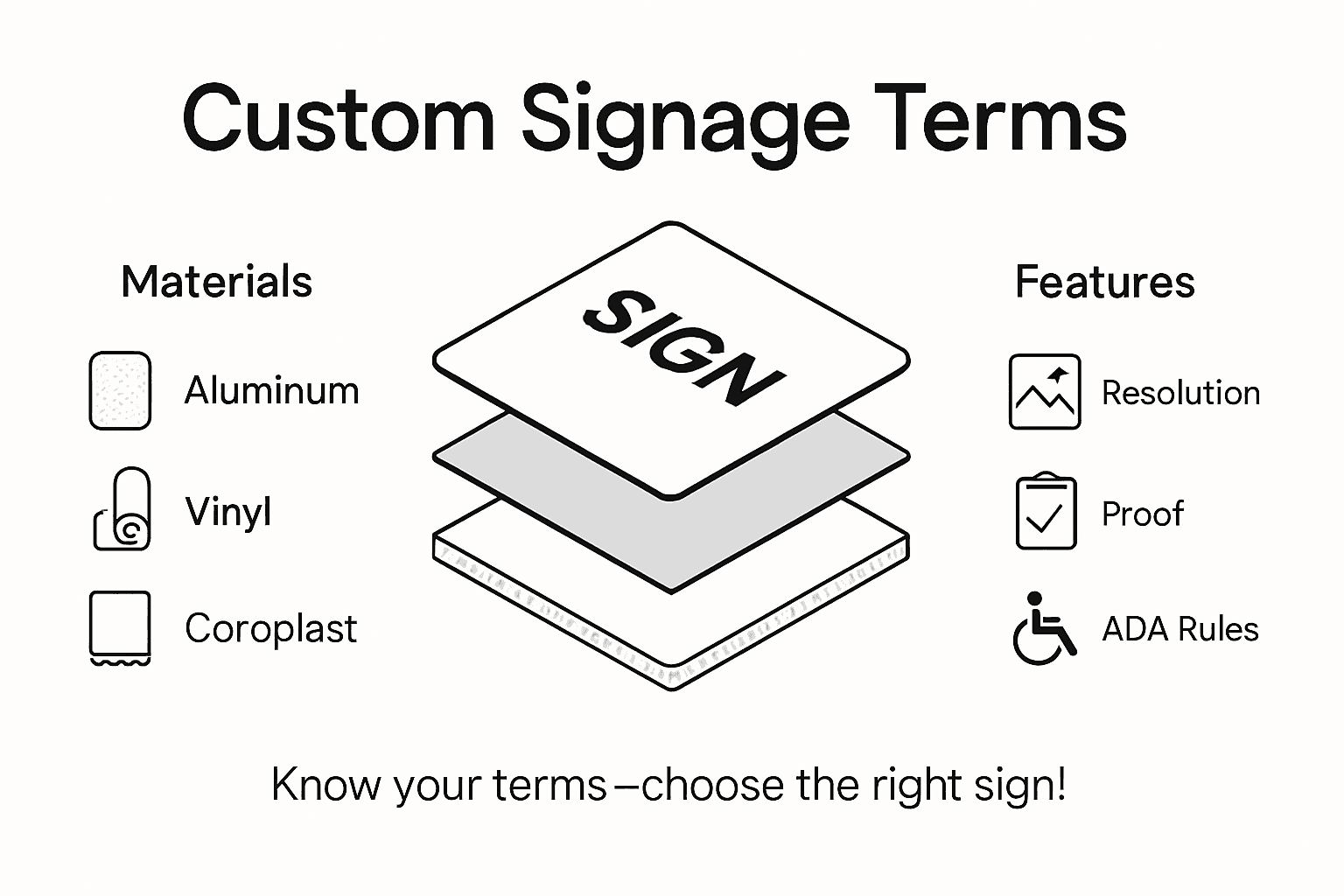
Traditional real estate signage includes several key types. Yard signs are the most recognizable, typically displaying property details like “For Sale” or contact information. Open house signs provide directional guidance and temporary event notifications. Listing signs mounted directly on properties offer comprehensive details about the home, including square footage, price, and agent contact information. Building-mounted signs such as wall signs, window signs, and projecting signs can provide additional marketing opportunities for real estate offices and showcase properties in high-traffic urban environments.
Digital and interactive signage represents an emerging trend in real estate marketing. These advanced sign types include electronic displays with rotating property information, QR code-enabled signs that link directly to online listings, and dynamic signage that can update pricing or availability in real-time. Modern realtors increasingly combine traditional physical signs with digital technologies to create comprehensive marketing strategies that reach broader audiences and provide instantaneous property information.
Here is a comparison of traditional versus digital real estate signage to help you choose the optimal strategy:
| Feature | Traditional Signage | Digital/Interactive Signage |
|---|---|---|
| Visibility | Fixed location, day-only | Adjustable, 24/7 with lighting |
| Update Flexibility | Printed; requires reordering | Content can be updated instantly |
| Interactivity | No digital interaction | QR codes, links, dynamic content |
| Cost | Lower initial, reprint costs | Higher initial, lower update costs |
Pro tip: Invest in high-quality, weather-resistant signs that maintain professional appearance and legibility in various environmental conditions.
Material and Design Terminology Explained
Understanding the nuanced world of signage materials and design requires deep technical knowledge specific to real estate marketing. Signage best practices highlight critical considerations that influence material selection and design effectiveness for California realtors seeking to create impactful visual communication.
Real estate sign materials play a crucial role in durability and visual appeal. Aluminum offers lightweight, rust-resistant properties ideal for outdoor signs, while vinyl provides cost-effective, versatile printing surfaces. Acrylic materials deliver a sleek, professional appearance with excellent weather resistance. Dimensional design techniques expand visual complexity through strategic material choices, allowing realtors to create three-dimensional logos and lettering that stand out in competitive markets. Key design considerations include material thickness, mounting techniques, and surface treatments that enhance visual communication.

Advanced design terminology encompasses technical aspects that transform ordinary signs into sophisticated marketing tools. Color contrast determines readability, with professional recommendations suggesting high-contrast color combinations that maximize visibility from a distance. Illumination techniques like backlit or edge-lit designs ensure signs remain readable during low-light conditions, extending marketing reach beyond daylight hours. Typography selection, including font weight, size, and style, plays a critical role in communicating professionalism and brand identity for real estate professionals.
Pro tip: Select sign materials that complement your local architectural style and withstand specific regional weather conditions for maximum longevity and visual impact.
Legal Requirements for California Signage
Navigating the complex legal landscape of signage requires California realtors to understand intricate local and state regulations that govern property marketing materials. Comprehensive sign code regulations provide crucial guidance for professionals seeking to maintain compliance and avoid potential legal complications.
Zoning restrictions represent a critical consideration for real estate signage placement. Different municipalities within California implement unique regulations concerning sign size, height, location, and illumination. Urban areas like San Francisco and Los Angeles typically enforce stricter signage guidelines compared to rural counties, requiring realtors to obtain specific permits before installing promotional signs. Permit requirements often vary based on sign dimensions, with larger signs necessitating more comprehensive documentation and potentially additional fees from local government offices.
California’s legal framework also addresses several nuanced aspects of sign design and placement. ADA compliance mandates specific visibility and accessibility standards, ensuring signs are readable and positioned to accommodate individuals with disabilities. Lighting regulations restrict brightness levels and illumination techniques to prevent visual disturbances in residential neighborhoods. Realtors must also consider historical district restrictions, which may impose additional constraints on sign design, material selection, and placement to maintain architectural integrity and community aesthetic standards.
Pro tip: Always consult local municipal offices and obtain written confirmation of signage regulations before installing any real estate marketing signs to prevent potential legal complications.
Common Mistakes and Terminology Misuse
Signage best practices reveal numerous potential pitfalls that California realtors must carefully navigate when creating and installing property marketing signs. Understanding these common errors can help professionals avoid costly mistakes and maintain professional communication standards.
One significant area of terminology misuse involves incorrectly classifying sign types. Temporary signs and permanent signs have distinct legal definitions that many realtors inadvertently confuse. For instance, some professionals mistakenly treat open house signs as permanent installations, which can trigger local permit violations. Sign regulation codes specify precise distinctions between sign categories, with specific requirements for duration, placement, and material composition that can dramatically impact legal compliance.
Design and technical terminology present another complex landscape of potential misunderstandings. Substrate confusion frequently occurs when realtors misidentify sign materials, selecting inappropriate substances for specific environmental conditions. Misusing terms like reflectivity, opacity, and luminance can lead to signs that fail to meet local visibility standards or zoning requirements. Professional realtors must develop a nuanced understanding of technical terminology to ensure their marketing materials effectively communicate property information while remaining legally compliant.
This summary highlights common signage terminology mistakes and their real-world consequences:
| Misused Term | Common Error Example | Business Impact |
|---|---|---|
| Temporary Sign | Treated as permanent | Fines, permit violations |
| Substrate | Misidentified material | Poor durability, extra costs |
| Reflectivity | Incorrect standard specified | Fails visibility requirement |
| ADA Compliance | Assumed not required | Legal risk, accessibility issues |
Pro tip: Maintain a detailed reference guide of local sign terminology and regularly consult municipal resources to stay updated on current signage regulations.
Master Custom Signage Terminology with Expert Solutions Tailored for California Realtors
Understanding complex signage terms such as substrate, printing methods, and ADA compliance is crucial for California Realtors aiming to stand out in a competitive market. Missteps in material choice or regulatory compliance can lead to costly delays and undermine your property’s visibility. At Uncategorized –, we specialize in transforming your signage challenges into effective, durable custom signs that meet all legal requirements and design expectations.
Don’t let confusing industry jargon hold back your real estate marketing success. Visit Custom Signs Today now to explore our full range of custom sign solutions designed specifically for real estate professionals. Request a free quote today and take immediate action to enhance your property listings with visually compelling, compliant signs crafted from high-quality materials that last.
Frequently Asked Questions
What is a substrate in custom signage?
The substrate refers to the base material on which signs are printed, such as vinyl, aluminum, coroplast, or foam board.
What are the benefits of using digital signage in real estate?
Digital signage allows for real-time updates, interactivity through QR codes, and enhanced visibility 24/7 compared to traditional signage, which is fixed and only visible during the day.
How important is color contrast in sign design?
Color contrast is crucial for readability. High-contrast color combinations help ensure that signs are easily visible and legible from a distance.
What legal requirements should realtors be aware of when using signage?
Realtors must understand zoning restrictions, permit requirements, ADA compliance for accessibility, and regulations specific to historical districts to avoid legal complications.