
Nearly 85 percent of American home sales involve signage as a key marketing tool, yet many real estate agents still struggle with choosing the right post and panel signs for maximum property visibility. In a competitive market, clear and durable signage can be the difference between a quick sale and lingering on the market. Discover how the right post and panel signs help American agents stand out, communicate vital property information, and attract serious buyers with professionalism and impact.
Table of Contents
- What Defines A Post And Panel Sign
- Common Types For Real Estate Agents
- Key Features And Material Options Explained
- Regulatory Requirements And Zoning Rules
- Pricing, Lifespan, And Cost Factors
Key Takeaways
| Point | Details |
|---|---|
| Sign Characteristics | Post and panel signs are durable freestanding structures ideal for real estate advertising, compliant with local regulations. |
| Material Selection | Choosing the right materials is crucial for durability and compliance with local climate conditions; options include treated wood and aluminum composite panels. |
| Regulatory Compliance | Agents must understand local zoning rules regarding sign size, placement, and restrictions to avoid legal issues. |
| Cost Considerations | Base material, design complexity, and local conditions influence the cost of post and panel signs; agents should anticipate spending between $200 to $800 on quality signage. |
What Defines a Post and Panel Sign
A post and panel sign represents a specialized freestanding signage solution designed for real estate professionals to communicate property information effectively. According to local municipal codes, these signs are characterized by a durable display panel mounted on removable supporting posts that are embedded directly into the ground without permanent binding materials like cement or concrete.
The structural design of post and panel signs makes them unique among real estate marketing tools. Building code standards specify that these signs must be wholly supported by a sign structure planted into the ground, ensuring stability while maintaining flexibility for property marketing purposes. Unlike portable signs, post and panel signs are typically installed on private property and serve specific purposes such as advertising property sales, leases, or development projects.
Key characteristics of post and panel signs include their robust construction, ground-mounted installation, and ability to withstand various environmental conditions. Real estate professionals appreciate these signs because they provide a professional, semi-permanent solution for displaying critical property information. The signs are engineered to be durable, weather-resistant, and compliant with local signage regulations.
Pro tip: When selecting a post and panel sign, measure your property frontage and check local zoning regulations to ensure your sign meets size and placement requirements.
Common Types for Real Estate Agents
Real estate professionals utilize various types of post and panel signs to effectively market properties across different zoning districts. According to municipal regulations, these signs are strategically designed for commercial, industrial, mixed-use, and residential areas, with specific quantity and area restrictions based on lot size.
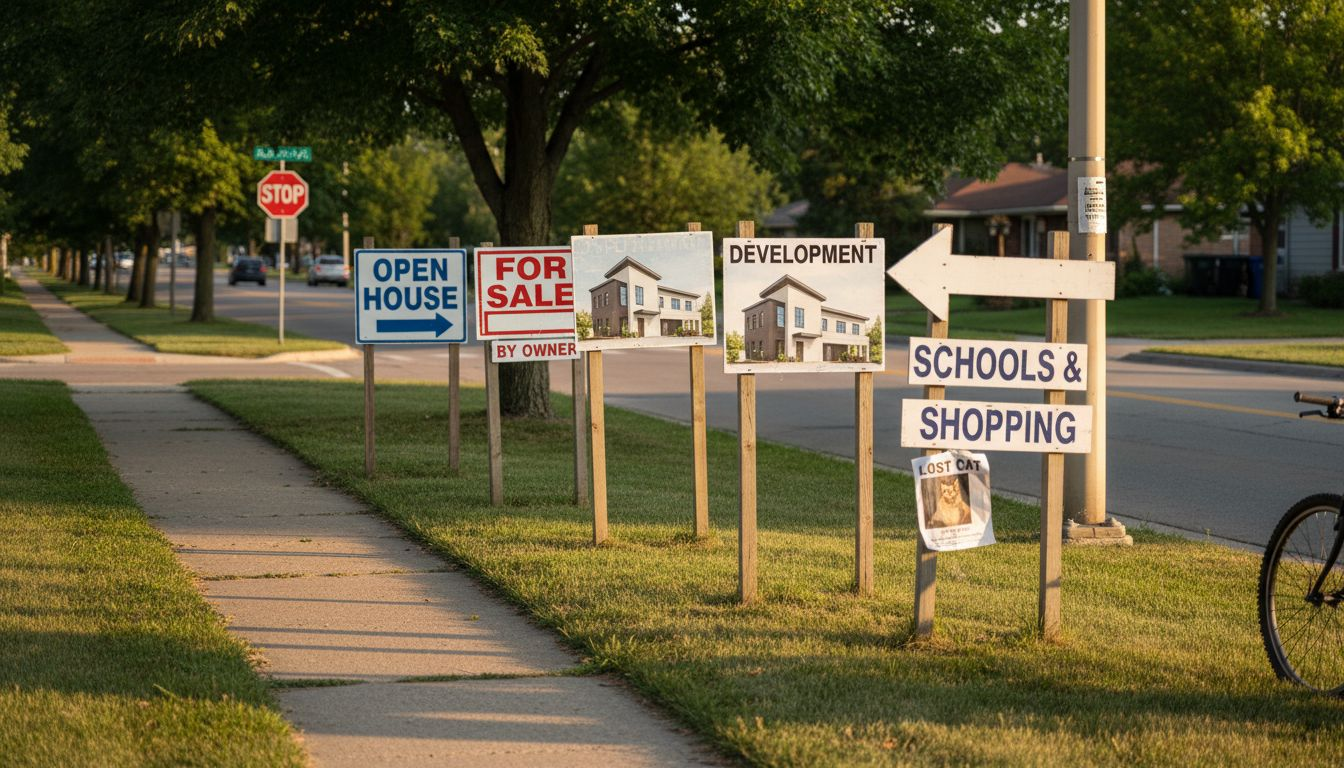
The primary categories of post and panel signs for real estate agents include directional signs, open house signs, listing signs, and development project signs. Professional sign organizations highlight that these signs differ in purpose and placement, ranging from temporary marketing tools to more permanent property markers. Directional signs help potential buyers locate properties, while listing signs provide critical property details such as price, contact information, and sale status.
Different sign types serve unique marketing objectives. Open house signs are typically portable and used for short-term event promotion, whereas permanent post and panel signs offer comprehensive property information for ongoing marketing efforts. Real estate agents must carefully select sign types that comply with local zoning regulations, ensuring visibility and legal compliance while effectively attracting potential buyers.
Pro tip: Always verify local zoning requirements and obtain necessary permits before installing any real estate signage to avoid potential legal complications.
Here’s a comparison of common post and panel sign types used in real estate marketing:
| Sign Type | Most Effective For | Typical Location | Notable Benefits |
|---|---|---|---|
| Directional | Guiding property seekers | Near roadways, corners | Improved property visibility |
| Open House | Event promotion | Temporary at property | Generates event traffic |
| Listing | Displaying property info | Front yards, entrances | Clear sale/lease messaging |
| Development Project | Large-scale projects | Commercial lots | Showcases future projects |
Key Features and Material Options Explained
Post and panel signs for real estate marketing are engineered with specific material considerations to ensure durability and performance. Structural wood panels utilized in these signs typically include plywood and oriented strand board (OSB), selected for their exceptional moisture resistance and exterior durability. These materials are critically evaluated based on their bond classification and ability to withstand prolonged outdoor exposure.
Material composition plays a crucial role in sign effectiveness. Wood-based structural systems employ both vertical wooden posts and display panels, with careful selection focused on fire resistance, load-bearing capacity, and compliance with building codes. Real estate agents can choose between several material options, including:
- Treated wooden panels with weather-resistant coatings
- Aluminum composite panels for lightweight durability
- High-density polyethylene panels for extreme weather conditions
- Fiberglass reinforced panels for enhanced structural integrity
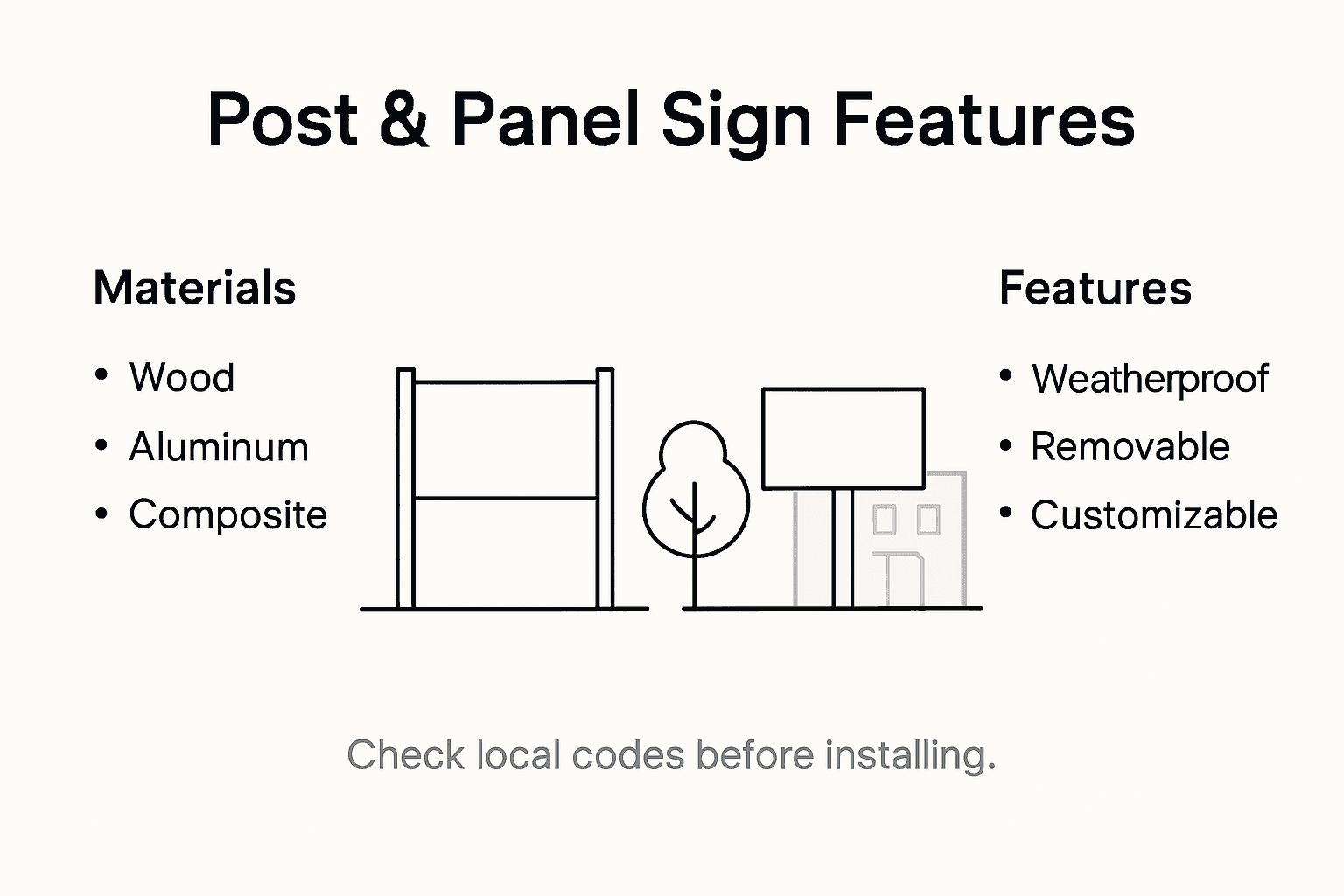
The primary features of high-quality post and panel signs include robust construction, weather resistance, easy installation, and the ability to showcase property information clearly and professionally. Agents should prioritize materials that offer UV protection, minimal maintenance requirements, and longevity in various environmental conditions.
Pro tip: Select sign materials that match your local climate conditions and prioritize panels with protective coatings to extend the sign’s effective lifespan.
This summary highlights how material choice impacts post and panel sign performance and cost:
| Material | Durability Level | Cost Range | Ideal Usage |
|---|---|---|---|
| Treated Wood Panel | Moderate to High | Affordable | Residential properties |
| Aluminum Composite | High | Moderate | Commercial districts |
| Polyethylene Panel | Very High | Premium | Harsh climates |
| Fiberglass Reinforced | Extremely High | Highest | Industrial sites |
Regulatory Requirements and Zoning Rules
Local zoning ordinances establish critical guidelines for post and panel signs, creating a complex framework of regulations that real estate professionals must carefully navigate. These regulations typically dictate specific parameters including sign placement, size, duration of display, and illumination restrictions. Each zoning district maintains unique requirements, meaning agents must thoroughly understand local municipal codes before installing any signage.
The primary regulatory considerations for post and panel signs include:
- Mandatory placement on private property
- Strict limitations on sign height and total display area
- Prohibition of signs in public rights-of-way
- Restrictions on decorative attachments like balloons or flags
- Specific quantity limits based on property type and zoning classification
County-level sign regulations emphasize safety and visibility standards, requiring that real estate signs do not obstruct traffic sightlines or mimic official traffic signage. Temporary signs are often exempt from permit requirements but must still comply with fundamental safety and placement guidelines. Real estate agents must carefully balance marketing needs with precise regulatory compliance to avoid potential fines or required sign removals.
Navigating these complex regulatory landscapes requires meticulous attention to detail. Agents should maintain comprehensive documentation of sign specifications, take photographs of sign placements, and maintain open communication with local zoning authorities to ensure full compliance.
Pro tip: Always request a written copy of local sign ordinances and consult with municipal planning departments before installing any real estate signage to prevent potential legal complications.
Pricing, Lifespan, and Cost Factors
Sign pricing and durability represent complex considerations for real estate professionals investing in post and panel signage. The total cost can fluctuate dramatically based on multiple interconnected factors, including material selection, design complexity, and expected environmental performance. Real estate agents must balance initial investment with long-term durability to maximize their marketing effectiveness.
The primary cost components for post and panel signs include:
- Base material expenses (wood, metal, composite)
- Design and graphic production
- Installation requirements
- Potential customization features
- Surface treatment and weather protection
Structural panel materials play a critical role in determining both upfront costs and long-term value. Exterior-grade plywood and oriented strand board (OSB) offer a strategic balance between affordability and durability, with typical lifespans ranging from 5 to 10 years depending on environmental conditions and maintenance practices. Agents should anticipate spending between $200 to $800 for professional-grade real estate signs, with premium options potentially exceeding $1,000 for highly customized or large-format displays.
Cost-effective strategies involve carefully evaluating material performance, considering local climate challenges, and selecting signs that offer the best combination of durability and visual appeal. Factors like UV resistance, moisture protection, and structural integrity directly impact the sign’s long-term value and marketing effectiveness.
Pro tip: Invest in high-quality materials and protective coatings upfront to reduce long-term replacement costs and maintain a professional marketing appearance.
Elevate Your Real Estate Marketing with Custom Post and Panel Signs
Navigating the challenges of creating durable and compliant post and panel signs can be tough for real estate professionals. From choosing the right materials like treated wood or aluminum panels to meeting local zoning requirements, many factors affect how effectively your property information reaches potential buyers. At Uncategorized, we specialize in delivering tailored signage solutions designed to stand up to weather, stay vibrant, and communicate clearly.
Take the stress out of sign creation by partnering with experts who understand the importance of professional, semi-permanent post and panel signs for real estate. Visit Custom Signs Today to explore custom options, request a free quote, and ensure your property gets the attention it deserves with high-quality, compliant signage crafted for maximum impact.
Frequently Asked Questions
What is a post and panel sign in real estate?
A post and panel sign is a freestanding signage solution used by real estate professionals to communicate property information. It features a display panel mounted on supporting posts embedded in the ground, designed to be durable and compliant with local municipal codes.
What are the common types of post and panel signs for real estate?
Common types include directional signs, open house signs, listing signs, and development project signs. Each type serves a different purpose, from guiding potential buyers to providing key information about properties.
What materials are used for post and panel signs?
Post and panel signs can be made from various materials such as treated wood panels, aluminum composite panels, high-density polyethylene panels, and fiberglass reinforced panels. The choice of material impacts durability, weather resistance, and overall appearance.
What are the regulatory requirements for post and panel signs?
Regulatory requirements typically dictate sign placement, size, and display duration. Signs must be installed on private property, comply with local zoning laws, and cannot obstruct traffic sightlines or mimic official signage.
Recommended
- Custom Signs Today | West Palm Beach FL Post and Panel Signs
- Custom Signs Today | West Palm Beach Sign Services
- 7 Key Examples of Real Estate Signs to Boost Sales –
- 7 Essential Types of Real Estate Signs to Consider –
- Oaklawn Residential Park Portals Greene Greene
- What is Commercial Property Insurance? Understanding Its Importance – Rental Income Insurance