
Over eighty percent of American consumers report noticing branded banners while shopping or attending events. For local small business owners and event organizers, making a strong impression is crucial in crowded American markets. Using eye-catching custom banners can set your brand apart and help attract more attention, whether on a busy street or at a community fair. This guide helps clarify how banners drive results through smart design and clear messages tailored to your American audience.
Table of Contents
- Defining Banners In Modern Marketing
- Types Of Banners And Key Differences
- How Banners Influence Buying Behavior
- Integrating Banners With Digital Strategies
- Common Banner Design Mistakes To Avoid
Key Takeaways
| Point | Details |
|---|---|
| Banners are versatile marketing tools | They effectively communicate brand messages and attract audience attention across various platforms. |
| Types of banners vary in format and impact | Digital and physical banners have distinct advantages, such as real-time targeting for digital and tangible presence for physical. |
| Psychological triggers enhance consumer engagement | Strategic design elements in banners influence buying behavior by evoking emotions, familiarity, and visual appeal. |
| Avoid common design mistakes | Effective banner design should prioritize clarity and branding consistency to maintain audience interest and comprehension. |
Defining Banners in Modern Marketing
Banners represent powerful visual communication tools designed to capture audience attention and convey brand messages quickly and effectively. In modern marketing strategies, these graphic advertising pieces serve as critical vehicles for promoting products, services, and ideas across multiple platforms. From digital web displays to physical printed materials, banners have evolved into versatile marketing instruments that enable businesses to communicate complex narratives through compelling visual design.
Originally emerging in digital spaces around 1993, banner advertisements have transformed dramatically from simple clickable web ads into sophisticated marketing assets. These graphic elements now function as dynamic communication channels that allow real-time monitoring and targeted delivery based on viewer demographics and interests. Unlike traditional static advertisements, modern banners can adapt dynamically, providing marketers unprecedented flexibility in reaching specific audience segments.
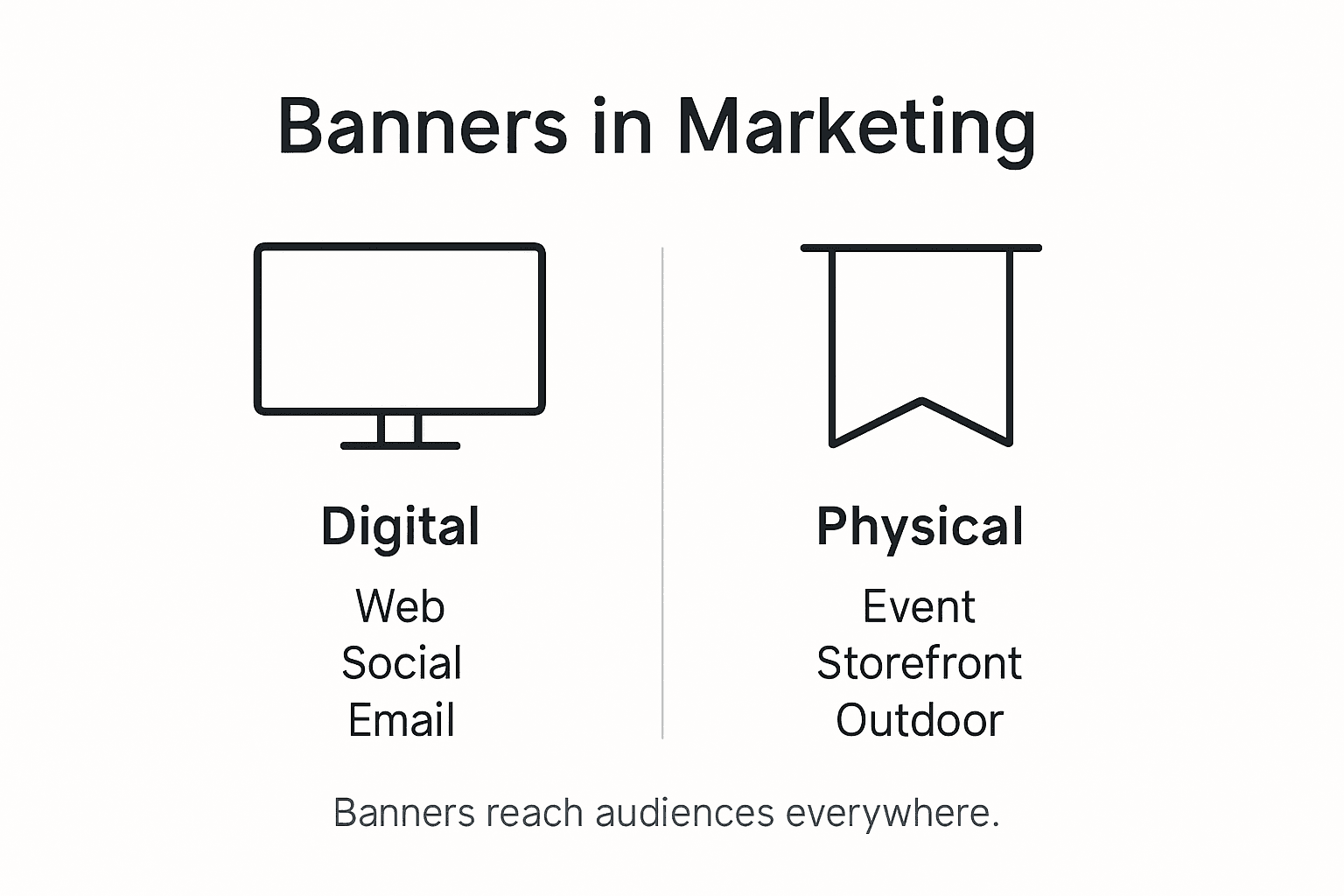
Marketing banners encompass a wide range of formats and applications, including digital web banners, social media graphics, physical printed signs, trade show displays, and event promotional materials. Graphic advertising pieces are strategically designed to facilitate quick understanding of brand messages, drawing viewer attention through strategic color schemes, typography, imagery, and messaging. Their primary objective remains consistent: generate interest, communicate value propositions, and motivate potential customers to engage further with the brand.
Pro tip: When designing marketing banners, prioritize visual clarity and focus on communicating one primary message that resonates with your target audience’s specific needs and preferences.
Types of Banners and Key Differences
Banners represent a diverse marketing landscape with multiple formats designed to meet specific communication objectives. Digital and print banners encompass an extensive range of styles, each tailored to unique audience engagement strategies. The primary categories include digital web banners, social media graphics, physical printed signs, trade show displays, and event promotional materials, each offering distinct advantages for brand visibility.
Digital Banners come in several sophisticated variations that enable dynamic audience targeting. These include:
- Static Image Banners: Simple, classic designs with fixed graphics
- Animated GIF Banners: Introducing motion to capture viewer attention
- HTML5 Interactive Banners: Advanced designs allowing user interaction
- Rich Media Banners: Complex advertisements incorporating video, audio, or expandable elements
Physical Printed Banners offer tangible marketing solutions with diverse applications. Web banner technologies have influenced physical banner design, creating more strategic and visually compelling options. Key physical banner types include:
- Vinyl Banners: Durable, weather-resistant outdoor advertising
- Fabric Banners: Lightweight, elegant options for indoor events
- Retractable Banners: Portable displays ideal for trade shows and conferences
- Banner Stands: Flexible mounting solutions for various presentation contexts
Pro tip: Select banner types that align precisely with your specific marketing objectives, considering factors like target audience, venue, and desired viewer interaction.
Here’s a concise comparison of digital versus physical banner formats and their business impact:
| Criteria | Digital Banners | Physical Printed Banners |
|---|---|---|
| Audience Reach | Global online exposure | Local or event-specific |
| Customization Speed | Instant modifications possible | Requires reprinting for changes |
| Tracking & Analytics | Detailed data available | Limited to direct observation |
| Interactivity | Clickable and dynamic features | Static visual presentation |
How Banners Influence Buying Behavior
Consumer psychology plays a critical role in understanding how banners transform viewer perceptions and purchasing decisions. Advertising communications serve as powerful psychological triggers that shape consumer attitudes and behaviors through strategic visual messaging. Banners operate as more than simple visual tools – they are sophisticated instruments of persuasion that tap into emotional and cognitive processes driving consumer engagement.
Banners influence buying behavior through multiple psychological mechanisms:
- Emotional Resonance: Creating immediate emotional connections
- Brand Familiarity: Reinforcing recognition and trust
- Information Transmission: Quickly communicating product value
- Social Validation: Suggesting popularity and desirability
- Visual Stimulation: Capturing attention through compelling design
Consumer behavior research reveals that well-crafted banners can generate powerful psychological responses that directly impact purchase intentions. These visual communications activate neural pathways related to decision-making, triggering subconscious reactions that nudge consumers toward specific purchasing choices. By strategically combining visual elements, messaging, and design principles, marketers can create banner experiences that subtly guide consumer perceptions and motivate action.
Pro tip: Design banner advertisements that balance emotional appeal with clear, concise value propositions to maximize psychological impact on potential buyers.
Use this reference table to quickly understand common psychological triggers employed in banner marketing:
| Psychological Trigger | How It Shapes Buying Decisions | Business Benefit |
|---|---|---|
| Emotional Appeal | Evokes feelings to influence perception | Increases interest |
| Familiarity | Builds trust and brand recognition | Enhances loyalty |
| Social Proof | Illustrates popularity or endorsements | Boosts credibility |
| Visual Stimulation | Draws attention with design elements | Improves engagement rates |
Integrating Banners with Digital Strategies
Digital marketing has transformed traditional banner advertising into a sophisticated, data-driven communication channel. Digital media integration requires marketers to leverage advanced technologies and strategic insights to create more targeted, responsive banner experiences across multiple platforms. This approach goes beyond simple visual placement, demanding a comprehensive understanding of consumer behaviors and technological capabilities.
Key strategies for effective banner integration include:
- Cross-Platform Optimization: Ensuring consistent messaging across web, mobile, and social channels
- Data-Driven Targeting: Utilizing analytics to personalize banner content
- Behavioral Tracking: Adapting banner designs based on user interactions
- Dynamic Content Adaptation: Creating responsive banners that adjust in real-time
- Multi-Channel Synchronization: Aligning banner messaging with broader marketing campaigns
Digital advertising technologies now enable unprecedented precision in banner placement and audience engagement. Modern marketers can leverage artificial intelligence and machine learning algorithms to micro-target banner advertisements, ensuring that each visual communication reaches the most relevant audience segments. By combining technological capabilities with strategic design principles, businesses can transform banners from passive visual elements into dynamic, interactive marketing tools that drive meaningful consumer connections.

Pro tip: Implement continuous performance tracking and A/B testing to refine banner strategies and maximize digital marketing effectiveness.
Common Banner Design Mistakes to Avoid
Visual communication demands precision, especially when designing marketing banners that capture audience attention. Banner design mistakes can dramatically reduce a marketing message’s effectiveness, turning potentially powerful visual tools into ineffective noise. Successful banner design requires a strategic approach that balances creativity with clear, purposeful communication.
Critical design errors that undermine banner effectiveness include:
- Text Overload: Cramming too much information into limited space
- Poor Color Contrast: Creating unreadable or visually jarring compositions
- Inconsistent Branding: Deviating from established visual identity
- Complex Layouts: Designing cluttered or confusing visual hierarchies
- Irrelevant Imagery: Using graphics that don’t directly support the core message
Accessibility principles play a crucial role in creating effective banner designs that communicate clearly to all viewers. Professional designers understand that visual communication must transcend aesthetic preferences, focusing instead on creating inclusive, readable experiences that work across different devices and user capabilities. This means selecting high-contrast color schemes, using legible typography, and ensuring that visual elements communicate effectively without relying solely on color or complex visual cues.
Pro tip: Always test your banner design with multiple people, including those with different visual abilities, to ensure maximum clarity and impact.
Transform Your Brand Visibility with Custom Banners That Speak Volumes
The article highlights a key challenge businesses face: capturing attention and communicating powerful messages clearly through banners. Many companies struggle with banner design mistakes or lack the expertise to create visual communications that truly influence buying behavior and integrate seamlessly with digital strategies. If your goal is to boost emotional resonance, enhance brand familiarity, and use vibrant visual stimulation to engage customers, a custom approach becomes essential.
At Uncategorized, we specialize in tailored banner solutions crafted to match your unique marketing objectives and help overcome issues like text overload or poor color contrast. Using durable materials suitable for indoor and outdoor use, our products are designed to maximize your banner’s psychological impact and ensure you stand out in any setting.
Ready to elevate your brand visibility with expertly designed, high-quality banners that truly capture attention? Visit Custom Signs Today now to explore custom options and request a free quote tailored to your business needs. Don’t settle for ordinary when your brand deserves extraordinary signage crafted to convert viewers into loyal customers.
Frequently Asked Questions
What are the different types of banners used in marketing?
Banners in marketing primarily fall into two categories: digital and physical. Digital banners include static image banners, animated GIF banners, HTML5 interactive banners, and rich media banners. Physical printed banners encompass vinyl banners, fabric banners, retractable banners, and banner stands.
How do banners influence consumer buying behavior?
Banners shape consumer behavior by creating emotional connections, reinforcing brand familiarity, transmitting important information quickly, providing social validation, and capturing attention through compelling designs. These elements work together to influence perceptions and purchase intentions.
What are some common design mistakes to avoid when creating banners?
Common design mistakes include text overload, poor color contrast, inconsistent branding, complex layouts, and irrelevant imagery. Avoiding these mistakes ensures that banners communicate messages clearly and effectively.
How can banners be integrated with digital marketing strategies?
Banners can be integrated into digital strategies through cross-platform optimization, data-driven targeting, behavioral tracking, dynamic content adaptation, and multi-channel synchronization. These approaches enhance audience engagement and ensure consistent messaging across all channels.
Recommended
- Complete Guide to Why Use Custom Banners –
- How to Create Business Banners for Effective Promotion –
- 7 Types of Promotional Banners Every Business Should Know –
- What is a Banner Sign? Understanding its Purpose and Impact –
- Corporate Event Branding – Shaping Memorable Experiences – Winelands Function – For Every Occasion, Your Celebration