
More than eighty percent of American businesses rely on building signs to guide customers and make lasting first impressions. Choosing the right sign is not just about visibility, it shapes your reputation and brand credibility every day. With American storefronts competing for attention, understanding the full purpose and potential of building signs helps you stand out and connect with visitors in ways that go beyond a simple nameplate.
Table of Contents
- Defining Building Signs And Their Purpose
- Types Of Building Signs And Key Uses
- Design Features And Customization Options
- Legal Requirements And Compliance Standards
- Costs, Maintenance, And Common Pitfalls
Key Takeaways
| Point | Details |
|---|---|
| Building Signs are Essential for Brand Identity | They not only identify structures but also convey an organization’s values and professional image. |
| Diverse Types of Building Signs | There are various sign types, including identification, directional, and regulatory signs, each serving specific communication purposes. |
| Importance of Design and Compliance | Effective signage requires careful design consideration and adherence to legal requirements to ensure visibility and functionality. |
| Ongoing Maintenance is Critical | Regular upkeep and updates of building signs are necessary to maintain brand relevance and functionality over time. |
Defining Building Signs and Their Purpose
Building signs are critical visual communication tools that serve multiple essential functions for businesses, organizations, and property owners. These strategically placed markers help identify locations, provide critical information, and create powerful first impressions for visitors and potential customers.
Building identification signage fundamentally helps individuals locate and recognize specific structures. Building identification signs are typically mounted near building entrances, either on pedestals or directly on the building facade, with the primary purpose of announcing the building’s name and helping people navigate effectively. These signs can be positioned in various locations, including entry points, roadside areas, or directly on building exteriors.

The purpose of building signs extends far beyond simple identification. They function as powerful branding tools that communicate an organization’s professional image, values, and identity. Business sign design plays a crucial role in attracting attention, establishing credibility, and creating a memorable visual representation of a company. Whether mounted on exterior walls, attached to entry points, or positioned near main entrances, these signs work continuously to represent an organization’s visual brand.
Building signs come in multiple formats and styles, each serving specific communication objectives:
- Identification Signs: Clearly display building names and numbers
- Directional Signs: Guide visitors through complex spaces
- Informational Signs: Provide essential details about the location
- Regulatory Signs: Communicate rules and compliance requirements
These versatile communication tools not only help people navigate physical spaces but also play a strategic role in marketing, branding, and creating professional visual environments.
Types of Building Signs and Key Uses
Building signs represent a diverse category of visual communication tools designed to serve multiple strategic purposes for businesses and organizations. Building signage types encompass several distinct mounting styles and functional approaches that cater to different architectural and communication needs.
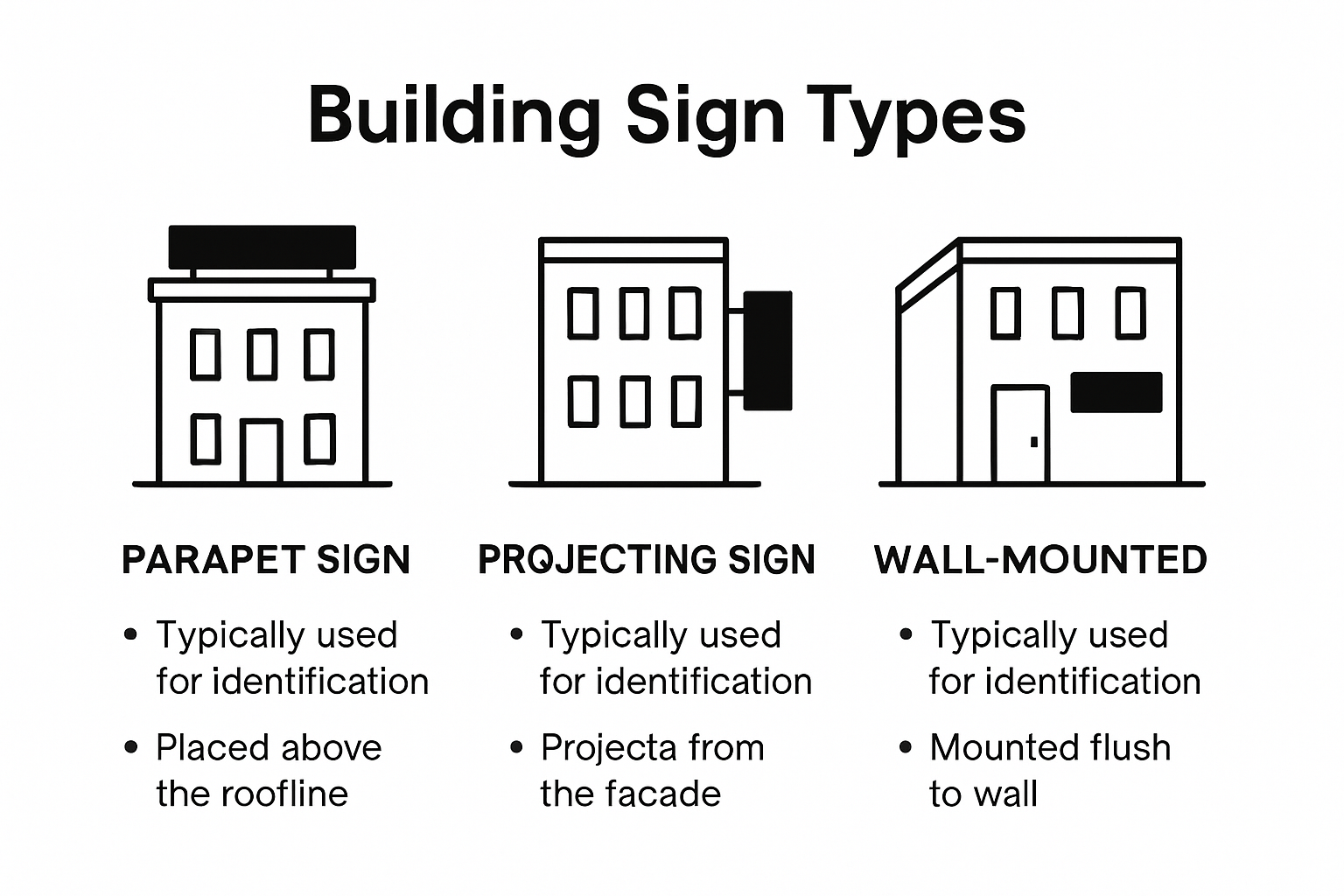
The most common building sign configurations include parapet signs mounted on building parapets, projecting signs that extend perpendicularly from structures, roof signs positioned on top of buildings, and wall or fascia signs attached directly to exterior walls. Each type offers unique visibility and branding opportunities, allowing businesses to customize their visual communication strategy based on their specific architectural layout and marketing objectives.
Businesses can leverage different sign types to achieve specific communication goals. Exterior signage basics play a critical role in creating memorable brand experiences and guiding potential customers. Identification signs help visitors locate a specific building, directional signs navigate complex spaces, and branded wall signs create powerful first impressions that communicate a company’s professional identity.
Key building sign types include:
- Identification Signs: Display building names and numbers
- Directional Signs: Guide visitors through complex environments
- Informational Signs: Provide essential location details
- Branded Wall Signs: Communicate company visual identity
- Regulatory Signs: Communicate rules and compliance requirements
Choosing the right sign type depends on architectural constraints, branding goals, and practical communication needs. The most effective building signs seamlessly blend functional information with compelling visual design, transforming simple markers into powerful marketing and navigation tools.
Design Features and Customization Options
Building sign design requires careful consideration of multiple visual and functional elements that transform simple markers into powerful communication tools. Design principles such as contrast, alignment, and repetition play a critical role in creating signage that effectively communicates information while maintaining visual appeal and accessibility.
Effective signage design involves integrating clear communication strategies with sophisticated visual elements. Typography, color selection, material choices, and overall aesthetic composition are crucial in developing signs that not only provide information but also reflect a company’s professional brand identity. Businesses can customize their signs through various design parameters to create unique visual representations.
Key customization options for building signs include:
- Material Selection: Choose from options like metal, acrylic, wood, or composite materials
- Color Palette: Match corporate branding or create high-contrast visibility
- Illumination Styles: Select from backlit, front-lit, or channel letter designs
- Dimensional Variations: Create flat, raised, or three-dimensional sign elements
- Mounting Configurations: Adapt to different architectural spaces and visibility requirements
The most successful building signs strategically balance aesthetic appeal with functional communication, ensuring that every design element serves a specific purpose in representing the organization’s visual identity and practical information needs.
Legal Requirements and Compliance Standards
Building sign regulations represent a complex network of legal requirements that businesses must carefully navigate to ensure proper installation and visibility. Signage should complement surroundings and integrate into architectural design, while adhering to specific municipal, state, and federal guidelines that govern sign placement, dimensions, and visual characteristics.
A comprehensive and coordinated signage system ensures not only legal compliance but also provides clear information for visitors, employees, and stakeholders. Businesses must consider multiple legal dimensions when designing building signs, including zoning restrictions, accessibility standards, visibility requirements, and American Disabilities Act (ADA) guidelines that mandate specific design elements for public spaces.
Key legal compliance considerations for building signs include:
- Zoning Restrictions: Understand local municipal codes regarding sign size and placement
- ADA Accessibility: Ensure signs meet federal guidelines for readability and navigation
- Permit Requirements: Obtain necessary approvals from local authorities
- Height and Dimension Limits: Adhere to specific measurement standards
- Material Safety Regulations: Use approved materials that meet safety standards
Successful sign implementation requires proactive engagement with local regulatory frameworks, careful design planning, and a commitment to creating communication tools that are both legally compliant and functionally effective.
Costs, Maintenance, and Common Pitfalls
Building sign investments require careful financial planning and ongoing strategic management to ensure long-term effectiveness and value. The initial costs of custom signage can vary significantly, with factors like material selection, size, complexity, and installation requirements directly impacting the overall financial investment businesses must consider.
Effective signage management involves addressing potential pitfalls that can compromise a sign’s functionality and impact. Why Use Business Signs requires understanding the hidden challenges, including issues like inadequate placement, poor visibility, and the critical need for regular maintenance and updates that prevent communication breakdowns.
Key cost and maintenance considerations include:
- Material Durability: Select materials that withstand local environmental conditions
- Regular Cleaning: Implement scheduled maintenance to preserve sign appearance
- Periodic Updates: Refresh signage to maintain brand relevance and accuracy
- Repair Budget: Allocate funds for potential damage or wear-and-tear repairs
- Technology Integration: Consider future upgrading or digital sign conversion costs
Successful sign management requires a proactive approach that balances initial investment with long-term maintenance strategies, ensuring your building signs continue to effectively communicate your brand’s identity and provide critical information for years to come.
Elevate Your Business Presence with Custom Building Signs
Struggling to make your building stand out or communicate your brand effectively Can unclear signage cause confusion and lost customers Understanding the impact of building signs is the first step to solving these challenges. Whether you need identification signs, directional markers, or branded wall signs, the right design and materials are key to creating lasting impressions that attract and guide visitors while ensuring legal compliance.
Discover how custom signage solutions from https://customsignstoday.us can transform your property into a powerful marketing tool Our expertise covers every aspect of high-quality, durable building signs tailored to your specific needs and branding goals Don’t let your message go unnoticed Act now to request a free quote and find the perfect signage solution that balances design, functionality, and compliance Visit our main site to explore options and take your business visibility to the next level.
Frequently Asked Questions
What are building signs used for?
Building signs are used for identifying locations, providing essential information, guiding visitors, and promoting branding for businesses and organizations.
What types of building signs are available?
Common types of building signs include identification signs, directional signs, informational signs, branded wall signs, and regulatory signs, each serving specific communication and branding purposes.
How can I customize my building sign design?
Customization options for building signs include material selection, color palette, illumination styles, dimensional variations, and mounting configurations to align with a brand’s identity and architectural needs.
What legal requirements should be considered for building signs?
When designing building signs, it’s important to consider zoning restrictions, ADA accessibility guidelines, permit requirements, and material safety regulations to ensure compliance with local laws.
Recommended
- Why Use Business Signs: Complete Guide for 2025 –
- What Is Business Storefront Signage? Complete Overview –
- Role of Business Signs: Complete Guide for 2025 –
- How to Design Business Signs That Boost Visibility –
- Understanding Digital Signage for Offices: Key Insights – Projector Display
- How to Enhance Brand Visibility for Small Businesses – Paul Baguley
- Role of Design in Business – Driving Growth and Trust