{
“@type”: “Article”,
“image”: {
“url”: “https://csuxjmfbwmkxiegfpljm.supabase.co/storage/v1/object/public/blog-images/organization-6408/1771487375521_image.png”,
“@type”: “ImageObject”,
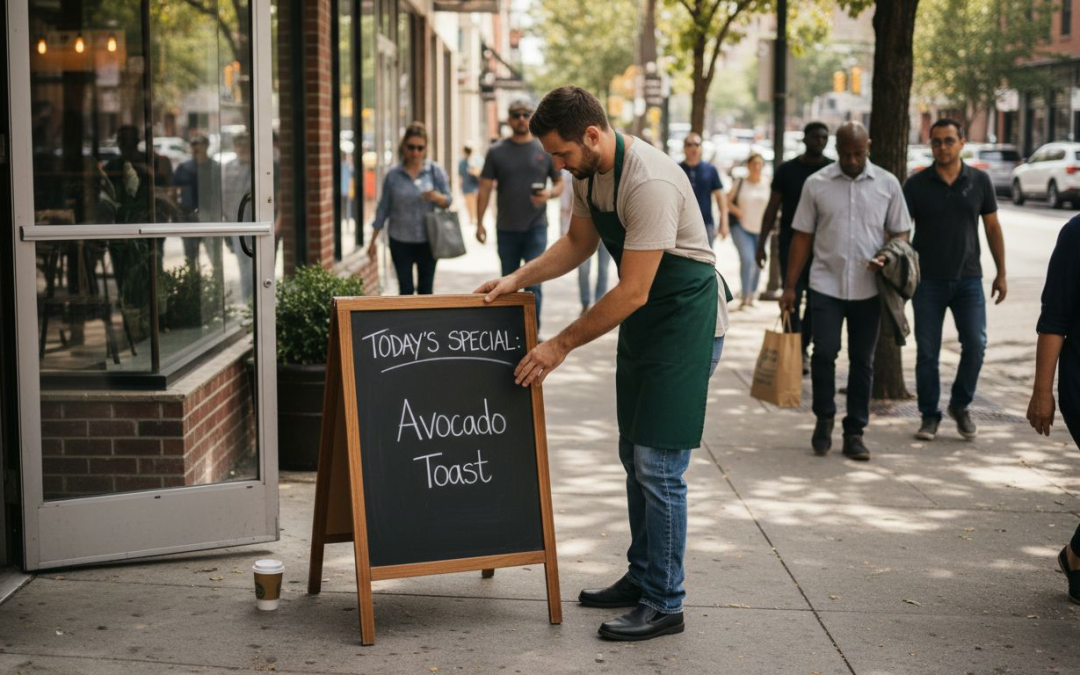
“caption”: “Cafe owner placing sandwich board on sidewalk”
},
“author”: {
“url”: “https://customsignstoday.us”,
“name”: “Customsignstoday”,
“@type”: “Organization”
},
“@context”: “https://schema.org”,
“headline”: “What Are Sandwich Boards and Why They Work”,
“publisher”: {
“url”: “https://customsignstoday.us”,
“name”: “Customsignstoday”,
“@type”: “Organization”
},
“inLanguage”: “en-US”,
“articleBody”: “What are sandwich boards? Learn about types, materials, uses, legal rules, and expert tips for effective sidewalk signs for U.S. retail businesses.”,
“description”: “What are sandwich boards? Learn about types, materials, uses, legal rules, and expert tips for effective sidewalk signs for U.S. retail businesses.”,
“datePublished”: “2026-02-19T07:51:12.515Z”
}
Local shops across the United States often face stiff competition when trying to stand out on busy streets. For many business owners, finding a simple yet effective method to catch the attention of passersby is a daily necessity. Sandwich boards are a proven, adaptable solution for increasing street-level visibility and sharing eye-catching promotions, events, or directions directly with potential customers. This guide explains how these temporary signs work, what makes them compliant with American city regulations, and how your store can use them to attract more foot traffic and drive up sales.
Table of Contents
- Defining Sandwich Boards for U.S. Businesses
- Common Types and Key Features Explained
- Popular Uses and Real-World Applications
- Relevant U.S. Laws and Placement Rules
- Comparing Alternatives and Cost Factors
- Mistakes to Avoid With Sandwich Boards
Key Takeaways
| Point | Details |
|---|---|
| Regulatory Compliance | Businesses must adhere to local laws regarding sandwich board size, placement, and permitted hours to avoid penalties. |
| Cost-Effectiveness | Sandwich boards offer an affordable advertising solution compared to other marketing methods, making them ideal for small businesses. |
| Design Versatility | Various types of sandwich boards, such as A-frame and digital options, cater to different marketing needs and environments. |
| Increased Foot Traffic | Strategically placed sandwich boards can significantly enhance customer walk-ins and visibility for nearby businesses. |
Defining Sandwich Boards for U.S. Businesses
Sandwich boards are portable advertising tools that businesses use to attract customer attention in public spaces. These A-frame signs consist of two connected panels that form a triangle shape when placed on the ground, creating a compact and highly visible marketing platform.
According to official city regulations, sandwich boards are temporary advertisement devices with specific usage guidelines. Businesses must adhere to important restrictions such as:
- Maximum sign size of 12 square feet per side
- Cannot block sidewalks or driveways
- Must be placed directly on the ground
- Prohibited from attaching balloons or flags
These signs are incredibly versatile marketing tools that allow local businesses to communicate promotions, events, and directional information quickly and effectively. Mobile advertisement platforms enable companies to leverage street-level visibility without permanent installation.
Businesses typically use sandwich boards to highlight:
- Daily specials
- Sales and discounts
- Grand opening announcements
- Directional information
- Seasonal promotions
The portability and affordability of sandwich boards make them an attractive option for small and medium-sized businesses seeking cost-effective advertising solutions.
Pro tip: Always check your local municipal regulations before placing sandwich boards to ensure compliance with specific size, placement, and usage requirements.
Common Types and Key Features Explained
Sandwich boards come in various designs, each tailored to meet different business advertising needs. Temporary sign classifications reveal multiple configurations that businesses can leverage for effective street-level marketing.
The primary types of sandwich boards include:
- Classic A-Frame Signs: Traditional triangle-shaped boards with two interconnected panels
- Weighted Base Signs: Featuring heavy bases for stability in windy conditions
- Changeable Letter Signs: Allowing frequent message updates
- Digital LED Signs: Offering dynamic, illuminated display options
- Customizable Graphic Signs: Enabling full-color brand representation
Key structural features of sandwich boards are critical for their functionality. Portable sign design typically incorporates several essential characteristics:
- Lightweight materials for easy transportation
- Durable construction to withstand outdoor conditions
- Compact folding mechanisms for storage
- Weather-resistant surfaces
- Standardized sizing (usually 2 feet by 4 feet maximum)
Most sandwich boards are constructed from materials like aluminum, plastic, or wood, each offering unique advantages in terms of durability, weight, and cost. The choice of material directly impacts the sign’s performance in different environmental conditions.
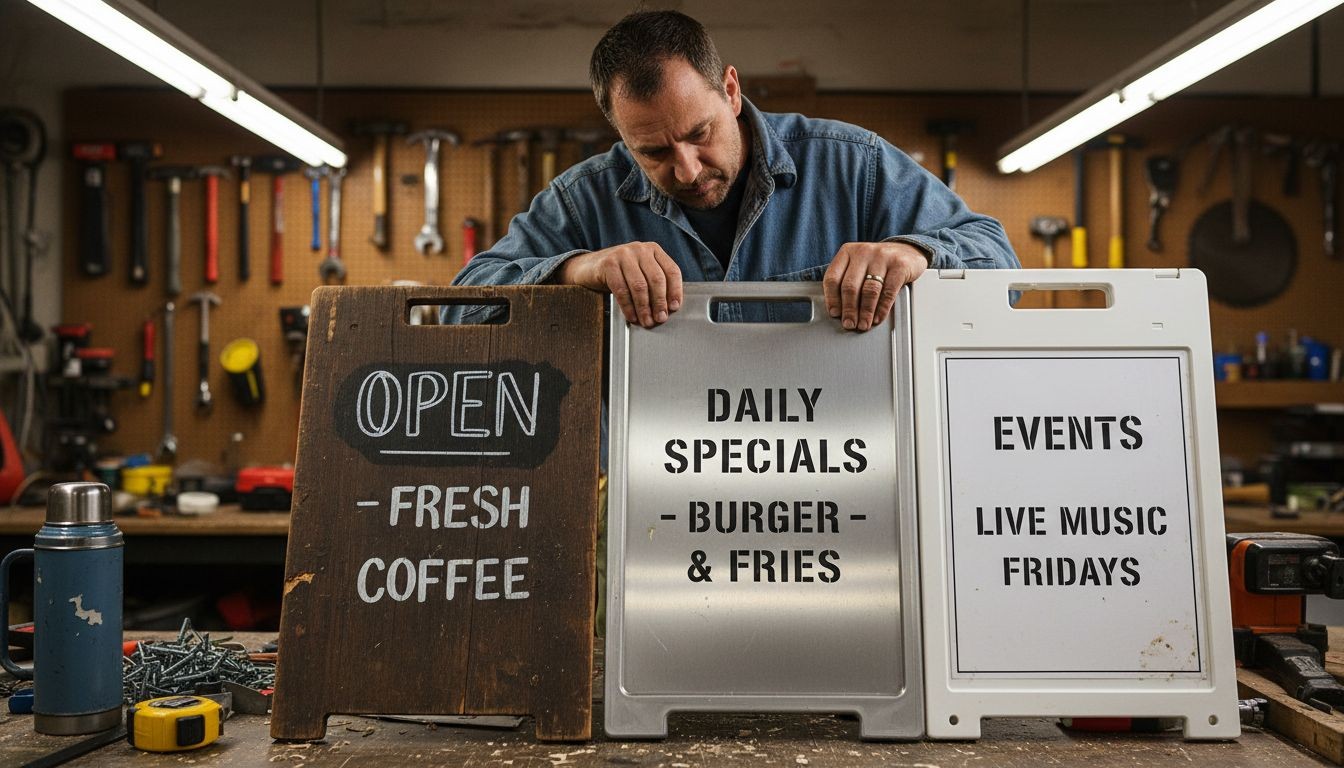
Here is a comparison of common sandwich board materials and their advantages:
| Material | Durability | Weight | Typical Cost |
|---|---|---|---|
| Aluminum | High, rust-resistant | Lightweight | Moderate |
| Plastic | Weather-resistant | Very light | Affordable |
| Wood | Classic look | Heavier | Variable |
Professional sandwich boards are designed to be both functional marketing tools and compliant with local municipal regulations.
Pro tip: Select a sandwich board material and design that matches your specific business environment and local weather conditions.
Popular Uses and Real-World Applications
Sandwich boards serve as versatile marketing tools across numerous business sectors. Temporary sign applications demonstrate their widespread utility in attracting customer attention and communicating critical business information.
Different industries leverage sandwich boards for distinct purposes:
- Restaurants: Displaying daily specials, menu updates, and happy hour promotions
- Retail Stores: Announcing sales, clearance events, and new product arrivals
- Cafes and Coffee Shops: Highlighting seasonal drinks, bakery items, and current discounts
- Professional Services: Indicating office hours, new service offerings, and appointment availability
- Entertainment Venues: Promoting upcoming events, ticket sales, and special performances
Foot traffic generation is a primary benefit of sandwich board usage. Sidewalk advertisement strategies enable businesses to capture potential customers’ attention in high-traffic commercial areas, effectively bridging the gap between storefront visibility and direct marketing.
Strategically placed sandwich boards can increase walk-in customer rates by up to 30% for local businesses.
The adaptability of sandwich boards makes them particularly valuable for small businesses with limited marketing budgets. They offer a cost-effective solution for dynamic, location-specific advertising that can be quickly updated to reflect current promotions or business changes.
Pro tip: Position your sandwich board at a 45-degree angle to the sidewalk to maximize visibility and draw more potential customers.
Relevant U.S. Laws and Placement Rules
Sandwich board signs are subject to specific municipal regulations that vary across different U.S. cities and jurisdictions. Portable sign regulations demonstrate the critical importance of understanding local compliance requirements before deploying these marketing tools.
Typical placement restrictions for sandwich boards include:
- Must remain on ground level
- Cannot block pedestrian walkways
- Require clear pathway of at least four feet
- Restricted to business hours
- Size limitations typically range from 6-8 square feet per side
- Must withstand minimum wind speeds (usually 20 mph)
Zoning district requirements play a significant role in sandwich board placement. Local sign compliance varies dramatically between urban, suburban, and commercial zones, making it essential for businesses to verify specific local ordinances.
Local municipalities prioritize pedestrian safety and accessibility when establishing sandwich board regulations.
Most U.S. cities require businesses to remove sandwich boards after operating hours, ensure they are non-reflective, and maintain them in good condition. Some jurisdictions mandate periodic inspections or require businesses to obtain temporary permits for sidewalk signage.
Below is a summary of typical U.S. municipal regulations for sandwich board placement:
| Regulation Aspect | Typical Requirement | Purpose |
|---|---|---|
| Size Limit | 6–12 sq ft per side | Ensures visibility/safety |
| Placement | Must not block walkways or driveways | Maintains accessibility |
| Allowed Hours | Business hours only | Reduces nighttime hazards |
| Permit Needed | Often required | Local compliance |
Pro tip: Contact your local city planning department to get precise sandwich board regulations specific to your business location.
Comparing Alternatives and Cost Factors
Businesses exploring advertising options must carefully evaluate the cost-effectiveness and functionality of sandwich boards compared to alternative marketing strategies. Advanced material considerations highlight the importance of selecting durable, lightweight solutions that provide maximum marketing impact.
Cost comparison between sandwich boards and alternative marketing methods reveals several key insights:
- Traditional Storefront Signs: Higher installation costs ($500-$2,000)
- Digital Display Screens: Ongoing electricity and maintenance expenses
- Printed Banners: Limited durability, frequent replacement needed
- Sandwich Boards: Low initial investment ($100-$300)
- Social Media Marketing: Requires ongoing content creation
Marketing investment efficiency depends on understanding the unique advantages of each platform. Structural design comparisons demonstrate how innovative material choices can significantly reduce long-term advertising expenses while maintaining high visual impact.
Sandwich boards offer the most cost-effective localized marketing solution for small to medium-sized businesses.
The primary cost factors for sandwich boards include initial purchase, potential permit fees, and periodic maintenance. Unlike digital or permanent signage, sandwich boards provide a flexible, low-risk marketing approach with minimal financial commitment.
Pro tip: Calculate your return on investment by tracking foot traffic increases after implementing sandwich board advertising.
Mistakes to Avoid With Sandwich Boards
Businesses frequently encounter critical errors when deploying sandwich boards that can undermine their marketing effectiveness and potentially result in municipal penalties. Common signage placement mistakes reveal several key pitfalls that entrepreneurs must carefully navigate.
The most significant sandwich board mistakes include:
- Obstructing pedestrian walkways
- Blocking ADA-required accessibility clearances
- Leaving signs out beyond permitted hours
- Attaching unauthorized decorations
- Using non-weatherproof materials
- Failing to secure signs during windy conditions
- Positioning signs near street obstructions
Regulatory compliance requires meticulous attention to detail. Strategic sign positioning demands understanding local ordinances and maintaining proper sign maintenance to avoid potential fines or removal.
Municipal regulations prioritize pedestrian safety over marketing convenience.
Proper sandwich board management involves daily maintenance, careful positioning, and strict adherence to local guidelines. Businesses must remain vigilant about sign placement, condition, and timely removal to maximize marketing potential while avoiding regulatory complications.
Pro tip: Create a daily checklist for sandwich board deployment and removal to ensure consistent compliance with local regulations.
Elevate Your Business Visibility with Custom Sandwich Boards
Parking your message right where customers pass is a powerful marketing move. If you’re looking to capitalize on the dynamic visibility that sandwich boards provide while navigating local regulations and design challenges, it is essential to use signs that stand out with durability and style. From capturing foot traffic with clear promotions to enhancing your brand personality, your sandwich board needs to perform flawlessly in every condition.
Discover how Uncategorized custom signage solutions from https://customsignstoday.us can solve these challenges for your business. With professional craftsmanship and materials built to resist weather and wear, you get signs that deliver your message effectively and comply with municipal rules. Start boosting your storefront today by requesting a free quote or browse the range of custom signs to find the perfect fit. Don’t let pedestrian safety rules or poor visibility hold your business back. Take action now to attract more walk-in customers with expert-designed sandwich boards that work.
Explore our full offering at https://customsignstoday.us and turn every passerby into a customer.
Frequently Asked Questions
What are sandwich boards?
Sandwich boards are portable advertising tools that consist of two connected panels forming a triangle shape, used by businesses to communicate promotions, events, and directional information in public spaces.
How do sandwich boards comply with local regulations?
Sandwich boards must adhere to local municipal regulations which typically include size limits, placement restrictions, and operational hours to ensure pedestrian safety and compliance with signage ordinances.
What are the benefits of using sandwich boards for advertising?
Sandwich boards are cost-effective marketing tools that can increase foot traffic by up to 30%, allowing businesses to attract potential customers with dynamic, location-specific messaging.
What materials are commonly used for sandwich boards and their benefits?
Common materials include aluminum, plastic, and wood. Aluminum is durable and lightweight; plastic is weather-resistant and affordable; wood offers a classic look but is heavier. The choice impacts visibility, durability, and cost-effectiveness.
Recommended
- Understanding Types of Promotional Signage for Businesses –
- Custom Signs Today | West Palm Beach Sign Services
- 7 Essential Promotional Signage Examples for Businesses –
- Custom Signs Today | West Palm Beach FL Post and Panel Signs
- Brand Activation | RMD Photo Booths
- Retractable Banners – Transfer Kingz