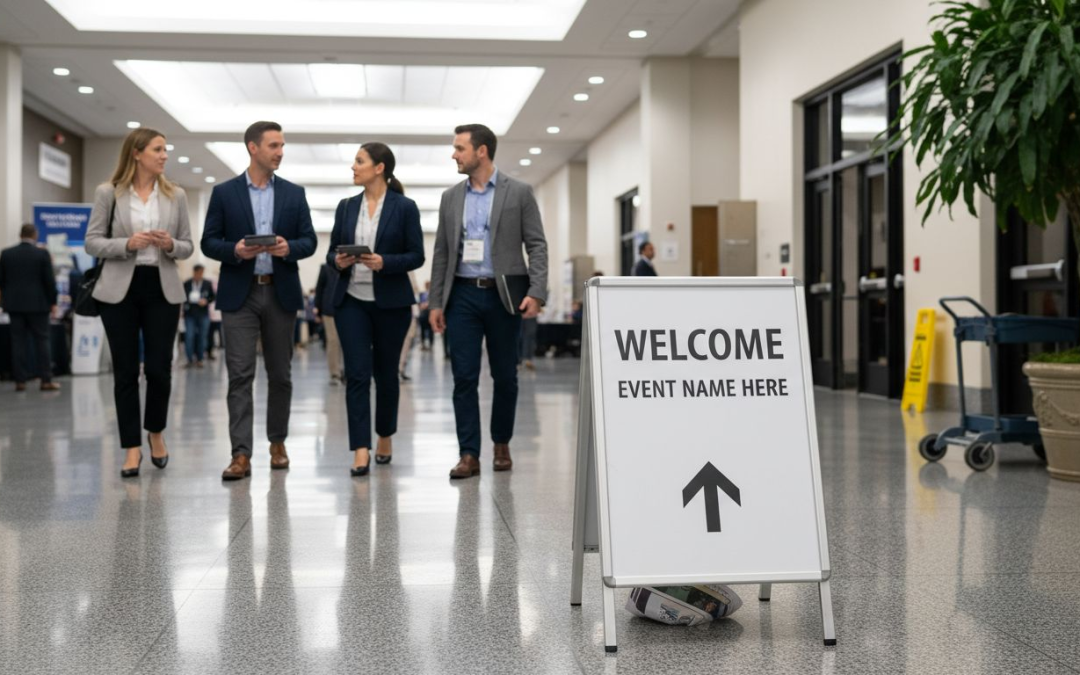
Over 85 percent of American event planners agree that custom signage shapes how attendees perceive and navigate gatherings. In the United States, strong visual communication is crucial for both brand presence and audience experience at corporate and social events. Discover how expertly designed signage can transform every touchpoint, boost engagement, and reinforce the impact of your next American event.
Table of Contents
- Defining Event Signage And Its Core Role
- Major Types Of Event Signage Solutions
- Key Benefits For Attendee Experience
- Brand Presence And Sponsor Promotion
- Safety, Accessibility, And Legal Considerations
- Common Mistakes And How To Avoid Them
Key Takeaways
| Point | Details |
|---|---|
| Core Role of Event Signage | Event signage guides, informs, and engages attendees, enhancing their overall experience and comprehension of the event. |
| Types of Event Signage | Utilize a variety of signage types, such as banners, directional signs, and digital displays, to create an effective communication strategy. |
| Benefits for Attendee Experience | Effective signage reduces confusion, increases engagement, and promotes a professional event environment for participants. |
| Accessibility and Safety Compliance | Ensure all signage meets legal requirements and accessibility standards to accommodate diverse attendee needs. |
Defining Event Signage and Its Core Role
Event signage represents a strategic visual communication method designed to guide, inform, and engage attendees throughout an event experience. According to the Academic Advisory Council for Signage Research and Education, signage functions as a critical communication medium using signs and symbols to convey messages effectively across various environments.
At its core, event signage serves multiple essential purposes. Signage fundamentally encompasses design and usage of visual symbols that communicate information through strategic placement and clear messaging. These visual tools help attendees navigate complex spaces, understand event logistics, and connect with the broader event narrative. Event signage typically includes directional signs, informational displays, branded graphics, schedule boards, welcome banners, and interactive wayfinding elements that collectively create a comprehensive communication ecosystem.
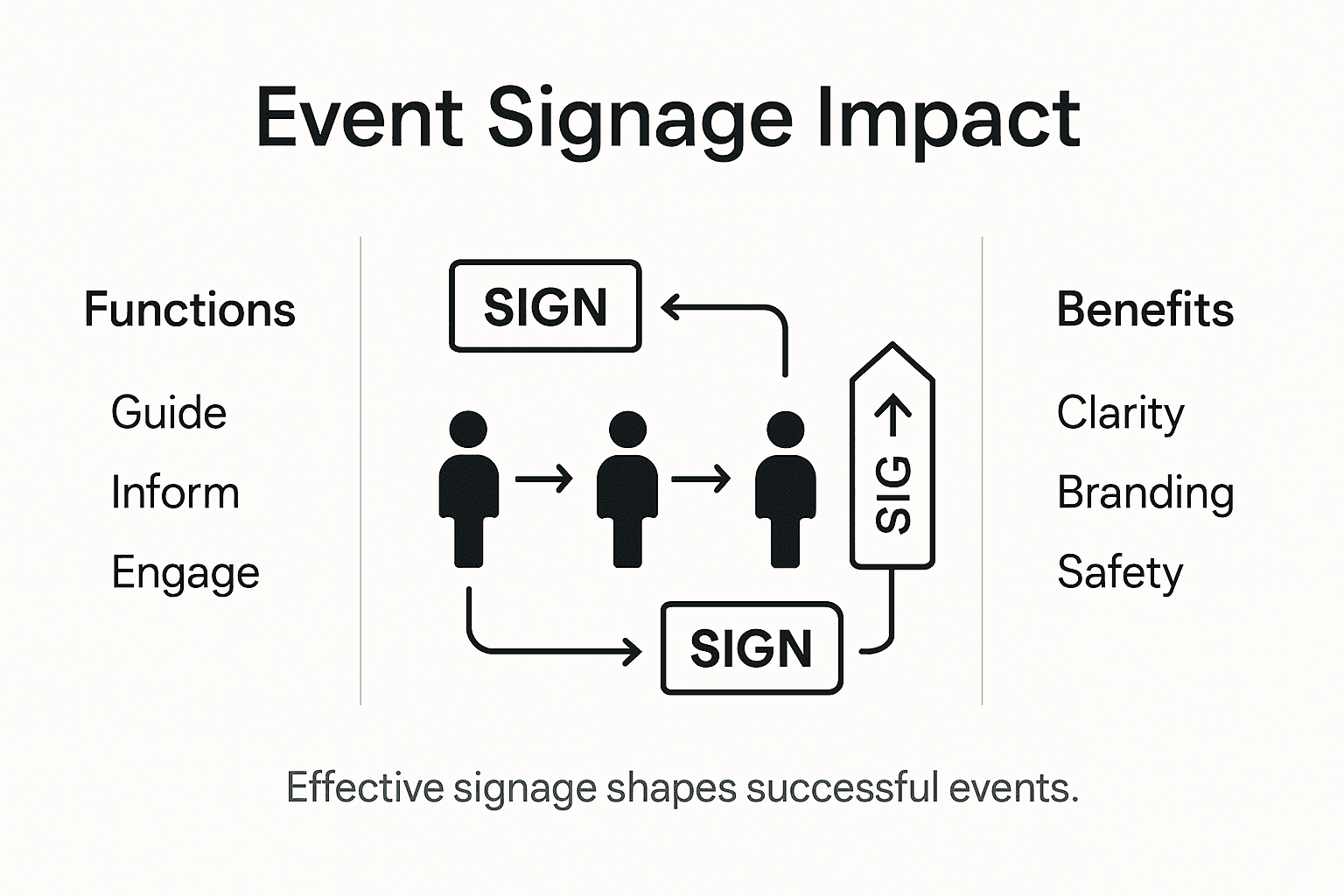
The primary functions of effective event signage extend beyond simple navigation. These visual communication tools play pivotal roles in:- Providing clear directional guidance- Establishing event branding and visual identity- Communicating critical event information- Enhancing attendee experience and engagement- Supporting event management objectives
Pro tip: Design your event signage with a consistent color scheme and typography to create a cohesive visual experience that reinforces your event’s professional image.
Major Types of Event Signage Solutions
Event signage encompasses a diverse range of visual communication tools designed to enhance attendee experience and event management. According to industry experts, five primary signage types dominate event communication strategies, each serving unique purposes and delivering critical information to participants.
Banners and Backdrops represent the most visually prominent signage solutions, creating powerful first impressions and establishing event branding. These large-format displays serve multiple functions – from creating photographic opportunities to communicating event themes and sponsorship recognition. Strategically placed banners can transform event spaces, providing visual anchors that guide attendee attention and reinforce organizational messaging.
Other essential event signage categories include:
- Directional Signs: Helping attendees navigate complex event spaces
- Digital Signage: Offering dynamic, real-time information updates
- Floor Graphics: Creating interactive wayfinding experiences
- Informational Displays: Communicating schedules, speaker details, and event logistics
Pro tip: Integrate multiple signage types to create a comprehensive visual communication strategy that guides, informs, and engages event participants.
Here’s an overview of leading event signage types and their strategic strengths:
| Signage Type | Main Advantage | Typical Use Case |
|---|---|---|
| Banners & Backdrops | Brand impact and visibility | Entrances, stage areas |
| Directional Signs | Smooth navigation | Hallways, intersections |
| Digital Signage | Real-time updates | Registration, lounges |
| Floor Graphics | Interactive engagement | Entry paths, social zones |
| Informational Displays | Quick reference | Schedule boards, info desks |
Key Benefits for Attendee Experience
Effective event signage transforms attendee interactions by addressing fundamental communication and navigational challenges during events. Event signage plays a critical role in creating a seamless, engaging, and informative participant experience that goes far beyond simple directional guidance.
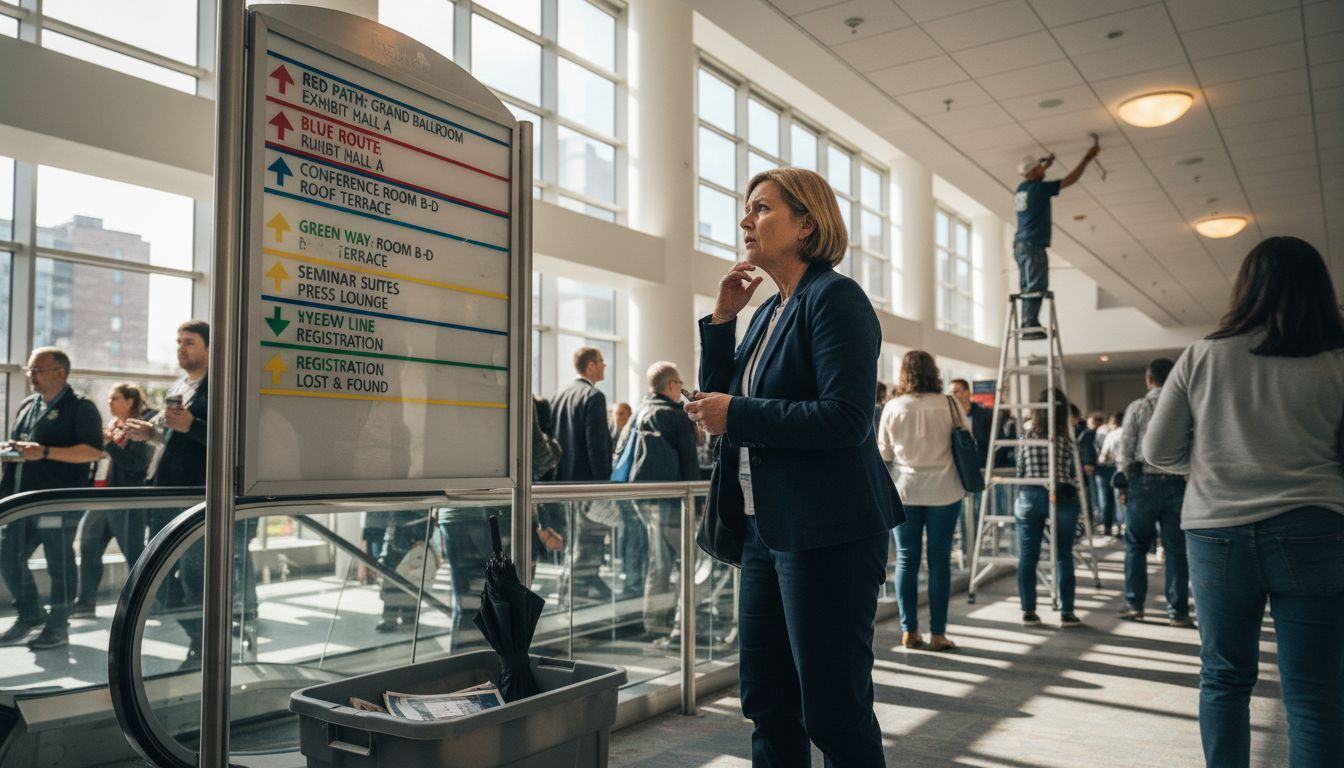
The primary benefits of strategic signage for attendees include reducing confusion and anxiety associated with navigating unfamiliar event spaces. Well-designed signs provide clear, intuitive wayfinding that helps participants confidently move through venues, locate specific sessions, amenities, and networking areas. This reduces stress and allows attendees to focus on the event’s core content and networking opportunities.
Signage also significantly enhances attendee engagement through multiple dimensions:
- Informational Clarity: Providing real-time updates and schedules
- Emotional Comfort: Reducing navigation uncertainty
- Brand Perception: Creating professional and welcoming event environments
- Interactive Experiences: Offering creative and dynamic communication channels
Pro tip: Design your event signage with a human-centered approach, prioritizing clarity, simplicity, and visual appeal to maximize attendee understanding and comfort.
This table compares the impact of strong event signage on attendee experience:
| Experience Dimension | With Effective Signage | Without Effective Signage |
|---|---|---|
| Stress Level | Lower thanks to clarity | Higher due to confusion |
| Event Navigation | Fast and intuitive | Slow and frustrating |
| Brand Perception | Professional and welcoming | Disorganized and bland |
| Information Access | Immediate and useful | Delayed or missed details |
Brand Presence and Sponsor Promotion
Strategic event signage transforms brand visibility by creating powerful visual narratives that extend far beyond traditional marketing approaches. Event signage serves as a critical communication platform, enabling organizations and sponsors to establish meaningful connections with their target audiences through carefully crafted visual experiences.
Sponsors benefit dramatically from thoughtfully integrated signage solutions that maximize brand exposure and engagement. Comprehensive signage strategies can include logo placements on event banners, digital displays, registration materials, and interactive zones – each designed to create memorable brand impressions. These visual touchpoints not only increase brand recognition but also demonstrate the sponsor’s commitment to the event’s success.
Key strategies for effective brand and sponsor representation through signage include:
- Prominent Logo Placement: Ensuring visibility in high-traffic event areas
- Digital Integration: Utilizing dynamic screens for real-time brand messaging
- Interactive Displays: Creating engaging brand experiences
- Consistent Branding: Maintaining visual alignment across different signage types
- Strategic Positioning: Maximizing exposure in key event spaces
Pro tip: Design sponsor signage with a balanced approach that highlights brand presence without overwhelming the event’s primary message and attendee experience.
Safety, Accessibility, and Legal Considerations
Event signage must meet rigorous legal standards to ensure safe, inclusive experiences for all attendees. Federal regulations like the Americans with Disabilities Act (ADA) establish comprehensive guidelines that mandate specific requirements for visual communication and wayfinding solutions in public spaces and event environments.
Compliance involves multiple critical considerations beyond basic visual design. Organizations must carefully design signage to accommodate diverse participant needs, including implementing high-contrast color schemes, using clear sans-serif fonts, incorporating braille translations, and ensuring appropriate mounting heights for individuals using wheelchairs or with limited mobility. Digital signage must also meet Section 508 accessibility standards, which require electronic information technology to be usable by people with various sensory and cognitive capabilities.
Key accessibility and safety requirements for event signage include:
- Visual Contrast: Ensuring minimum color contrast ratios
- Tactile Elements: Adding raised characters and braille translations
- Font Readability: Using clear, large typography
- Placement Standards: Positioning signs at consistent, reachable heights
- Digital Accessibility: Providing alternative text and screen reader compatibility
Pro tip: Conduct an accessibility audit of your event signage with disability experts to identify and address potential navigation or comprehension barriers.
Common Mistakes and How to Avoid Them
Event signage success depends on avoiding critical design and strategic errors that can undermine communication effectiveness. Organizations frequently encounter predictable challenges that, when left unaddressed, can significantly diminish the impact and clarity of their visual communication strategies.
The most prevalent mistakes in event signage stem from inadequate planning and design considerations. Event planners often overlook crucial factors such as material selection, environmental context, information density, and visual hierarchy. Poor material choices can lead to signage deterioration, while overcrowded designs can overwhelm attendees and reduce comprehension. Critical errors include using inappropriate materials for specific venues, positioning signs incorrectly, creating visually cluttered layouts, and failing to maintain consistent brand representation.
Key mistakes to avoid in event signage include:
- Material Mismatches: Selecting signs unsuitable for specific environments
- Placement Problems: Positioning signs where they are difficult to see or access
- Information Overload: Cramming too much text into limited space
- Low Contrast: Using color schemes that reduce readability
- Inconsistent Branding: Failing to maintain visual identity standards
Pro tip: Always conduct a comprehensive visual audit of your signage design before the event, simulating attendee perspectives to identify potential comprehension or navigation barriers.
Elevate Your Event with Custom Signage Solutions
Navigating the challenges of effective event signage can be overwhelming. From ensuring clear direction to reinforcing your brand’s presence, every visual element counts. The insights from “Why Signage Matters for Successful Events” highlight the importance of strategically placed banners, digital signs, and wayfinding graphics that reduce attendee stress and boost engagement. If you want to avoid common pitfalls like poor material choices or cluttered designs, partnering with experts who understand these nuances is crucial.
Ready to transform your event experience with tailored signage that speaks clearly and looks professional? Explore our wide range of customizable options designed for impactful event communication at Uncategorized –. At Custom Signs Today, we specialize in high-quality banners, decals, and directional signs crafted to fit your unique venue and audience needs. Don’t let unclear signage reduce your attendee satisfaction Act now and request a free quote to ensure your event signage delivers clarity, branding, and engagement exactly where it matters most.
Frequently Asked Questions
What is the core purpose of event signage?
Event signage serves to guide, inform, and engage attendees during an event, helping them navigate spaces, understand logistics, and connect with the event’s themes.
What types of event signage are most commonly used?
Common types of event signage include banners and backdrops, directional signs, digital signage, floor graphics, and informational displays, each serving a unique purpose to enhance the event experience.
How does effective signage improve the attendee experience?
Effective signage reduces confusion and anxiety by providing clear navigation, enhances engagement through informational clarity, contributes to a professional brand perception, and offers interactive experiences that facilitate participation.
What are key considerations for designing accessible event signage?
Key considerations include ensuring visual contrast for readability, incorporating tactile elements such as braille, using large, clear fonts, positioning signs at accessible heights, and ensuring digital signage meets accessibility standards for all attendees.