

Standing out in a crowded California market can feel challenging when your store signage blends into the background or no longer meets community standards. For local retail business owners, updated business signage now means more than a name over the door—it influences how customers find, trust, and remember your brand. Learn how strategic, modern signage not only increases customer attraction and aligns with current regulations, but also builds lasting visibility in your community.
Table of Contents
- Defining Updated Business Signage For Retail
- Types Of Signage And Modern Trends
- How Updated Signage Impacts Customer Attraction
- Legal And Regulatory Factors In California
- Common Pitfalls With Outdated Signage
Key Takeaways
| Point | Details |
|---|---|
| Technological Integration | Embrace digital displays and interactive signage to enhance customer engagement and brand communication. |
| Customer Attraction | Utilize well-designed signage to create an emotional connection and guide potential customers effectively. |
| Regulatory Compliance | Stay informed about local sign regulations to avoid penalties and ensure accessibility for all customers. |
| Avoiding Outdated Signage | Regularly update signage to maintain brand relevance and improve visibility, preventing negative impacts on customer perception. |
Defining Updated Business Signage for Retail
Business signage has dramatically evolved from static displays to dynamic communication platforms that serve multiple strategic purposes. Modern retail signage represents far more than simple identification – it’s now a sophisticated marketing tool designed to engage customers, communicate brand identity, and enhance overall visibility.
According to academic research on signage strategies, updated business signage encompasses several critical dimensions:
- Technological Integration: Incorporating digital displays and interactive elements
- Brand Communication: Representing visual brand messaging and aesthetic
- Customer Engagement: Creating intuitive wayfinding and informational experiences
- Regulatory Compliance: Meeting current accessibility and safety standards
Updated signage goes beyond traditional print materials, integrating advanced technologies and design principles that transform how businesses communicate with potential customers. These modern solutions blend visual appeal with functional communication, ensuring that retail spaces can effectively attract and guide visitors.
Key characteristics of contemporary business signage include:
- High-resolution digital displays
- Dynamic content management systems
- Energy-efficient LED technologies
- Adaptable design frameworks
- Smart interactive capabilities
The goal of updated signage is not just visibility, but creating meaningful connections with customers through strategic visual communication. By leveraging innovative materials, design techniques, and technological integrations, retail businesses can transform their physical spaces into engaging, informative environments.
Here’s a comparison of traditional signage and updated business signage in retail environments:
| Aspect | Traditional Signage | Updated Business Signage |
|---|---|---|
| Content Delivery | Fixed, static messages | Dynamic, adaptable content |
| Customer Interaction | Passive viewing only | Enables interaction and feedback |
| Technology Used | Print, painted materials | Digital displays, smart systems |
| Maintenance Needs | Frequent replacements needed | Remote monitoring, longer lifespan |
| Branding Consistency | Potentially inconsistent | Easily updated for brand alignment |
Pro tip: Invest in signage that reflects your brand’s unique personality while prioritizing clear, legible communication that speaks directly to your target audience.
Types of Signage and Modern Trends
Retail businesses today are experiencing a revolutionary transformation in signage technologies, moving far beyond traditional static displays. Modern retail signage trends encompass a dynamic range of innovative solutions that dramatically enhance customer engagement and brand communication.
The contemporary landscape of business signage includes several critical types:
- Digital Displays: High-resolution screens that provide dynamic content
- Interactive Signage: Touch-enabled interfaces enabling direct customer interaction
- LED Messaging Boards: Bright, energy-efficient communication platforms
- Window Graphics: Visually compelling exterior brand messaging
- Wayfinding Systems: Intelligent navigation solutions for complex spaces
Emergent technologies are fundamentally reshaping how businesses approach visual communication. Advanced signage solutions now integrate artificial intelligence, augmented reality, and data-driven personalization techniques that transform passive displays into intelligent marketing instruments.
Key technological innovations driving modern signage include:
- AI-powered content management systems
- Real-time data integration capabilities
- Cloud-based display networks
- Sensor-triggered dynamic content
- Multi-platform synchronization technologies
Businesses can now create immersive, responsive visual experiences that adapt in real-time to customer behaviors, environmental conditions, and marketing objectives. These sophisticated systems represent a quantum leap from traditional print signage, offering unprecedented flexibility and engagement potential.
Pro tip: Select signage technologies that not only display information but also create meaningful, interactive experiences that resonate with your specific customer demographics.
How Updated Signage Impacts Customer Attraction
Modern businesses recognize that signage is far more than a mere identifier – it’s a powerful communication tool that directly influences customer behavior and attraction. How signs attract customers represents a sophisticated interplay of visual psychology, brand messaging, and strategic design.
Customer attraction through signage occurs through multiple critical mechanisms:
- Visual Engagement: Creating immediate visual interest
- Brand Storytelling: Communicating company identity and values
- Directional Guidance: Helping customers navigate physical spaces
- Emotional Connection: Triggering positive psychological responses
- Information Transmission: Quickly sharing key business details
The psychological impact of well-designed signage extends beyond simple information delivery. Effective signs function as silent salespeople, capturing attention, building trust, and guiding potential customers through subtle visual cues that trigger decision-making processes.
Key strategies for maximizing customer attraction through signage include:
- Utilizing high-contrast color schemes
- Implementing clear, readable typography
- Creating visually balanced design layouts
- Incorporating brand-consistent imagery
- Ensuring appropriate scale and placement
Signage serves as a critical touchpoint between businesses and potential customers, acting as a first impression that can significantly influence purchasing decisions. By understanding and leveraging the nuanced psychological principles of visual communication, businesses can transform their signage from passive information displays into powerful customer attraction mechanisms.

Pro tip: Invest in signage that not only looks professional but tells a compelling visual story about your brand’s unique value proposition.
Legal and Regulatory Factors in California
Navigating the complex landscape of signage regulations in California requires a comprehensive understanding of local and state legal requirements. Sign codes and regulations represent a critical consideration for businesses seeking to maintain compliance while maximizing their visual communication strategies.
California’s signage legal framework encompasses several key regulatory dimensions:
- Zoning Restrictions: Location-specific size and placement limitations
- Permit Requirements: Mandatory documentation for sign installation
- ADA Compliance: Accessibility standards for visual communication
- Illumination Regulations: Brightness and light pollution controls
- Content Restrictions: Guidelines on messaging and visual design
The legal landscape for business signage in California is particularly nuanced, with regulations that vary significantly between different municipal jurisdictions. Local governments often implement specific ordinances that can dramatically impact how businesses design, place, and maintain their exterior signage.
Key legal considerations for California businesses include:
- Obtaining proper municipal permits
- Ensuring full ADA accessibility compliance
- Respecting historic district visual guidelines
- Managing sign illumination intensity
- Maintaining setback and height restrictions
Businesses must approach signage as a regulated communication tool, understanding that legal compliance is not just about avoiding penalties, but about creating inclusive, community-responsive visual environments. This requires proactive engagement with local regulatory frameworks and a commitment to understanding the evolving legal landscape of commercial signage.
Pro tip: Consult with local municipal planning departments and a legal professional specializing in commercial signage to ensure full compliance with California’s complex regulatory requirements.
Common Pitfalls With Outdated Signage
Outdated signage represents a significant risk for businesses, potentially undermining brand perception and customer engagement. Economic impact of ineffective signs demonstrates how poorly maintained visual communication can directly harm business performance.
Businesses commonly encounter several critical pitfalls with outdated signage:
- Visual Degradation: Faded, worn materials that appear unprofessional
- Design Obsolescence: Styles that no longer reflect current brand identity
- Technical Limitations: Lack of digital or interactive capabilities
- Regulatory Non-Compliance: Failure to meet current legal standards
- Poor Visibility: Reduced ability to attract potential customers
The visual communication landscape has transformed dramatically, with modern signage going far beyond simple identification. Businesses using outdated sign technologies risk being perceived as static, unresponsive, and disconnected from contemporary market expectations.
Key negative consequences of maintaining outdated signage include:
- Decreased foot traffic
- Reduced customer trust
- Potential legal penalties
- Lower brand perceived value
- Missed marketing opportunities
Modern businesses must view signage as a dynamic marketing tool that continuously evolves with technological and design innovations. Proactively updating signage is not an expense, but a strategic investment in maintaining competitive market positioning and customer engagement.
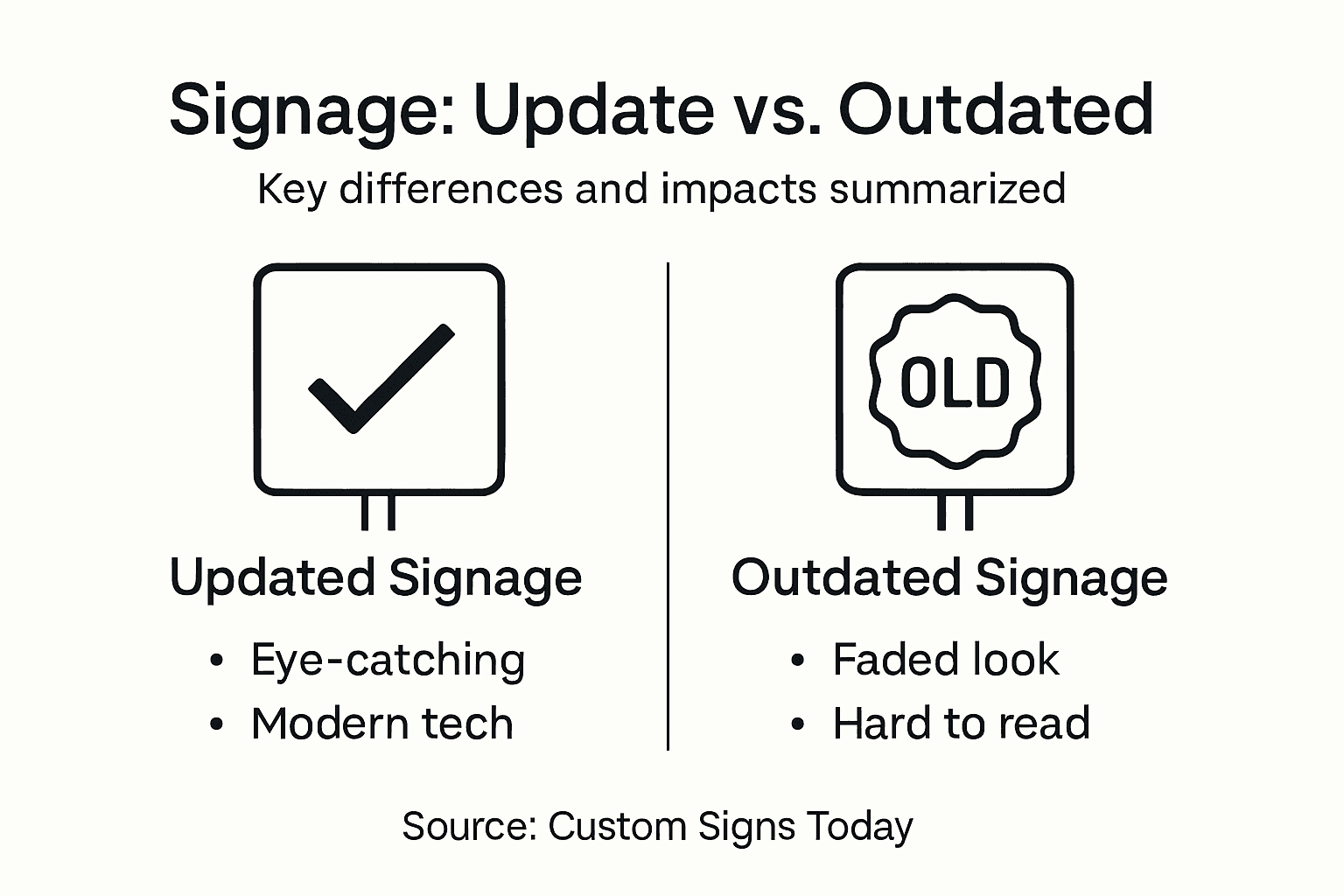
Below is an at-a-glance summary of common pitfalls and their business impact for outdated signage:
| Pitfall | Business Impact |
|---|---|
| Faded or worn materials | Decreases trust and deters foot traffic |
| Outdated design styles | Weakens brand image and appeal |
| Lack of technology integration | Missed marketing and engagement opportunities |
| Non-compliance with regulations | Risk of fines and forced sign removal |
| Poor visibility | Reduces customer awareness and sales potential |
Pro tip: Conduct an annual review of your business signage, assessing its visual appeal, technological relevance, and alignment with current brand messaging.
Elevate Your Business Visibility with Custom Signage Solutions
Struggling with outdated signage that no longer draws customers or reflects your brand’s unique identity is a common challenge. This article highlights the importance of updating business signage to boost local visibility by using dynamic content, high-quality materials, and technology integration that engage customers and comply with regulations. Your business deserves signage that acts as a powerful communication tool to attract attention and create meaningful connections.
At Custom Signs Today, we specialize in designing and producing custom-made signs tailored to your specific needs. Whether you need banners, vehicle wraps, decals, or all types of indoor and outdoor signage, our client-centric approach ensures high-quality, durable solutions that reflect your brand’s personality and meet modern standards. Explore our broad range of services to find the perfect fit for your signage goals in our Uncategorized category.
Take control of your business’s first impression today. Visit Custom Signs Today and request your free quote to start transforming your signage into a vibrant, customer-attracting element. Don’t miss the chance to boost your local visibility with signs designed to perform and impress.
Frequently Asked Questions
What are the benefits of updating business signage?
Updating business signage enhances customer engagement, improves brand visibility, and ensures compliance with current regulations, ultimately attracting more customers and boosting sales.
How often should I update my business signage?
Regularly review your signage at least once a year to assess its condition, relevance, and alignment with your brand. This helps maintain a modern appearance and engagement with customers.
What are the key features of updated signage?
Modern signage includes high-resolution digital displays, interactive elements, energy-efficient LED technologies, and adaptable design frameworks, maximizing customer attraction and communication.
How can outdated signage affect my business?
Outdated signage can lead to decreased foot traffic, reduced customer trust, potential legal penalties, and missed marketing opportunities, ultimately harming your business’s reputation and sales.