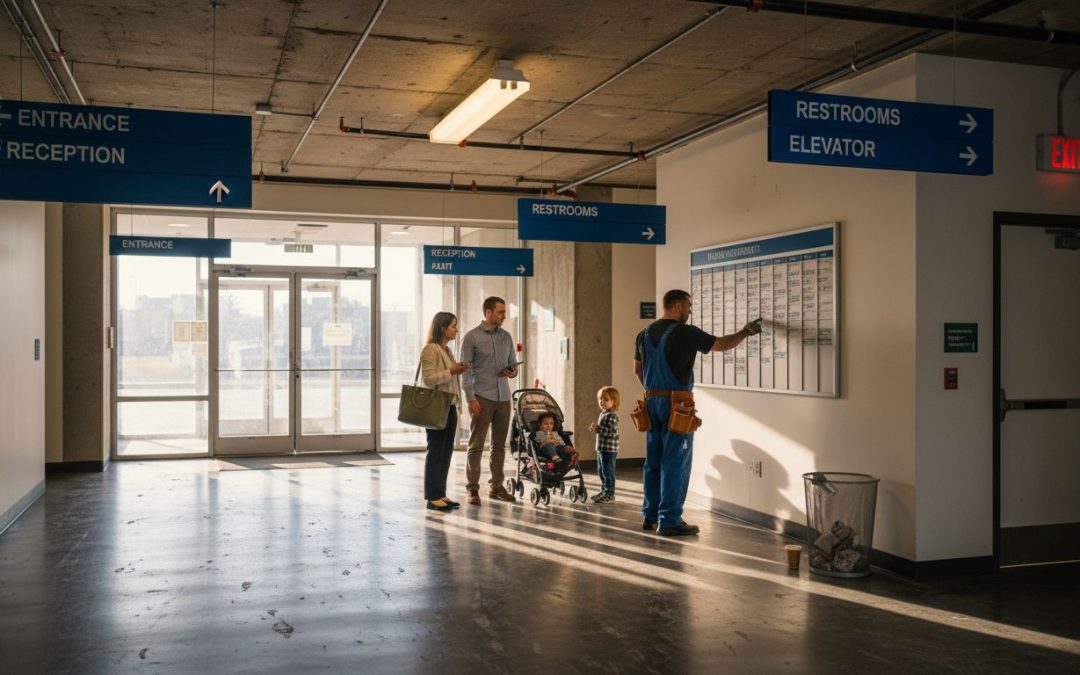
Every American business wants visitors to feel welcomed the moment they arrive. Studies show that over 60 percent of first impressions are shaped by visual cues like signage. Entrance and wayfinding signs do much more than point the way—they create an atmosphere of professionalism, help guests relax, and reduce confusion. By choosing the right signs for entrances, lobbies, corridors, and outdoor spaces, companies can turn ordinary visits into memorable experiences that begin the moment someone steps inside.
Table of Contents
- Entrance Signs For Welcoming Visitors
- Lobby And Reception Directional Signs
- Corridor And Hallway Guidance Signs
- Stairwell And Elevator Location Signs
- Restroom And Facilities Directional Signs
- Emergency Exit And Safety Route Signs
- Outdoor Wayfinding For Parking And Events
Quick Summary
| Key Message | Explanation |
|---|---|
| 1. Effective Signage Enhances Visitor Experience | Strategically designed entrance signs create welcoming atmospheres and facilitate positive first impressions for visitors. |
| 2. Clear Directional Signs Reduce Confusion | Lobby and corridor signs act as navigational guides that help visitors transition seamlessly through complex interior spaces. |
| 3. Emergency Signs Are Critical for Safety | Well-designed emergency exit signs must be highly visible and strategically placed to aid quick and effective evacuations during emergencies. |
| 4. Outdoor Wayfinding Sets the Right Tone | Thoughtful outdoor signage directs visitors smoothly to destinations, shaping their initial perceptions and reducing stress upon arrival. |
| 5. Inclusive Facilities Signs Promote Accessibility | Restroom and facilities signs that incorporate universal symbols ensure clear communication and create a welcoming environment for all visitors. |
1. Entrance Signs for Welcoming Visitors
Entrance signs serve as the critical first point of visual communication for any business. These pivotal signage elements do far more than simply mark an entry point they create the initial impression that sets the tone for visitor experience.
When designed strategically, entrance signs communicate professionalism, brand identity, and provide crucial wayfinding information. Research from Cornell University highlights how exterior signage reinforces arrival through distinctive elements like logos and flags, transforming a simple marker into a powerful welcome statement.
Key Components of Effective Entrance Signs:
- Company Logo: Prominently display your brand identity
- Clear Directional Information: Guide visitors precisely where they need to go
- Professional Typography: Choose fonts that reflect your business personality
- High Visibility Materials: Ensure readability from a distance
Businesses can transform their entrance signs from mere markers to strategic communication tools. Consider downtown establishments like Hanny’s, which uses historic terrazzo and distinctive display windows to create an enticing visual narrative that immediately draws potential customers inside.
Implementing a well designed entrance sign is not just about aesthetics it is about creating an inviting first impression that makes visitors feel welcomed, oriented, and excited to engage with your business.
2. Lobby and Reception Directional Signs
Lobby and reception directional signs act as the navigational backbone of any professional business environment. These critical wayfinding elements guide visitors seamlessly through complex interior spaces, reducing confusion and enhancing overall visitor experience.
Research from Cornell University highlights the importance of orientation signs in lobbies, demonstrating how strategic signage can assist visitors in navigating interior spaces. Effective lobby signs communicate not just directions, but also establish a sense of organizational professionalism and efficiency.
Key Elements of Effective Lobby and Reception Signs:
- Clear Directional Information: Specify precise routes and destinations
- Simple Typography: Use legible fonts that are easy to read quickly
- Color Coding: Implement color schemes that match brand identity
- Size and Placement: Ensure signs are visible from multiple angles
Strategic Sign Placement Recommendations:
- Near building entrances
- Directly inside main reception areas
- Adjacent to elevator banks
- At key decision points where multiple hallways intersect
By thoughtfully designing lobby and reception signs, businesses can transform potentially overwhelming spaces into intuitive environments. Think of these signs as silent guides that welcome visitors and help them feel instantly comfortable and oriented.
Professional organizations like veterinary clinics provide excellent examples of directional clarity. Consider how medical facilities strategically separate different service entrances to streamline visitor flow and reduce potential confusion.
3. Corridor and Hallway Guidance Signs
Corridor and hallway guidance signs are the silent navigators of interior spaces, providing critical visual directions that help visitors move efficiently through complex environments. These strategic signage solutions transform potentially confusing passageways into clear, intuitive pathways.
Research from Cornell University demonstrates how destination signage within corridors can effectively identify specific departments and services, enabling smooth and confident navigation for visitors and employees alike.
Essential Components of Effective Corridor Signs:
- Clear Department Identifications
- Directional Arrows
- Color Coded Zones
- Distance Markers
- Room Number Indicators
Strategic Placement Considerations:
- Intersections of multiple hallways
- Near elevator and stairwell exits
- Approaching key destination areas
- At regular intervals to maintain orientation
Successful corridor signage goes beyond simple directions. It creates a psychological roadmap that helps reduce visitor anxiety and frustration. By providing consistent, clear visual cues, businesses can transform potentially disorienting spaces into welcoming, navigable environments.
Think of corridor signs as your building’s communication system a network of visual assistants guiding people smoothly and confidently to their destinations. When designed thoughtfully, these signs become an integral part of your organizational infrastructure.
4. Stairwell and Elevator Location Signs
Stairwell and elevator location signs are crucial navigational tools that help people move vertically through multi level buildings with confidence and clarity. These specialized directional markers serve as critical wayfinding elements that reduce confusion and enhance overall building accessibility.
Research from Cornell University emphasizes the importance of orientation signs that include elevator floor range numbers and strategic lobby service indicators, enabling visitors to understand vertical navigation options quickly and efficiently.
Key Design Elements for Effective Vertical Navigation Signs:
- Clear Floor Number Displays
- Universal Accessibility Symbols
- Directional Arrows
- Color Coded Zones
- Emergency Exit Indicators
Strategic Placement Recommendations:
- Immediately adjacent to elevator banks
- Near stairwell entrances
- At primary corridor intersections
- Visible from multiple approach angles
- Consistent height and design throughout building
The primary goal of stairwell and elevator signs is to create an intuitive vertical transportation system. By providing clear visual cues, businesses can help visitors navigate complex building layouts with minimal confusion.
Thoughtful signage transforms potentially overwhelming vertical spaces into easily traversed pathways. Whether guiding employees or welcoming visitors, these signs act as silent navigators that simplify movement and reduce potential stress associated with finding the right floor or exit.
5. Restroom and Facilities Directional Signs
Restroom and facilities directional signs are fundamental to creating comfortable and accessible business environments. These specialized signs help visitors quickly locate essential amenities while reducing potential confusion and stress.
Research from Cornell University underscores the importance of destination signage that clearly identifies specific facilities within buildings, ensuring smooth navigation for everyone who enters the space.
Critical Design Elements for Restroom Signage:
- Universal Accessibility Symbols
- Clear Gender Identification
- High Contrast Color Schemes
- Braille Supplemental Markings
- Simple Iconography
Strategic Placement Recommendations:
- Near primary building entrances
- At corridor intersections
- Close to elevator and stairwell areas
- Visible from multiple approach angles
- Consistently positioned throughout facility
The goal of restroom and facilities signs extends beyond simple direction. These signs communicate professionalism, demonstrate inclusivity, and help create a welcoming environment for all visitors.
Thoughtful sign design considers diverse user needs including accessibility requirements, multilingual considerations, and clear visual communication. By investing in quality directional signage, businesses show they value visitor comfort and experience.
6. Emergency Exit and Safety Route Signs
Emergency exit and safety route signs represent the most critical directional signage in any business environment. These life saving visual guides provide essential navigation during potentially dangerous situations when quick and clear evacuation is paramount.
Cornell University research emphasizes the critical necessity of clear orientation signs that facilitate efficient emergency evacuation, underscoring the importance of strategic sign placement and design.
Key Design Requirements for Emergency Signs:
- High Visibility Fluorescent Colors
- Illuminated or Photoluminescent Formats
- Universal International Symbols
- Clear Directional Arrows
- Large Readable Typography
Strategic Placement Recommendations:
- Near all potential exit points
- Along primary evacuation routes
- At corridor intersections
- Adjacent to stairwells and elevators
- Visible from multiple angles
Effective emergency signage communicates critical information instantly and intuitively. These signs must transcend language barriers and be comprehensible to everyone regardless of their background or ability.
Beyond legal compliance, well designed emergency exit signs demonstrate a profound commitment to visitor safety. They transform potential moments of panic into structured pathways toward protection and survival.
7. Outdoor Wayfinding for Parking and Events
Outdoor wayfinding signs serve as the critical first point of navigation for visitors arriving at businesses, events, and complex facilities. These essential signage elements transform potentially confusing exterior spaces into intuitive, easily traversed environments.
Cornell University research highlights the significance of exterior identification and entry signage that effectively directs visitors to specific parking areas and event locations, demonstrating the strategic importance of comprehensive outdoor navigation systems.
Key Design Components for Outdoor Wayfinding:
- Highly Visible Color Schemes
- Large Readable Typography
- Directional Arrows
- Distance Markers
- Universal Accessibility Symbols
Strategic Placement Recommendations:
- Near main entrance points
- At parking lot entry and exit zones
- Intersection of primary pathways
- Adjacent to event registration areas
- Close to primary building access points
Effective outdoor wayfinding goes beyond simple direction. These signs communicate professionalism, reduce visitor stress, and create positive first impressions that set the tone for the entire visitor experience.
By implementing thoughtful outdoor signage, businesses can transform complex environments into welcoming spaces that guide visitors smoothly and confidently to their intended destinations.
Below is a comprehensive table summarizing the key components and strategies for effective signage discussed throughout the article.
| Sign Type | Description | Key Elements |
|---|---|---|
| Entrance Signs | First point of visual communication at business entry. | Company logo, directional information, professional typography, high visibility materials. |
| Lobby & Reception Signs | Navigational guides within business environments. | Clear routes, simple typography, color coding, strategic placement. |
| Corridor & Hallway Signs | Provide directions within interior spaces. | Department identifications, directional arrows, color zones, distance markers. |
| Stairwell & Elevator Signs | Aid vertical navigation through buildings. | Floor number displays, accessibility symbols, directional arrows, emergency indicators. |
| Restroom & Facilities Signs | Direct visitors to essential amenities. | Accessibility symbols, gender identification, braille, simple iconography. |
| Emergency Exit Signs | Guide evacuations during emergencies. | High visibility colors, illuminated formats, international symbols, clear arrows. |
| Outdoor Wayfinding | Directs visitors in exterior spaces. | Visible color schemes, large typography, distance markers, accessibility symbols. |
Enhance Visitor Experience with Custom Directional Signage Solutions
Navigating business spaces can be a challenge for visitors when clear, professional signage is missing. This article highlights crucial pain points like visitor confusion and the need for well-designed entrance, lobby, corridor, and emergency exit signs. Your goals include creating a welcoming and stress-free environment that reinforces your brand while providing clear wayfinding cues. At https://customsignstoday.us, we understand how essential effective directional signage is to your business success. Our custom signs use high-quality, durable materials tailored for indoor and outdoor use to meet all your navigational and branding needs.
Key benefits of partnering with Custom Signs Today include:
- Personalized signs that incorporate your company logo and color schemes
- Clear typography and universal symbols for easy comprehension
- Strategic custom designs for all areas including entrances, corridors, restrooms, and emergency exits
Visit our Uncategorized page to explore how tailored directional signage solutions can transform your visitor experience.
Ready to guide your visitors confidently every step of the way The first step is simple Request a free quote or explore our comprehensive signage services at Custom Signs Today. Don’t let confusing signage undermine your professionalism Seize the opportunity to impress visitors and improve safety today!
Frequently Asked Questions
What are the main types of directional signage businesses should use?
Directional signage types include entrance signs, lobby and reception signs, corridor signs, stairwell and elevator signs, restroom signs, emergency exit signs, and outdoor wayfinding signs. Implement these signs to improve navigation and enhance visitor experiences in your space.
How can entrance signs impact visitor perception?
Entrance signs create the first impression of your business, communicating professionalism and brand identity. Ensure your entrance signage includes your logo and clear directional information to welcome visitors effectively.
What elements should I include in my lobby and reception signage?
Your lobby and reception signage should include clear directional information, simple typography, and consistent color coding to match your brand. Position these signs in high-traffic areas, such as near reception desks or by elevator banks, to guide visitors smoothly.
Why are corridor and hallway signs important for visitor navigation?
Corridor and hallway signs help reduce confusion by providing clear directions as visitors navigate through your building. Use features like directional arrows and room number indicators to enhance orientation and ensure visitors can find their destinations easily.
How do emergency exit signs contribute to safety in a business?
Emergency exit signs provide critical information to guide people during evacuations in emergencies. Clearly display these signs near exits and along evacuation routes to help ensure everyone can exit quickly and safely.
What role does outdoor wayfinding signage play for businesses?
Outdoor wayfinding signage directs visitors to parking areas and entry points, helping them navigate your property easily. Utilize visible colors and clear typography to enhance comprehension, making visitors feel welcomed and at ease.