
Finding the right way to capture attention in a busy American marketplace is an ongoing challenge for local business owners. Signage offers more than decoration—it acts as a silent guide and persuasive communicator, helping customers connect with your brand and location quickly. From storefront signs to digital displays, understanding how signage works can shape customer perception, drive foot traffic, and highlight what sets your business apart. Effective signage functions as a strategic visual communication tool for boosting visibility and building a recognizable brand.
Table of Contents
- What Is Signage and How Does It Work
- Types of Signage for Small Businesses
- Signage’s Role in Branding and Visibility
- Costs, ROI, and Common Pitfalls
- Legal, Safety, and Compliance Essentials
Key Takeaways
| Point | Details |
|---|---|
| Signage is Essential for SMEs | It serves as a critical communication tool that enhances visibility and influences customer behavior. |
| Diverse Signage Types Exist | Different sign types cater to various business needs, including wayfinding, promotion, and branding. |
| Strategic Design Matters | Prioritize clarity, readability, and brand consistency to maximize signage effectiveness and customer attraction. |
| Legal Compliance is Crucial | Understand and adhere to regulations concerning signage size, placement, and safety to avoid legal issues. |
What Is Signage and How Does It Work
Signage represents a critical communication tool for small and medium enterprises (SMEs), designed to convey messages, attract customers, and enhance business visibility. At its core, signage refers to visual graphics that communicate information, directions, or promotional content through various design elements and mediums.
The fundamental purpose of signage extends beyond mere visual decoration. It serves as a strategic communication method that encodes messages people can quickly understand and act upon. Effective signage functions as a persuasive communication system capable of influencing customer behavior and perception. For small businesses, this means creating signs that not only look professional but also communicate key information about products, services, or brand identity.
Signage works through several core mechanisms. First, it provides wayfinding information that helps potential customers locate and navigate to a business. Second, it serves promotional purposes by attracting attention through strategic design, color, and messaging. Third, signage acts as a silent salesperson, communicating brand personality, professionalism, and core business offerings without requiring direct human interaction. Different types of signage include storefront signs, window displays, vehicle wraps, banners, and digital displays, each serving unique communication objectives.
Pro tip: When designing signage, prioritize clarity, readability, and brand consistency to maximize its communication effectiveness and attract potential customers.
Types of Signage for Small Businesses
Small businesses have access to a diverse range of signage options that can dramatically enhance their visibility and communication strategy. Different types of signage serve unique business objectives, ranging from directional and informational to promotional and regulatory signs. Understanding these variations allows entrepreneurs to craft a comprehensive visual communication approach tailored to their specific needs.
Building-mounted signs represent a crucial category for local businesses. These include awning signs, projecting signs, and window graphics that catch potential customers’ eyes and provide essential business information. Digital signage offers dynamic messaging capabilities that allow small businesses to update content quickly, display promotions, and engage customers with interactive visual experiences. Traditional signage like storefront signs, channel letter signs, and monument signs continue to be fundamental in establishing a professional business presence.

Beyond physical placement, effective signage involves strategic design and purposeful communication. Businesses can leverage different sign types to communicate brand personality, provide wayfinding information, and create memorable visual experiences. Exterior signs attract initial attention, while interior signs help guide customers and reinforce brand messaging. Vehicle wraps, banner signs, and portable A-frame signs offer additional opportunities for businesses to expand their visual marketing reach and communicate with potential customers in diverse settings.
Here’s a quick comparison of common signage types and their primary business benefits:
| Signage Type | Main Business Benefit | Typical Use Case |
|---|---|---|
| Storefront Signs | Boosts walk-in customer rate | Marks business location and entrance |
| Window Graphics | Highlights promotions/services | Displays sales or business hours |
| Vehicle Wraps | Increases brand exposure | Mobile advertising while traveling |
| Digital Displays | Allows fast content updates | Rotates ads or announcements daily |
| A-frame/Banner Signs | Captures foot traffic attention | Sidewalk marketing for special offers |
Pro tip: Invest in a cohesive signage strategy that integrates multiple sign types and maintains consistent branding across all visual communications.
Signage’s Role in Branding and Visibility
Branding represents more than just a logo or color scheme. Signage plays a critical role in shaping consumer perception by transmitting visual messages that communicate a business’s unique identity and core values. Every sign becomes a strategic touchpoint that helps small and medium enterprises establish a memorable and professional image in their local marketplace.
Consistent visual design stands at the heart of effective branding through signage. Uniform design elements strengthen brand recognition by creating a cohesive visual language that customers can instantly associate with a specific business. This means carefully selecting typography, color palettes, and graphic elements that reflect the company’s personality across all signage platforms – from storefront displays to vehicle wraps and interior signs.
Beyond aesthetic appeal, strategic signage serves multiple branding functions. It communicates professionalism, builds trust, and helps businesses stand out in competitive local markets. Exterior signs act as silent ambassadors, attracting potential customers and conveying essential information about the business’s nature, services, and unique selling propositions. Interior signage reinforces brand messaging, guiding customer experiences and creating a consistent narrative that extends from initial attraction to in-store interaction.
Pro tip: Develop a comprehensive signage style guide that ensures consistent visual branding across all communication platforms, from physical signs to digital media.
Costs, ROI, and Common Pitfalls
Signage investment represents a strategic financial decision for small businesses, with potential returns far beyond the initial cost. Effective signage can significantly enhance business visibility and sales through carefully planned design and implementation. Entrepreneurs should view signage not as an expense, but as a critical marketing asset that communicates brand value and attracts potential customers.
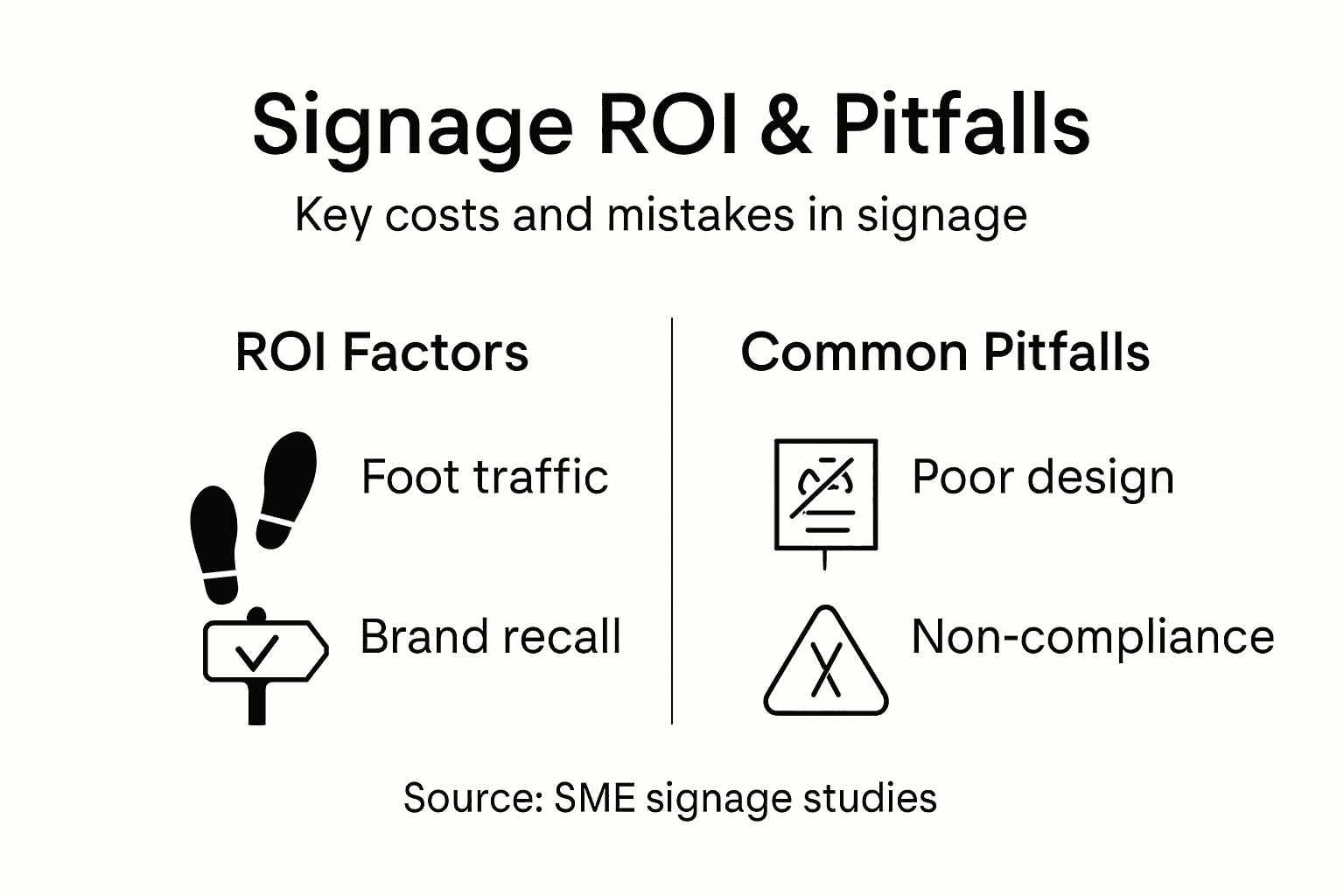
Cost considerations for signage vary widely depending on complexity, materials, and design sophistication. Electronic message centers and high-quality signs can drive measurable increases in store transactions with typical investments ranging from $500 to $5,000 for small businesses. Factors influencing cost include sign type (monument, channel letter, digital), size, lighting, and customization. Small businesses should budget approximately 3-5% of their annual marketing expenditure for signage, understanding that a well-designed sign can generate returns many times its initial investment.
Common pitfalls can dramatically reduce signage effectiveness and waste financial resources. Critical mistakes include choosing illegible fonts, using inappropriate color combinations, poor placement, inadequate lighting, and overcomplicated designs that confuse rather than attract customers. Small businesses must prioritize clarity, readability, and brand consistency. Signs should be visible from a distance, readable within seconds, and aligned with the company’s visual identity. Regular maintenance and periodic updates help ensure the sign continues to represent the business professionally and attracts potential customers.
Pro tip: Conduct a comprehensive cost-benefit analysis before investing in signage, considering potential customer acquisition, brand visibility, and long-term marketing value.
Legal, Safety, and Compliance Essentials
Business signage involves more than aesthetic considerations. Small businesses must navigate complex legal requirements when implementing signs, ensuring compliance with federal, state, and local regulations. These requirements encompass zoning laws, accessibility standards, safety guidelines, and permit restrictions that vary significantly across different jurisdictions and business types.
Workplace safety signage represents a critical legal obligation for businesses of all sizes. OSHA standards mandate specific sign types and placements to communicate potential hazards, emergency procedures, and employee rights. These regulations require businesses to post clear, visible signs indicating potential risks, safety protocols, and essential workplace information. Noncompliance can result in substantial financial penalties, potential legal actions, and increased workplace accident risks.
Navigating legal requirements involves understanding multiple compliance dimensions. Businesses must consider local zoning ordinances that regulate sign size, placement, and illumination. Americans with Disabilities Act (ADA) guidelines mandate specific design standards for signage accessibility, including appropriate color contrast, font sizes, and tactile elements. Additionally, businesses must obtain necessary permits, adhere to historical district restrictions, and ensure signs do not obstruct public spaces or create visual distractions for traffic safety.
Before choosing signage, consider these key legal and compliance factors for small businesses:
| Compliance Area | Requirement Example | Potential Consequence |
|---|---|---|
| Zoning Regulations | Size/placement restrictions | Fines, forced sign removal |
| ADA Accessibility | High-contrast colors, braille | Legal action, denied permits |
| Safety Standards | OSHA-mandated hazard signs | Government penalties |
| Permit Acquisition | Local government approval needed | Project delays, added costs |
Pro tip: Consult local municipal authorities and a legal professional to thoroughly understand signage regulations specific to your business location and industry.
Elevate Your Small Business Growth with Custom Signage Solutions
Struggling to capture local customers’ attention or convey your brand’s unique identity effectively Signage is a powerful tool to overcome these challenges by boosting visibility and reinforcing your professional image. This article highlights the importance of clear, consistent, and strategic signage for Small and Medium Enterprises facing competitive markets and aiming for stronger local presence
Discover how Uncategorized signage options can transform your storefront, vehicles, and promotional spaces into dynamic brand ambassadors. At Custom Signs Today we specialize in custom-made banners, vehicle wraps, lettering, and more using durable high-quality materials perfect for any business size or industry. Don’t let unclear or outdated signs hold you back Act now to create signage that communicates your brand consistently and attracts the customers you deserve Visit Custom Signs Today to request your free quote and take the first step toward enhancing your business’s local impact.
Frequently Asked Questions
What are the key benefits of signage for small and medium enterprises (SMEs)?
Signage enhances visibility, attracts customers, communicates brand identity, and can influence purchasing decisions, serving as both a marketing tool and a silent salesperson.
How can small businesses effectively design their signage?
Effective signage should prioritize clarity and readability, utilize brand-consistent colors and design elements, and ensure that information is communicated quickly to engage potential customers.
What types of signage are best for enhancing local business visibility?
Common effective signage types include storefront signs, window graphics, vehicle wraps, digital displays, and A-frame or banner signs, each catering to different promotional and directional needs.
What should small businesses consider regarding legal compliance when implementing signage?
Businesses must adhere to zoning laws, safety standards, and accessibility regulations, which vary by location. Obtaining the necessary permits and ensuring signage meets ADA guidelines are critical to avoid penalties and legal issues.