
Finding the right regulatory signage can quickly become confusing for property managers and local business owners. With strict federal guidelines from sources like the Manual on Uniform Traffic Control Devices and ever-evolving municipal codes, missing a detail may bring real consequences. Clarity in signage is about more than following rules—it is your frontline for safety, legal protection, and visible communication. This guide highlights the most effective ways to streamline compliance, strengthen your liability protection, and integrate strategically designed visual markers across your property.
Table of Contents
- Core Purpose of Regulatory Signage
- Types of Regulatory Signs for Properties
- Design Standards and Placement Rules
- Legal Requirements and Compliance Factors
- Property Manager Obligations and Risks
- Common Mistakes and How to Avoid Them
Key Takeaways
| Point | Details |
|---|---|
| Core Purpose of Regulatory Signage | Regulatory signage communicates legal requirements and safety protocols, helping to manage human behavior and minimize liability risks for property owners. |
| Types of Regulatory Signs | Common categories include safety notices, legal compliance signs, and access control markers, each serving a distinct purpose in property management. |
| Design Standards | Signs must be highly visible, legible, and positioned strategically, using retroreflective materials for nighttime visibility. |
| Legal Compliance | Property managers must navigate complex legal requirements and regularly audit signage to avoid penalties and protect tenant rights. |
Core Purpose of Regulatory Signage
Regulatory signage serves as a critical communication tool for property managers, enabling clear communication of legal requirements, safety protocols, and behavioral expectations across various environments. These strategically designed visual markers provide immediate guidance, reducing potential risks and ensuring compliance with established regulations.
At its core, regulatory signage aims to accomplish several essential objectives:
- Control and direct human behavior within specific spaces
- Communicate legal requirements and restrictions
- Enhance safety by providing clear, visible instructions
- Minimize potential liability risks for property owners
The fundamental purpose extends beyond mere information delivery. Regulatory design involves systematic approaches to manage behaviors through carefully crafted rules and visual indicators. Property managers utilize these signs to establish boundaries, communicate expectations, and create structured environments that promote safety and legal adherence.
Specifically, regulatory signs must meet rigorous standards to be effective. According to federal guidelines, these signs should be:
- Highly visible
- Clearly legible
- Strategically positioned
- Retroreflective for night-time visibility
- Consistent in design and messaging
By combining visual clarity with precise messaging, regulatory signage transforms abstract legal requirements into actionable guidance that property managers can implement across diverse settings.
Pro tip: Regularly audit and update your regulatory signs to ensure they remain current with changing local and federal regulations.
Types of Regulatory Signs for Properties
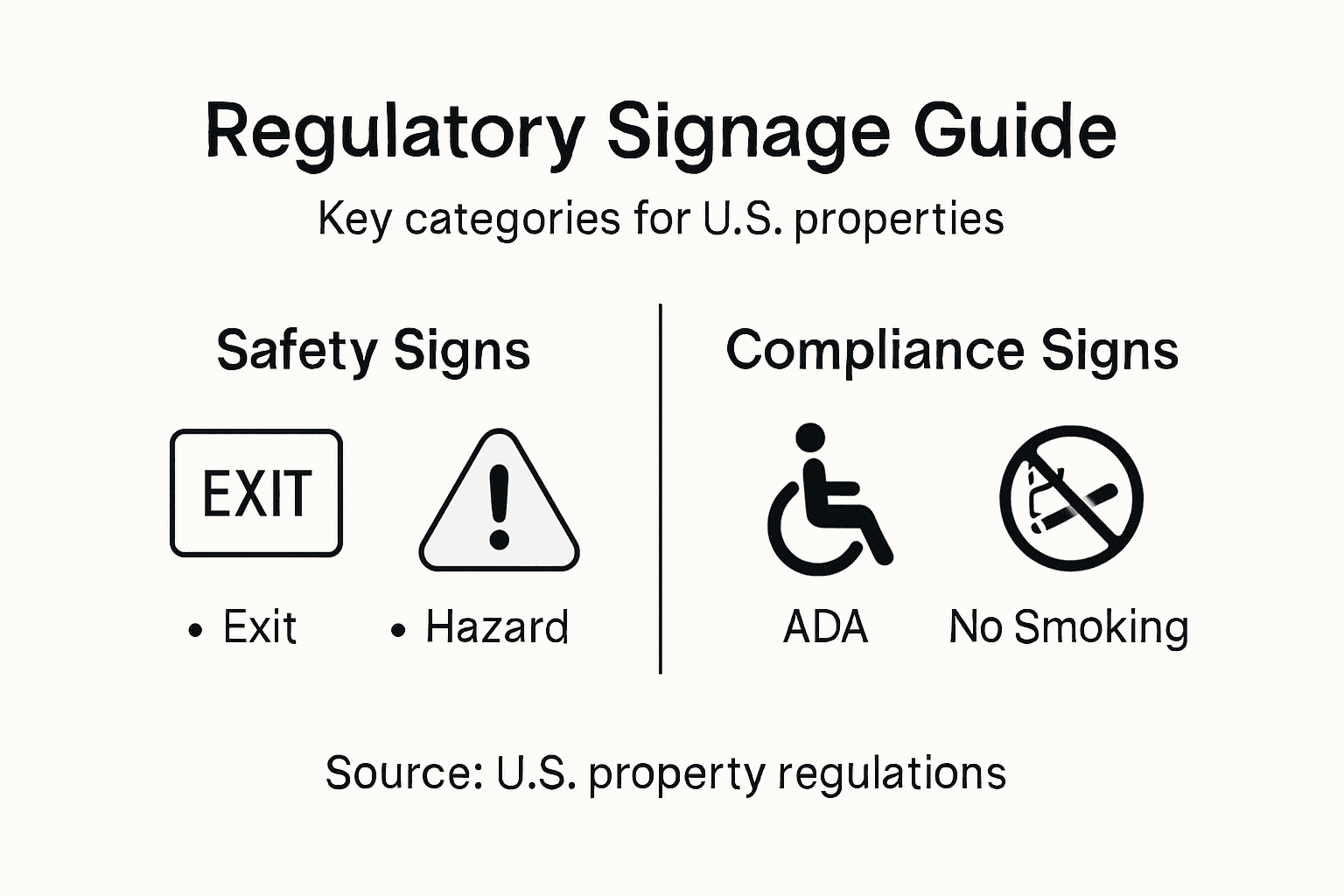
Property management requires a diverse array of regulatory signs that communicate critical information, establish legal boundaries, and ensure safety across different environments. Regulatory signs in the United States are standardized through comprehensive guidelines that specify their design, placement, and messaging to maximize clarity and compliance.
The primary categories of regulatory signs for properties include:
-
Safety and Hazard Notices
- Restricted area warnings
- Emergency exit instructions
- Potential danger indicators
-
Legal Compliance Signs
- No smoking regulations
- Parking restrictions
- Occupancy limitations
- Tenant rights notifications
-
Access Control Signs
- Entry/exit guidelines
- Authorized personnel markers
- Restricted zone indicators
Municipal and state regulations often mandate specific signage requirements for different property types. For residential properties, local housing codes require multiple informational signs addressing tenant protections, health risks, and safety protocols.
Property managers must carefully consider the unique requirements of their specific environment when selecting and implementing regulatory signage. Each sign serves a distinct purpose – from preventing potential legal liabilities to ensuring tenant safety and maintaining clear communication standards.

Here’s a comparison of the primary types of regulatory signs and their unique impacts on property management:
| Sign Type | Key Benefit | Common Use Location |
|---|---|---|
| Safety and Hazard | Reduces accident risks | Stairwells, exits |
| Legal Compliance | Ensures rule adherence | Lobbies, parking lots |
| Access Control | Secures restricted areas | Employee-only doors |
The effectiveness of regulatory signs depends on several critical factors:
- Clear, legible typography
- Appropriate color contrast
- Strategic placement
- Compliance with local regulations
- Regular maintenance and updates
Pro tip: Conduct a comprehensive regulatory sign audit twice annually to ensure all signage remains current, visible, and legally compliant.
Design Standards and Placement Rules
Property regulatory signage must adhere to strict design principles that ensure maximum visibility, comprehension, and legal compliance. Uniform design standards established by regulatory agencies provide comprehensive guidelines for creating effective and legally compliant signs across various property environments.
Key design considerations for regulatory signs include:
-
Visual Clarity
- High-contrast color schemes
- Large, readable typography
- Simple, direct messaging
-
Structural Requirements
- Standardized rectangular shapes
- Retroreflective materials
- Durable weather-resistant construction
-
Placement Strategies
- Optimal visibility zones
- Strategic height positioning
- Clear sightline considerations
The fundamental objective of design standards is to create signs that communicate information quickly and unambiguously. Professional property managers must understand that sign design involves comprehensive accessibility guidelines which go beyond simple visual communication.
Effective regulatory sign placement requires careful consideration of multiple factors:
- Proximity to regulated area
- Height from ground level
- Surrounding visual environment
- Potential obstructions
- Viewer’s typical line of sight
Regulatory signs are not just informational tools, but critical components of property safety and legal compliance.
Pro tip: Consult local building codes and accessibility guidelines when designing and positioning regulatory signs to ensure maximum effectiveness and legal compliance.
Legal Requirements and Compliance Factors
Property managers must navigate a complex landscape of legal requirements that govern regulatory signage, balancing constitutional protections with safety and regulatory standards. Sign regulation involves nuanced legal considerations that extend far beyond simple visual communication.
Key legal compliance factors include:
-
Constitutional Considerations
- Content-neutral sign regulations
- First Amendment speech protections
- Non-discriminatory placement rules
-
Regulatory Mandates
- Federal housing guidelines
- State-specific signage requirements
- Local municipal code compliance
-
Potential Legal Risks
- Penalties for non-compliance
- Potential tenant litigation
- Regulatory enforcement actions
The legal framework surrounding regulatory signage is dynamic and multifaceted. Housing codes mandate specific signage requirements that property managers must meticulously follow to avoid potential legal complications.
Property managers must systematically address multiple compliance dimensions:
- Verify signage meets federal regulations
- Confirm compliance with state laws
- Adhere to local municipal requirements
- Update signs regularly
- Maintain comprehensive documentation
Legal compliance is not just about avoiding penalties, but protecting tenant rights and property safety.
Pro tip: Consult with a local legal professional specializing in property management to conduct an annual comprehensive review of your regulatory signage compliance.
Property Manager Obligations and Risks
Property managers operate in a complex legal landscape where regulatory signage represents a critical component of risk management and legal compliance. Property managers face significant legal obligations that extend far beyond simple posting of informational notices.
Key obligations and potential risks include:
-
Compliance Responsibilities
- Accurate regulatory sign placement
- Regular maintenance of signage
- Timely updates to reflect legal changes
-
Potential Legal Vulnerabilities
- Negligence claims
- Financial penalties
- Tenant dispute escalations
-
Risk Management Strategies
- Comprehensive documentation
- Proactive regulatory monitoring
- Legal consultation practices
The stakes of non-compliance are significant. Property managers can face substantial legal risks for failing to maintain proper safety and regulatory communications.
Effective risk mitigation requires systematic approaches:
- Conduct quarterly signage audits
- Maintain detailed compliance records
- Train staff on regulatory requirements
- Consult legal professionals regularly
- Implement robust documentation protocols
Regulatory compliance is not merely a legal obligation, but a fundamental responsibility to tenant safety and property management integrity.
Pro tip: Develop a comprehensive compliance checklist and schedule regular reviews with a legal professional specializing in property management regulations.
Common Mistakes and How to Avoid Them
Navigating the complex landscape of regulatory signage requires vigilance and strategic attention to detail. Property managers frequently encounter critical signage errors that can compromise legal compliance and tenant safety.
Common regulatory signage mistakes include:
-
Design and Visibility Issues
- Incorrect sign sizing
- Poor placement
- Inadequate lighting
- Insufficient contrast
-
Compliance Oversights
- Outdated legal information
- Neglecting accessibility requirements
- Inconsistent messaging
- Ignoring local regulatory changes
-
Technical Implementation Errors
- Improper mounting heights
- Non-compliant font styles
- Missing tactile elements
- Lack of multilingual options
ADA signage requirements are particularly complex and demand meticulous attention to technical specifications and legal standards.
Effective mitigation strategies involve:
Consider these common mistakes versus the recommended best practice for each:
| Mistake Type | Example Problem | Best Practice Solution |
|---|---|---|
| Design/Visibility | Hard-to-read fonts | Use simple, bold lettering |
| Compliance | Outdated content | Schedule annual reviews |
| Technical | Incorrect mounting | Consult code specifications |
- Conducting regular compliance audits
- Staying updated on regulatory changes
- Consulting accessibility experts
- Implementing comprehensive staff training
- Developing systematic review protocols
Proactive management of regulatory signage is not just about avoiding penalties, but demonstrating a commitment to tenant safety and legal responsibility.
Pro tip: Create a dedicated compliance checklist that includes specific details for sign design, placement, and accessibility to systematically prevent common regulatory mistakes.
Enhance Property Safety and Compliance with Custom Regulatory Signage
Navigating the complex requirements of regulatory signage in U.S. property management demands signs that are not only compliant but also clear and durable. Property managers face ongoing challenges such as meeting visibility standards and updating signage to avoid legal liabilities. With precise custom solutions, you can address these pain points effectively while promoting tenant safety and regulatory adherence.
At Custom Signs Today, we specialize in producing high-quality, weather-resistant regulatory signs tailored to your property’s specific needs. Whether you require safety notices, access control markers, or legal compliance signs, our expert craftsmanship and attention to detail ensure each sign meets federal and local guidelines. Explore our Uncategorized category for versatile signage options crafted for critical communication that safeguards your property and minimizes risk.

Ready to upgrade your property’s regulatory signage with reliable, custom-made solutions designed for maximum impact and compliance? Visit Custom Signs Today now to request a free quote and take the first step toward protecting your assets and tenants with clear, professional signs.
Frequently Asked Questions
What is the core purpose of regulatory signage in property management?
Regulatory signage serves to communicate legal requirements, safety protocols, and behavioral expectations to manage human behavior, enhance safety, and minimize liability risks for property owners.
What types of regulatory signs are commonly used in properties?
Common types of regulatory signs include safety and hazard notices, legal compliance signs, and access control signs, each serving distinct purposes and conveying critical information.
What are the key design standards for regulatory signage?
Design standards for regulatory signage include high-contrast color schemes, large, readable typography, standardized shapes, retroreflective materials, and strategic placement to ensure maximum visibility and comprehension.
How can property managers ensure compliance with regulatory signage requirements?
Property managers can ensure compliance by regularly auditing signage, confirming adherence to federal, state, and local regulations, maintaining documentation, and consulting with legal professionals regarding signage standards.