
Navigating the crowded streets and complex layouts of United States cities can leave clients feeling lost before they even reach a property. For real estate agents, directional signage offers a practical solution that creates clear routes and meaningful connections from curb to front door. In urban environments, smart visual cues and consistent sign placement help set the tone for professional showings, guiding every visitor while reinforcing your agency’s identity and reliability.
Table of Contents
- Directional Signage Defined And Key Concepts
- Types Of Directional Signs For Real Estate
- Effective Placement And Visibility Strategies
- Legal Regulations And Compliance Requirements
- Branding Benefits For Urban Realtors
- Common Pitfalls And Cost Considerations
Key Takeaways
| Point | Details |
|---|---|
| Importance of Clear Signage | Effective directional signage enhances navigation, reduces confusion, and improves property perception. |
| Visibility Strategies | Strategic placement and high-contrast designs ensure signs are easily readable and noticeable. |
| Regulatory Compliance | Understanding and adhering to local signage regulations prevents legal issues and enhances safety. |
| Branding Impact | Consistent signage helps establish a professional identity, reinforces brand recognition, and builds trust with clients. |
Directional signage defined and key concepts
Directional signage represents a critical communication tool that guides individuals through complex physical environments. Wayfinding systems help people navigate spaces efficiently by providing clear visual cues and orientation markers.
At its core, directional signage involves strategic visual communication designed to help people understand and move through spaces. These signs go beyond simple directional arrows – they create comprehensive navigation experiences that reduce confusion and improve spatial comprehension. Key elements typically include:
- Clear typography and readable fonts
- High-contrast color schemes
- Intuitive graphic symbols
- Consistent placement and design language
- Strategic positioning at decision points
Real estate professionals understand that effective directional signage can significantly impact property perception and client experience. Directional indicators serve multiple purposes, from general orientation to specific navigation guidance, making them essential tools in creating welcoming, accessible environments.
Here’s how directional signage impacts real estate business outcomes:
| Impact Area | Benefit to Professionals | Benefit to Buyers |
|---|---|---|
| Property Perception | Enhances professionalism | Builds trust and confidence |
| Navigation | Reduces visitor confusion | Simplifies property tours |
| Branding | Reinforces agency identity | Increases brand recognition |
| Compliance | Minimizes legal risk | Ensures safe environment |
Navigation psychology plays a crucial role in signage design. People naturally seek visual cues that help them understand their surroundings quickly and confidently. Well-designed directional signs reduce cognitive load, making spaces feel more intuitive and user-friendly.
Pro tip: When designing directional signage for real estate properties, prioritize clarity, consistency, and simplicity to create an immediate sense of orientation for potential buyers and visitors.
Types of directional signs for real estate
Real estate professionals utilize multiple sign types for property navigation, each serving a specific purpose in guiding potential buyers and visitors. These signs range from temporary markers to permanent directional indicators that help streamline property exploration and enhance client experience.
Building-mounted signs play a crucial role in real estate directional communication. These include:
- Temporary open house signs
- Directional arrow signs
- Property location markers
- Route guidance signs
- Entrance and parking indicators
- Welcome and information boards
The strategic placement of these signs follows principles similar to standard guide sign practices, emphasizing clarity, legibility, and intuitive navigation. Real estate signs must quickly communicate essential information while creating a welcoming atmosphere for potential buyers.

Beyond basic directional function, these signs serve multiple communication objectives. They not only guide visitors but also reflect the property’s professionalism, brand identity, and attention to detail. Effective directional signage can reduce client confusion, demonstrate organizational competence, and create a positive first impression during property viewings.
Pro tip: Invest in high-quality, consistent directional signs that match your real estate brand’s aesthetic and provide clear, easy-to-follow navigation for potential buyers.
Effective placement and visibility strategies
Successful directional signage in real estate hinges on strategic sign placement and design, which maximizes visibility and enhances communication. The goal is to create signs that are instantly noticeable, easily readable, and provide clear guidance for potential buyers and visitors.
Key visibility considerations for real estate directional signs include:
- Optimal height for human eye-level viewing
- Positioning relative to traffic flow
- Clear line of sight from multiple approach angles
- Appropriate size for viewing distance
- High-contrast color schemes
- Unobstructed placement
- Illumination for low-light conditions
The research on signage effectiveness demonstrates that successful placement involves more than just positioning. Factors like typography, lighting, and environmental context play critical roles in creating signs that truly guide and inform.
Real estate professionals must consider multiple perspectives when designing directional signage. This includes understanding how signs will be viewed by drivers passing at different speeds, pedestrians walking nearby, and potential buyers approaching a property. Each viewing scenario requires careful consideration of sign size, angle, and informational clarity.
Pro tip: Conduct a physical walkthrough of your property and test sign visibility from multiple approach points to ensure potential buyers can easily navigate and understand your directional signage.
Legal regulations and compliance requirements
Real estate professionals must navigate complex federal signage regulations that govern directional sign placement, size, and visibility. These national standards are designed to ensure safety, prevent visual clutter, and maintain consistent communication across different properties and jurisdictions.
Key regulatory considerations for real estate directional signage include:
- Maximum sign area (typically 150 square feet)
- Height restrictions (generally 20 feet or less)
- Prohibition of flashing or moving lights
- Maintaining clear traffic visibility
- Avoiding interference with official traffic signs
- Securing local municipal approvals
- Compliance with state-specific guidelines
Local municipalities often impose additional specific restrictions on real estate signage. These regulations can vary significantly between jurisdictions, requiring real estate professionals to carefully research and understand local ordinances before installing directional signs.
Comprehensive compliance involves more than just following size and placement rules. Real estate agents must also consider potential liability issues, ensuring that signs do not create safety hazards for vehicles or pedestrians. This requires a nuanced understanding of both state and local regulations, which can change frequently.
Pro tip: Always consult local municipal offices and review current zoning regulations before installing any directional signage to ensure full legal compliance and avoid potential fines or removal orders.
Branding benefits for urban realtors
Directional signage serves as a powerful branding tool for urban real estate professionals, offering more than just navigational assistance. By creating a consistent visual identity, these signs communicate professionalism, reliability, and distinctive market positioning.
Strategic branding elements in directional signage include:
- Consistent color schemes matching agency branding
- Uniform typography reflecting agency personality
- Strategic logo placement
- Cohesive design language across all signs
- Clear representation of agency values
- Memorable visual markers
- Professional presentation style
Urban real estate markets demand sophisticated visual communication. Signage contributes significantly to place identity, helping realtors differentiate themselves in competitive metropolitan environments. Well-designed directional signs become silent ambassadors of a real estate brand, communicating trustworthiness and competence before a potential client even makes contact.
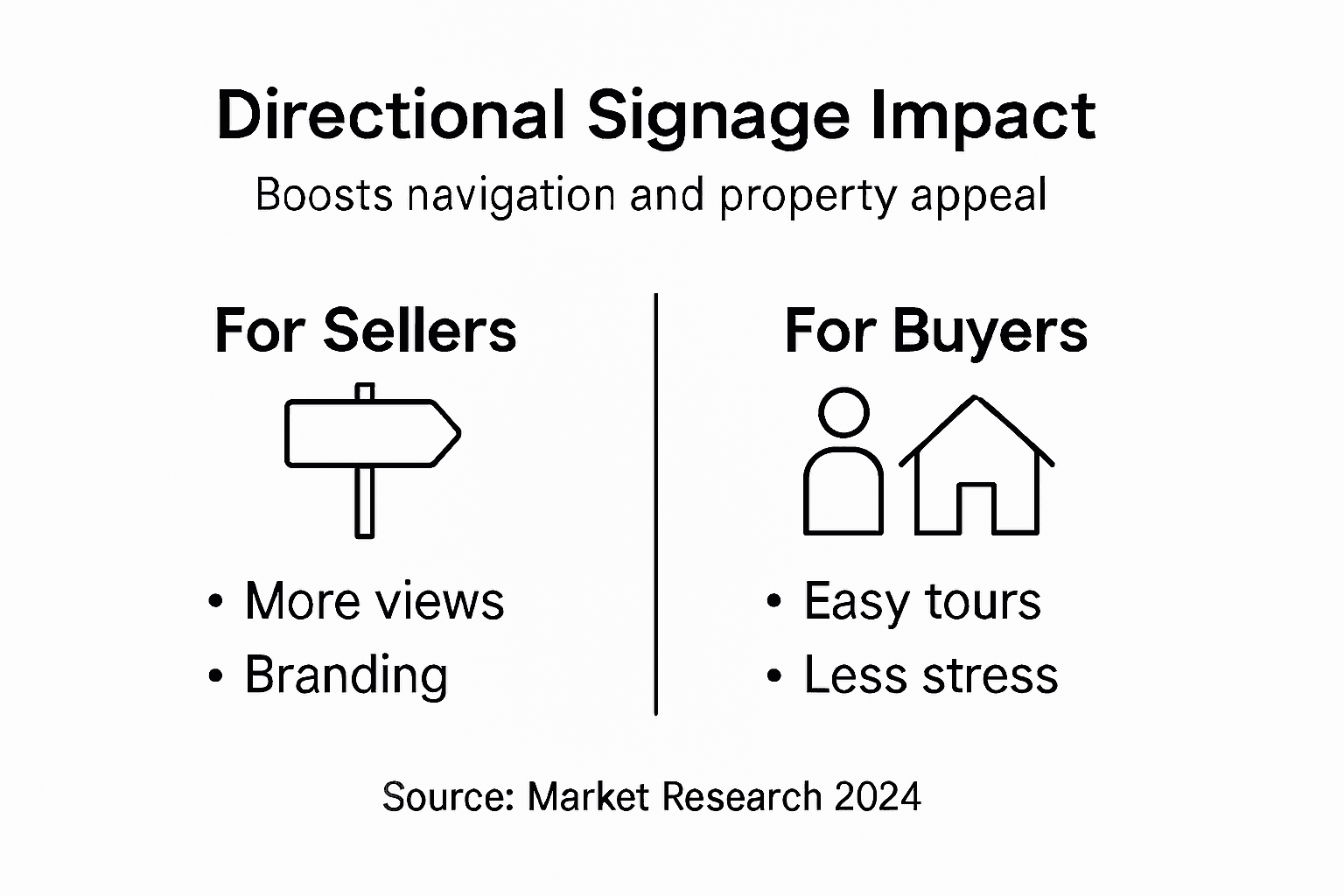
Beyond aesthetic appeal, directional signage represents a strategic investment in brand recognition. Repeated exposure through consistent, high-quality signs helps urban realtors build familiarity and credibility, transforming simple wayfinding tools into powerful marketing instruments that reinforce agency reputation.
Pro tip: Develop a comprehensive signage style guide that ensures every directional sign reflects your agency’s unique brand identity and professional standards.
Common pitfalls and cost considerations
Real estate professionals must carefully navigate the complex landscape of directional signage expenses, understanding that initial investments require strategic planning and long-term considerations. Unexpected costs and design challenges can quickly escalate budgets if not managed proactively.
Primary cost factors for directional signage include:
- Design and conceptual development
- Material selection
- Fabrication complexity
- Installation labor
- Permitting fees
- Maintenance requirements
- Potential replacement costs
- Compliance documentation
Signage investments vary dramatically, with wayfinding sign costs ranging significantly depending on specific project requirements. Large kiosks can exceed $6,000, while simpler directional posts represent more budget-friendly alternatives. Real estate professionals must carefully evaluate site-specific conditions and design complexity to manage expenses effectively.
Common pitfalls that increase costs include inadequate initial planning, poor material selection, non-compliance with local regulations, and insufficient maintenance strategies. These errors can lead to unexpected redesigns, replacement expenses, and potential legal complications that far exceed initial budgetary projections.
Key cost elements and pitfalls for directional signage projects:
| Cost Factor | Typical Challenge | Best Practice |
|---|---|---|
| Design Planning | Underestimating complexity | Develop detailed concepts |
| Material Selection | Inadequate durability | Choose weatherproof options |
| Installation | Unexpected site obstacles | Perform pre-install audits |
| Maintenance | Neglected upkeep leads to damage | Schedule routine checks |
Pro tip: Create a comprehensive budget that includes not just initial design and installation costs, but also accounts for potential maintenance, potential redesign, and compliance expenses over the signage’s expected lifecycle.
Elevate Your Real Estate Navigation with Custom Directional Signage
Directional signage is more than a simple wayfinder it solves critical challenges like visitor confusion and enhances property perception through clear, consistent communication. If you want to make your properties stand out, reinforce your brand identity, and comply with legal requirements while ensuring visitors feel confident, custom signage is the solution you need. Ideal for open houses, directional arrows, and property markers, well-designed signs reduce stress for buyers and showcase your professionalism.
Discover how tailored signs can transform your real estate marketing strategy. Visit our Uncategorized category for versatile sign options that fit your unique property needs.
Ready to turn directional challenges into branding opportunities with durable, high-quality signage? Visit us now at Custom Signs Today and request your free quote. Explore innovative solutions that fit your vision and budget and take the first step toward creating a welcoming and easily navigable property environment. Let us help you make every showing a positive, confident experience.
Frequently Asked Questions
What is directional signage?
Directional signage is a visual communication tool designed to guide individuals through various physical environments, helping them navigate spaces efficiently with clear cues and orientation markers.
How does directional signage impact real estate property perception?
Effective directional signage enhances professionalism, builds trust and confidence with clients, and creates a welcoming environment, ultimately improving property perception for potential buyers.
What are key considerations for placing directional signage in real estate?
Key considerations include optimal height for visibility, clear line of sight from multiple angles, appropriate sizing for viewing distance, high-contrast color schemes, and unobstructed placement to ensure easy navigation.
What are some common pitfalls in directional signage for real estate?
Common pitfalls include inadequate planning, poor material selection, non-compliance with local regulations, and neglecting maintenance, all of which can lead to unexpected costs and complications.