
Every real estate agent knows the challenge of helping clients find the right property in a busy American city. The streets and intersections of places like New York or Los Angeles can quickly become confusing without clear guidance. Directional signs are vital navigational tools that make properties stand out, streamline open house visits, and leave a lasting professional impression. This overview reveals practical ways to use directional signs for improved visibility, compliance, and client experience at urban open houses.
Table of Contents
- Defining Directional Signs For Real Estate
- Types Of Directional Signs Used At Open Houses
- How Directional Signs Boost Visibility And Traffic
- Legal Rules For Signage Placement In Urban Areas
- Best Practices For Installation And Design
- Avoiding Common Mistakes With Directional Signs
Key Takeaways
| Point | Details |
|---|---|
| Importance of Directional Signs | Directional signs guide potential buyers and enhance property visibility, significantly impacting marketing effectiveness. |
| Signage Regulations | Understanding zoning regulations is crucial to ensure compliance with sign placement, size, and illumination, avoiding legal complications. |
| Effective Design Practices | High-contrast colors, clear fonts, and strategic positioning are essential for maximizing readability and visibility of signs. |
| Common Pitfalls | Avoid overcrowding signs with excessive information and ensure consistent branding to maintain professionalism and clarity in navigation. |
Defining directional signs for real estate
Directional signs in real estate serve a critical purpose of guiding potential buyers, clients, and visitors toward specific properties, open houses, or designated locations. These visual communication tools are more than just simple indicators – they represent strategic navigational assets that can significantly impact a property’s visibility and accessibility.
Traditionally, directional signs have evolved from historical road navigation markers to sophisticated informational tools designed for clarity and quick comprehension. In the real estate context, these signs help potential buyers find properties efficiently, reduce confusion during property tours, and create a professional first impression about the agent or brokerage.
According to zoning regulations, directional signs must adhere to specific guidelines regarding placement, size, and visibility. The International Zoning Code provides comprehensive frameworks that ensure these signs contribute to public safety while serving their intended navigational purpose. Real estate professionals must understand these regulatory requirements to create compliant and effective signage.
Modern directional signs typically include essential information such as property addresses, agent contact details, open house times, and directional arrows. They are strategically placed at intersections, street corners, and key approach routes to maximize visibility and guide potential buyers directly to the target property.
Pro Tip: Create directional signs with high-contrast colors and large, readable fonts to ensure maximum visibility from a distance and during varying light conditions.
Types of directional signs used at open houses
Open houses require a strategic approach to signage that guides potential buyers effectively and professionally. Real estate agents utilize various directional sign types to create clear navigation paths and attract attention to properties.
Temporary directional signs are crucial for open house events. These typically include A-frame signs, arrow boards, and stake signs positioned at key intersections and approaches. Temporary signage guidance helps ensure safe traffic flow and clear direction for potential buyers seeking the property location.
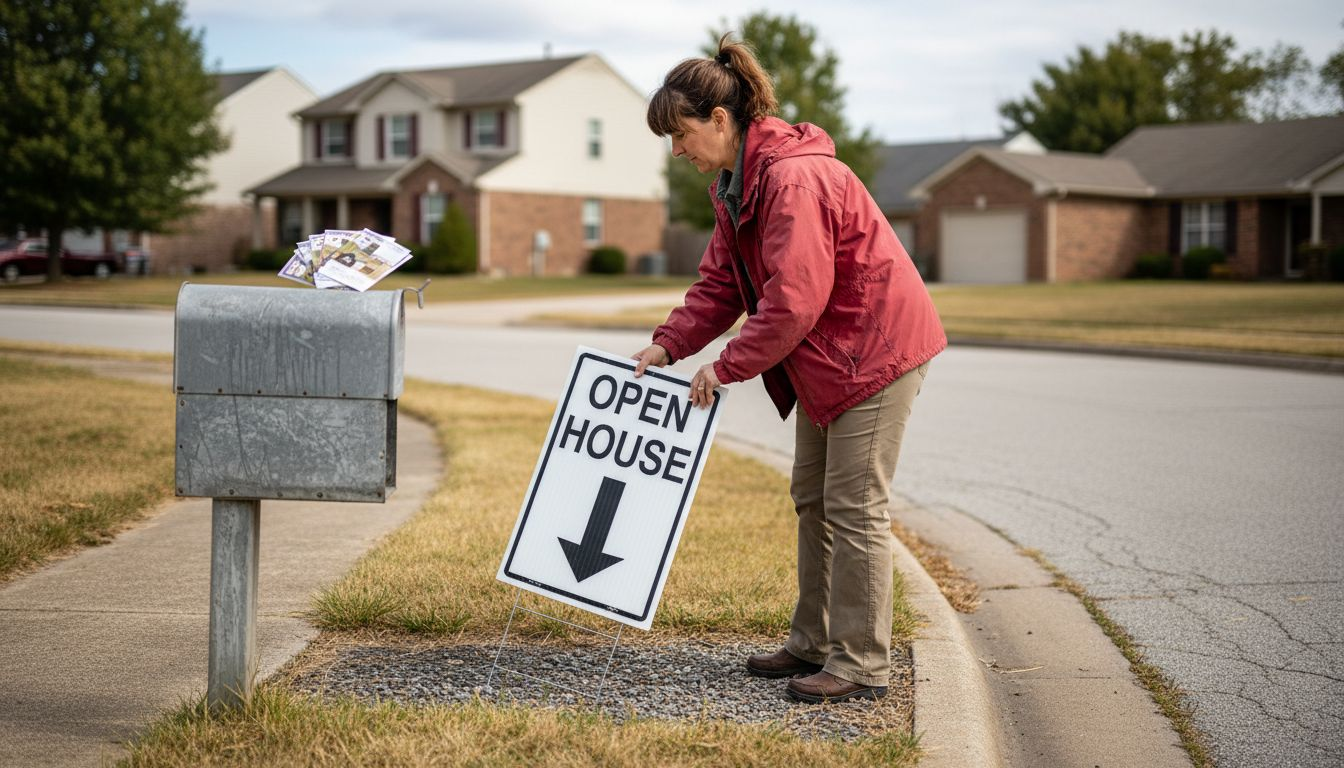
Building-mounted directional signs offer additional visual communication options. Wall-mounted signs, projecting signs, window signs, and roof signs can provide supplemental information about the property, agent contact details, and open house times. These permanent sign types complement the temporary directional markers and create a comprehensive wayfinding system for property viewings.
The most effective open house signage combines multiple sign types to create a cohesive navigation experience. This might include large street corner A-frame signs with directional arrows, smaller stake signs guiding visitors through parking areas, and building-mounted signs providing property details and branding.
Here’s a quick comparison of common directional sign types used in real estate:
| Sign Type | Typical Use | Visibility Impact |
|---|---|---|
| A-frame Sign | Street corners, high-traffic spots | High from multiple directions |
| Stake Sign | Lawns, narrow pathways | Moderate, pedestrian focus |
| Arrow Board | Major intersections | Very high, directs drivers |
| Building-mounted Sign | Property entrance or facade | High at point of arrival |
Pro Tip: Create a consistent color scheme and design across all directional signs to enhance brand recognition and provide a professional, unified appearance during open house events.
How directional signs boost visibility and traffic
Directional signs play a critical role in attracting potential buyers and increasing property visibility during real estate marketing efforts. Sign visibility factors like brightness, contrast, and strategic positioning determine how effectively agents can draw attention to properties and guide interested clients.
Traffic flow optimization is another crucial benefit of well-designed directional signage. Properly placed signs reduce navigation confusion and create clear pathways for potential buyers, ultimately increasing the number of visitors to open houses and property showings. Traffic sign research demonstrates that strategic sign placement can significantly improve driver recognition and property discovery rates.
The psychological impact of directional signs should not be underestimated. These visual markers provide more than just navigation – they communicate professionalism, attention to detail, and commitment to potential buyers. By creating a seamless and intuitive path to a property, real estate agents can reduce buyer hesitation and improve overall engagement with the listing.
Most successful real estate marketing strategies incorporate multiple sign types and locations to maximize visibility. This might include street corner signs, neighborhood intersection markers, and eye-catching arrows that guide potential buyers directly to the property, transforming casual interest into actual property visits.
Pro Tip: Use reflective or high-contrast sign materials to ensure maximum visibility during different times of day and weather conditions.
Legal rules for signage placement in urban areas
Real estate professionals must navigate complex legal regulations governing directional sign placement in urban environments. Zoning code regulations establish strict guidelines that protect public safety and maintain visual order, with specific provisions addressing sign placement, size, illumination, and permissible sign types.
Urban signage laws vary significantly between jurisdictions, requiring real estate agents to understand local municipal codes carefully. Violations can result in substantial fines, mandatory sign removal, or legal complications that could impede marketing efforts. Some key regulatory considerations include minimum and maximum sign dimensions, permitted placement distances from street intersections, and restrictions on sign illumination and visual obstruction.
The primary objectives of these legal frameworks are to ensure public safety, prevent visual clutter, and maintain aesthetic standards in residential and commercial districts. Transportation sign guidelines provide additional specifications about sign height, lateral positioning, and visibility to minimize potential traffic hazards and ensure clear navigation for drivers and pedestrians.
Successful real estate marketing requires a thorough understanding of these complex regulatory environments. Agents must carefully research local ordinances, potentially consult municipal planning departments, and design signage strategies that comply with all legal requirements while effectively promoting property listings.
Key legal considerations for urban real estate sign placement include:
| Legal Factor | Common Regulation | Impact on Sign Deployment |
|---|---|---|
| Maximum Size | Often 4-6 sq. ft. per sign | Limits sign content and visibility |
| Setback Distance | Typically 5-10 ft. from curb or intersection | Affects potential sign locations |
| Illumination Rules | Restricts lights or requires no illumination | Limits 24-hour sign effectiveness |
| Height Restrictions | Usually 3-6 ft. from ground level | Determines mounting options |
Pro Tip: Always request a written copy of local sign ordinances and consult with municipal authorities before placing any directional signs to ensure full legal compliance.
Best practices for installation and design
Directional signs for real estate require meticulous planning and strategic sign design considerations to maximize effectiveness. Successful installation goes beyond simple placement, encompassing visual communication that guides potential buyers with clarity and professionalism.
Optimal sign design involves multiple critical elements. Real estate professionals must carefully select letter heights that remain readable at various distances, utilize high-contrast color combinations that stand out against different backgrounds, and position signs at precise angles that capture drivers’ attention without causing visual distraction. Mounting height and angle are particularly crucial for ensuring maximum visibility during different times of day and traffic conditions.
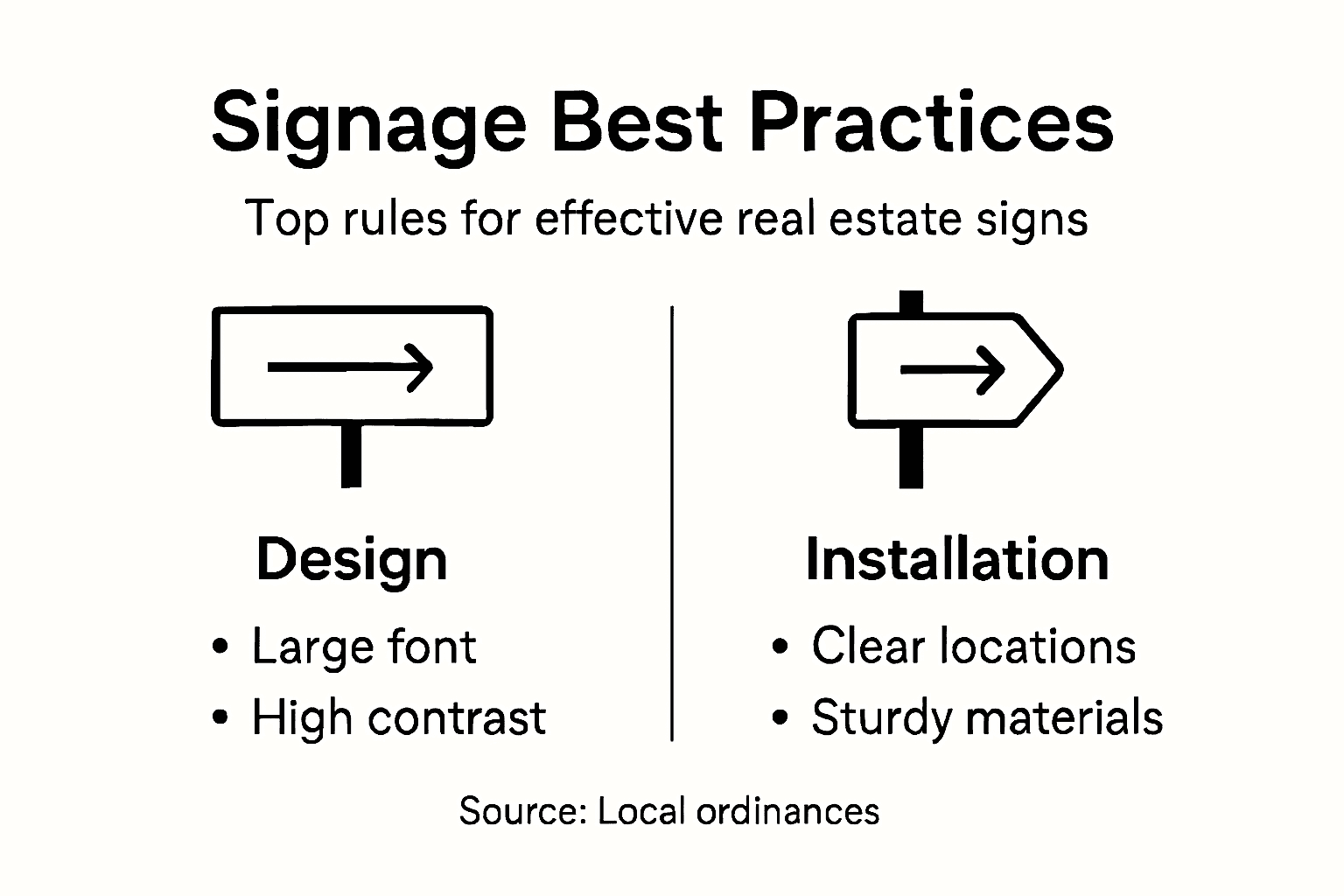
Sign installation standards mandate specific technical requirements that real estate agents must understand. These include using stable mounting fixtures, incorporating reflective materials for nighttime visibility, and ensuring signs can withstand local weather conditions. Compliance with the Manual on Uniform Traffic Control Devices (MUTCD) helps guarantee that directional signs meet professional safety and design standards.
Beyond technical specifications, successful sign design should align with the real estate agent’s brand identity. This means creating a consistent visual language across all signage that communicates professionalism, reliability, and local market expertise. Color schemes, typography, and overall design should reflect the agent’s unique positioning in the real estate market.
Pro Tip: Invest in high-quality, weather-resistant sign materials and conduct periodic maintenance checks to ensure your directional signs remain clear, legible, and professionally presented.
Avoiding common mistakes with directional signs
Real estate professionals must be vigilant about potential pitfalls when creating directional sign regulations. Common mistakes can lead to legal complications, reduced property visibility, and potential safety hazards that undermine marketing efforts.
One of the most critical errors involves sign placement and design complexity. Overcrowded signs with excessive text or intricate fonts dramatically reduce readability, especially for drivers moving at various speeds. Real estate agents should focus on clear, concise messaging that can be comprehended quickly, using high-contrast colors and simple typography that ensures immediate understanding.
Sign effectiveness strategies emphasize the importance of strategic positioning. Mistakes like blocking traffic control devices, obstructing pedestrian pathways, or placing signs in locations with limited visibility can render directional signage ineffective. Agents must carefully evaluate each potential sign location, considering sight lines, traffic patterns, and potential visual interference.
Additionally, real estate professionals should avoid inconsistent branding across directional signs. Each sign represents an opportunity to communicate professionalism and market expertise. Mismatched designs, varying color schemes, or inconsistent typography can diminish the perceived quality of a real estate agent’s services and confuse potential buyers navigating to an open house.
Pro Tip: Create a standardized sign design template that includes consistent color palette, font style, and layout to ensure professional and recognizable directional signage across all property listings.
Boost Your Real Estate Success with Custom Directional Signs
Navigating potential buyers to your properties can be challenging without clear, professional signage. This article highlights common pain points like sign visibility, legal compliance, and consistent branding. At Uncategorized – we understand that correctly designed and strategically placed directional signs are essential for maximizing property traffic and creating a strong first impression.
Don’t let poorly designed signs hold back your real estate success. Visit https://customsignstoday.us to explore our custom signage solutions crafted with high-quality, durable materials suitable for any setting. Our expert team will help you create eye-catching, compliant directional signs that guide clients straight to your listings. Take control of your property visibility now and request a free quote today.
Frequently Asked Questions
What are directional signs in real estate?
Directional signs in real estate are visual tools that guide potential buyers and visitors to properties, open houses, and specific locations, enhancing visibility and accessibility.
How do directional signs improve property visibility?
Directional signs improve property visibility by strategically guiding potential buyers through clear pathways and effective placements, ultimately drawing more traffic to open houses and property viewings.
What types of directional signs are commonly used in real estate?
Common types of directional signs in real estate include A-frame signs, stake signs, arrow boards, and building-mounted signs, each serving specific purposes to enhance navigation and attract attention.
What are the legal considerations for placing directional signs?
Legal considerations for placing directional signs include adhering to local zoning codes that dictate sign size, placement, illumination, and restrictions to ensure public safety and compliance with municipal regulations.