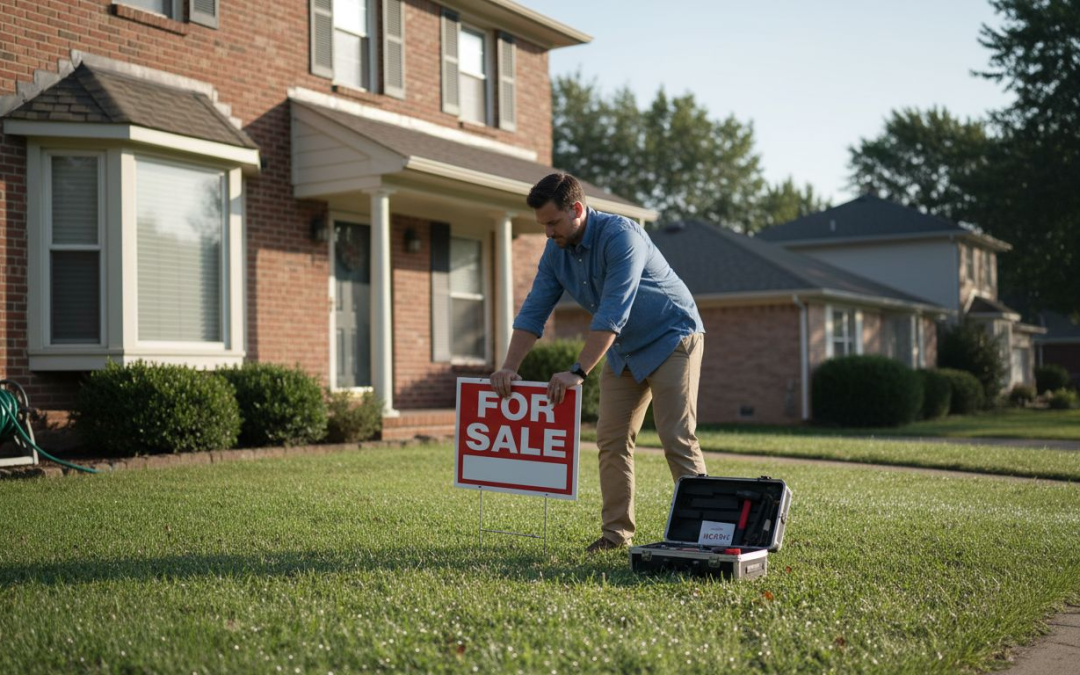
Finding signage that holds up against unpredictable weather and daily wear can feel like an ongoing challenge for American real estate agents. Durable property signs are essential for attracting buyers and keeping branding crisp and professional. Coroplast signs offer a unique advantage with their lightweight, waterproof design and vibrant colors that stay sharp season after season. Discover how these customizable options transform visibility and streamline your property marketing.
Table of Contents
- Defining Coroplast Signs And Common Uses
- Types Of Coroplast Signs For Real Estate
- Key Features And Customization Options
- Durability, Costs, And Maintenance Factors
- Coroplast Signs Versus Other Sign Materials
Key Takeaways
| Point | Details |
|---|---|
| Durability of Coroplast | Coroplast signs last 3-5 years outdoors, resisting weather elements and maintaining color vibrancy longer than paper or cardboard alternatives. |
| Cost-Effectiveness | Although Coroplast signs cost more upfront than paper, their longevity reduces total ownership costs significantly over time. |
| Versatility in Use | Coroplast signage serves multiple functions in real estate, including yard signs, directional aids, and temporary event promotions. |
| Customization Options | Signs can be easily personalized with colors, branding, and dimensions, allowing for targeted marketing strategies. |
Defining Coroplast Signs and Common Uses
Coroplast is a corrugated plastic material made from polypropylene that’s become the go-to choice for real estate signage across North America. Unlike traditional materials, corrugated plastic sheets are lightweight, waterproof, and built to withstand outdoor conditions without warping or fading.
Think of coroplast as cardboard’s more durable cousin. It has the same hollow, fluted structure, but instead of breaking down in rain, it actually gets stronger. Real estate agents especially love it because it holds up through multiple seasons while maintaining sharp, vibrant colors that catch buyer attention.
What Makes Coroplast Different
Coroplast stands out from other signage materials in several important ways:
- Waterproof and weather-resistant — survives rain, snow, and intense UV exposure without deteriorating
- Lightweight — easy to transport, install, and reposition across multiple properties
- Cost-effective — more affordable than metal or wood alternatives while lasting 3-5 years outdoors
- Color-stable — vibrant inks don’t fade, keeping your branding sharp in sunlight
- Impact-resistant — won’t crack or shatter if damaged during transport or installation
Coroplast’s resistance to water, oils, and solvents combined with optional UV protection makes it ideal for any weather-exposed real estate signage.
Common Uses for Real Estate Agents
Coroplast works for virtually every real estate signage need you’ll encounter in the field.
Yard signs remain the most popular application. These are the open house indicators and “For Sale” signs that sit at property frontages. They’re affordable to produce, quick to install, and carry your branding directly to potential buyers driving through neighborhoods.
Directional signs guide buyers from main roads to specific properties. A-frame coroplast signs positioned at intersections help people find your open houses without GPS.
Property-specific signage displays sold price, agent headshots, or QR codes linking to virtual tours. These custom details work perfectly on coroplast because you can add UV-protective coatings to extend outdoor life.
Construction site signage also benefits from coroplast durability. Whether announcing future developments or listing agent contact information, these signs handle continuous weather exposure.
Pro tip: Order your coroplast signs in batches using consistent branding elements. Multiple signs with matching design, colors, and fonts create stronger brand recognition than one-off variations across your properties.
Pro tip: When reusing coroplast signs for new listings, use a durable vinyl over original designs rather than removing ink—this protects the material and maintains quality for future use.
Types of Coroplast Signs for Real Estate
Coroplast signs come in several distinct formats, each designed to solve specific challenges you face when marketing properties. Understanding which type fits your situation helps you allocate your marketing budget more effectively and reach buyers where they actually look.
The variety available means you’re not locked into a one-size-fits-all approach. Different property types, locations, and buyer demographics call for different signage strategies.
Standard Yard Signs
Yard signs are the workhorses of real estate marketing. These are the rectangular signs planted at property frontages that announce “For Sale” or “Open House” status.
Standard sizes run 18" x 24" or 24" x 36", though custom dimensions are available. The larger format increases visibility from passing vehicles, which matters tremendously on busy streets. Corrugated plastic sheets in these dimensions are rigid enough to withstand wind without bending, yet light enough to install quickly.
Yard signs excel because:
- Visible from multiple directions and distances
- Quick to install and remove for property turnover
- Cost-effective when ordered in quantity
- Customizable with agent contact, QR codes, or property details
- Weather-resistant coating protects colors for months outdoors
Directional and A-Frame Signs
Directional signs guide buyers from main roads toward your property listings. These work especially well for properties set back from highways or in subdivisions where visibility from the main road is limited.
A-frame coroplast signs (sometimes called sandwich boards) stand independently and can be positioned at intersections or corners. They grab attention through movement and positioning flexibility that fixed signs cannot match.
A-frame advantages include:
- Portable between multiple properties and events
- Visible from both directions on streets
- Professional appearance signals active listing
- Easy to update messaging seasonally
Rider Signs and Add-On Panels
Rider signs attach to existing yard sign posts, adding specific details without replacing the main sign. Common riders announce “Reduced Price,” “New Listing,” or “Just Sold” status.
These signs save money by reusing your primary yard sign infrastructure. Rather than ordering entirely new signs each time status changes, you simply swap riders. Coroplast’s durability means the base sign withstands dozens of rider changes across multiple properties over years.
Coroplast variations in thickness (commonly 3, 4, or 5 mm) affect rigidity and durability—thicker materials work better for large directional signs exposed to constant wind.
Open House and Event Signage
Temporary event signs appear for specific weekends when you’re hosting open houses. These often feature bolder colors, larger text, and sometimes agent branding more prominently than standard for-sale signs.
Event signage handles the temporary nature well because coroplast doesn’t degrade when stored between uses. Unlike paper signs that curl or fade, coroplast maintains appearance through multiple seasons of weekend showings.
Pro tip: Order all your coroplast signs with the same base design template but different message panels—this reduces per-unit costs while maintaining consistent branding across your entire property portfolio.
Here’s a quick reference comparing types of real estate coroplast signs and their best-fit uses:
| Sign Type | Best Use Case | Typical Size | Distinct Advantage |
|---|---|---|---|
| Yard Sign | Property listing frontages | 18"x24" or 24"x36" | Maximizes driver visibility |
| Directional/A-Frame | Guiding buyers at intersections | Varies, often 18"x24" | Highly portable and versatile |
| Rider Panel | Status changes (e.g., Sold) | 6"x24" to 6"x36" | Updates info without new sign |
| Event/Open House | Temporary weekend promotion | 24"x18" or custom size | Reusable between multiple events |
Key Features and Customization Options
Coroplast signs offer flexibility that traditional materials simply cannot match. You can tailor virtually every aspect to match your branding, target market, and specific property needs.
This customization capability is what transforms coroplast from a generic signage material into a competitive advantage for your real estate business.
Material Thickness and Durability
Coroplast comes in multiple thicknesses, each affecting how your signs perform in the field. Standard options range from 3 to 6 millimeters, with thicker materials providing greater rigidity for large or wind-exposed installations.
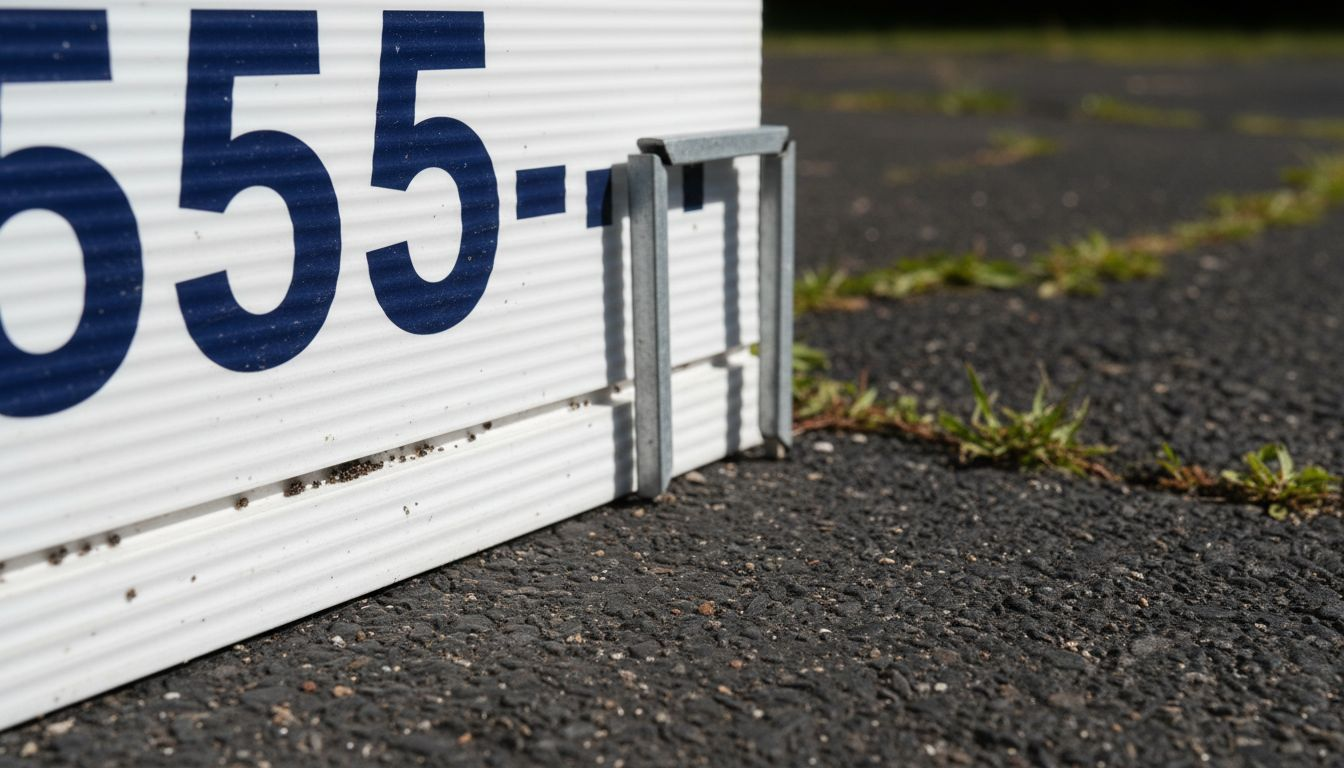
Coroplast sheets available in various thicknesses allow you to choose based on your specific application. A 3 mm sheet works perfectly for small yard signs in protected locations, while 5 or 6 mm handles directional signs on busy highways where wind exposure is constant.
Thickness impacts these factors:
- Rigidity — thicker material resists bending without support posts
- Weight — thinner sheets remain portable for frequent repositioning
- Cost — thickness directly affects per-unit pricing
- Lifespan — heavier gauge materials withstand more weather cycles
Color and Printing Options
Color choices directly influence how quickly buyers notice your listings. Bright, contrasting colors (white backgrounds with dark text, or bold accent colors) grab attention from moving vehicles.
Weather-resistant inks are standard on quality coroplast signage. These inks resist fading even after months of direct sunlight exposure, ensuring your branding stays sharp and professional.
You can incorporate:
- Custom brand colors matching your logo and marketing materials
- Agent headshots and contact information
- QR codes linking to property virtual tours
- Property-specific details like price, square footage, or listing highlights
- Multiple colors for maximum visual impact
UV Protection and Environmental Additives
Coroplast can be modified with additives for UV protection, ensuring colors remain vibrant season after season. UV-protective coatings add minimal cost but dramatically extend sign lifespan.
These protective treatments prevent the color fading that plagues outdoor signage, maintaining professional appearance through multiple years of exposure.
Requesting UV protection coatings on your coroplast signs extends their usable outdoor lifespan by 2-3 years compared to unprotected materials, protecting your investment in custom branding.
Design Customization and Finishing
Coroplast accepts various finishing techniques that enhance visual appeal. Edge banding covers raw plastic edges for a polished look. Die-cut shapes create distinctive designs that stand out from rectangular competitors.
You can also customize mounting options based on your installation method. Some signs use H-frames, others mount directly to existing structures, and directional signs employ A-frame stands.
Common customization approaches:
- Custom dimensions tailored to specific locations
- Rounded or angled edges for modern appearance
- Multiple-panel designs with interchangeable sections
- Textured surfaces or special finishes for premium effect
Pro tip: Request your coroplast signs with UV-protective coating and 5 mm thickness for directional signs, 3 mm for standard yard signs—this balance optimizes durability against cost across your portfolio.
Durability, Costs, and Maintenance Factors
Coroplast delivers exceptional value when you calculate lifespan against initial investment. Understanding the cost structure and maintenance requirements helps you make smarter decisions about your signage budget.
Most real estate agents find that coroplast signs pay for themselves through improved property visibility and buyer engagement.
Outdoor Lifespan and Weather Resistance
Coroplast signs typically last 3-5 years in continuous outdoor use, though UV-protected versions extend this to 5-7 years. This lifespan assumes standard weather exposure without extreme conditions.
Coroplast’s resistance to oils, solvents, and water makes it significantly more durable than paper-based alternatives. Unlike cardboard signs that deteriorate within weeks of rain, coroplast maintains structural integrity through multiple freeze-thaw cycles and intense UV exposure.
Factors affecting real-world lifespan include:
- UV protection — unprotected signs fade faster in intense sunlight
- Installation location — wind-exposed areas stress signs more heavily
- Climate — coastal salt spray and extreme temperature swings reduce longevity
- Material thickness — thicker coroplast resists degradation longer
Cost Comparison and Value Proposition
Coroplast yard signs cost $8-15 per unit when ordered in quantity, compared to $3-5 for paper signs but significantly less than metal alternatives at $25-40 each. The price difference narrows considerably when you factor in replacement frequency.
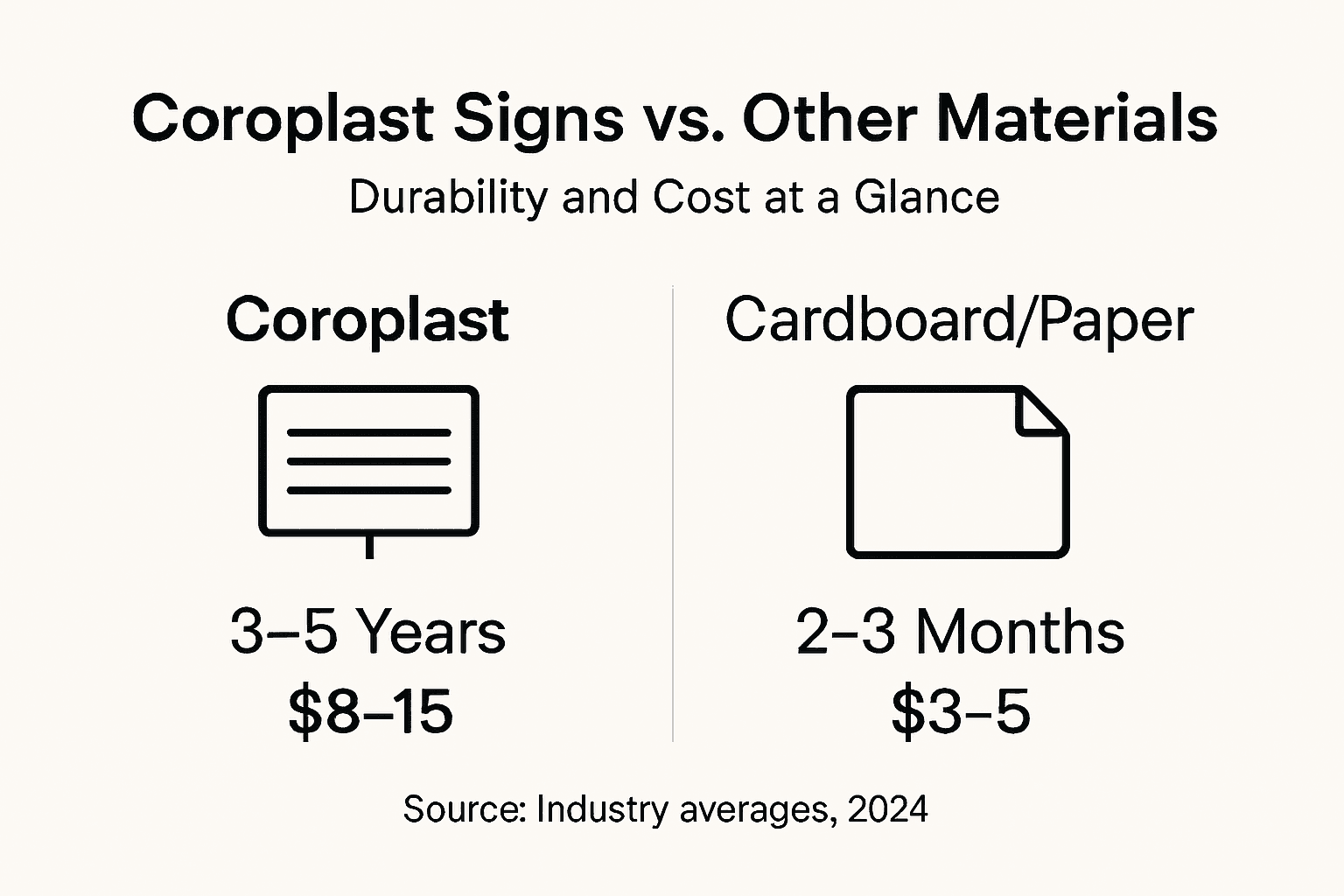
A paper sign lasting 2-3 months versus a coroplast sign lasting 36-60 months means fewer reorders and lower total cost of ownership. You also reduce labor costs associated with replacing damaged or faded signage.
Consider this summary of estimated total ownership costs for major sign materials over three years:
| Material | Upfront Cost (40 Signs) | Avg. Lifespan | Annual Replacement Cost | Maintenance Required |
|---|---|---|---|---|
| Coroplast | $400–$720 | 3–5 years | $80–$130 | Occasional rinsing |
| Cardboard | $120–$200 | 2–3 months | $800 | Frequent replacement needed |
| Metal | $1,000–$1,600 | 5+ years | $200 | Rust prevention |
Typical cost scenarios:
- Paper signs: $200 for 40 signs replaced every 3 months = $800 annually
- Coroplast signs: $400 for 40 signs lasting 3-5 years = $80-130 annually
- Metal signs: $1,000 for 40 signs lasting 5+ years = $200 annually
Investing in UV-protected coroplast at slightly higher upfront cost ($12-18 per sign) reduces annual replacement costs by 40-60% compared to unprotected alternatives.
Minimal Maintenance Requirements
Coroplast requires virtually no maintenance compared to painted wood or metal signage. Basic cleaning with mild soap and water removes dirt or grime that accumulates from weather exposure.
Avoid pressure washers, harsh chemicals, and excessive heat. These can damage the material or affect color vibrancy. Simple rinsing with a garden hose annually keeps signs looking fresh.
Maintenance best practices:
- Rinse signs quarterly to remove dust and debris
- Inspect mounting hardware annually for corrosion
- Store unused signs in a dry location away from direct sunlight
- Avoid contact with solvents or extreme heat sources
Pro tip: Calculate your sign replacement costs annually—most agents discover that ordering coroplast in bulk every 2-3 years costs less than managing paper signs throughout the year.
Coroplast Signs Versus Other Sign Materials
Choosing the right signage material directly impacts your marketing effectiveness and return on investment. Coroplast stands out when compared side-by-side with traditional alternatives, but understanding the tradeoffs helps you make decisions aligned with your specific needs.
Different materials excel in different situations, and the best choice depends on your property type, location, and budget constraints.
Coroplast Versus Cardboard and Paper
Paper and standard cardboard signs are cheap upfront but fail quickly outdoors. Rain, wind, and UV exposure reduce their lifespan to 6-12 weeks, forcing constant replacement.
Coroplast outperforms cardboard significantly. While cardboard absorbs moisture and becomes structurally weak, coroplast repels water entirely. You’ll invest more initially but eliminate the constant cycle of damaged, faded signs requiring replacement.
Key differences:
- Weather resistance — cardboard deteriorates in rain; coroplast withstands months of exposure
- Color retention — paper fades within weeks; coroplast maintains vibrancy for years
- Structural integrity — wet cardboard becomes flimsy; coroplast stays rigid and stable
- Total cost of ownership — paper seems cheaper until you calculate replacement frequency
Coroplast Versus Metal and Wood Signage
Metal and wood signs project premium aesthetics but come with significant drawbacks. Metal rusts in coastal environments, wood rots with moisture exposure, and both require protective coatings that fade and peel.
Coroplast offers strength and water resistance comparable to these traditional materials while remaining lightweight and easier to install. Metal and wood demand professional installation and are difficult to reposition once mounted.
Comparison highlights:
- Installation effort — metal requires heavy equipment; wood needs professional carpentry; coroplast installs with basic tools
- Maintenance — metal needs rust prevention; wood needs sealant reapplication; coroplast needs only occasional rinsing
- Customization — metal is expensive to customize; wood is difficult to alter; coroplast cuts and bends easily
- Portability — metal and wood are permanent; coroplast relocates between properties effortlessly
Coroplast Versus Foam Core and Composite Materials
Foam core looks sleek but absorbs moisture and deteriorates outdoors. Composite materials perform better than foam core but cost significantly more than coroplast.
Coroplast provides better water resistance and impact durability than foam core while remaining more affordable than premium composites. You sacrifice some visual polish compared to foam core, but gain superior outdoor performance.
Coroplast balances cost, durability, and ease of customization better than foam core or premium composites, making it the most practical choice for real estate agents managing multiple properties across varying climates.
Making Your Material Choice
Your ideal signage material depends on three factors: budget constraints, expected outdoor exposure, and repositioning frequency.
If you manage multiple properties requiring frequent sign changes, coroplast’s portability and durability justify the moderate upfront cost. If you maintain permanent signage in stable locations, consider whether wood or metal’s premium appearance justifies higher maintenance costs.
Selection considerations:
- Real estate agents with 10+ active listings benefit most from coroplast’s reusability
- Properties in extreme climates (coastal, desert, freeze-thaw zones) require coroplast’s durability
- Single permanent property listings might justify metal or wood’s premium appearance
- Budget-conscious agents should calculate 3-year total costs, not initial purchase price
Pro tip: Order a sample coroplast sign alongside samples from metal and wood vendors, then compare appearance, weight, and durability after three months of outdoor exposure to make a confident material choice.
Elevate Your Real Estate Marketing with Custom Coroplast Signs
Real estate agents know how critical durable, eye-catching signage is when showcasing listings. Coroplast signs offer unbeatable weather resistance, vibrant color retention, and easy portability—addressing common challenges like fading, damage from outdoor exposure, and costly frequent replacements. If you want professional-grade visual communication that highlights your properties and strengthens your branding, you need a trusted partner who can deliver high-quality custom coroplast signs tailored just for your business.
Discover the difference with Custom Signs Today, where we specialize in custom-designed coroplast signs crafted from premium materials to maximize durability and visibility. Whether you need yard signs, directional A-frames, or rider panels, our expert team provides unmatched customization options and UV-protective coatings to extend outdoor lifespan and keep your listings looking vibrant for years. Don’t let inferior signage hold back your property’s appeal. Visit Custom Signs Today now and request your free quote to start building stronger buyer engagement through smarter, longer-lasting signage solutions.
Frequently Asked Questions
What is a coroplast sign?
Coroplast signs are made from corrugated plastic, specifically polypropylene. They are lightweight, waterproof, and weather-resistant, making them an excellent choice for outdoor real estate signage.
What are the main benefits of using coroplast signs for real estate?
Coroplast signs are cost-effective, durable, impact-resistant, and maintain vibrant color quality over time. They can withstand various weather conditions and are lightweight for easy installation and transport.
How long can coroplast signs last outdoors?
Typically, coroplast signs last between 3 to 5 years outdoors. However, those with UV protective coatings can extend their lifespan to 5 to 7 years, ensuring consistent branding visibility over time.
What types of coroplast signs are best for real estate agents?
Real estate agents commonly use yard signs, directional signs, rider signs, and temporary event signage. Each type serves a specific purpose, and customizations can enhance their effectiveness in marketing properties.