Choosing the right lawn sign isn’t just about design. Many business owners assume all lawn signs use similar materials, but this misconception can cost you visibility and durability. The material you select directly impacts how long your sign lasts, how well it withstands weather, and whether it effectively catches attention. Understanding the differences between corrugated plastic, aluminum, and PVC helps you make informed decisions that align with your budget and promotional goals.
Table of Contents
- Common Materials Used For Lawn Signs
- Durability And Weather Resistance: Choosing The Right Lawn Sign Material
- Customization And Visual Appeal Of Lawn Sign Materials
- Cost Considerations And Best Practices For Selecting Lawn Sign Materials
- Explore Custom Signage Solutions For Your Business
Key takeaways
| Point | Details |
|---|---|
| Material variety | Lawn signs commonly use corrugated plastic, aluminum, and PVC, each offering distinct benefits. |
| Durability differences | Materials vary significantly in weather resistance, affecting lifespan from weeks to years. |
| Customization options | Each material supports different printing methods and finishes for optimal visual impact. |
| Budget alignment | Cost ranges from economical corrugated plastic to premium aluminum based on intended use. |
| Selection criteria | Choose materials based on sign purpose, exposure duration, location, and marketing budget. |
Common materials used for lawn signs
Lawn signs serve countless purposes, from real estate promotions to event announcements, and the material you choose determines their effectiveness. Three primary materials dominate the lawn sign market, each bringing unique characteristics to your promotional efforts.
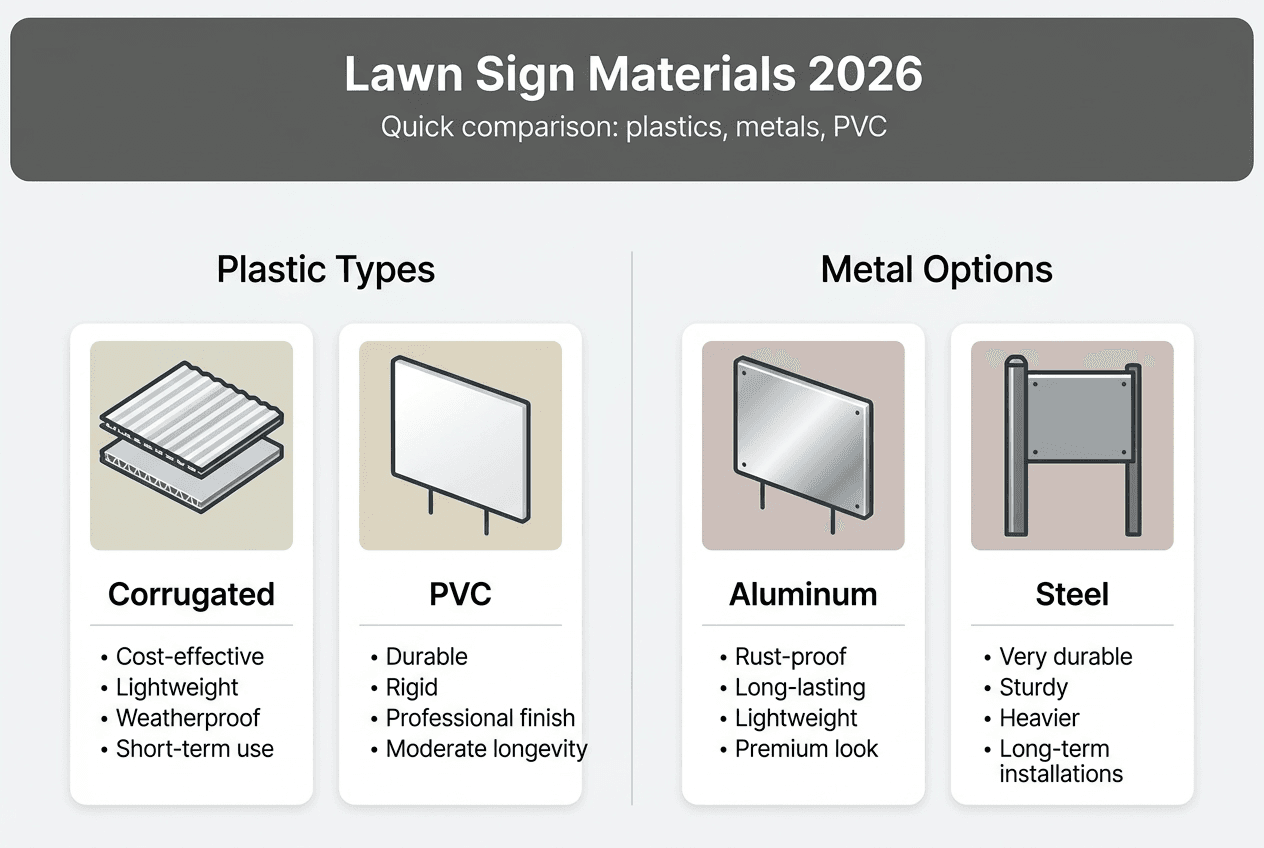
Corrugated plastic is popular for lawn signs because it combines affordability with practical weather resistance. Often called Coroplast, this lightweight material features a fluted plastic core sandwiched between two flat sheets. The air channels provide structural rigidity without adding weight, making installation and repositioning effortless. Business owners appreciate how corrugated plastic maintains its shape in moderate weather while keeping costs manageable for short to medium term campaigns.
Aluminum signs represent the premium end of lawn signage materials. This metal option delivers exceptional durability and professional appearance that withstands years of outdoor exposure. Unlike plastic alternatives, aluminum resists warping, cracking, and fading even through harsh seasonal changes. The material’s rigidity means it maintains crisp edges and flat surfaces, projecting a polished brand image that resonates with quality conscious audiences.
PVC fills the middle ground between budget friendly plastic and premium metal options. This versatile synthetic material offers superior durability compared to corrugated plastic while costing less than aluminum. PVC signs resist moisture effectively and maintain structural integrity through moderate weather challenges. Event organizers and seasonal businesses often choose PVC when they need signage lasting several months without investing in permanent aluminum solutions.
Other materials occasionally appear in specialized applications:
- Wood signs create rustic or upscale aesthetics but require protective coatings for outdoor use
- Foam board works well for indoor events or very short term outdoor displays in protected areas
- Magnetic materials allow temporary vehicle or metal surface mounting for mobile promotions
- Rigid cardboard serves ultra budget temporary needs but offers minimal weather protection
Durability and weather resistance: choosing the right lawn sign material
Weather exposure separates functional lawn signs from disappointing investments. Understanding how materials respond to sun, rain, wind, and temperature fluctuations helps you select options matching your timeline and location requirements.
Aluminum and corrugated plastic show distinct durability differences when facing outdoor elements. Aluminum excels in harsh conditions, maintaining its appearance and structural integrity for three to five years or longer with proper care. The metal resists rust when finished correctly, stands firm against strong winds, and tolerates extreme temperature swings without warping. Business owners investing in permanent location signage or multi year brand presence find aluminum’s longevity justifies its higher upfront cost.
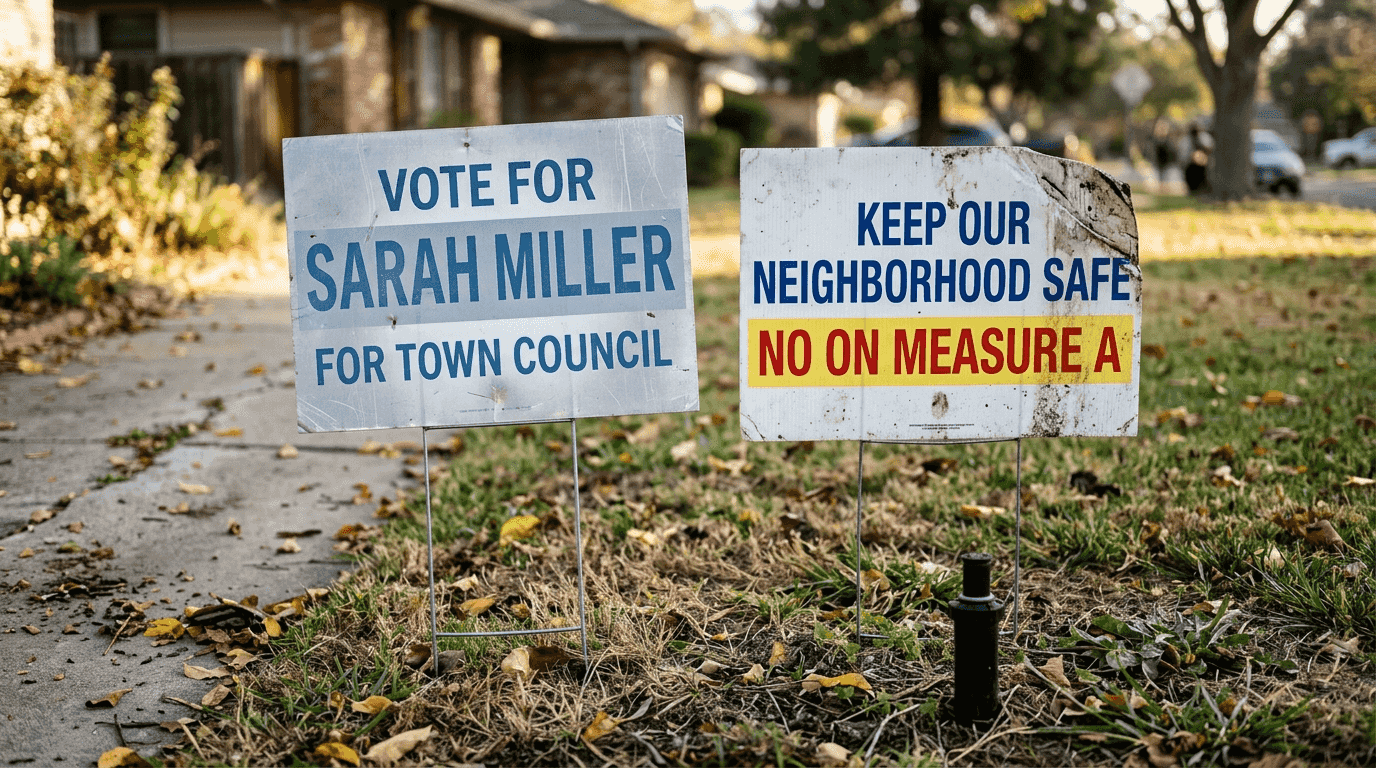
Corrugated plastic performs admirably for campaigns lasting weeks to several months. The material’s water resistant properties prevent immediate degradation from rain or morning dew. However, prolonged UV exposure gradually fades printed colors and weakens the plastic structure. Signs placed in full sun year round may show visible wear within six to twelve months, with edges becoming brittle and colors losing vibrancy. Strategic placement in partially shaded areas or seasonal use maximizes corrugated plastic’s effective lifespan.
PVC occupies a practical middle position for weather resilience. This material handles moisture better than corrugated plastic while maintaining flexibility that prevents the brittleness sometimes seen in lower quality plastics. Temperature fluctuations cause minimal expansion or contraction in PVC, preserving dimensional stability and print quality. Signs expected to perform for one to two years in moderate climates find PVC delivers reliable durability without aluminum’s price point.
| Material | Weather Resistance | Expected Lifespan | Best Use Case |
|---|---|---|---|
| Corrugated Plastic | Moderate | 3-12 months | Short term promotions, seasonal events |
| Aluminum | Excellent | 3-5+ years | Permanent locations, brand visibility |
| PVC | Good | 1-2 years | Medium term campaigns, recurring events |
Pro Tip: Pair aluminum signs with UV resistant coatings and high quality inks to maximize lifespan in direct sunlight. This combination prevents color fading and maintains professional appearance through years of exposure, protecting your brand image investment.
Customization and visual appeal of lawn sign materials
Your sign’s material directly influences how effectively it communicates your message and attracts attention. Different substrates accept various printing methods and finishes, affecting both initial visual impact and long term appearance retention.
Vinyl graphics and digital printing create vibrant visuals across multiple sign materials. Corrugated plastic’s smooth surface readily accepts vinyl decals, allowing bold colors and crisp text that immediately capture passerby attention. The lightweight substrate pairs perfectly with pressure sensitive vinyl, enabling quick production and easy design updates when promotional needs change. Digital printing directly onto corrugated plastic produces cost effective full color graphics ideal for photo heavy designs or gradient backgrounds.
Aluminum supports premium finishing options that enhance perceived value and brand professionalism. Direct printing onto aluminum creates permanent graphics resistant to peeling or edge lifting common with applied vinyl. The metal surface accommodates specialized inks designed for outdoor durability, ensuring colors maintain intensity through years of sun exposure. Aluminum also accepts powder coating for solid background colors, providing a high end foundation for vinyl lettering or digitally printed overlays.
PVC bridges the customization capabilities of plastic and metal substrates. Screen printing works exceptionally well on PVC, delivering vibrant spot colors perfect for simple designs with bold impact. Digital printing produces detailed full color images when complexity demands photographic quality. The material’s smooth finish accepts both glossy and matte laminates, letting you control light reflection based on typical viewing angles and ambient lighting conditions.
Material choice influences these visual elements:
- Surface texture affects how light reflects and colors appear in different times of day
- Substrate thickness impacts perceived quality and shadow depth for dimensional lettering
- Edge finishing options vary, with aluminum allowing professional wrapped edges unavailable on plastic
- Color matching accuracy depends on material porosity and surface preparation requirements
Pro Tip: Match your material’s printable surface characteristics with your brand colors and typical viewing distances. High contrast designs on matte corrugated plastic excel for roadside visibility, while subtle gradients on glossy aluminum create sophisticated curb appeal for upscale properties.
Cost considerations and best practices for selecting lawn sign materials
Budget realities significantly influence material selection, but understanding cost in relation to performance and lifespan reveals true value. Smart business owners evaluate total cost of ownership rather than focusing solely on initial purchase price.
Corrugated plastic costs vary from very affordable to moderate depending on size and quantity ordered. Single signs for small events might cost $10 to $30, while bulk orders for real estate or political campaigns achieve per unit prices under $5 for standard 18×24 inch sizes. This affordability makes corrugated plastic ideal when you need numerous signs for short term awareness campaigns or when budget constraints limit spending on temporary promotional tools.
Aluminum’s higher price point reflects its superior durability and professional appearance. Expect to invest $40 to $150 or more per sign depending on size, thickness, and finishing options. This initial expense transforms into excellent value for permanent installations where sign replacement costs and labor would accumulate over time. Businesses establishing long term presence at a location or building brand recognition through consistent visibility find aluminum’s cost per year of service highly competitive.
PVC pricing falls between plastic and metal alternatives, typically ranging from $20 to $70 per sign for common sizes. This middle tier cost matches PVC’s intermediate durability and professional appearance that exceeds corrugated plastic without reaching aluminum’s premium positioning. Organizations planning seasonal campaigns or recurring annual events appreciate PVC’s balance of reasonable cost and reliable multi season performance.
Follow these steps to select optimal lawn sign materials:
- Define your sign’s intended lifespan and whether it serves temporary promotional or permanent directional purposes
- Assess the installation location’s weather exposure including sun intensity, wind conditions, and precipitation patterns
- Determine your total budget including both material costs and potential replacement expenses over the desired timeframe
- Evaluate visual requirements such as color complexity, image detail, and finish preferences for your brand standards
- Calculate cost per day of effective use by dividing total investment by expected functional lifespan in days
| Material | Cost Range | Durability Rating | Ideal Usage Scenario |
|---|---|---|---|
| Corrugated Plastic | $5-$30 | Basic | Events under 6 months, high quantity needs |
| PVC | $20-$70 | Moderate | Seasonal campaigns, 1-2 year projects |
| Aluminum | $40-$150+ | Premium | Permanent signage, multi year visibility |
Consider these additional cost factors. Installation hardware requirements differ by material weight and wind resistance needs. Corrugated plastic often uses simple wire stakes costing under $2, while aluminum may require reinforced posts adding $10 to $30 to total installation costs. Design complexity impacts pricing when intricate graphics demand premium printing processes. Protective coatings and laminates add 20% to 40% to base costs but significantly extend outdoor lifespan, improving overall return on investment.
Explore custom signage solutions for your business
Selecting the right lawn sign material sets the foundation for effective outdoor promotion, but professional execution brings your vision to life. Custom Signs Today specializes in helping business owners and event organizers navigate material choices while delivering high quality finished products tailored to specific needs.
Whether you need durable yard signs for real estate listings or professional site signs for construction projects, expert guidance ensures your investment achieves maximum impact. Access comprehensive material recommendations based on your timeline, budget, and visibility goals.
Get started with custom sign quotes that compare material options, pricing, and production timelines. Fast turnaround and experienced design support help you launch effective signage campaigns without delays or guesswork.
FAQ
What are lawn signs typically made of?
Most lawn signs use corrugated plastic, aluminum, or PVC as primary materials. Corrugated plastic dominates temporary applications like real estate and event promotion due to its low cost and adequate weather resistance for short term use. Aluminum serves permanent installations requiring years of outdoor durability, while PVC balances cost and longevity for medium term campaigns lasting one to two years.
How does weather affect the choice of lawn sign material?
Aluminum provides superior weather resistance across all seasons, maintaining appearance and structural integrity through rain, snow, intense sun, and temperature extremes. Corrugated plastic works well for protected locations or campaigns under six months but gradually degrades under harsh sun exposure and strong winds. PVC offers moderate weather durability suitable for seasonal outdoor use in typical climate conditions without the premium cost of metal alternatives.
Can lawn signs be customized with different finishes and designs?
Yes, all common lawn sign materials accept various customization methods including vinyl graphics, digital printing, and screen printing for vibrant colors and detailed designs. Finish options range from matte surfaces reducing glare for roadside visibility to glossy coatings enhancing color depth for upscale presentations. Material selection influences print quality retention over time, with aluminum maintaining original appearance longest and corrugated plastic showing gradual fading in direct sun exposure.
What is the best material for long term lawn signs?
Aluminum stands as the optimal choice for long term outdoor lawn signs, delivering three to five years or more of reliable performance with proper finishing. Though initial costs exceed plastic alternatives, aluminum’s resistance to weather damage, color fading, and structural degradation provides superior cost per year of service. The professional appearance aluminum maintains throughout its lifespan protects brand image and eliminates frequent replacement expenses associated with less durable materials.