Think all banners are made from the same material? That assumption could cost you time, money, and promotional impact. The material you choose directly affects how long your banner lasts, how it looks, and whether it survives weather exposure. This guide breaks down the most common banner materials, their practical uses, and how to pick the right one for your business or event needs.
Table of Contents
- The Most Common Materials Used For Banners
- Comparing Banner Materials: Durability, Cost, And Usage
- Sustainable And Eco-Friendly Banner Material Options In 2026
- How To Choose The Right Banner Material For Your Business Or Event
- Discover Custom Banner Solutions Tailored To Your Needs
Key takeaways
| Point | Details |
|---|---|
| Material variety | Banner materials range from durable vinyl to elegant fabric, each serving specific purposes and environments. |
| Performance differences | Durability, weather resistance, and visual appeal vary significantly across vinyl, mesh, and fabric options. |
| Cost considerations | Material choice impacts both upfront costs and long-term value based on lifespan and reusability. |
| Environmental options | Sustainable materials like recycled vinyl and biodegradable fabrics are now viable alternatives in 2026. |
| Selection criteria | Matching material properties to venue conditions, budget, and brand image ensures maximum promotional effectiveness. |
The most common materials used for banners
Banner materials fall into three main categories, each engineered for specific conditions and applications. Understanding these options helps you avoid mismatches that lead to early wear or poor visual results.
Vinyl is a highly durable and versatile banner material commonly used in outdoor and indoor settings. Polyvinyl chloride (PVC) banners dominate commercial signage because they resist moisture, UV rays, and temperature swings. These banners work equally well for storefronts, construction sites, and trade shows. The material accepts vibrant prints and maintains color integrity for months or years outdoors.
Mesh banners use perforated vinyl that allows wind to pass through the material. Mesh banners reduce wind resistance by allowing air to pass through, which extends banner lifespan in outdoor windy locations. The tiny holes prevent the banner from acting like a sail in gusty conditions. You’ll see these on building facades, fences, and scaffolding where wind load matters. The trade-off is slightly reduced image sharpness compared to solid vinyl.
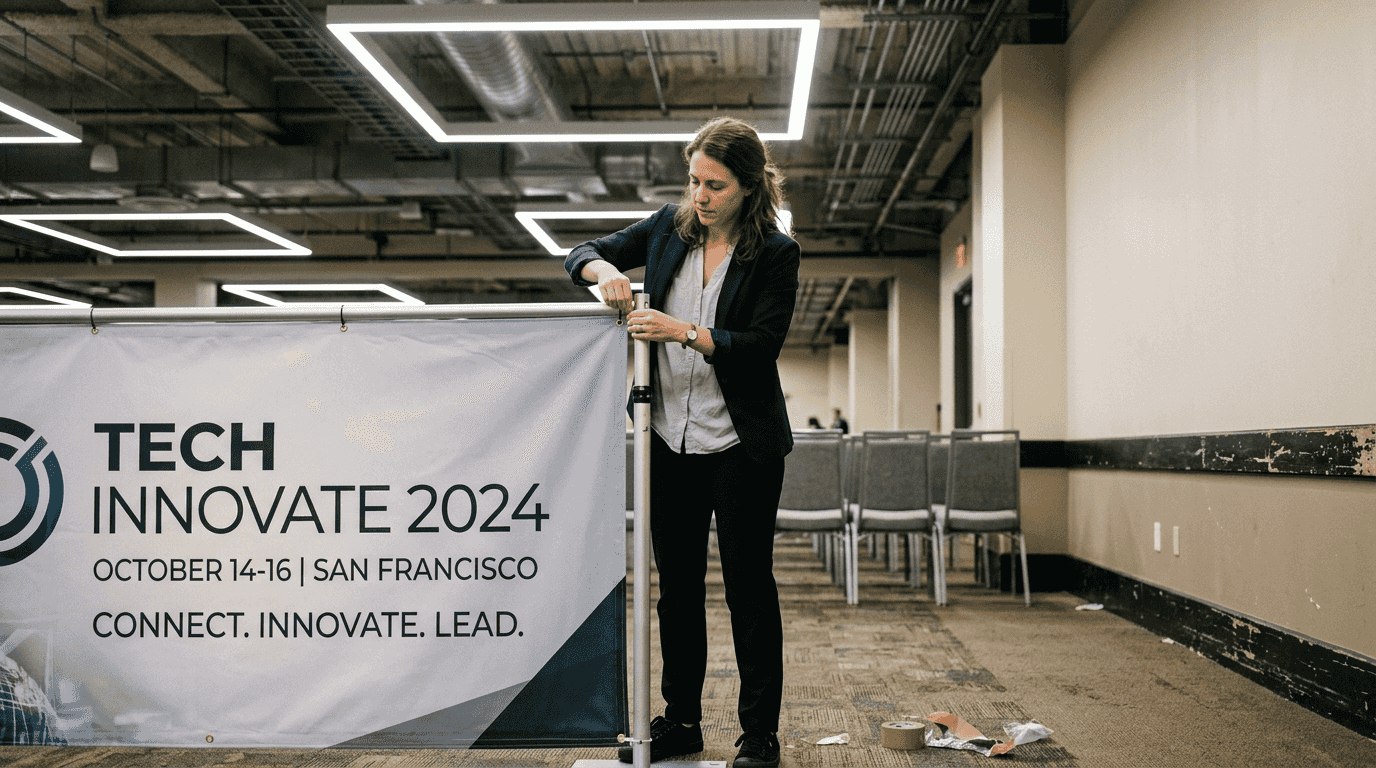
Fabric banners bring a premium aesthetic to indoor environments and upscale events. Materials like polyester, satin, and canvas produce softer draping and eliminate the plastic appearance of vinyl. These work best for conferences, retail displays, and branded backdrops where lighting and presentation quality matter more than weather resistance.
Other specialized materials include canvas for artistic displays and polyester blends for wrinkle-resistant portable banners. Canvas offers texture and a handcrafted look but requires careful storage. Polyester blends split the difference between fabric elegance and vinyl practicality.
Common banner materials and their primary uses:
- Vinyl banners for outdoor advertising, storefronts, and long-term installations
- Mesh banners for windy locations, building wraps, and fence-mounted displays
- Fabric banners for trade show booths, indoor events, and premium retail environments
- Canvas banners for artistic installations and specialty applications requiring texture
Comparing banner materials: durability, cost, and usage
Material performance varies dramatically based on environmental exposure and usage patterns. A vinyl banner might last three years outdoors but deteriorate in months if you picked the wrong thickness. Fabric looks stunning indoors but fails quickly when exposed to rain.
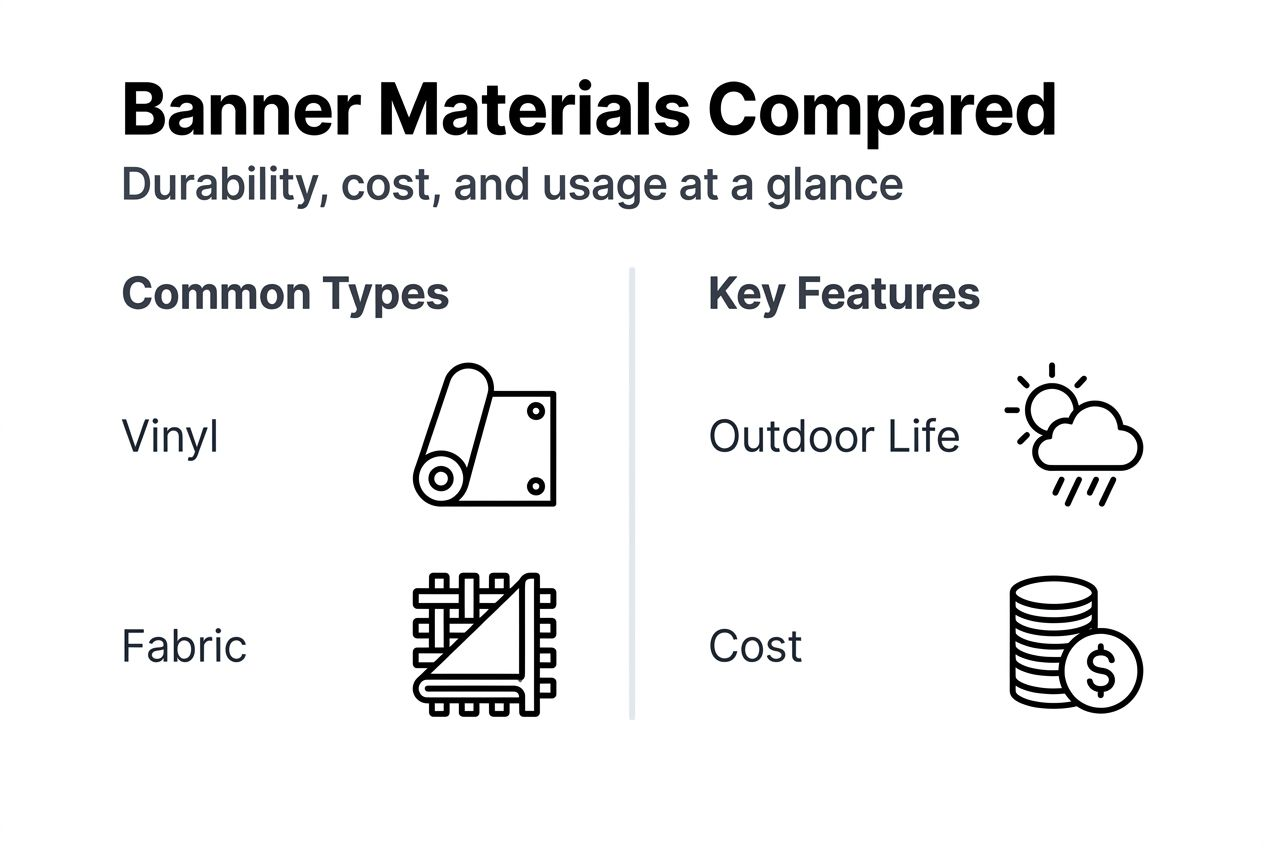
Durability breaks down by material type and application environment. Vinyl banners survive 1 to 5 years outdoors depending on weight (measured in ounces per square yard). Heavier 13 oz vinyl outlasts lighter 10 oz options in harsh weather. Mesh banners last similarly to vinyl but handle wind better. Fabric banners work for months indoors but degrade rapidly outside due to moisture absorption and UV sensitivity.
Cost differences reflect material properties and manufacturing complexity. Vinyl typically offers the best value per square foot for outdoor use. Mesh costs slightly more due to specialized production. Fabric runs 20% to 50% higher than vinyl but justifies the premium for indoor branding where appearance drives customer perception. Canvas and specialty materials command the highest prices.
Material comparison for typical 4×8 foot banner:
| Material | Outdoor lifespan | Indoor lifespan | Relative cost | Best applications |
|---|---|---|---|---|
| 10 oz vinyl | 1-2 years | 3-5 years | $ | Short-term promotions, seasonal sales |
| 13 oz vinyl | 3-5 years | 5+ years | $$ | Permanent signage, business fronts |
| Mesh vinyl | 2-4 years | 3-5 years | $$ | Windy areas, building wraps |
| Fabric | 2-6 months | 2-3 years | $$$ | Trade shows, indoor retail displays |
| Canvas | 6-12 months | 3-4 years | $$$$ | Art installations, specialty displays |
Pro Tip: Calculate cost per month of use, not just upfront price. A $150 vinyl banner lasting 3 years costs $4.17 monthly, while a $100 fabric banner lasting 6 months costs $16.67 monthly outdoors.
Key selection factors by priority:
- Environment exposure drives material choice more than any other factor
- Wind conditions determine whether solid vinyl or mesh performs better
- Brand positioning influences fabric versus vinyl decisions for customer-facing displays
- Budget constraints require balancing initial cost against replacement frequency
Learn more about types of banner materials suited to different event types and venues.
Sustainable and eco-friendly banner material options in 2026
Environmental concerns are reshaping banner material choices as businesses seek greener alternatives. Sustainable materials and recycling options in signage are gaining traction in 2026 as businesses prioritize greener promotional methods. You can now find effective banner solutions that reduce environmental impact without sacrificing performance.
Recycled PVC banners use post-consumer vinyl waste as feedstock. These materials match traditional vinyl in durability and appearance while diverting waste from landfills. Some manufacturers now offer banners made from 30% to 50% recycled content with performance identical to virgin vinyl.
PVC-free alternatives use polyethylene or bio-based polymers instead of traditional vinyl. These materials eliminate chlorine from production and disposal, reducing environmental harm. Performance varies, but premium PVC-free options now match vinyl for outdoor durability.
Biodegradable fabric banners break down naturally at end of life. Materials like organic cotton, hemp, and biodegradable polyester suit short-term indoor use and events where disposal matters. These work best for eco-conscious brands willing to trade some durability for environmental benefits.
Sustainable banner material options:
- Recycled vinyl combining waste reduction with proven outdoor performance
- PVC-free synthetic materials eliminating chlorine from production and disposal
- Biodegradable fabrics for temporary indoor use and environmentally focused events
- Recyclable polyester that can be reclaimed and reprocessed after use
Pro Tip: Ask suppliers about take-back programs that recycle old banners into new materials. Some providers now offer closed-loop systems that turn used banners into feedstock for future production.
Explore sustainable signage options that align promotional effectiveness with environmental responsibility.
How to choose the right banner material for your business or event
Selecting banner material requires matching material properties to specific use conditions. Understanding the event context and banner purpose is critical before selecting materials to maximize impact and cost-effectiveness. Follow this systematic approach to avoid costly mistakes.
Step-by-step material selection process:
- Determine installation location (indoor, outdoor, or mixed use environments)
- Assess expected display duration (days, weeks, months, or permanent installation)
- Evaluate environmental conditions (wind exposure, direct sunlight, precipitation risk)
- Set realistic budget accounting for material cost and expected lifespan
- Match material characteristics to brand image and message requirements
- Request material samples from suppliers before committing to large orders
Venue conditions override all other factors. Outdoor locations require weather-resistant materials like vinyl or mesh. Indoor spaces allow fabric and lighter materials. Mixed-use situations need careful evaluation of primary exposure.
Duration affects material thickness and quality tier. Short-term promotions work fine with lighter, less expensive options. Permanent installations justify premium materials that resist fading and weather damage over years.
Weather exposure determines material resistance requirements. Direct sun demands UV-resistant inks and materials. Coastal areas need corrosion-resistant grommets and wind-rated construction. Desert climates require materials that handle extreme temperature swings.
Budget optimization strategies:
- Compare total cost of ownership, not just purchase price
- Consider reusability for recurring events and seasonal promotions
- Invest in heavier materials for permanent installations to avoid replacement costs
- Use lighter, less expensive materials for short-term campaigns under two months
Brand alignment matters for customer-facing applications. Fabric banners signal premium positioning and attention to detail. Vinyl works for value-focused messaging and practical applications. Canvas suits artistic or craft-oriented brands.
Professional signage providers offer material samples and environmental guidance based on specific applications. Use their expertise to test materials before committing to full production runs. Review the event banner creation guide for comprehensive planning advice.
Sustainability preferences now influence material decisions for environmentally conscious businesses. Specify recycled content, PVC-free options, or biodegradable materials when environmental impact aligns with company values and customer expectations.
Discover custom banner solutions tailored to your needs
Now that you understand banner materials and selection criteria, the next step is finding the right partner to bring your vision to life. Whether you need durable vinyl for outdoor advertising, elegant fabric for trade shows, or sustainable options that reflect your environmental values, professional guidance ensures optimal results.
Explore custom banner options in multiple materials designed for specific business and event applications. Expert material selection support helps you balance durability, appearance, and budget for maximum promotional impact. Get tailored quotes for vinyl banner products or discover eco-friendly signage solutions that align with sustainability goals without compromising quality.
What are banners made of? Frequently asked questions
What is the most durable banner material for outdoor use?
Heavy-duty 13 oz vinyl provides the best outdoor durability, lasting 3 to 5 years in most climates. This material resists UV rays, moisture, and temperature extremes better than lighter alternatives.
Can fabric banners be used outdoors?
Fabric banners work outdoors only for short-term use in protected areas. Moisture absorption and UV sensitivity cause rapid deterioration, typically within 2 to 6 months of continuous outdoor exposure.
Are mesh banners suitable for windy locations?
Mesh banners excel in windy environments because perforations allow air to pass through, reducing wind load by 30% to 50%. This prevents tearing and extends lifespan in exposed locations like building facades and fences.
What sustainable materials are available for banners?
Recycled vinyl, PVC-free synthetics, and biodegradable fabrics offer environmentally responsible alternatives. Recycled vinyl performs identically to traditional options while diverting waste, making it the most practical sustainable choice for outdoor use.
How do I know which banner material suits my event?
Match material to venue conditions first, then consider duration and budget. Indoor events allow fabric for premium appearance, outdoor requires vinyl or mesh, and mixed use needs weather-resistant options. Request samples to evaluate quality before ordering.
Does banner material affect print quality?
Material surface texture directly impacts print sharpness and color vibrancy. Smooth vinyl produces the sharpest images, mesh slightly reduces clarity due to perforations, and fabric texture creates softer, less detailed prints compared to vinyl.