TL;DR:
- Choosing the right sign material depends on the project’s lifespan, environment, and budget. Long-lasting substrates like ACM and cast acrylic withstand outdoor conditions, while Corflute is suitable for short-term use. Proper environmental protection and quality fabrication extend sign durability and reduce replacement costs over time.
A sign materials comparison is the evaluation of different sign substrates by durability, cost, and application to match the right material to a specific project. Corflute lasts 3–18 months outdoors, Aluminum Composite Material (ACM) lasts 7–10+ years, and cast acrylic delivers 5–10+ years indoors. For business owners, event planners, and real estate professionals, choosing the wrong substrate means early failure, unexpected replacement costs, and signs that undermine your brand. This guide covers every major material type so you can make a confident, informed decision.
1. Sign materials comparison: ranked by durability and use case
The durability range across sign substrates runs from one month to over a decade. Knowing where each material falls on that spectrum is the fastest way to narrow your options.
Corflute (corrugated polypropylene)
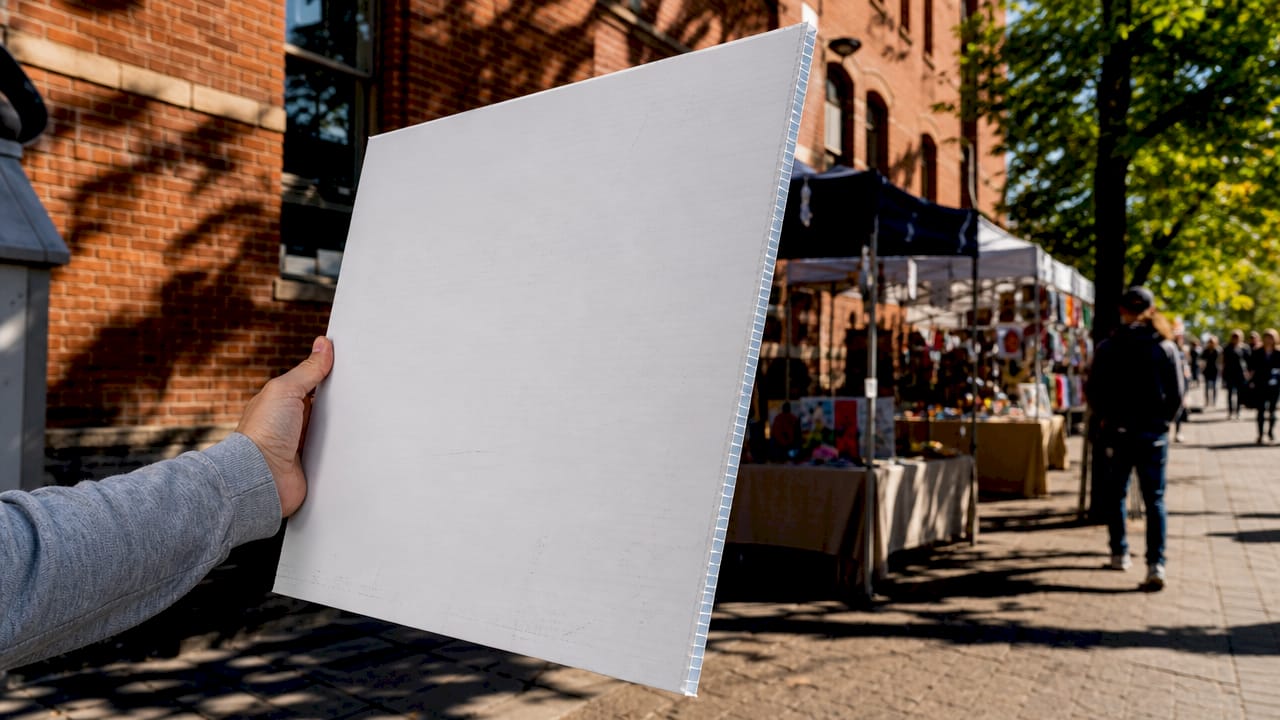
Corflute boards at 3–5 mm thickness last 3–18 months outdoors, depending on weather, ink quality, and lamination. That makes Corflute the go-to for real estate yard signs, event directionals, and short-term construction site notices. It is lightweight, easy to cut, and inexpensive to replace.
Pros: Low cost, lightweight, easy to install, recyclable.
Cons: Not suited for permanent use, prone to fading without UV lamination, can warp in extreme heat.
Foamboard (polystyrene core)
Foamboard at 5 mm lasts 1–6 months indoors and is designed for budget presentations, pop-up retail displays, and trade show backdrops. It has no meaningful outdoor lifespan. Use it only when the sign will stay inside a controlled environment.
Pros: Very low cost, easy to print on, lightweight.
Cons: Fragile, moisture-sensitive, no outdoor use.
Aluminum Composite Material (ACM)
ACM panels at 3–4 mm last 7–10+ years outdoors. ACM is the standard for storefront signs, permanent directional signs, and real estate development boards. It is rigid, weather-resistant, and holds printed graphics without warping.
Pros: Long outdoor lifespan, rigid, professional finish, accepts direct digital print or applied vinyl.
Cons: Heavier than Corflute, higher upfront cost, requires professional installation for large formats.
Pro Tip: For real estate development projects or permanent business signage, ACM is the most cost-effective choice over a 5-year horizon. The higher upfront cost pays back quickly when you factor in zero replacement cycles.
Cast acrylic
Cast acrylic at 3 mm lasts 5–10+ years in indoor or sheltered outdoor settings. It is the preferred material for office reception signs, interior wayfinding, and branded lobby displays. Direct outdoor UV exposure causes warping and fading, so acrylic belongs inside or under a covered structure.
Pros: Premium finish, excellent color clarity, long indoor lifespan.
Cons: Brittle under impact, UV-sensitive outdoors, higher cost than PVC.
PVC (rigid foam board)
PVC sits between Corflute and ACM in both price and durability. It handles short-to-medium outdoor exposure well, typically 2–4 years with proper lamination. Event planners use PVC for branded display panels that need to look polished but will not be reused beyond a single season.
Pros: Smooth printable surface, moderate durability, easy to fabricate.
Cons: Not as rigid as ACM for large formats, mid-range cost.
You can review a detailed breakdown of lawn sign materials to see how these substrates perform specifically in yard and property sign applications.
2. How environmental factors shape your material choice
Outdoor signage failures typically trace back to UV photodegradation and moisture cycling, not rare accidents. Planners must match the material to the actual exposure profile of the installation site.
The key environmental failure modes for outdoor signs are:
- UV degradation: Unprotected inks and substrates fade within months in direct sun. UV-stabilized laminates and UV-resistant inks extend lifespan significantly.
- Moisture cycling: Repeated wetting and drying causes delamination and edge failure, especially on boards with paper-based cores.
- Chemical exposure: Healthcare facilities and food service environments require substrates that withstand disinfectants. Polyurethane coatings protect tactile features and color stability under frequent antimicrobial cleaning.
- Temperature swings: Extreme heat warps thinner substrates like foamboard and unlaminated Corflute.
“Outdoor signage failures typically relate to material properties like UV photodegradation and moisture cycling rather than rare edge cases; planners must match material to exposure profile.” — The Permanence Renaissance
For traffic and regulatory signs, ASTM D4956 retroreflective sheeting warranties guarantee 10–12 years of performance using encapsulated glass bead or microprismatic technologies. Specifying the sheeting type and requiring certificates of conformance are the two non-negotiable steps for any sign that must meet visibility compliance standards.
Real estate professionals installing signs in coastal or high-humidity markets should prioritize ACM with sealed edges over Corflute. Event planners running outdoor festivals need UV-laminated Corflute or PVC at minimum. Healthcare facility managers must document substrate and coating performance after disinfectant exposure to maintain long-term ADA compliance.
For a practical guide on extending outdoor sign life, Customsignstoday covers weatherproofing outdoor signs in detail.
3. Cost and maintenance: what you actually spend over time
The upfront price of a sign substrate is rarely the true cost. Lifecycle cost analysis shows that cheaper short-term materials like Corflute become more expensive than ACM over multi-year campaigns because of frequent replacement cycles.
| Material | Upfront cost | Typical lifespan | Replacement frequency | Best for |
|---|---|---|---|---|
| Foamboard | Very low | 1–6 months (indoor) | High | One-time indoor events |
| Corflute | Low | 3–18 months (outdoor) | Medium-high | Real estate, short campaigns |
| PVC | Medium | 2–4 years | Low-medium | Seasonal outdoor displays |
| ACM | Medium-high | 7–10+ years | Very low | Permanent business signage |
| Cast acrylic | High | 5–10+ years (indoor) | Very low | Office branding, reception |
Under-budgeting replacement frequency is the most common cost mistake in signage projects. A real estate agency replacing Corflute boards every six months across 50 listings will spend more over three years than it would have on ACM panels installed once.
Maintenance requirements also vary by material. ACM needs periodic cleaning and inspection of edge seals. Acrylic benefits from anti-static cleaning solutions to prevent dust buildup. Corflute and PVC need UV-protective overlaminates applied at print time, not after installation.
Pro Tip: Ask your sign fabricator for a total cost of ownership estimate before committing to a substrate. Factor in print costs, installation labor, and expected replacement cycles over your project’s full duration.
Professional fabrication and installation fees add to the cost of heavier materials like ACM. For large-format permanent signs, those fees are a one-time expense. For lightweight Corflute, installation is often self-service. That difference matters when you are managing a tight event budget versus a long-term brand investment.
For more on choosing durable signage materials that balance upfront cost with long-term performance, Customsignstoday has a dedicated resource.
4. Specialty sign materials for niche applications
Some projects require substrates that go beyond the standard five materials. Specialty options fill specific gaps in durability, flexibility, and compliance.
Vinyl banners
Vinyl banners are the workhorse of event and trade show signage. They are flexible, lightweight, and printable in large formats. A standard 13 oz. scrim vinyl banner handles outdoor use for one to three seasons with proper storage between events. Vinyl signs work well for grand openings, property launches, and festival branding where portability matters more than permanence.
Porcelain enamel
Porcelain enamel is the most durable sign material available. It bonds a glass-based coating to a steel substrate, producing a surface that resists UV, moisture, chemicals, and physical abrasion for 50+ years. Heritage sites, transit authorities, and interpretive trail systems use porcelain enamel when replacement is not an option. The cost is high, but the lifecycle cost is unmatched.
Polymer ADA-compliant signs
Healthcare ADA signs must balance abrasion resistance, chemical resistance, and tactile dimension stability to maintain compliance after frequent cleaning. Polymer substrates with polyurethane coatings meet these demands. They hold Braille dots and raised lettering without degrading under repeated disinfectant application. Facilities that skip this specification risk ADA non-compliance after routine cleaning cycles.
Magnetic sheets and fabric flags
Magnetic sheets attach to metal surfaces without adhesive, making them ideal for vehicle door signs and seasonal window promotions. Fabric flags printed on knitted polyester handle wind loading better than rigid signs and pack down for transport. Both formats suit mobile campaigns and seasonal real estate open-house marketing.
| Material | Best application | Lifespan | Key advantage |
|---|---|---|---|
| Vinyl banner | Events, trade shows | 1–3 seasons | Large format, portable |
| Porcelain enamel | Heritage, transit | 50+ years | Extreme durability |
| Polymer ADA | Healthcare wayfinding | 10+ years | Chemical resistance |
| Magnetic sheet | Vehicle, window | 1–3 years | Removable, no adhesive |
| Fabric flag | Outdoor events, real estate | 1–2 seasons | Wind-resistant, portable |
For outdoor commercial projects, the outdoor material supply guide from Prozone offers additional perspective on substrate suitability in demanding climates.
Key takeaways
The most cost-effective sign material is the one matched to the project’s lifespan, environment, and replacement budget, not the cheapest option at the point of purchase.
| Point | Details |
|---|---|
| Match lifespan to project duration | Use Corflute for short campaigns and ACM for permanent signage to avoid over or under-spending. |
| Environmental exposure drives failure | UV degradation and moisture cycling cause most outdoor sign failures; specify laminates and edge seals accordingly. |
| Lifecycle cost beats upfront price | Replacing cheap materials repeatedly costs more than investing in ACM or acrylic from the start. |
| Specialty materials fill compliance gaps | Polymer ADA signs and ASTM D4956 retroreflective sheeting are required for healthcare and regulatory applications. |
| Print quality affects longevity | UV-stabilized inks, overlaminates, and sealed edges extend sign life more than substrate choice alone. |
What I’ve learned from years of watching signs fail
The most expensive mistake I see business owners make is treating sign material as an afterthought. They spend weeks on logo design and color selection, then pick the cheapest substrate available. Six months later, the sign is faded, warped, or delaminating, and they are back to square one with a second print bill.
The insight that changed how I think about this: material failure in outdoor signage is usually caused by unprotected printed layers and edge delamination, not the core board itself. That means a well-laminated Corflute sign can outlast a poorly finished ACM panel. The substrate matters, but the print system matters just as much.
My practical rule is this: if a sign will be up for more than 18 months, specify ACM with sealed edges and UV-laminated graphics. If it will be up for less than 18 months, Corflute with UV lamination is the right call. Anything in between is a judgment call based on budget and replacement tolerance.
The other thing I warn clients about is the indoor-outdoor confusion around acrylic. Acrylic looks stunning in a reception area. Put it outside in direct sun and it will warp within a year. I have seen this happen on storefront signs that cost thousands of dollars. Always check the indoor versus outdoor performance differences before specifying any material.
Document your material specs before you order. Ask for the substrate grade, laminate type, and edge treatment in writing. That documentation protects you if the sign fails early and gives your fabricator clear accountability.
— Yossi
Customsignstoday: professional material selection and fabrication
Picking the right substrate is only half the job. The fabrication quality, print system, and installation method determine whether that material performs as expected.
Customsignstoday works with business owners, event planners, and real estate professionals across West Palm Beach and South Florida to match the right material to every project. From face change signs on existing structures to site signs for construction and development projects, the team handles substrate selection, printing, and installation as a single service. Every project starts with a custom sign quote that accounts for your environment, timeline, and budget so you get the right material the first time.
FAQ
What is the most durable outdoor sign material?
ACM (Aluminum Composite Material) is the most durable standard outdoor sign substrate, lasting 7–10+ years. Porcelain enamel exceeds 50 years but is reserved for permanent heritage or transit applications.
How long does Corflute last outdoors?
Corflute lasts 3–18 months outdoors depending on weather conditions, ink quality, and whether UV lamination was applied at print time.
Which sign material is best for real estate signs?
Corflute is the standard for short-term real estate yard signs due to its low cost and adequate outdoor lifespan. ACM is the better choice for permanent development site boards and long-running listings.
Do cheaper sign materials cost more over time?
Yes. Lifecycle cost analysis shows that replacing Corflute repeatedly over a multi-year campaign costs more than a single ACM installation. Under-budgeting replacement frequency is the most common signage cost mistake.
What material do ADA-compliant healthcare signs require?
Healthcare ADA signs require polymer substrates with polyurethane coatings that resist disinfectants without degrading tactile features or color stability. Standard acrylic or PVC does not meet this specification.