TL;DR:
- Proper weatherproofing extends outdoor sign lifespan by protecting against moisture, UV rays, and temperature changes.
- Material choice and maintenance routines crucially influence a sign’s durability in harsh climates.
- Regular inspections and reapplication of protective treatments prevent most weather-related sign failures.
Not every outdoor sign is built to survive what nature throws at it. Business owners and event organizers lose thousands of dollars each year replacing signs that fade, crack, rust, or warp after just one harsh season. The assumption that “outdoor-rated” automatically means “weatherproof” is one of the most expensive misconceptions in signage. A sign that looks sharp on day one but deteriorates within months doesn’t just hurt your budget — it sends the wrong message to every customer who walks past it. This guide breaks down exactly how to protect your outdoor signs from weather damage, extend their lifespan, and get real return on your signage investment.
Table of Contents
- What does outdoor sign weatherproofing mean?
- Key materials for weatherproof outdoor signs
- Best protective finishes and treatments
- Installation, placement, and maintenance tips
- Why most outdoor sign failures are preventable — but overlooked
- Upgrade your signage for lasting impact
- Frequently asked questions
Key Takeaways
| Point | Details |
|---|---|
| Material matters most | Choosing the right sign material is the top factor in weatherproofing success. |
| Protective finishes are essential | Coatings like sealants and UV-protective films greatly extend sign life. |
| Install and maintain proactively | Proper installation and routine upkeep prevent most avoidable sign failures. |
| Climate impacts durability | Always match your sign material and finishes to your local climate for best results. |
What does outdoor sign weatherproofing mean?
Weatherproofing, in the context of outdoor signage, means applying the right combination of materials, protective treatments, and installation methods to shield a sign from environmental damage over time. It’s not a single product or step — it’s a system.
Signs face a constant barrage of threats. Rain causes moisture infiltration and rust. UV rays from the sun bleach colors and weaken plastics. Wind creates physical stress on panels and mounting hardware. Humidity accelerates corrosion and causes wood to swell or split. Temperature swings — especially freeze-thaw cycles — crack coatings and loosen adhesives. Every climate has its own set of damaging forces, and a sign that performs well in Phoenix might fail within a season in Miami.
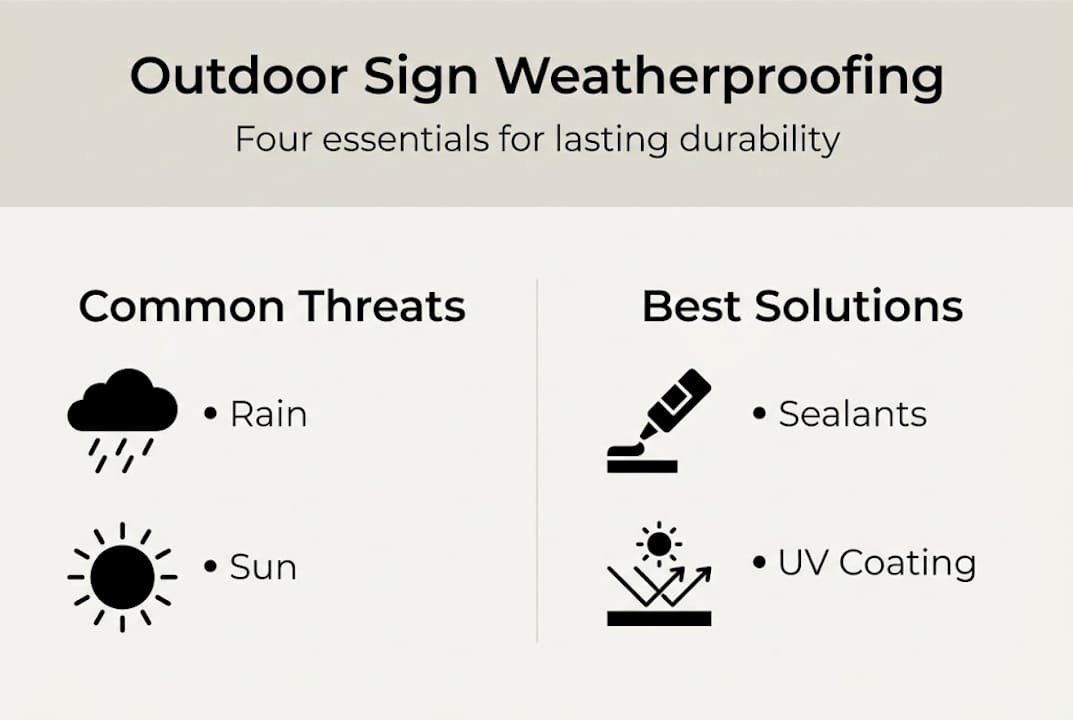
The goals of weatherproofing are straightforward: protect the sign’s structure so it stays physically intact, preserve its appearance so colors and graphics remain vivid, and keep the message legible so it keeps doing its job. When weatherproofing is neglected, the consequences show up fast. Peeling vinyl, rust streaks, warped panels, and faded text are all signs of protection that was never applied or has worn out.
According to outdoor signage material experts, the biggest weatherproofing mistakes aren’t about choosing the wrong sign — they’re about treating weather protection as optional rather than essential. A solid grasp of exterior signage basics gives you the foundation to make smart choices before the weather takes a toll.
Here are the most common ways unprotected signs fail:
- Fading and bleaching from prolonged UV exposure, especially on vinyl graphics
- Rust and corrosion on metal frames or faces left without proper coating
- Warping and cracking in wood or low-grade plastic during temperature swings
- Delamination where layers of the sign separate due to moisture infiltration
- Structural failure at mounting points caused by wind fatigue over time
Pro Tip: Even signs rated for outdoor use need an additional protective layer. “Outdoor-rated” means the material can tolerate weather, not that it’s immune to it.
Key materials for weatherproof outdoor signs
Material choice is the single biggest factor in how well a sign holds up outside. Understanding the trade-offs between common options saves you from costly replacements and gives you confidence in your investment.
Aluminum is the workhorse of outdoor signage. It resists rust natively, handles UV exposure without warping, and stays lightweight enough for easy installation. Powder-coated aluminum pushes that durability even further, making it suitable for coastal environments where salt air accelerates corrosion on other metals. The trade-off is cost — aluminum typically runs higher upfront than plastic alternatives.
Steel offers strength but demands more maintenance. Without consistent protective coatings, it will rust. Galvanized or powder-coated steel extends lifespan dramatically, but it still requires periodic inspection in humid or wet climates.
Rigid plastics and composites, such as PVC foam board and aluminum composite panels, hit a strong middle ground. They’re affordable, cut cleanly, and handle moisture well. The vulnerability is high heat: some plastics warp under sustained direct sun in very hot climates. High-density polyethylene and polycarbonate composites solve most of those problems but at a higher price point.
Wood carries aesthetic appeal but demands serious ongoing maintenance. Without regular sealing and repainting, wood absorbs moisture, cracks in frost, and invites rot. As material comparisons show, wood requires significantly more upkeep than synthetic alternatives to maintain both appearance and structural integrity.
For a deeper look at how materials stack up in real-world conditions, the lawn sign materials guide and a top signage materials compared breakdown are valuable resources.
| Material | Weather resistance | Maintenance level | Best climate |
|---|---|---|---|
| Aluminum | Excellent | Low | All climates |
| Galvanized steel | Good | Medium | Dry to moderate |
| PVC composite | Good | Low | Moderate climates |
| Polycarbonate | Very good | Low | Hot or sunny |
| Wood | Fair | High | Dry, mild climates |
Pro Tip: In coastal or high-humidity areas, skip untreated steel entirely and lean on aluminum or marine-grade composites. The upfront cost difference is far less than the cost of replacement.
Best protective finishes and treatments
Even the best material needs a layer of protection applied on top. Finishes and treatments are what truly lock in durability over time, and skipping them is where many business owners leave money on the table.
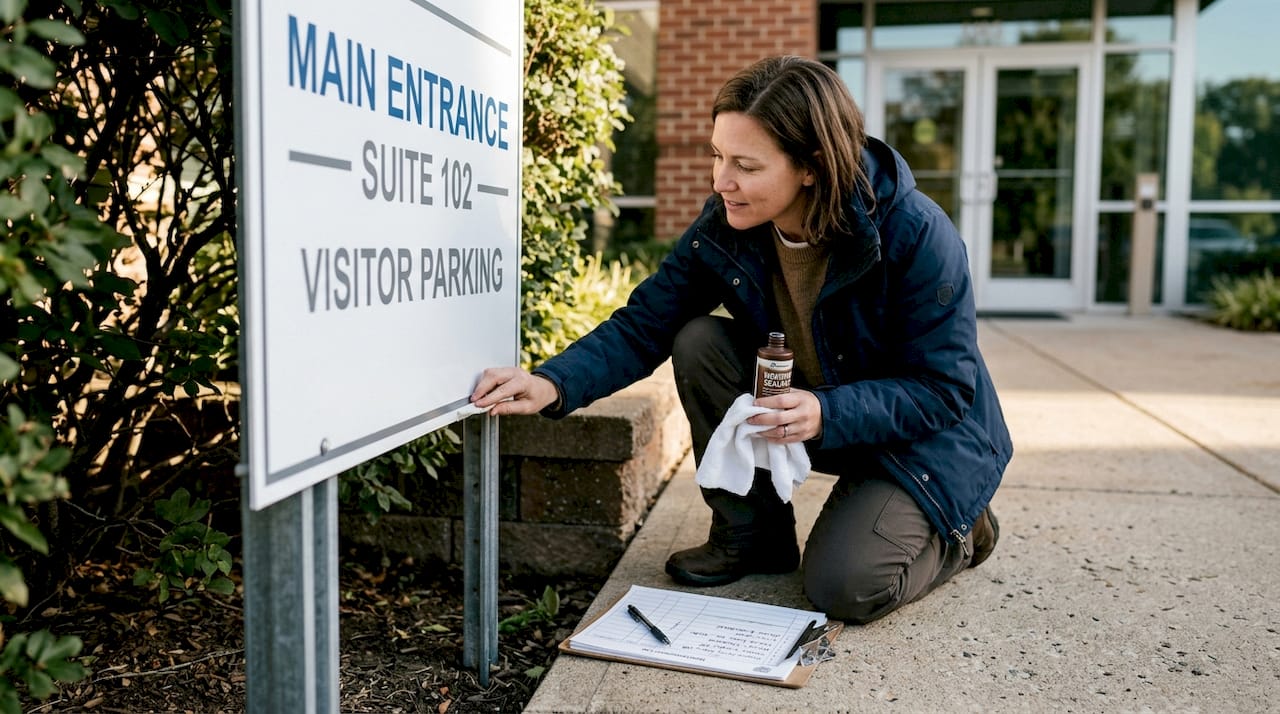
Sealants fill microscopic pores in materials like wood and some composites, blocking moisture entry. They’re the first line of defense in wet climates and should be reapplied based on the manufacturer’s cycle, typically every one to two years for wood.
UV-resistant paints and coatings slow color degradation on both sign faces and frames. Outdoor-grade paints with built-in UV inhibitors maintain color fidelity far longer than standard formulas. This matters most in regions with intense sun exposure, where untreated signs can fade noticeably within just a few months.
Laminates are applied over printed vinyl or digitally printed surfaces. Gloss and matte laminates both block UV rays and add a scratch-resistant barrier. For signs with complex graphics or photographic prints, lamination is not optional — it’s essential.
Clear topcoats and protective films work well on rigid sign faces, metal frames, and even lettering. They add a sacrificial layer that weathers before the sign itself does, and they’re far cheaper to reapply than replacing a full sign face.
The risk of skipping regular reapplication is real. Wood signs that go unsealed degrade far faster than their synthetic counterparts, often requiring full replacement within two to three years in wet climates. Staying current on outdoor sign maintenance tips keeps that cycle from sneaking up on you.
Here’s a quick checklist for a well-protected sign:
- UV-resistant topcoat applied over all printed surfaces
- Sealed edges on any cut wood or composite panels
- Rust-inhibiting primer under any steel hardware
- Laminate or protective film over vinyl graphics
- Drainage gaps or weep holes in enclosed sign cabinets to prevent moisture pooling
- All fasteners made from stainless steel or galvanized metal
The difference between a sign that lasts two years and one that lasts eight often comes down to this checklist, applied consistently from day one.
Installation, placement, and maintenance tips
A perfectly weatherproofed sign can still fail if it’s installed in the wrong location or ignored after mounting. Placement and ongoing care are as important as materials and finishes.
Here are the key steps to a resilient installation:
- Choose a sheltered location when possible. Positioning signs under a roof overhang or near a windbreak reduces direct exposure to rain and gusting wind without sacrificing visibility.
- Orient away from prevailing wind. Facing a sign parallel to the dominant wind direction reduces lateral stress on mounting hardware and the sign face.
- Maintain ground clearance. Signs mounted close to the ground collect splashing mud and standing water. A minimum clearance of 18 to 24 inches reduces moisture contact significantly.
- Use weatherproof mounting hardware. Stainless steel bolts and brackets resist rust far better than zinc-plated alternatives. This is especially important in coastal or high-rain environments.
- Seal all mounting penetrations. Any hole drilled into a panel is a moisture entry point. Apply sealant around bolts and brackets during installation.
For practical guidance on proper weatherproof mounting strategies and related structural techniques, professional installation resources are worth reviewing before you start. A well-structured signage installation guide also walks through the common errors that lead to premature failure.
Routine care is what separates signs that last a decade from ones that need replacing every couple of years.
| Inspection item | Check frequency | Action if needed |
|---|---|---|
| Surface coating condition | Every 6 months | Reapply sealant or topcoat |
| Hardware and mounting points | Every 3 months | Tighten or replace fasteners |
| Rust or corrosion spots | After wet seasons | Sand, prime, and repaint |
| Vinyl or graphic adhesion | Every 6 months | Re-laminate or replace graphics |
| Overall structural integrity | Annually | Repair or replace panels as needed |
Pro Tip: Set a calendar reminder for sign inspections after every major weather event. Catching small cracks or lifting edges early costs almost nothing to fix. Ignoring them often costs you the whole sign. Sign maintenance best practices can keep those costs predictable.
Why most outdoor sign failures are preventable — but overlooked
Here’s an uncomfortable truth: the vast majority of weather-damaged signs we see weren’t failed by poor material choices. They were failed by neglect after installation.
Business owners and event organizers spend real money on a quality sign, mount it correctly, and then treat it as a set-and-forget asset. Weather doesn’t work that way. Finishes degrade. Hardware loosens. Moisture finds every gap. A sign that looked bulletproof in year one can deteriorate rapidly by year three without a single scheduled inspection.
The irony is that the maintenance required to prevent this is modest. A tube of sealant, thirty minutes of inspection, and a can of touch-up paint can add years to a sign’s life. The brands who understand why durable signage matters treat their signs like any other business asset — maintained, documented, and budgeted for upkeep.
Stop thinking of weatherproofing as a one-time purchase. Think of it as a routine, like changing the oil in a vehicle. The signs that last are the ones with owners who show up for them.
Upgrade your signage for lasting impact
You’ve learned what separates a sign that fades in a season from one that performs for years. The next step is putting that knowledge into a real sign built to survive your climate and represent your brand at its best.

At Custom Signs Today, we build custom signs using materials and finishes matched to your specific environment, whether that’s blazing sun, coastal humidity, or hard freezes. From face change signs that let you update messaging without replacing the structure, to full weatherproof builds designed for years of low-maintenance performance, we handle the details. Get a custom sign quote and tell us where your sign will live — we’ll tell you exactly what it needs to thrive.
Frequently asked questions
What is the best material for weatherproofing outdoor signs?
Aluminum and high-grade plastics lead the pack for longevity and low maintenance, though your climate and budget are the final deciding factors. For coastal or high-humidity environments, aluminum outperforms steel and wood by a wide margin.
How often should you inspect outdoor signs for weather damage?
Inspect your signs at least every 3 to 6 months, and always after severe weather events. Catching small issues early — a lifting edge, a loose bolt — prevents expensive repairs down the line.
Do I need different weatherproofing in rainy versus sunny climates?
Absolutely. Wet climates call for waterproofing sealants and rust-resistant hardware, while sunny regions demand UV-resistant coatings above everything else. As climate-matched weatherproofing guidelines confirm, a one-size approach leads to premature failure in both environments.
Can you add weatherproofing to old outdoor signs?
Yes, and it’s often worth doing. Applying fresh sealants, protective films, or UV coatings can meaningfully extend an older sign’s life. Always inspect for structural damage, rust, or delamination first, since no topcoat will fix a sign that’s already compromised underneath.