
TL;DR:
- An A-frame sign is a portable, double-sided display used primarily for street-level advertising and often called a sandwich board. Selecting durable materials and complying with local regulations is essential for effective use. Proper design, maintenance, and placement maximize the sign’s impact and longevity.
An A-frame sign is a portable, double-sided, freestanding display that folds into the shape of the letter A, used primarily for street-level advertising. The industry also calls these signs sandwich boards, pavement signs, or sidewalk signs. All four terms refer to the same product. Businesses from cafes to real estate agencies rely on A-frame signs because they are cheap to produce, easy to move, and visible to foot traffic without requiring a permanent installation. If you are asking what are A-frame signs and whether they belong in your marketing mix, the short answer is yes. They are one of the most cost-effective local advertising tools available.
What are A-frame signs, and what types exist?
A-frame signs come in three main construction types, and choosing the wrong one wastes money. The three types are fixed panel, slide-in poster frame, and chalkboard or whiteboard.

Fixed panel signs have a rigid printed surface that does not change. They work well for permanent messages like a business name, logo, or address. Once printed, the message stays until you replace the entire panel.
Slide-in poster frame signs hold interchangeable printed inserts. A snap frame or slide-in channel lets you swap graphics in seconds without tools. This type suits businesses that run weekly specials, seasonal promotions, or event announcements. Snap frame A-frames make frequent message updates easy without replacing the whole sign.
Chalkboard and whiteboard signs let you write and erase messages by hand. They are popular with coffee shops and restaurants that change their menu or specials daily. The handwritten look adds a personal, approachable feel that printed signs cannot replicate.
Common materials and what they mean for durability
A-frame sign materials fall into three main categories:
- Corflute (corrugated polypropylene): Lightweight, UV-resistant, and inexpensive. Available in 3mm thickness for frequently changed inserts and 5mm for permanent outdoor use.
- Powder-coated metal frames: Heavy and wind-resistant. Best for high-traffic outdoor locations where stability matters more than portability.
- Heavy-duty plastic: A middle ground between corflute and metal. Durable enough for outdoor use but light enough to carry inside at closing time.
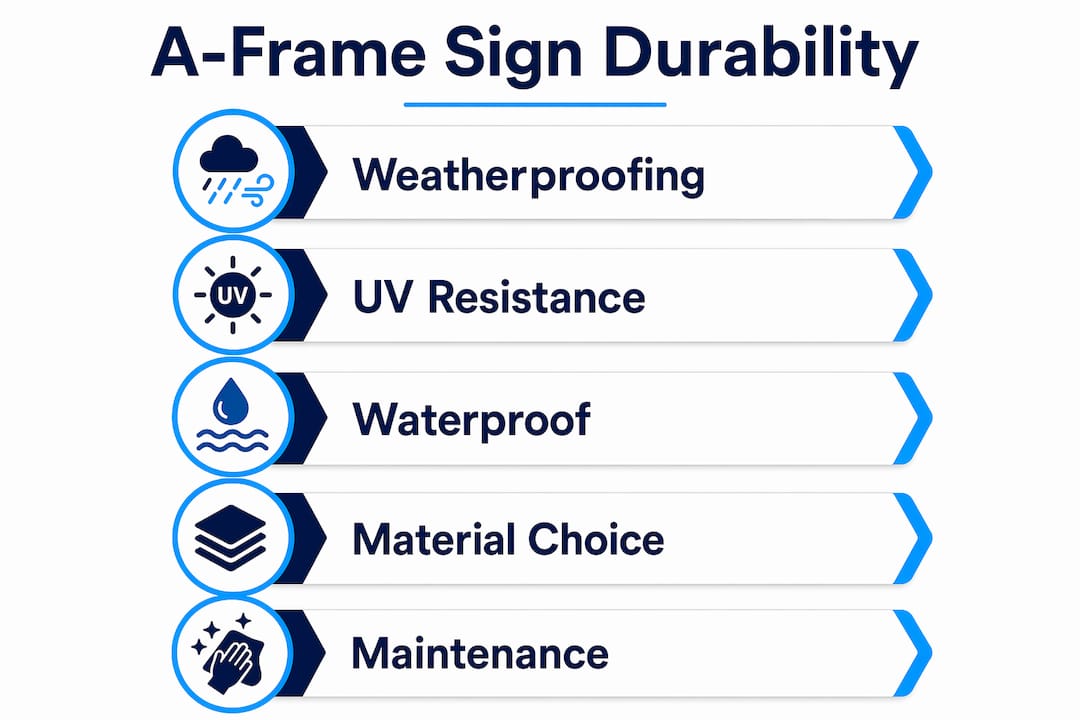
Weatherproofing is a standard feature on outdoor-grade signs. Look for UV-resistant coatings, waterproof substrates, and rust-resistant frames if the sign will live outside year-round.
Pro Tip: Choose 5mm corflute or a powder-coated metal frame for any sign that stays outdoors more than six months. The extra upfront cost pays off when you are not replacing a warped or faded sign every season.
How do regulations and permits affect A-frame sign use?
Regulations catch most business owners off guard. Municipalities treat A-frame signs as temporary structures, and many require a permit before you place one on a public sidewalk.
The City of Toronto provides one of the clearest examples of how detailed these rules get. Toronto’s 2026 permit rules charge approximately $151.32 per year for an A-frame sign license. That fee is modest, but the placement rules are strict.
Key restrictions businesses commonly face include:
- Maximum sign size: Toronto caps signs at 0.6 meters wide by 1 meter tall. Many U.S. cities use similar proportions.
- Pedestrian clearway: Signs must maintain a 2.1-meter pedestrian clearway on the sidewalk. Blocking foot traffic is the fastest way to get a sign removed by city staff.
- Number of signs: One sign is allowed if your storefront is 6.1 meters wide or less. Two signs are allowed for wider frontages.
- No illumination, sound, or motion: Most municipalities ban lit, animated, or audio-equipped A-frame signs entirely.
- Signs must come inside when you close: Leaving a sign on the sidewalk overnight violates most municipal codes.
American cities vary widely in their rules. Some require no permit at all for signs placed on private property directly in front of a business. Others mirror Toronto’s approach with annual fees and strict placement rules. Check your city’s zoning or business licensing department before you put a sign on the sidewalk.
Pro Tip: Search your city’s name plus “temporary sign permit” or “sidewalk sign ordinance” to find the exact rules. A $50 permit fee is far cheaper than a fine or a confiscated sign.
What are the key benefits of A-frame signs for businesses?
A-frame signs for businesses deliver four advantages that most permanent signage cannot match. Here is how each one plays out in practice:
-
Low cost relative to impact. Basic A-frame signs start around $42 for entry-level models. Compared to window graphics, illuminated signs, or digital displays, that is a fraction of the investment for a sign that works at eye level on a busy sidewalk.
-
Portability and flexibility. You can move an A-frame sign to the sidewalk in the morning and bring it inside at night. You can reposition it to catch foot traffic from a different direction on a slow afternoon. No other sign type gives you that kind of real-time control.
-
Visibility for hidden locations. A cafe tucked down a side street or a boutique set back from the main road has a serious discovery problem. An A-frame sign placed at the corner or near the main street entrance solves that problem immediately. It acts as a physical arrow pointing people toward your door.
-
Easy message changes. Slide-in poster frame signs let you update your message for a weekend promotion, a holiday sale, or a new product launch without ordering a new sign. That flexibility makes A-frames one of the few advertising tools that stay relevant year-round without recurring production costs.
Cafes, boutiques, real estate agents, event organizers, and contractors all use A-frame signs regularly. For outdoor event signage, A-frames are especially effective because they can be placed at entrances, near parking areas, or along walking routes to guide attendees.
How to design and maintain an A-frame sign for maximum impact
Effective A-frame sign design follows a short set of rules that most businesses ignore. The result is signs that blend into the visual noise of a busy street instead of stopping people in their tracks.
Design principles that actually work
- High contrast colors: Dark text on a light background, or light text on a dark background. Avoid mid-tone combinations that look fine on a screen but disappear at ten feet.
- Large, readable fonts: A passerby has about two seconds to read your sign. Use a font size that fills at least 40% of the panel height for your main message.
- Minimal text: Three to five words is the target for your headline. Supporting details can go below in smaller text, but the main message must be instant.
- Professional printing over handwriting: Professionally printed signs signal brand credibility in a way that handwritten signs rarely do. Chalkboard signs are the exception because the handwritten look is part of their appeal.
Maintenance and longevity
| Maintenance Task | Frequency | Why It Matters |
|---|---|---|
| Wipe down frame and panel | Weekly | Dirt and grime dull colors and reduce visibility |
| Check hinges and hardware | Monthly | Loose hinges cause signs to collapse in wind |
| Refresh printed inserts | Seasonally | Faded graphics look neglected and reduce trust |
| Apply UV-protective coating | Annually | Extends panel life significantly in sunny climates |
| Inspect for cracks or warping | After storms | Damaged signs are a liability and look unprofessional |
Weatherproof outdoor signs last multiple seasons when maintained properly. Signs made from durable, weatherproof materials hold up through varied climates with regular care. Neglect is the main reason A-frame signs fail early, not material quality.
Pro Tip: Keep a spare set of printed inserts for your most common messages. When a panel fades or gets damaged, you can swap it out the same day instead of waiting for a reprint.
Key Takeaways
A-frame signs are the most cost-effective portable advertising tool for street-level visibility, but material choice, design clarity, and local permit compliance determine whether they actually drive foot traffic.
| Point | Details |
|---|---|
| Definition and terminology | A-frame signs are also called sandwich boards or sidewalk signs. All terms refer to the same freestanding, double-sided display. |
| Material selection matters | Choose 5mm corflute or powder-coated metal for outdoor use. Thinner materials warp and fade faster in direct sun. |
| Permits are often required | Many cities charge annual fees and enforce size, placement, and clearway rules. Check local ordinances before placing a sign. |
| Design drives results | High contrast, large fonts, and minimal text are the three rules that separate effective signs from ignored ones. |
| Maintenance extends lifespan | Regular cleaning, hardware checks, and graphic refreshes keep signs looking professional and functioning safely. |
What I have learned from watching businesses use A-frame signs
Most businesses underinvest in their A-frame signs and then wonder why they do not work. I have seen the same pattern repeatedly. A business owner buys the cheapest sign available, prints a generic message in a small font, and places it directly in front of the door where people already know the business exists. Then they conclude that A-frame signs do not work for their industry.
The sign was never the problem. The execution was.
Custom fabrication is what separates signs that stop people from signs that blend into the sidewalk clutter. A well-designed, professionally printed A-frame with a sharp message placed at the right corner can outperform a digital ad for local foot traffic. The reason is simple: it meets people exactly where they are, at the moment they are deciding where to go.
The regulatory side is where I see the most avoidable problems. Business owners place signs without checking local rules, get fined or have signs confiscated, and then blame the sign format. Spending 20 minutes on your city’s website before you order saves real money and frustration.
One more thing: refresh your graphics. A faded, sun-bleached sign tells potential customers that you do not pay attention to details. That is not the message any business wants to send.
— Yossi
Custom A-frame signs from Customsignstoday
Customsignstoday specializes in custom signage built for real business conditions, not just showroom displays. If you need a sign that holds up through Florida heat, stands out on a crowded sidewalk, and reflects your brand accurately, the team at Customsignstoday can produce it.
From face change A-frame signs that let you swap graphics without replacing the frame, to fully custom designs built around your brand colors and messaging, Customsignstoday covers the full range of A-frame signage needs. You can also explore the complete custom sign services catalog to find the right format for your location, budget, and marketing goals. Request a free quote directly on the site to get started.
FAQ
What is an A-frame sign?
An A-frame sign is a portable, double-sided, freestanding display that folds into an A shape for easy setup and storage. It is also called a sandwich board, sidewalk sign, or pavement sign.
How much does an A-frame sign cost?
Basic A-frame signs start around $42 for entry-level models. Premium options with custom printing, weatherproof materials, or metal frames cost more, and permit fees may add to the total depending on your city.
Do I need a permit for a sidewalk A-frame sign?
Most municipalities require a permit for signs placed on public sidewalks. Toronto, for example, charges approximately $151.32 per year and enforces strict size and clearway rules. Check your local city or county regulations before placing a sign outdoors.
How long do A-frame signs last?
A-frame signs last multiple seasons when made from weatherproof materials and maintained regularly. Powder-coated metal frames and 5mm corflute panels offer the best longevity for outdoor use.
What is the difference between an A-frame sign and a sandwich board?
There is no functional difference between the two terms. “A-frame” is the technical term based on shape, while “sandwich board” is the older, colloquial name. Suppliers and municipal regulations use both interchangeably.