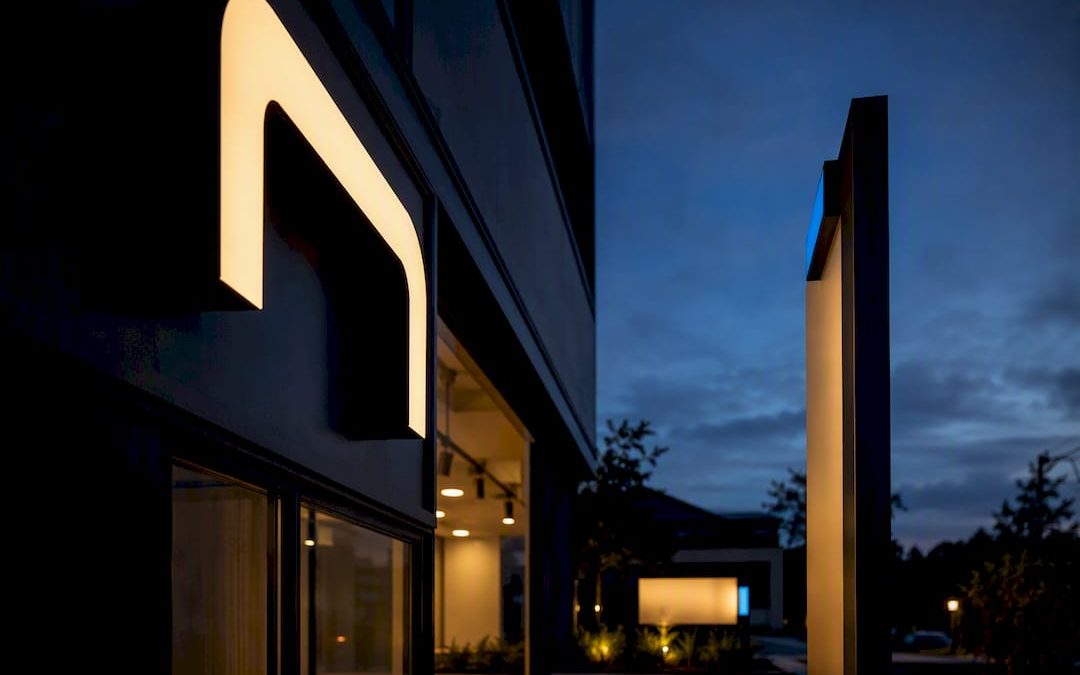
Every commercial sign falls into one of three categories: permanent, temporary/promotional, or digital. For most businesses, the highest-impact starting lineup is illuminated channel letters or a monument sign for identification, a vinyl banner or feather flag for short-term promotion, and a vehicle wrap for mobile reach. Everything else on this list supports one of those three jobs. The sections below break down materials, viewing distance, permits, and cost so you can match the right format to your storefront, budget, and timeline.
TL;DR:
- Permanent signs like channel letters and monument signs are best for long-term branding and require permits, with costs ranging from hundreds to thousands of dollars.
- Temporary signs such as banners and yard signs are quick, inexpensive, and ideal for short-term promotions or testing messaging, lasting six to twelve months outdoors.
- Digital signage offers flexibility to change messages frequently but involves higher costs and ongoing maintenance compared to static formats.
- Proper size, contrast, and letter height are essential for readability, especially considering viewing distance, which should guide sign selection.
- Start with temporary signage to validate your location and message before investing in permanent and permit-requiring signs; plan timelines accordingly.
Table of Contents
- Different Types of Signs for Business: The Three Core Categories
- Types of Business Signs, What They Cost, and Where They Work Best
- How to Choose the Right Sign for Your Business
- Materials and Durability: What Actually Holds Up Outdoors
- Permits, Installation, and How Long It Actually Takes
- How Sign Professionals Sequence a Project
- Three Rules That Cut Through Most Signage Mistakes
- Get a Custom Sign Quote From Custom Signs Today
- Sources
Different Types of Signs for Business: The Three Core Categories
Every sign a business puts up serves one of three functions, and understanding which bucket you’re shopping in saves you from ordering the wrong format. Industry classifications generally group business signage into categories like identification, advertising, wayfinding, informational, safety, digital, and temporary. That’s a useful checklist, but for planning purposes it collapses into three practical buckets.
Permanent/architectural signage is built to last years, not months. Think channel letters, monument signs, pylon signs, and dimensional wall lettering. These carry the highest upfront cost, often require permits, and represent your biggest visual commitment to a location. You install one because you’re staying put.
Temporary/promotional signage is fast, cheap, and disposable. Banners, feather flags, yard signs, A-frames, and window decals fall here. You can order and hang most of these within days, which makes them the right tool for grand openings, sales events, or testing a message before you commit to something permanent.
Digital/hybrid signage covers LED displays, digital menu boards, and electronic wayfinding. Digital signage lets you change messaging on the fly without reprinting anything, but that flexibility comes with higher installation and maintenance costs than static formats.
Mapping your goal to a category is straightforward once you frame it this way:
- Identify your business (who are you, where are you): channel letters, monument signs, pylon signs
- Promote an offer or event (limited time): banners, flags, window decals, yard signs
- Guide people through your space: directional signs, wayfinding, ADA-compliant signage
- Stay compliant with local codes: safety and regulatory signage, often non-negotiable
If you only remember one thing from this section, remember that permanent signs answer “what is this place,” temporary signs answer “what’s happening right now,” and digital signs answer “what do we want you to know today.”
Types of Business Signs, What They Cost, and Where They Work Best
Here’s the practical rundown: what each format is, where it earns its keep, what it’s made of, and how far away someone needs to be to read it.
1. Channel letters and dimensional wall signs
Illuminated channel letters are the individual, three-dimensional letters you see mounted to storefront facades, usually backlit with LED modules. They’re built from aluminum returns with acrylic faces, and they’re legible from 50 to 100 feet depending on letter height. A 12-inch letter reads clearly from about 100 feet away; go smaller and you lose that distance fast. Cost typically runs from a few hundred dollars per letter installed to several thousand for a full storefront package, and lead times stretch several weeks once permits are factored in. Custom Signs Today’s illuminated channel letters page walks through the installation process if you want specifics on your own facade.
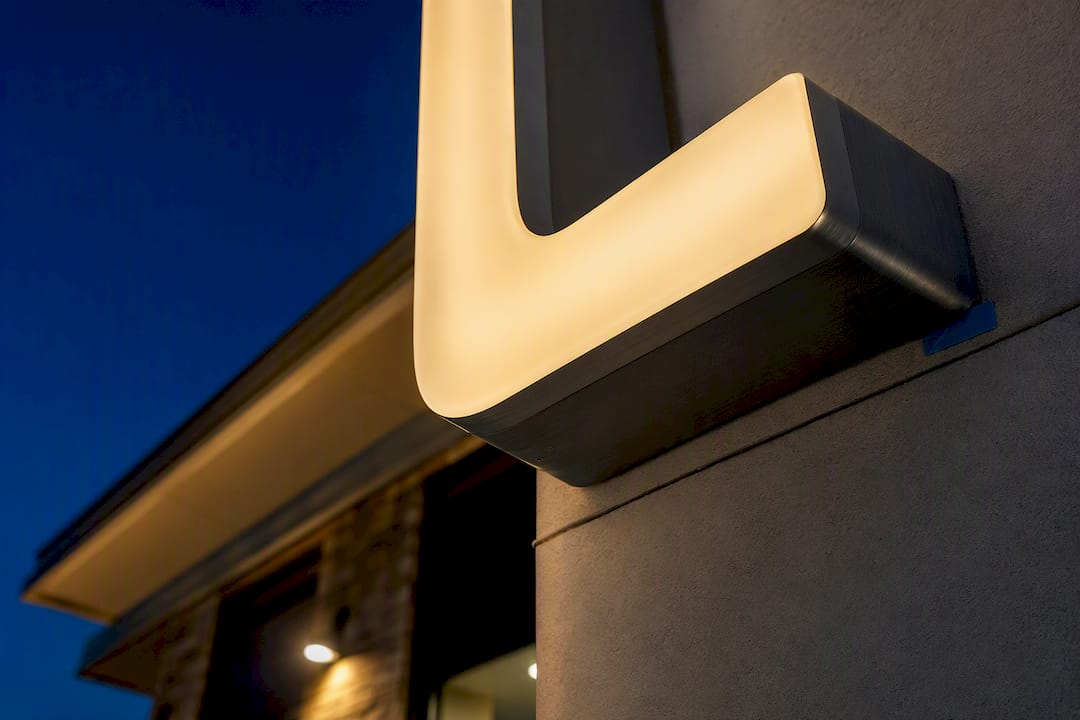
Pro Tip: Match letter height to viewing distance, not to how big your logo looks on a screen. A sign that looks perfect on your laptop can shrink to unreadable once it’s forty feet in the air.
2. Cabinet and lightbox signs
Cabinet signs, sometimes called lightboxes, use an acrylic face lit from behind or within, housed in a metal frame. They’re common for retail plazas where uniform sign bands are required. Acrylic holds up well outdoors for years, though colors will fade under constant sun exposure eventually. Best viewing range is similar to channel letters, roughly 50 to 100 feet.
3. Monument, pylon, and post-and-panel signs
These are your freestanding, roadside identity markers. Monument signs sit low to the ground, often with masonry or brick bases, and work well for businesses set back from the road with landscaping in front. Pylon signs are taller, pole-mounted structures designed to be seen over other buildings and from moving vehicles, common along highways and busy commercial corridors. Post-and-panel signs are the budget version, simple and effective for smaller lots or shared business parks. All three commonly require permits since they involve permanent structures and, frequently, electrical work for illumination. Explore Custom Signs Today’s site signs options if you’re weighing monument versus pylon for a specific property.
Pro Tip: If your building sits behind other structures, a pylon sign that peeks above the roofline is often worth more than an oversized building sign nobody set back from the road can see.
4. Vinyl banners, feather flags, and yard signs
This is where speed wins. Vinyl banners, typically printed on 13 oz scrim-reinforced PVC, hold up outdoors for roughly six to twelve months depending on wind exposure and sun. Feather flags and yard signs, often made from corrugated polypropylene, have a similar lifespan and are ideal for grand openings, seasonal sales, or marking a temporary event location. According to Custom Ink’s guidance on business signage sequencing, starting with flexible, low-cost signage before committing to permanent installations lets you validate your location and messaging first.
Pro Tip: Rotate banner messaging every few weeks even if the sign itself is still in good shape. Repeat customers notice stale signage faster than you’d think.
5. A-frame and sandwich boards
The sidewalk workhorse. A-frames are portable, weatherproof, and let you change messaging daily with dry-erase or chalkboard inserts, or swap in printed graphics for a specific promotion. They work at close range, generally under 30 feet, which makes them ideal for foot traffic rather than drivers.
6. Vehicle wraps and magnets
A wrapped van or car turns every mile driven into a rolling advertisement, and because the vehicle moves through different neighborhoods, it reaches audiences a fixed sign never will. Full wraps use vinyl film designed to last several years with proper care, while magnetic sheeting is a lower-commitment option lasting one to two years, useful if you lease vehicles or want to swap branding between fleet cars. Custom Signs Today’s vehicle wraps service covers both routes.
Pro Tip: Keep vehicle graphics simple enough to read in the two or three seconds a passing driver actually has to glance at it.
7. Window graphics, decals, and interior branding
Window decals, retractable banners, wall graphics, and table covers do the quiet work of reinforcing your brand once someone’s already inside or standing at your door. These are typically printed on removable or permanent vinyl and hold up well indoors for years with minimal fading since they’re shielded from direct UV exposure. Custom Signs Today’s custom vinyl decals and interior signs pages cover the range from storefront window lettering to lobby wall graphics.
8. Wayfinding, directional, and ADA/regulatory signs
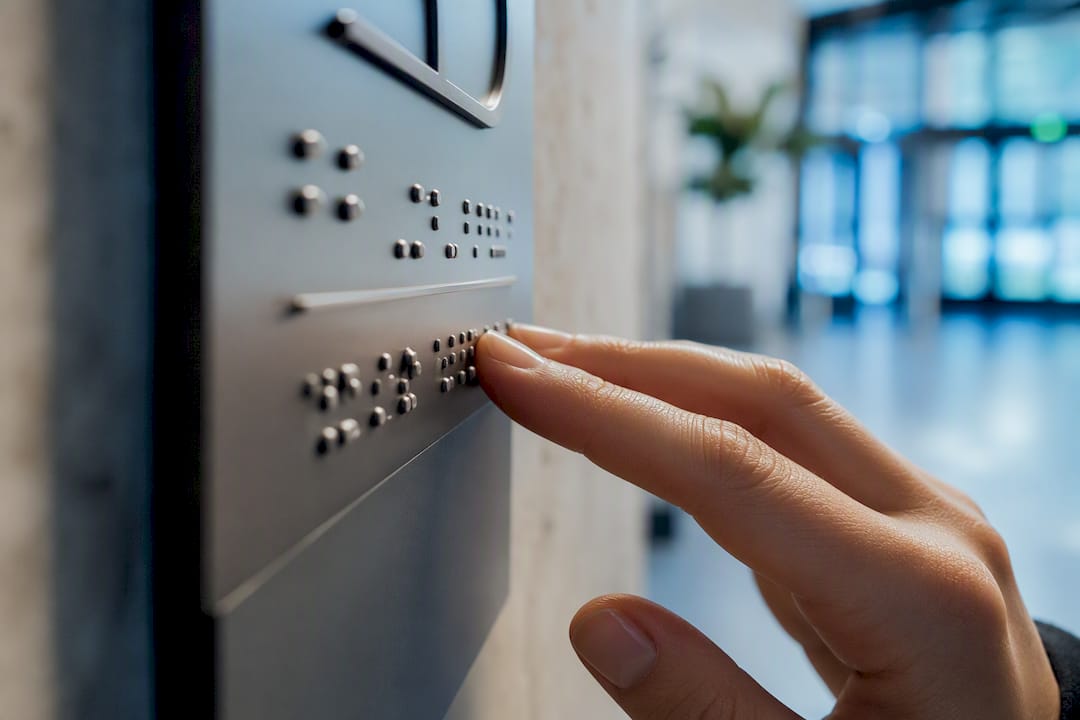
These aren’t trying to sell anything. Wayfinding and ADA signage exist to move people through a space safely and to meet accessibility and code requirements, which in many jurisdictions is not optional once you open to the public. Restroom signs, exit markers, parking directionals, and room identification all fall here, typically in durable acrylic or metal with raised lettering and Braille where required. Custom Signs Today’s directional door signs page covers common formats for offices and multi-tenant buildings.
9. Digital displays, menu boards, and trade-show signage
Digital menu boards and LED displays make sense when your message genuinely changes often, like a restaurant rotating specials or a gym updating class schedules throughout the day. The trade-off is real: higher installation cost, ongoing software and content management, and a hardware investment that static signs never carry. Trade-show and indoor event signage, meanwhile, tends to be retractable banners, tension fabric displays, and modular panel systems built for repeated setup and teardown rather than permanent mounting.
Pro Tip: Only go digital if your message actually changes weekly or daily. If you’re updating a static price twice a year, a printed sign is cheaper and just as effective.
How to Choose the Right Sign for Your Business
Start with who needs to see the sign and from how far away. A driver on a 40 mph road needs letters roughly three times larger than a pedestrian walking past your storefront would, because they have a fraction of a second to read and react. Figure out whether your audience is mostly on foot, in cars, or a mix of both before you spec anything.
From there, legibility rules of thumb matter more than design preference:
- Keep copy short. Your name, logo, and one short tagline beat a paragraph every time.
- Use high contrast between text and background. Dark letters on light backgrounds, or the reverse, read faster than subtle color pairings.
- Match letter height to distance: a rough guide is one inch of letter height for every 10 feet of intended viewing distance.
- Avoid more than two or three lines of primary copy on any sign meant to be read while moving.
Signage guidance from the US Chamber of Commerce puts readability above every other design choice, and that holds true whether you’re pricing a $200 banner or a $15,000 monument sign. A gorgeous sign nobody can read from the road is money spent on nothing.
Budget and timeline should drive sequencing, not the other way around. If you’re not sure a location or message works yet, start temporary and layer in permanent signage once you’ve proven it. Before you sign a quote, ask your vendor these questions:
- Will you do a site survey before finalizing size and placement?
- Does this sign need electrical service, and is that included in the installation quote?
- What’s the warranty on materials and on the LED components if it’s illuminated?
- Do you handle permit applications, or is that on me?
- What’s the realistic lead time from deposit to install?
Watch for red flags before you commit: a design with too much text crammed onto a small panel, low contrast that looks fine on a screen but disappears in daylight, mounting hardware that isn’t rated for your wind zone, or a vendor who can’t tell you whether your project needs a permit. Any one of those should slow you down.
Materials and Durability: What Actually Holds Up Outdoors
Material choice determines how long a sign lasts and how much you’ll spend maintaining it. Outdoor banners typically use 13 oz scrim-reinforced PVC vinyl, which holds up for roughly six to twelve months depending on wind and sun exposure. Yard signs and feather flags in 4 mm corrugated polypropylene run a similar lifespan. Channel letters and monument faces built from aluminum and acrylic are a different tier entirely, engineered to last years rather than months, which is why they cost more upfront.
Sun, wind, and mounting all shape lifespan. A banner in constant direct sun and coastal wind will fade and fray faster than the same banner mounted somewhere sheltered. Vehicle magnetic sheeting has a moderate durability before it needs replacing.
Indoors, the calculus flips. Removable vinyl, foamboard, and fabric prints hold color for years since they’re shielded from UV and weather. Common material choices by setting:
- Outdoor short-term: 13 oz scrim vinyl banners, corrugated polypropylene yard signs
- Outdoor long-term: aluminum channel letters, formed acrylic lightbox faces
- Indoor: foamboard, fabric displays, removable vinyl decals
Warranty lengths vary by material and manufacturer, but illuminated components like LED modules commonly carry multi-year coverage separate from the sign structure itself. Ask for both warranties in writing.
Permits, Installation, and How Long It Actually Takes
Permanent, illuminated, and roadside signs like pylons and monuments almost always require a permit from your local building or planning department, since they involve structural mounting, electrical work, or both. Temporary signage, banners, yard signs, window decals, generally clears far fewer regulatory hurdles.
Timeline expectations matter for planning your launch:
- Temporary signage: often produced and installed within days
- Permanent illuminated signage: permit approval alone can take weeks to months before installation even begins
- Roadside monument or pylon signs: budget the longest runway of any format, given permitting, site prep, and often concrete footings
If your project involves structural mounting or new electrical service, bring in a licensed installer or general contractor rather than a general handyman. Improperly mounted signage is a liability issue, not just a cosmetic one.
How Sign Professionals Sequence a Project
A phased approach lowers risk: test with temporary signage, refine the message based on what actually gets a response, then invest in permanent signage once you know it works. A proper site survey checks sightlines from both pedestrian and vehicle approaches, confirms whether electrical service exists for illumination, and identifies the mounting substrate, brick, EIFS, metal, each requiring different hardware. Custom Signs Today handles custom design, manufacturing, installation, and permit guidance for exterior signage across the full range covered here, so the sequencing above isn’t theoretical, it’s how projects actually get built.
Three Rules That Cut Through Most Signage Mistakes
Start with visibility, not aesthetics. A sign that looks stunning up close but vanishes from fifty feet away has failed at its one job. Second, fewer words always win. Every sign on this list performs better with less copy, not more; if you can’t say it in five words, split it into two signs. Third, match your material to how long you actually need the message to last. Don’t buy a five-year aluminum sign for a six-week promotion, and don’t rely on a banner to carry your brand identity for a decade.
If there’s one takeaway that covers every format from channel letters to feather flags, it’s this: figure out who needs to see the sign and from where, then build backward from that distance. Everything else, material, size, cost, follows from that one decision.
— Yossi
Get a Custom Sign Quote From Custom Signs Today
Whatever combination you land on, whether that’s illuminated channel letters up front, a monument sign at the road, and a wrapped van for good measure, Custom Signs Today builds and installs all of it under one roof, which means one point of contact instead of juggling three vendors and three timelines.
Custom Signs Today handles design, fabrication, installation, and permit guidance for banners, vehicle wraps, channel letters, monument signs, decals, and interior graphics. To get a fast, accurate quote, have your dimensions ready, a few photos of the install location, and a short note on your goal, identification, promotion, or wayfinding. That’s usually enough for a first estimate without a site visit. Check out what speeds up the quoting process or head straight to the custom signs services page to start your request today.
Sources
For sizing and contrast standards, the US Chamber of Commerce’s signage tips offer solid, practical baselines. For sequencing temporary versus permanent purchases, Custom Ink’s business signage breakdown covers real-world specs. For a category overview, see this practical guide to sign types. Always check with your local zoning office before finalizing any permanent or illuminated sign project.
- 9 Business Signage Tips to Attract Customers and Build Your Brand | CO- by US Chamber of Commerce
- Business Signs 101: What Goes Outside, What Goes Inside, and What to Buy First – Custom Ink Blog
- Types of Signs: Business, Safety, Road & Marketing Signs
- Digital signage — Wikipedia