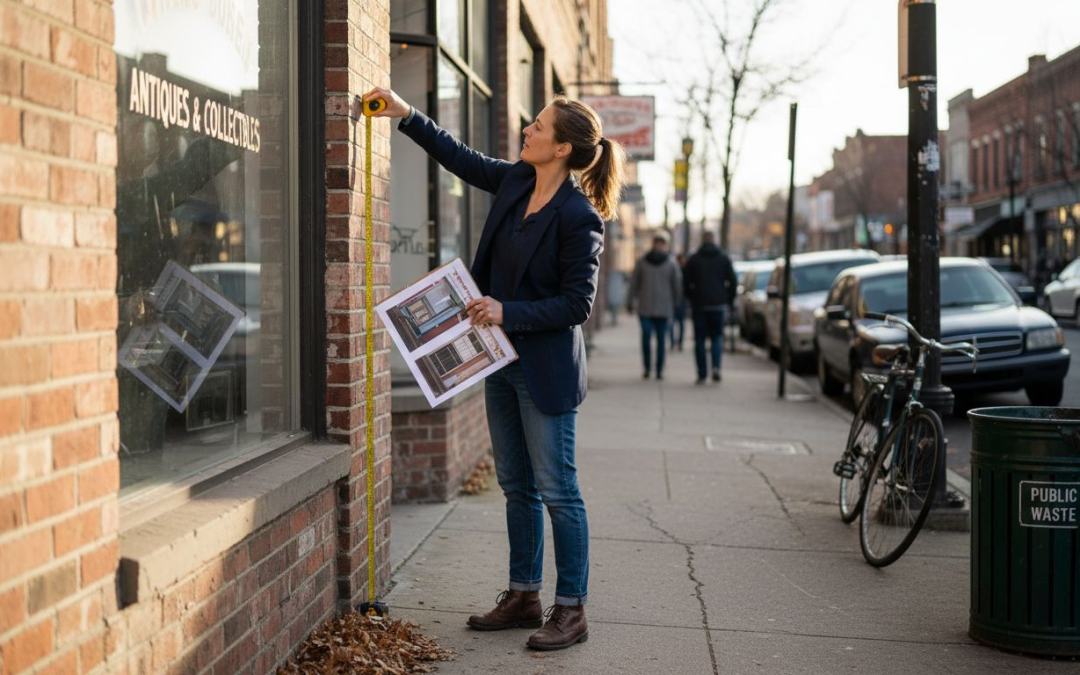
Bold signage can make an American small business stand out when traffic is heavy and the competition is fierce. Whether customers are walking by on Main Street or driving past your storefront, grabbing their attention starts with the right sign in the right place. With over 60% of potential customers forming first impressions based on signage alone, smart design choices can transform the way your business is seen and remembered during important events.
Table of Contents
- Step 1: Identify Sign Needs and Placement
- Step 2: Select Materials and Sign Types
- Step 3: Submit Design and Customization Details
- Step 4: Review and Approve Sign Proofs
- Step 5: Arrange Payment and Delivery Options
Quick Summary
| Key Point | Explanation |
|---|---|
| 1. Analyze Sign Needs Carefully | Understanding traffic flow and placement influences sign visibility and effectiveness for your business. |
| 2. Select Appropriate Materials | Different materials and sign types affect durability and brand representation; choose wisely based on environment and budget. |
| 3. Provide Detailed Design Specifications | Clear design documentation ensures that the final product aligns perfectly with your brand and messaging goals. |
| 4. Review Proofs for Accuracy | Checking proofs closely helps prevent costly mistakes before production begins, ensuring your sign meets all specifications. |
| 5. Manage Payment and Delivery | Clarifying payment methods and delivery logistics is essential for a smooth installation process and avoiding misunderstandings. |
Step 1: Identify Sign Needs and Placement
Successfully designing custom signs starts with understanding your business’s unique visual communication requirements. This critical first step determines how effectively your signage will attract and guide potential customers toward your brand.
Begin by analyzing your specific business environment and traffic flow patterns. Consider where customers approach your business, the speed of traffic, and potential viewing distances. Signs placed near roadways need different design considerations compared to indoor signage or storefront displays. For example, signs visible to drivers moving at higher speeds require larger lettering and higher contrast to ensure legibility within the brief moments a potential customer has to notice them.
Carefully assess your location’s physical characteristics. Examine potential sign placement areas considering factors like building architecture, surrounding landscape, lighting conditions, and potential visual obstructions. A sign positioned with clear sight lines and appropriate illumination will dramatically increase its effectiveness. Regulatory compliance is equally important remember to check local zoning requirements and sign ordinances before finalizing your design and placement strategy.
Pro tip: Always create a scaled mockup of your proposed sign placement to visualize how it will actually look in your specific business environment.
Step 2: Select Materials and Sign Types
Choosing the right materials and sign types is crucial for creating a custom sign that effectively represents your business and withstands environmental challenges. Your selection will impact the sign’s durability, visibility, and overall brand message.

Your material selection depends on several key factors including outdoor exposure, budget, and aesthetic goals. Signage material research indicates metal, plastic, vinyl, and illuminated options each offer unique advantages. Metal signs provide exceptional durability and a professional appearance ideal for exterior building mounting. Plastic materials offer lightweight flexibility and cost effectiveness. Vinyl works wonderfully for temporary or short term signage with vibrant color options. Digital signs present dynamic messaging capabilities that can update in real time transforming your communication approach.
Consider your specific business environment when selecting sign types. Building mounted options like wall signs, projecting signs, and window graphics each serve different communication purposes. Awning signs provide shade while advertising. Roof signs maximize visibility from a distance. Parapet signs create clean architectural integration. Your final choice should align with your brand identity, local regulations, and practical visibility requirements.
Pro tip: Request material samples from your sign provider to assess texture, color accuracy, and durability before making a final decision.
Here’s a comparison of common sign materials to help guide your selection:
| Material Type | Durability | Cost Range | Typical Usage |
|---|---|---|---|
| Metal | High | Moderate-High | Outdoor, storefronts |
| Plastic | Moderate | Low-Moderate | Indoor, retail spaces |
| Vinyl | Low | Low | Temporary displays |
| Digital | Variable | High | Dynamic, real-time signage |
Step 3: Submit Design and Customization Details
Submitting precise design and customization details transforms your sign vision from concept to reality. This critical step ensures your sign accurately represents your business brand and communicates your intended message.
Prepare comprehensive design specifications that cover every aspect of your sign project. Include high resolution digital files of your logo, exact color specifications using Pantone or RGB codes, preferred font selections, and specific dimensional requirements. Professional sign fabricators need clear guidelines about your desired size, material preferences, mounting options, and any special features like illumination or unique textures. Graphics should be vector format to ensure crisp reproduction, and resolution must match your intended sign dimensions.
Communicate additional context about your business environment to help designers understand placement and functional requirements. Share details about lighting conditions, viewing distances, and architectural surroundings that might impact sign visibility. If you have existing brand guidelines or marketing materials, include these to provide comprehensive context. Anticipate potential questions by preparing supplementary information like architectural drawings, color palette references, and examples of signs that inspire your vision.
Pro tip: Schedule a brief consultation with your sign designer to walk through your specifications and clarify any potential interpretational nuances.
Step 4: Review and Approve Sign Proofs
Reviewing and approving sign proofs represents the final checkpoint before your custom sign moves into production. This critical stage ensures every visual detail precisely matches your business branding and communication objectives.
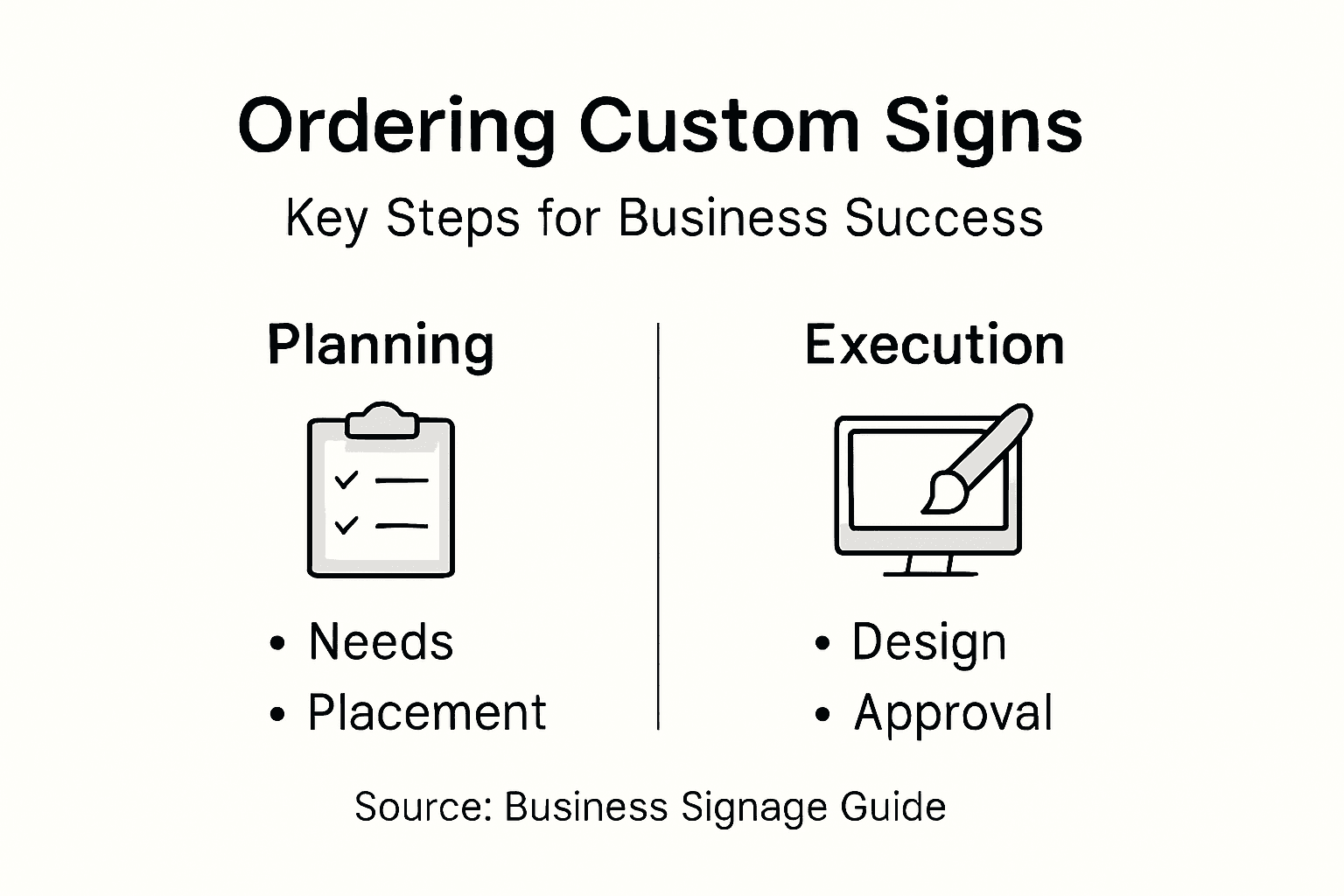
Carefully examine the proof review process with meticulous attention to detail. Check color accuracy by comparing digital proofs against your original brand specifications. Verify that logo placement, font styles, and graphic elements align perfectly with your initial design requirements. Pay special attention to text legibility, ensuring all words are spelled correctly and sized appropriately for your intended viewing distance. Look closely at graphic resolution and ensure images appear crisp and professional across different potential viewing angles.
Communicate any required modifications clearly and professionally with your sign fabrication team. Provide specific feedback about needed adjustments using precise language. Request a revised proof if any elements do not meet your exact specifications. Remember that minor corrections are typically easier to implement during this stage compared to making changes after production begins. Your goal is achieving a sign that represents your brand with absolute precision and visual impact.
Pro tip: Print a physical color proof if possible to verify how colors and graphics will actually appear in real world lighting conditions.
Step 5: Arrange Payment and Delivery Options
Selecting the right payment and delivery method ensures a smooth and predictable process for receiving your custom sign. This final stage transforms your design from concept to physical reality while managing financial and logistical expectations.
Explore payment processing systems that offer flexibility and security for your sign purchase. Most sign manufacturers accept multiple payment methods including credit cards, electronic bank transfers, and business checks. Request a detailed quote that breaks down all costs including design fees, materials, fabrication, and potential shipping or installation charges. Ask about deposit requirements many companies request an initial payment typically ranging from 25% to 50% of the total project cost before beginning production.
Discuss delivery logistics thoroughly with your sign provider. Understand the estimated production timeline and shipping options based on your sign size and complexity. For larger signs or more intricate designs, professional installation might be recommended. Some providers offer local pickup which can reduce delivery expenses. Confirm exact delivery dates and any potential additional fees for expedited production or specialized shipping requirements. Request a written agreement detailing the complete payment structure and delivery expectations to protect your business interests.
Pro tip: Negotiate a final payment schedule that includes a small percentage held back until complete sign installation and your full satisfaction.
This summary outlines key steps and their impact in custom sign creation:
| Step | Key Action | Business Impact |
|---|---|---|
| Needs & Placement | Analyze environment, traffic flow | Maximizes visibility & effectiveness |
| Materials & Types | Select optimal material/type | Ensures durability & brand match |
| Design Submission | Provide clear specifications | Achieves precise brand representation |
| Proof Review | Confirm visual accuracy | Avoids errors before production |
| Payment & Delivery | Manage logistics | Guarantees smooth installation process |
Take Your Custom Sign Ideas From Concept to Reality With Expert Help
Ordering custom signs can feel complicated when you are trying to match the perfect materials, design details, and placement to your business needs. The article clearly highlights common challenges like ensuring sign visibility, selecting durable materials, and reviewing proofs with precision. These important steps are essential but can be time-consuming and overwhelming without the right support.
You want signage that makes your brand stand out and lasts through any weather. You want confidence that your sign is crafted to your exact specifications and looks perfect when installed. That is exactly what you find at Custom Signs Today, a professional signage provider specializing in custom-made visual communication solutions for businesses of all sizes. Whether you need banners, vehicle wraps, or storefront signs made with high-quality materials, their experienced team guides you seamlessly through design submission, proof approvals, and reliable delivery.
Ready to overcome sign ordering challenges and boost your business success? Explore the wide range of services available in the Uncategorized category where you can request a free quote tailored to your unique project. Visit Custom Signs Today to start your personalized custom sign journey now with a trusted partner who understands your needs and commits to delivering exceptional results.
Frequently Asked Questions
What are the first steps to order custom signs for my business?
Begin by identifying your specific sign needs and placement. Analyze your business environment, including traffic flow patterns and visibility, to determine the most effective locations for your signs.
How do I choose the right materials for my custom sign?
Selecting the proper materials involves assessing factors such as outdoor exposure, budget, and aesthetic goals. Aim for materials that ensure durability and align with your brand image, such as metal for outdoor signs or vinyl for temporary displays.
What details should I include when submitting my design for a custom sign?
Provide clear design specifications, including high-resolution files of your logo, color codes, font selections, and dimensional requirements. This thoroughness helps ensure that your sign accurately reflects your brand’s identity and intended message.
How can I review and approve sign proofs effectively?
Carefully examine the proof for color accuracy, text legibility, and graphic resolution. Make a point to request a revised proof for any needed adjustments to avoid errors before production begins.
What steps should I take to arrange payment and delivery for my custom sign?
Discuss payment methods and delivery logistics with your sign provider. Confirm a written agreement detailing costs, estimated production timelines, and delivery expectations to ensure a smooth process.
How long does it typically take to receive a custom sign after ordering?
The timeline for receiving a custom sign varies based on its size and complexity, but it often falls within 30 to 60 days. Always confirm specific timeframes with your sign provider to manage your expectations.