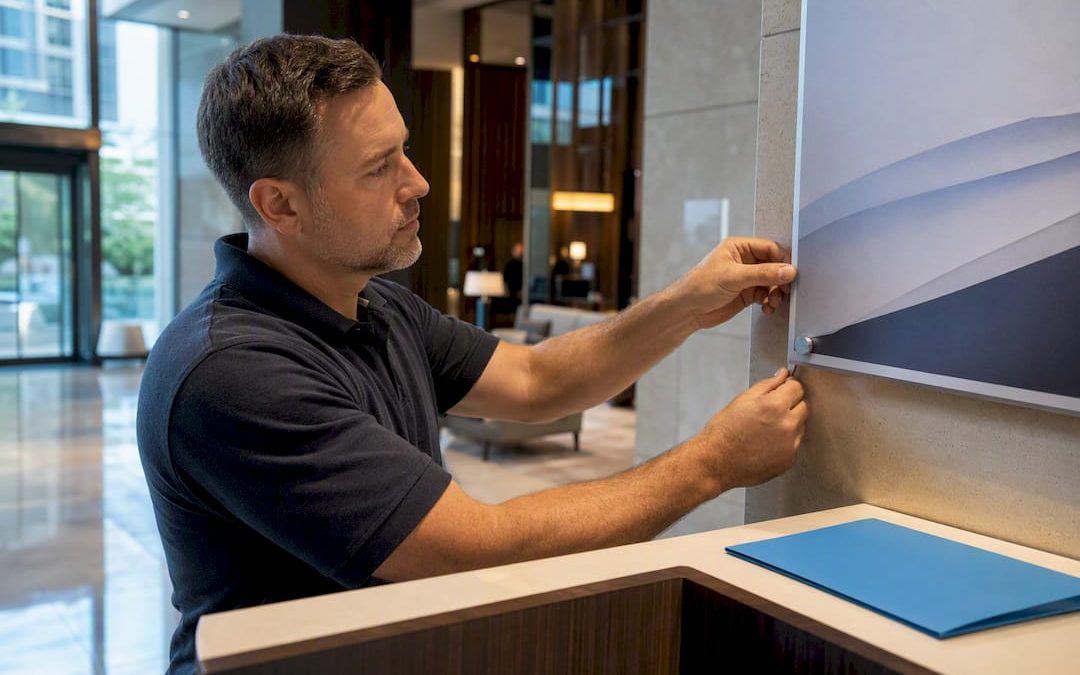
For most office receptions, a dimensional logo sign, a clean acrylic panel with understated backlighting, or a digital welcome screen delivers the best mix of professionalism, legibility, and durability. The right pick depends on your budget, how often your messaging changes, and whether your lobby needs to impress a client or simply guide an employee to the right hallway.
TL;DR:
- Acrylic signs are the most budget-friendly option for modern lobbies but require UV protection for outdoor use.
- Backlit acrylic panels and LED displays provide high visibility but come with higher installation and maintenance costs.
- Sign placement at eye level opposite entry doors and decision points enhances visibility and improves wayfinding.
- Materials should be combined; for example, acrylic letters on wood panels with hidden lighting offer a premium look with controlled costs.
- Digital signs are ideal for frequently changing messaging, while static signs suit locations with stable information needs.
Table of Contents
- Welcome Sign Ideas for Office Reception Areas
- Choosing Materials and Finishes for an Office Sign
- Where to Place Your Sign for Better Wayfinding
- How to Choose the Right Welcome Sign for Your Office
- Design Styles and Wording Ideas for Office Signs
- What Office Managers Get Wrong About Welcome Signs
- Get a Custom Office Welcome Sign Made
- Sources
- FAQ
Welcome Sign Ideas for Office Reception Areas
Picking from a long menu of options gets easier once you sort ideas by budget and purpose. Here are 14 concepts worth briefing to a sign vendor, ranked roughly from statement pieces to practical fillers.
- Dimensional logo letters. Raised acrylic or metal letters mounted directly on a feature wall. Best for lobbies with strong existing branding. Midrange to premium budget. Clean with a microfiber cloth; avoid ammonia-based sprays on acrylic.
- Backlit acrylic panel. A frosted panel with LED halo lighting around your logo. Best for tech and creative offices wanting a modern glow. Midrange budget. Check the LED driver annually.
- Digital welcome screen. A touchscreen or static display greeting visitors by name and showing daily meetings. Best for offices with frequent visitor traffic. Premium budget, plus software subscription. Reboot weekly to avoid display lag.
- Wood accent sign with laser-etched logo. Warm, natural material paired with metal or acrylic lettering. Best for hospitality, wellness, or design firms. Midrange budget. Reseal or oil the wood every 12 to 18 months indoors.
- Brushed metal plaque. Stainless steel or aluminum letters on a painted wall. Best for law firms, finance, and medical offices wanting gravitas. Premium budget. Nearly maintenance free indoors.
- Vinyl wall lettering. Cut vinyl graphics applied directly to drywall or glass. Best for startups and budget-conscious teams. Entry-level budget. Replace every few years as edges can lift.
- Frosted glass film with logo cutout. Applies privacy film to a lobby partition with your name etched through. Best for glass-heavy modern offices. Midrange budget. Wipe with glass cleaner only, no abrasives.
- Freestanding lobby sign or pedestal. A standalone sign near the entrance rather than wall-mounted. Best for open-plan lobbies without a clear focal wall. Midrange budget.
- Interactive visitor check-in kiosk. Combines a welcome message with digital sign-in and badge printing. Best for offices with compliance or security needs. Premium budget.
- Painted MDF sign with vinyl graphics. A budget-friendly board painted to match brand colors. Best for temporary offices or short-lease spaces. Entry-level budget.
- Seasonal interchangeable panel. A sign frame with swappable inserts for holidays or company milestones. Best for offices that like refreshing the lobby feel. Entry-level to midrange. Store extra panels flat to avoid warping.
- Neon or LED script sign. A playful, glowing script spelling out “Welcome” or a company tagline. Best for creative agencies and startups. Midrange budget.
- Living wall with logo signage. Combines greenery with a mounted nameplate. Best for wellness-focused or biophilic office designs. Premium budget, higher upkeep.
- Directory-integrated welcome sign. Combines a greeting with a simple tenant or department directory. Best for shared or multi-tenant office buildings. Midrange budget, especially useful when paired with a wayfinding signage system.
Choosing Materials and Finishes for an Office Sign
Material choice drives both first impression and how much upkeep you sign up for. Acrylic gives you a clean, modern look at a lower cost than metal, while brushed stainless or aluminum projects a premium, more permanent feel. LED and backlit options pull the most attention in a dim lobby but come with a higher upfront price and occasional bulb or driver maintenance, according to a comparison of acrylic, metal, and LED reception signage.
- Acrylic: budget-friendly, lightweight, easy to reface if your branding changes. Indoor use only unless UV-rated.
- Metal (aluminum or stainless): durable, scratch-resistant, holds up outdoors and indoors, higher material cost.
- Wood or painted MDF: warm and approachable, but MDF needs a controlled indoor climate to avoid swelling.
- LED/backlit: highest visual impact, needs an electrician for installation and periodic bulb replacement.
Pro Tip: Combine materials rather than picking just one. Acrylic letters mounted on a wood panel with hidden LED backlighting gives you a premium look while keeping the priciest material to a minimal accent, a pairing that signage material comparisons point to as a smart way to control cost.
Where to Place Your Sign for Better Wayfinding
A lobby sign works best as part of a system, not a standalone decoration. Signage specialists describe three layers: identification (your company name at the entrance), direction (arrows or hallway labels), and information (a directory or floor listing), with each sign built to do one job rather than everything at once, per Eptura’s breakdown of wayfinding types. Mixing all three into a single busy sign is the most common mistake office managers make.
- Mount identification signs at eye level, directly opposite the entry door or elevator bank, following advice from a top contractor marketing agency to ensure clear company identification.
- Place directional signs at decision points, like hallway junctions, not mid-corridor.
- Keep contrast high between text and background; dark text on light acrylic reads better under standard office lighting.
- Follow ADA-informed height and tactile guidance where required, especially for ADA-compliant signage near restrooms and exits.
- Plan the full layout on your floor plan before ordering, a step Vista System recommends to avoid costly rework later.
How to Choose the Right Welcome Sign for Your Office
Start with four questions: who walks through your door, what tone your brand needs to strike, how much abuse the sign will take daily, and what your maintenance budget looks like a year from now.
- Match tone to audience. A law firm greeting clients needs different signage than a startup greeting job candidates.
- Set a realistic budget bracket. Entry-level vinyl or MDF signs are generally budget-friendly; midrange acrylic or wood panels offer a balance of cost and quality; premium metal, LED, or digital installations tend to be the highest investment depending on size.
- Ask vendor questions upfront. Confirm lead time, whether installation is included, warranty length, whether physical samples are available, and if the design needs electrical work.
Design Styles and Wording Ideas for Office Signs
Your sign’s style should echo your office interior, not fight it.
- Formal (law, finance): brushed metal or etched glass, serif or clean sans-serif type, minimal color, subtle uplighting.
- Modern (tech, agencies): backlit acrylic, bold sans-serif, high contrast, negative space around the logo.
- Rustic (design studios, wellness): wood panels, laser-etched logos, warm LED accent lighting.
- Playful (startups, creative teams): neon script or colorful vinyl lettering, casual typography, asymmetric layout.
- Tech-forward (coworking, SaaS offices): digital screens with rotating messages, motion graphics kept subtle.
For wording, skip generic phrases. Try your company name paired with a one-line mission statement, or a simple “Welcome to [Company]” with your founding year underneath for added credibility. Browsing lobby sign examples before finalizing a brief helps narrow down which combination actually fits your space.
What Office Managers Get Wrong About Welcome Signs
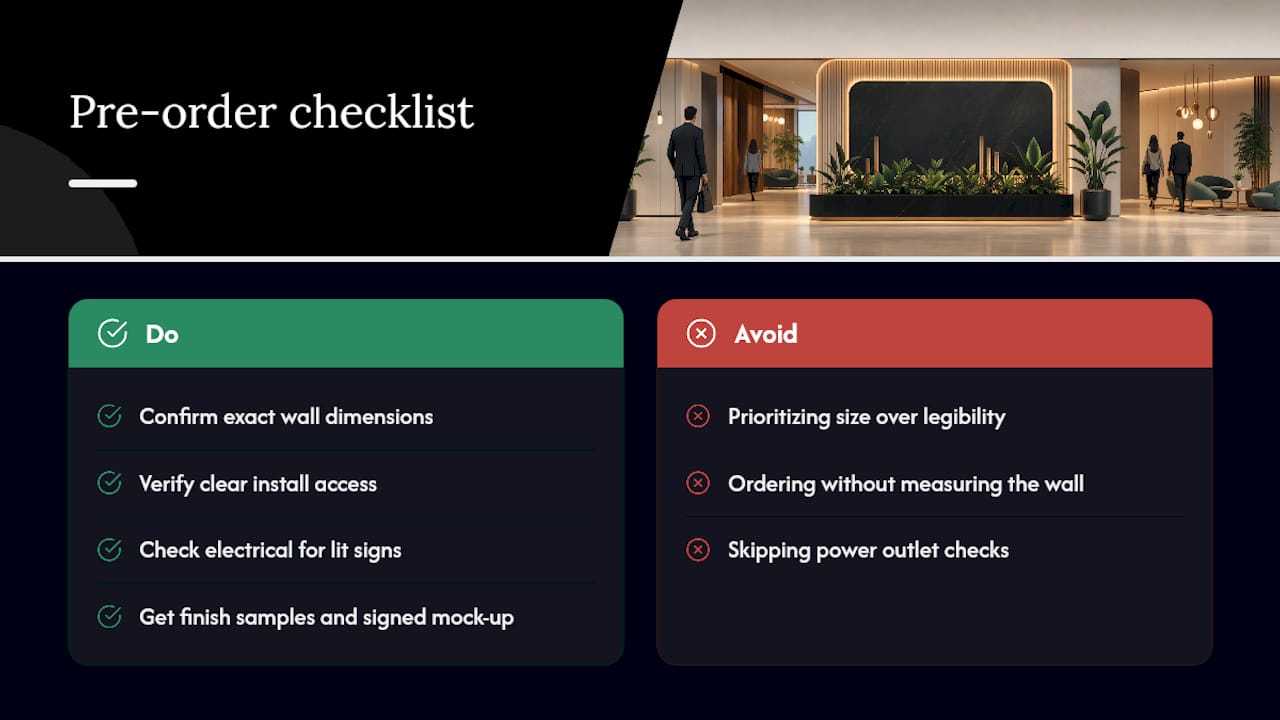
Most clients walk in wanting a bigger logo and walk out realizing legibility and mounting access mattered more than size. The real hiccups show up during installation, not design, usually because nobody measured the wall or checked for a power outlet nearby.
Before you order, confirm: exact wall dimensions, clear install access, electrical needs for any lit sign, physical finish samples, a signed mock-up approval, and a simple maintenance plan for the material you picked.
— Yossi
Get a Custom Office Welcome Sign Made
We design and build office welcome signs to order, from acrylic panels and dimensional metal letters to backlit and digital displays, matched to your interior and your budget.
Every project starts with a free quote, and physical material samples can be requested before committing to acrylic, metal, or wood so there are no surprises once installation day arrives. The team can help you with mounting height, electrical needs, and access requirements so your sign goes up smoothly. If you’re comparing a face-change panel system for a lobby that updates messaging often, or a straightforward static sign for a smaller reception area, our custom sign services page covers both. Ready to move from idea to production? Request your free quote and tell us your space, budget, and timeline.
Sources
- Lobby signage: How to plan a clear and professional entrance | Vista System
- Types of wayfinding and signage (Eptura)
- Office Signage: Types, Materials, and How to Choose the Right System 2026 Guide
- Acrylic vs Metal vs LED Reception Signage: Which Is Best (Colorprint)
FAQ
What is the best material for an office welcome sign?
Acrylic works well for budget-conscious modern lobbies, while brushed metal suits offices wanting a premium, durable finish. LED or backlit signs add visibility but cost more upfront and need occasional maintenance, per material comparisons from Colorprint.
How high should a lobby welcome sign be mounted?
Mount identification signs at standard eye level directly in the visitor’s sight line, and follow ADA-informed height and contrast guidance wherever accessibility rules apply to your building.
Should my office use a digital or static welcome sign?
Digital displays work best when your content changes often, like meeting room schedules or daily announcements, while static signs suit offices with a stable message, according to Gable’s signage guide.
How much does a custom office sign cost?
Entry-level vinyl or painted signs start in the low hundreds of dollars, midrange acrylic or wood panels run into the low thousands, and premium metal, LED, or digital installations cost more depending on size and complexity. Customsignstoday provides exact pricing through a free custom quote.
Do office welcome signs need to meet ADA requirements?
Yes, in many cases, particularly near restrooms, exits, or where tactile and Braille elements are legally required. Customsignstoday’s ADA signage services cover compliant mounting height, contrast, and tactile lettering.