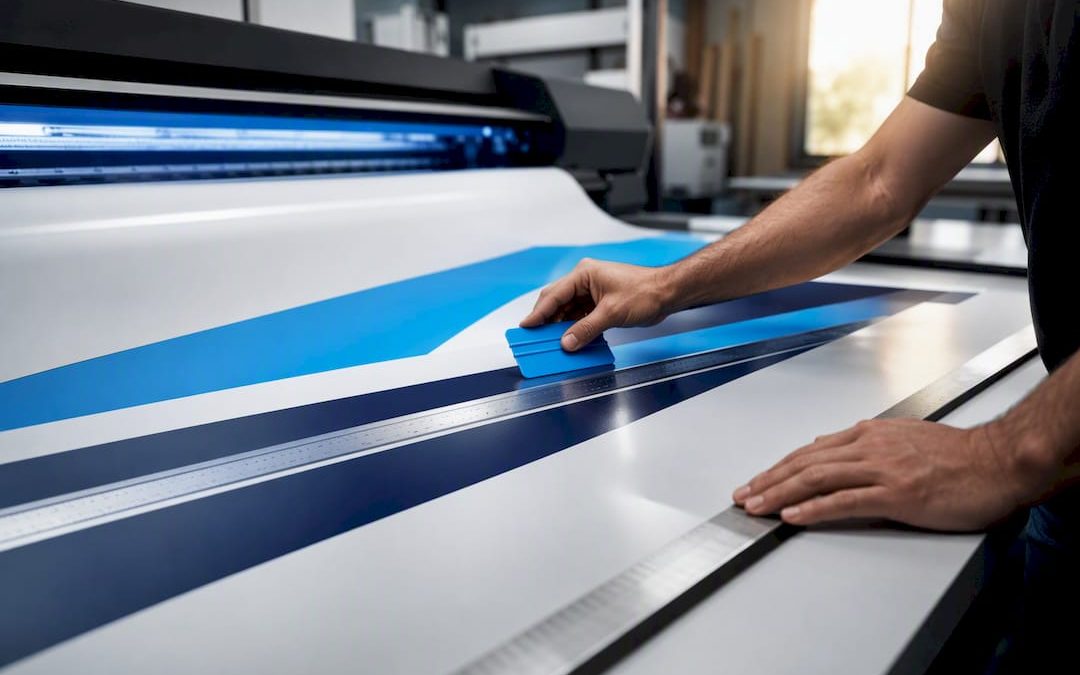
On-demand printing means your banner, sign, decal, or vehicle wrap gets produced only after you place the order, cut to your exact size and specs rather than pulled from a warehouse shelf. There’s no preprinted inventory sitting around waiting for a buyer. The payoff for businesses is speed, accuracy, and customization: you get the size, material, and finish you actually need, with far less waste and no minimum order size holding you hostage.
TL;DR:
- On-demand printing eliminates inventory costs by producing only the exact quantity needed, reducing waste and obsolescence for small or urgent orders.
- Turnaround times vary from same-day for simple decals to two weeks for complex vehicle wraps, with delays mainly caused by artwork issues or slow approvals.
- Precise file preparation and quick proof approval are essential to avoid reprints and meet tight deadlines in on-demand sign projects.
- Material choices like vinyl, mesh, or aluminum affect durability and cost, with customization options for finishes such as lamination and UV protection.
- Cost per unit is higher than bulk printing, but on-demand methods are more efficient for personalized, small-volume, or time-sensitive signage needs.
Table of Contents
- What On-Demand Printing Covers and When Businesses Use It
- Why Businesses Choose On-Demand Over Bulk Printing
- How the On-Demand Sign Ordering Process Actually Works
- Materials and Finishes That Affect Durability and Cost
- How to Order Custom Signs Without Delays or Reprints
- How Custom Signs Today Approaches On-Demand Production
- Get a Custom Sign Quote That Matches What You Actually Need
- Sources
- FAQ
What On-Demand Printing Covers and When Businesses Use It
On-demand printing spans nearly every physical marketing and signage item your business might need in a hurry or in an exact custom spec. That includes event banners, trade-show displays, real estate yard signs, vehicle graphics, temporary wayfinding signs, and posters. The defining trait isn’t the product category. It’s the production method: single pieces or short batches, made to order, instead of long production runs printed months in advance and stored until sold.
Here’s where that distinction actually shows up for buyers:
- Real estate agents listing a property on Thursday and needing an “Open House” sign by Saturday can’t wait on a bulk print run.
- Event organizers ordering a step-and-repeat backdrop for a one-time gala don’t want 500 extras sitting in a closet afterward.
- Property managers replacing a damaged “No Parking” sign need one unit, fast, not a case of twelve.
- Retailers running a weekend promotion need window decals that match this specific sale, not last quarter’s.
- Fleet owners adding one new van to their business need matching vehicle lettering without reordering the whole fleet’s wrap job.
Each scenario shares the same constraint: the job is custom, urgent, or small in volume, and traditional bulk printing doesn’t fit any of those conditions well.
Why Businesses Choose On-Demand Over Bulk Printing
The financial case starts with inventory. When signage prints only after an order comes in, you’re not paying to store, insure, or eventually discard stock nobody bought. That’s a direct, measurable saving for any business that used to keep boxes of pre-printed materials in a back room, half of which went stale before they were used.
Turnaround is the second driver. Shops that have digitized their front-office work, meaning online quoting, digital proofing, and automated approvals, cut the friction that used to stretch a simple banner order into a week of back-and-forth email. Automating quoting and preflight often matters more for order speed than incremental print-quality gains, since most delays happen before a machine ever touches the material.
On-demand production also opens the door to variable data and personalization. A property management company with fifteen buildings can order fifteen directional signs with different addresses and unit numbers in one batch, no separate setup fee per variant. Mass customization techniques let manufacturers standardize their workflow so a single production run handles both one-off orders and dozens of variants without sacrificing consistency.
- Lower holding costs, no dead stock
- Faster quote-to-production cycle
- Location or branch-specific customization in one order
- Consistent output quality across small and large batches
Pro Tip: Ask your sign provider whether their quoting system prices by exact square footage. If it does, you’ll get a real number in minutes instead of waiting a day for a manual estimate.
How the On-Demand Sign Ordering Process Actually Works
Every on-demand sign order moves through the same basic sequence, whether you’re ordering one banner or fifty decals.
- Request a quote. You specify size, substrate, and finish, either through a web-to-print configurator or a conversation with a sales rep. Web-to-print storefronts now handle custom size inputs, material selection, and price calculation automatically, which is why a quote that once took a full business day can now show up instantly on screen.
- Upload your artwork. The file goes through automated preflight, a check for resolution, bleed, and color mode before anything reaches a printer.
- Review and approve a proof. You’ll see a digital proof, and sometimes a scaled physical mockup for large-format work, before production starts.
- Production and finishing. The material gets printed, cut, and laminated or coated according to your finish spec.
- Delivery or installation. Some jobs ship flat-packed; others, like vehicle wraps or large exterior signs, need a technician on-site.
Lead times typically run from same-day for simple decals to up to a couple of weeks for complex vehicle wraps or multi-panel exterior signage. Delays almost always trace back to one of two things: artwork that fails preflight (wrong color mode, missing bleed) or slow proof approval on the client’s end. Preflight software catches resolution, bleed, and color-mode errors before they become expensive reprints, which is the single biggest lever for keeping a job on schedule.
Pro Tip: If you need a hard deadline met, approve your proof the same day it’s sent. A 48-hour delay in sign-off is the most common reason a “one-week” job turns into two.
Materials and Finishes That Affect Durability and Cost
The substrate you choose determines how long a sign survives outdoors and how much it costs upfront. Vinyl or PVC banners handle most exterior applications well and stay affordable. Mesh vinyl, which has small perforations, cuts wind load on large banners mounted on fences or building facades, so it’s the better pick anywhere wind resistance matters more than image sharpness. Fabric works well for indoor trade-show displays where a soft, wrinkle-resistant finish matters more than weatherproofing.
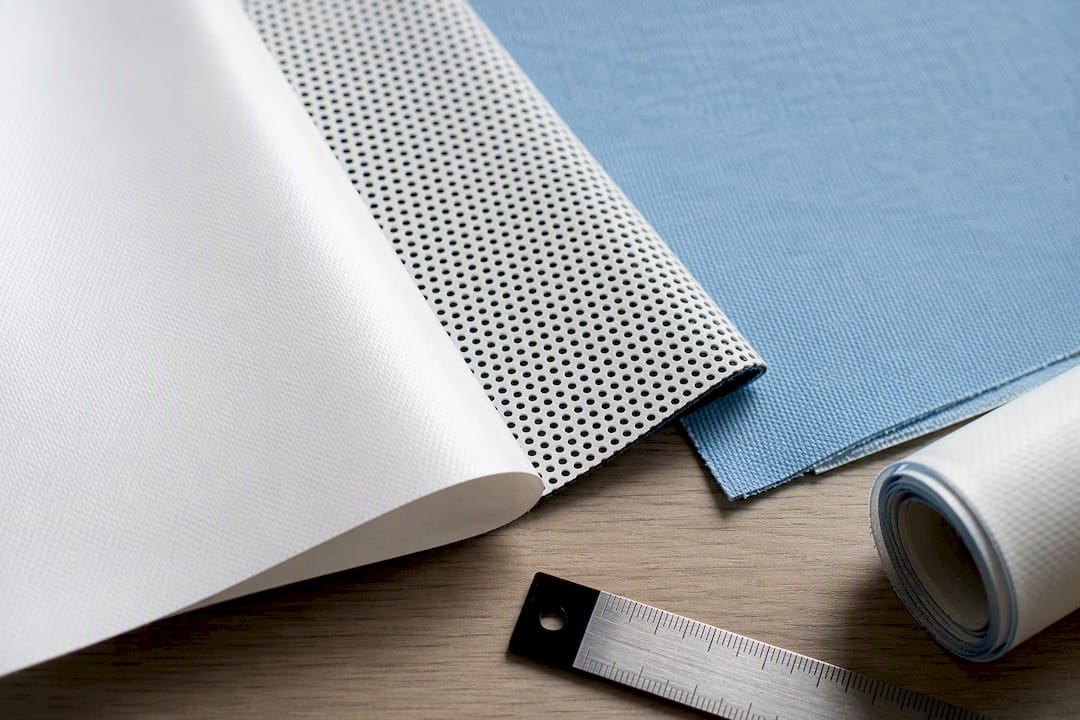
Coroplast, a corrugated plastic, is the standard for real estate yard signs and temporary wayfinding because it’s light and cheap to replace. Aluminum composite panels cost more but last years outdoors, making them the right call for permanent exterior signage. Canvas suits indoor art-style prints and lobby displays.
Finish choices matter just as much as the base material:
- Lamination adds scratch and UV resistance, extending outdoor life
- UV-cured inks resist fading better than standard solvent inks
- Matte finishes cut glare in bright storefront windows; gloss makes colors pop indoors
- Anti-graffiti coatings matter for street-level signage in high-traffic areas
- Vehicle wrap vinyl requires manufacturer templates matched to the specific make and model, since a generic template will leave gaps around mirrors, door handles, and curves
The tradeoff is almost always durability against cost, as seen in specialized orders like custom baseball jerseys that require precise materials and production methods. A coroplast sign that lasts one selling season costs a fraction of an aluminum panel built to last a decade, and buying the cheaper option for a genuinely temporary need isn’t a mistake.
How to Order Custom Signs Without Delays or Reprints
A little file prep saves a lot of back-and-forth. Before submitting artwork, confirm these basics:
- Export as a flattened PDF or PDF/X, in CMYK color mode, not RGB
- Set resolution to 150–300 dpi at final print size, not a scaled-down draft
- Outline all fonts so they don’t shift or default on someone else’s machine
- Include bleed and respect safe zones so nothing critical gets trimmed off
- Use exact measurements and the manufacturer’s template, especially for vehicle wraps, where a fraction of an inch off can leave a visible gap
Ask your printer for a preflight report and either a hard proof or a scaled mockup before the job goes into production. That single step catches most of the errors that otherwise turn into a reprint.
Pricing depends on size, substrate, finish, and rush timing, so confirm upfront who handles installation. Some jobs, like window decals, are simple enough for in-house staff. Others, like large exterior signs or vehicle wraps, need a trained installer.
Pro Tip: If you order similar signage regularly, ask your provider to save a reusable template. Real estate agents and property managers who reorder the same sign style repeatedly can cut quote time down to almost nothing by skipping the spec conversation each time.
Batch similar jobs together when you can, and plan seasonal signage (holiday sales, open enrollment periods, event season) a few weeks ahead rather than during the rush. It’s the easiest way to avoid rush fees entirely.
How Custom Signs Today Approaches On-Demand Production
We build every order around the same principle this article has laid out: made-to-order production beats guessing at inventory. Whether it’s a banner for a weekend sale, a vehicle wrap for a new delivery van, or a set of window decals for a storefront refresh, we quote and produce based on your exact specs, not a catalog size.
Templates and a clear preflight process cut down on the reprints that eat into both budget and deadlines. Communication during production, not just at the quote stage, is what actually keeps a rush job on schedule. If you want a closer look at how we handle print-on-demand-style requests specifically for local businesses, our breakdown of print-on-demand workflows walks through it in more detail.
— Yossi
Get a Custom Sign Quote That Matches What You Actually Need
Everything covered above, banners, vehicle graphics, decals, real estate signs, is exactly what Customsignstoday produces to order, in the size and material your project calls for, without forcing you into a stock template or a minimum quantity you don’t need.
Instead of hunting for a preprinted size that’s close enough, you send us the exact dimensions and we build to that spec. That’s the practical difference between an on-demand shop and a catalog printer: you’re not compromising on fit to save time.
| What to send us | Typical lead time | Who handles installation |
|---|---|---|
| Artwork file, size, substrate preference | Same day to 2 weeks depending on complexity | In-house staff for simple decals; our installers for wraps and large exterior signs |
If you have an event coming up, a storefront refresh, or a fleet that needs new graphics, start with a free custom sign quote and tell us your size, timeline, and material preference. For vehicle-specific work, our vehicle wraps and decals page has the material options laid out, and if banners are more your speed, check our banner options for retractable, mesh, and feather styles.
Sources
For deeper reading on the systems behind modern sign production: OnPrintShop’s breakdown of web-to-print storefronts covers automated quoting and preflight. Print21’s analysis of sign shop front offices explains the shift toward digital ordering. Trotec’s guide to mass customization details flexible production tech, and this overview of on-demand printing covers inventory and distributed fulfillment benefits.
- How OnPrintShop Helps Sign Shops Sell Online with Web-to-Print Storefront
- The quiet revolution in sign shop front offices – Print21
- Mass Customization: How Sign Manufacturers Scale Custom Production
FAQ
What Is On-Demand Printing in Simple Terms?
On-demand printing means a sign, banner, or decal gets produced only after you place an order, in the exact size and material you specify. It skips the pre-printed inventory model entirely, which is why on-demand production reduces obsolete stock and shortens supply chains.
How Long Does On-Demand Sign Printing Take?
Simple items like window decals can be ready same-day, while complex jobs like vehicle wraps or multi-panel exterior signs typically take one to two weeks. Most delays come from slow proof approval or artwork that fails preflight checks, not from the printing itself.
What File Format Should I Submit for Custom Signage?
Submit a flattened PDF or PDF/X file in CMYK color mode, with fonts outlined and bleed included. Resolution should sit between 150 and 300 dpi at the actual final print size, not a scaled-down draft.
Does Customsignstoday Handle Installation?
Installation depends on the product. Simple decals are often self-installed, while vehicle wraps and large exterior signs are typically handled by trained installers, a detail worth confirming when you request a quote.
Why Does On-Demand Printing Cost More Per Unit Than Bulk Printing?
Per-unit cost runs higher because there’s no economy of scale from printing hundreds of identical pieces at once. That tradeoff is usually worth it for custom or short-run jobs, since you avoid paying to store or discard signage you don’t end up using.