
Standing out in a crowded marketplace can feel challenging for any American retail manager. Brand visibility is not just about catching attention—it shapes customer trust and recognition. Signs serve as more than just physical markers. They are powerful tools for conveying identity and professionalism. This article explains how custom signage influences brand perception, strengthens customer loyalty, and transforms first impressions into lasting connections.
Table of Contents
- Branding Impact of Signs Explained
- Major Types of Retail Signage
- How Signage Shapes Brand Perception
- Design Principles for Effective Signs
- Common Pitfalls and Compliance Issues
Key Takeaways
| Point | Details |
|---|---|
| Branding Through Signs | Signs are a crucial branding tool that influences customer perception and fosters emotional connections. Effective signage enhances brand recognition and credibility. |
| Types of Retail Signage | Retail businesses should utilize various sign types such as informational, directional, promotional, regulatory, and identification signs to guide customer behavior and reinforce brand identity. |
| Design Principles for Impact | Successful sign design should focus on simplicity, legibility, visual hierarchy, and consistent branding to create engaging customer experiences and effective communication. |
| Compliance Matters | Businesses must prioritize compliance with accessibility and regulatory standards to avoid legal issues and enhance customer inclusivity, showcasing professionalism and attention to detail. |
Branding Impact of Signs Explained
Branding serves as a critical strategic asset for businesses, fundamentally shaping customer perception and market positioning. Brand equity components like awareness, loyalty, and quality perception play a pivotal role in how customers understand and connect with a business.
Signs represent a powerful yet often overlooked branding tool that communicates a company’s identity, values, and professionalism. Effective signage goes beyond mere visual communication – it creates an immediate emotional connection with potential customers. The strategic placement and design of signs can:
- Establish brand recognition
- Create visual credibility
- Guide customer expectations
- Differentiate from competitors
Visual communication through signs acts as a silent salesperson, delivering key messages about a business’s character before a single word is spoken. Strategic branding research consistently demonstrates that cohesive visual branding increases customer trust and simplifies consumer decision-making processes.
Retail businesses must recognize that signs are not just directional tools but powerful brand ambassadors. Each sign represents an opportunity to reinforce brand personality, whether through color schemes, typography, or overall design aesthetic. The most effective signs seamlessly integrate a company’s core visual identity, creating a memorable and professional impression.
Pro tip: Invest time in designing signs that truly reflect your brand’s unique personality and consistently apply those design principles across all visual touchpoints.
Major Types of Retail Signage
Retail signage represents a critical communication strategy that goes far beyond simple visual displays. Signage types and classifications play a fundamental role in guiding customer behavior, reinforcing brand identity, and creating memorable shopping experiences.
The primary categories of retail signage can be strategically divided into several key types:
- Informational Signs: Provide essential details about products, services, and store layout
- Directional Signs: Guide customers through the retail space efficiently
- Promotional Signs: Highlight sales, special offers, and marketing campaigns
- Regulatory Signs: Communicate store policies and safety guidelines
- Identification Signs: Display brand logos and create visual brand recognition
Wayfinding signage serves a particularly crucial function in retail environments. These signs help customers navigate complex store layouts, reducing frustration and improving overall shopping experience. Comprehensive design standards emphasize the importance of clear, consistent, and strategically placed signage that enhances customer orientation.
Each sign type serves a unique purpose in the retail ecosystem. Informational signs educate customers about product features, while promotional signs create excitement and drive purchasing decisions. Directional signs minimize customer confusion, and identification signs reinforce brand personality. The most effective retail environments integrate these sign types seamlessly, creating a cohesive and engaging customer journey.

Here’s a summary of major signage types and their benefits for retail branding:
| Sign Type | Typical Use | Branding Benefit | Example Impact |
|---|---|---|---|
| Informational | Product or store details | Builds transparency | Clarifies product features |
| Directional | Guide customer flow | Enhances customer ease | Reduces confusion |
| Promotional | Announce offers and campaigns | Drives sales excitement | Boosts impulse purchases |
| Regulatory | Display policies, safety | Shows responsibility | Increases trust |
| Identification | Brand logo, name | Reinforces recognition | Improves recall |
Pro tip: Develop a comprehensive signage strategy that balances functional information with compelling brand storytelling to maximize customer engagement and store navigation.
How Signage Shapes Brand Perception
Brand perception is a delicate ecosystem of visual and emotional cues, with signage serving as a powerful communication tool that transcends mere visual display. Brand equity fundamentals reveal how strategic signage can create lasting impressions that deeply influence customer relationships and purchasing behaviors.
The psychological impact of signage on brand perception involves multiple critical dimensions:
- Visual Identity: Communicates brand personality and core values
- Emotional Resonance: Triggers immediate emotional responses
- Credibility Signals: Establishes trust and professionalism
- Memory Retention: Creates memorable brand interactions
- Differentiation: Helps brands stand out from competitors
Visual storytelling through signage goes far beyond simple information transmission. Interpretive design strategies demonstrate how well-crafted signs can educate, engage, and emotionally connect with customers, transforming passive visual encounters into meaningful brand experiences.
Successful brands understand that every sign is an opportunity to communicate their unique narrative. The color palette, typography, placement, and design of signage speak volumes about a company’s culture, values, and commitment to customer experience. Consistent, thoughtful signage builds a cohesive brand language that resonates with target audiences and creates lasting positive associations.
Pro tip: Invest in professional sign design that authentically represents your brand’s core identity and creates emotional connections beyond mere visual communication.
Design Principles for Effective Signs
Effective signage is an art form that blends strategic communication with visual design, transforming simple graphics into powerful brand messengers. Universal design principles reveal critical elements that elevate signs from mere information displays to compelling brand experiences.
The core design principles for creating impactful signs include:
- Simplicity: Clear, uncluttered visual communication
- Legibility: Easily readable text and graphics
- Visual Hierarchy: Guiding viewer’s attention strategically
- Color Psychology: Using colors that evoke desired emotional responses
- Consistent Branding: Maintaining visual alignment with brand identity
Strategic sign design transcends aesthetic considerations. Sign communication principles emphasize the importance of signs that command attention, convey clear meaning, and create immediate understanding. This means crafting messages that are instantly comprehensible and visually striking.
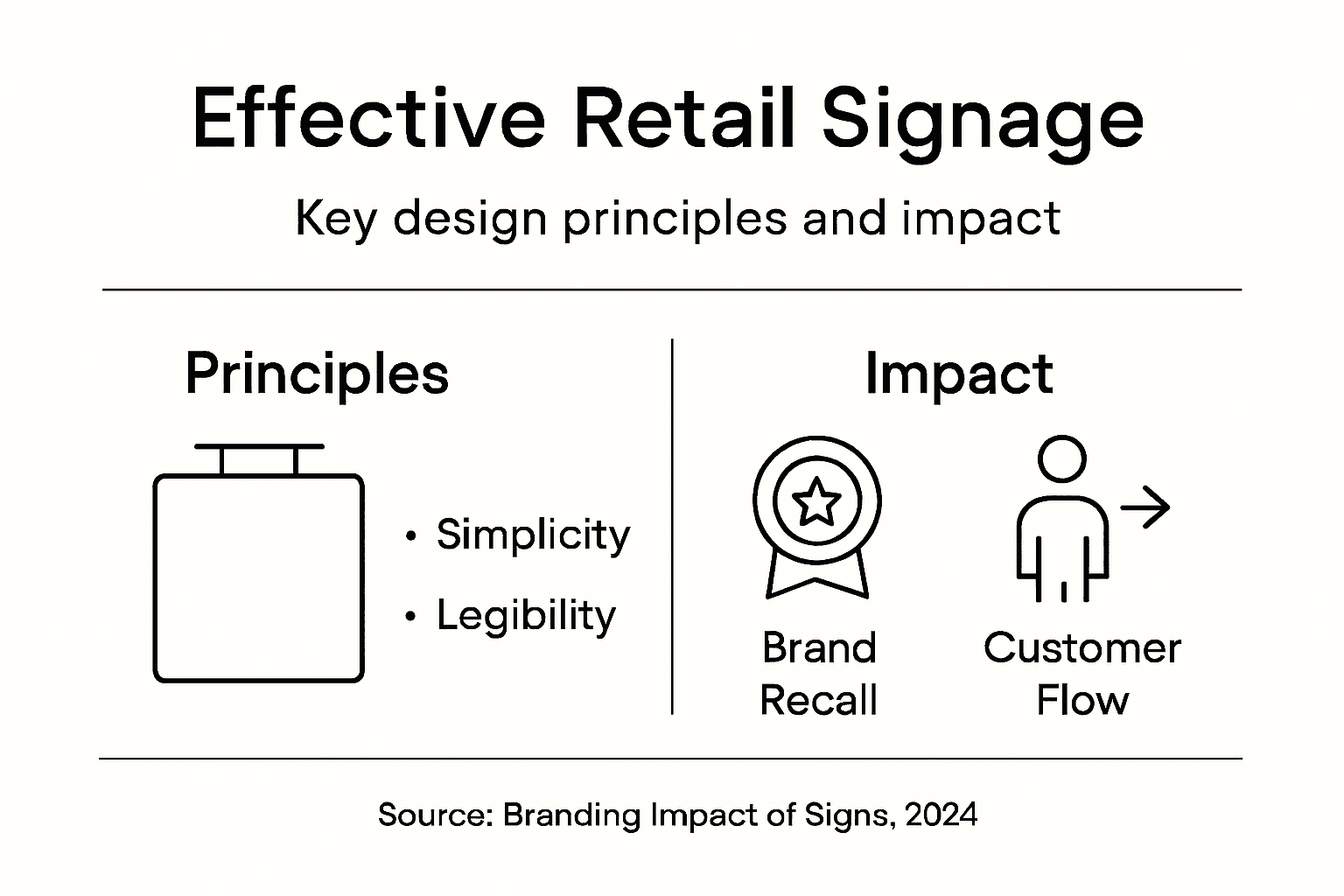
Successful sign design requires a delicate balance between form and function. Typography, color selection, spatial relationships, and graphic elements must work harmoniously to communicate brand personality while providing clear, actionable information. The most effective signs tell a story, create an emotional connection, and guide customer behavior with subtle yet powerful visual cues.
Pro tip: Conduct regular design audits of your signage to ensure they remain aligned with your evolving brand identity and communication goals.
Common Pitfalls and Compliance Issues
Navigating the complex landscape of signage compliance requires meticulous attention to detail and a comprehensive understanding of regulatory requirements. Accessibility signage guidelines highlight critical standards that businesses must meet to ensure their signs are legally compliant and universally accessible.
The most significant compliance pitfalls for retail businesses include:
- Visual Contrast Failures: Inadequate color differentiation
- Incorrect Mounting Heights: Non-compliant sign placement
- Tactile Signage Violations: Missing raised character requirements
- Font Legibility Issues: Using inappropriate typography
- Material Non-Compliance: Selecting unsuitable sign materials
Regulatory standards demand more than aesthetic considerations. Institutional signage protocols emphasize the importance of consistent design and strict adherence to building codes, highlighting potential legal and financial risks associated with non-compliance.
Businesses must recognize that compliance is not optional but a critical aspect of professional sign design. Beyond legal requirements, proper signage demonstrates a commitment to inclusivity, customer experience, and organizational professionalism. Each sign represents an opportunity to showcase attention to detail and respect for diverse customer needs.
Compare common signage design pitfalls with preferred compliant practices:
| Pitfall | Compliance Practice | Benefit of Compliance |
|---|---|---|
| Low visual contrast | Strong color differentiation | Improves clarity, accessibility |
| Incorrect height | ADA-compliant mounting | Ensures visibility for all |
| Illegible fonts | Clear, readable typography | Enhances quick information |
| Non-compliant materials | Approved materials | Withstands wear, meets standards |
Pro tip: Consult with an accessibility expert annually to review your signage and ensure ongoing compliance with the latest regulatory standards.
Elevate Your Brand with Custom Signs That Speak Volumes
Struggling to create a lasting impression through your retail signage? The article highlights the power of strategic sign design and visual branding to instantly connect with customers and build trust. At Custom Signs Today, we understand that every sign is more than just a display it is a vital part of your brand story. Whether you need promotional banners, directional signs, or identification signage, we specialize in crafting custom-made solutions that reflect your unique brand personality and comply with all quality and accessibility standards.
Discover how professional signage can transform customer experience and boost your retail success by visiting our Uncategorized page for inspiration. Start building a memorable brand presence now with durable, eye-catching signs that guide, inform, and engage. Don’t wait to make your mark: explore Custom Signs Today and request your free quote to bring your brand vision to life.
Frequently Asked Questions
What is the importance of signage in branding?
Signage plays a crucial role in branding by establishing brand recognition, creating visual credibility, and guiding customer expectations. It serves as a silent salesperson that communicates a company’s identity and values, creating an emotional connection with customers.
How do different types of retail signage impact customer behavior?
Different types of signage, such as informational, directional, promotional, regulatory, and identification signs, each serve unique purposes that influence customer behavior. For example, promotional signs can create excitement and drive sales, while directional signs help improve navigation within a retail environment.
What design principles are essential for effective signage?
Essential design principles for effective signage include simplicity for clear communication, legibility for easy readability, visual hierarchy to guide attention, color psychology to evoke emotions, and consistent branding to align with the overall brand identity.
What are common compliance issues to watch for with retail signage?
Common compliance issues with retail signage include inadequate visual contrast, incorrect mounting heights, missing tactile requirements, illegible fonts, and selecting unsuitable materials. Addressing these issues is essential for meeting regulatory standards and ensuring accessibility.
Recommended
- 7 Key Advantages of Outdoor Signs for Retail Success –
- Role of Signage in Retail: Boosting Engagement and Sales –
- Retail Sign Placement Guide for Effective Business Impact –
- Role of Signage in Marketing Success for Retailers –
- 7 Types of Digital Advertising Every E-Commerce Owner Should Know
- Visuelles Design im Marketing: Markenwirkung gezielt steigern