{
“@type”: “Article”,
“image”: {
“url”: “https://csuxjmfbwmkxiegfpljm.supabase.co/storage/v1/object/public/blog-images/organization-6408/1774657943553_Event-coordinator-setting-up-pull-up-banner.jpeg”,
“@type”: “ImageObject”,
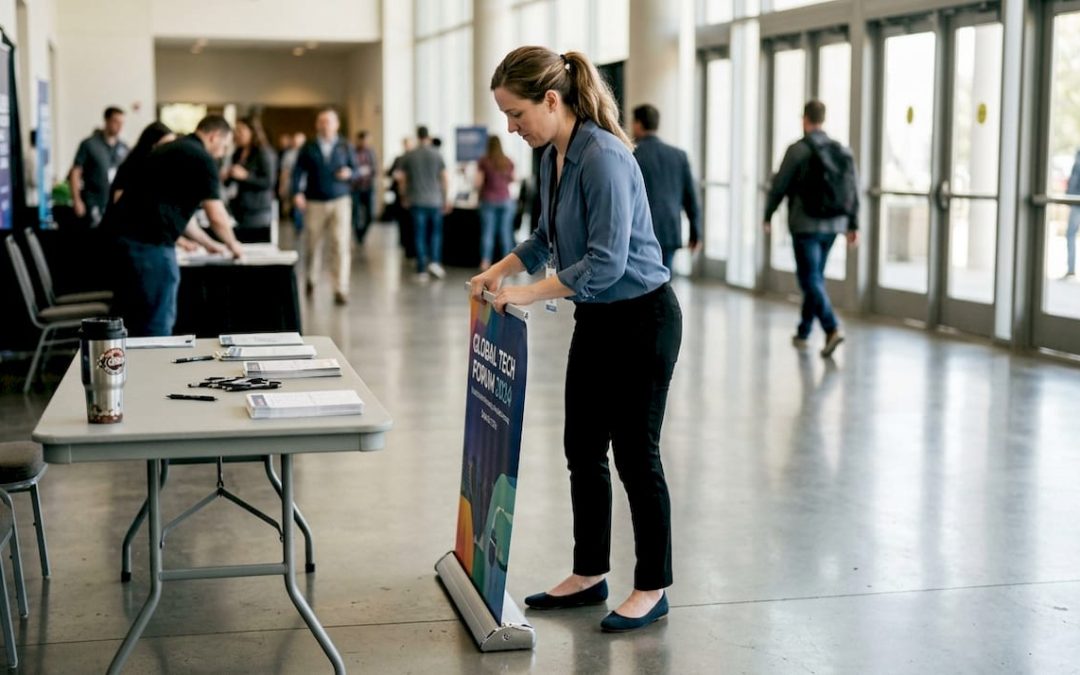
“caption”: “Event coordinator setting up pull up banner”
},
“author”: {
“url”: “https://customsignstoday.us”,
“name”: “Customsignstoday”,
“@type”: “Organization”
},
“@context”: “https://schema.org”,
“headline”: “Pull up banners: versatile marketing for events & trade shows”,
“publisher”: {
“url”: “https://customsignstoday.us”,
“name”: “Customsignstoday”,
“@type”: “Organization”
},
“inLanguage”: “en-US”,
“articleBody”: “Learn what pull up banners are, which materials work best, and how to use them strategically at trade shows, events, and retail settings for maximum impact.”,
“description”: “Learn what pull up banners are, which materials work best, and how to use them strategically at trade shows, events, and retail settings for maximum impact.”,
“datePublished”: “2026-03-28T00:33:18.947Z”
}
A single pull up banner, set up in under two minutes, can transform an empty booth corner into a professional brand statement that draws foot traffic all day long. Many business owners and event planners assume that serious event marketing requires expensive modular displays, elaborate lighting rigs, or a full production crew. That assumption costs real money. Pull up banners deliver high visibility at a fraction of that cost, and they work just as hard in a hotel lobby as they do at a packed trade show floor. This article covers what pull up banners are, how they are built, what materials work best, where to use them, and how to avoid the mistakes that waste your investment.
Table of Contents
- What is a pull up banner?
- Key features and components of pull up banners
- Benefits of using pull up banners for events and promotions
- Where and how to use pull up banners for maximum impact
- Common mistakes and best practices with pull up banners
- Get started with custom pull up banners
- Frequently asked questions
Key Takeaways
| Point | Details |
|---|---|
| Portable branding | Pull up banners give businesses a mobile, professional display option for any event. |
| Easy setup | They are lightweight and quick to assemble, saving teams valuable time. |
| Durable materials | Choose vinyl for outdoor durability or fabric for glare-free, high-end indoor displays. |
| Cost-effective impact | Pull up banners deliver big visual impact at a lower cost than larger fixtures. |
| Refresh design regularly | Update your banner graphics every 12-18 months to keep your message effective and current. |
What is a pull up banner?
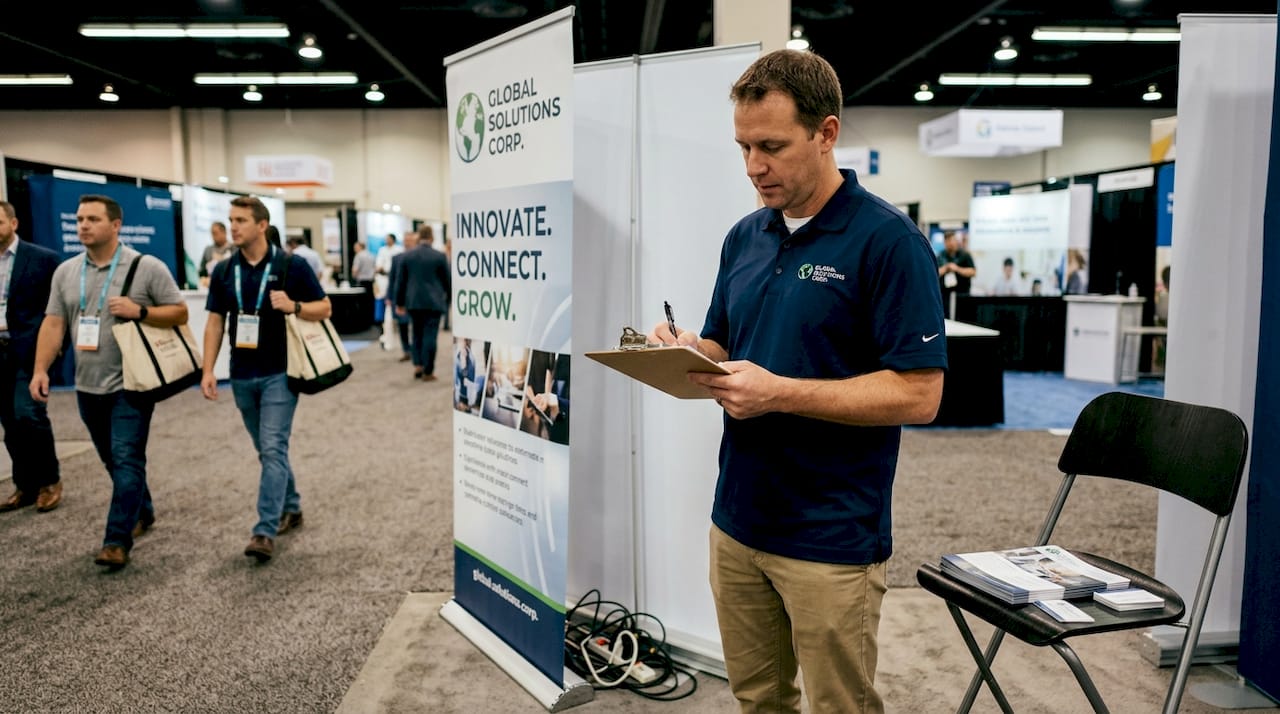
A pull up banner is a portable, retractable display unit where the printed graphic rolls up into a protective base cassette for storage and transport. When you need it, you simply pull the graphic upward, lock it into a support pole, and your display is ready. The whole process takes less than two minutes, no tools required.
You may also hear them called banner stands, roll up banners, or retractable banners. All of these terms describe the same core product. The name changes depending on the region or vendor, but the mechanism is identical. Understanding retractable banner basics helps you shop smarter and communicate clearly with your print provider.
The market for these displays is substantial and growing. The global retractable banner stand market was valued at USD 1.63 billion in 2024, driven by rising demand from event organizers, retailers, and advertisers worldwide. That figure reflects just how widely businesses rely on this format.
Common places you will see pull up banners in action include:
- Trade show booths where space is limited but visibility is critical
- Retail store entrances to promote seasonal sales or new products
- Conference registration desks for sponsor recognition and wayfinding
- Hotel lobbies and event venues for directional signage
- Pop-up events and markets where setup speed matters most
Key features and components of pull up banners
Every pull up banner shares the same basic anatomy, and knowing each part helps you evaluate quality before you buy. The base or cassette houses the rolled graphic and protects it during transport. The support pole extends from the base and holds the graphic taut. The top rail clips across the top edge of the graphic to keep it flat and wrinkle-free. Most units ship with a carry bag that holds everything together for easy transport.
Size matters for visibility. Common banner sizes are 33 x 81 inches (approximately 85 x 200 cm), which is the industry standard for most trade show and retail applications. Wider formats at 47 x 81 inches are available for brands that need more graphic real estate.
The material you choose affects how your banner looks and how long it lasts. Explore your banner material options before placing an order, because the wrong choice can hurt your results.
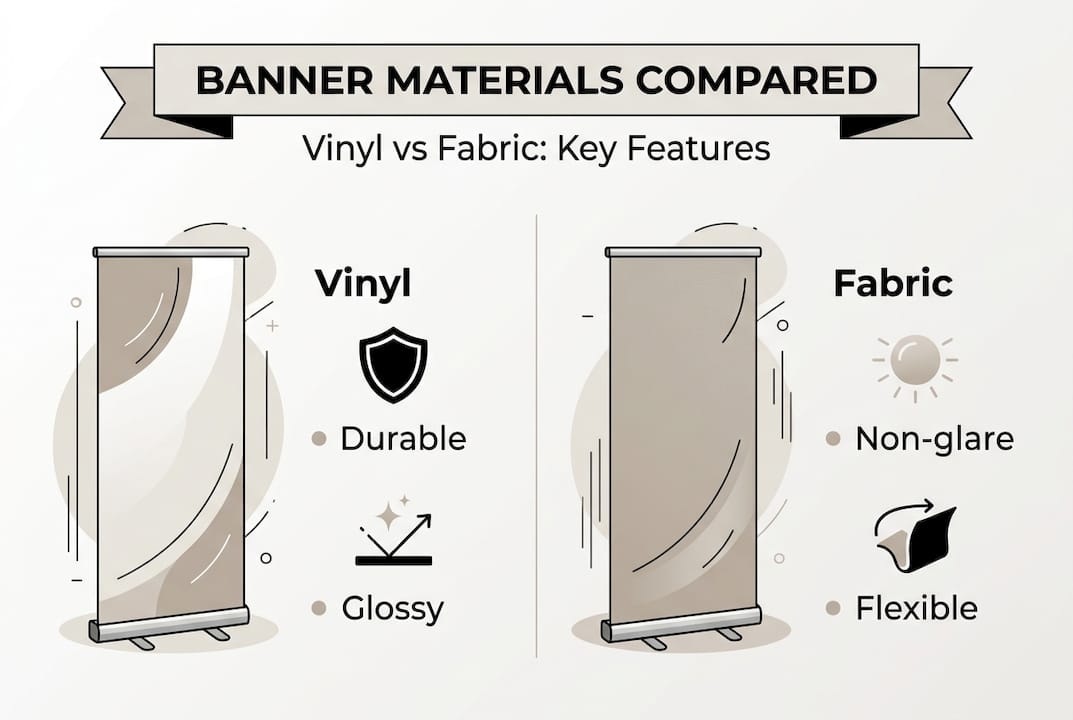
| Feature | Vinyl banners | Fabric banners |
|---|---|---|
| Durability | High, resists tearing | Moderate, prone to snags |
| Glare | Can reflect light | Non-glare finish |
| Photo quality | Good | Excellent, richer color |
| Indoor use | Suitable | Ideal |
| Outdoor use | Best choice | Not recommended |
| Weight | Heavier | Lighter |
| Cost | Lower | Higher |
Pro Tip: If your event involves professional photography or video coverage, choose fabric. The non-glare surface prevents washed-out spots in photos and looks premium on camera. For outdoor or high-traffic environments, vinyl holds up better and costs less to replace.
Browsing available pull up banner stands side by side makes it easier to match the right hardware to your material choice.
Benefits of using pull up banners for events and promotions
The financial case for pull up banners is straightforward. A quality unit with a custom graphic typically costs between $80 and $300, compared to thousands of dollars for modular booth structures or backlit display walls. The base is reusable, so you only pay for a new graphic when your messaging changes.
Here is why so many marketing teams and event planners keep pull up banners in their toolkit:
- Fast setup and takedown: No assembly crew needed. One person handles it in minutes.
- Lightweight and portable: Most units weigh under 10 pounds, fitting easily into overhead luggage compartments.
- Fully customizable: Graphics can match any brand color, campaign theme, or event message.
- Reusable hardware: The stand lasts for years. Swap the graphic, not the whole unit.
- Consistent branding: Identical banners across multiple locations create a unified, professional look.
Refreshing your banner graphic every 12 to 18 months keeps your display current and prevents your brand from looking dated at events where competitors are showing updated visuals.
Understanding vinyl banner advantages helps you decide when vinyl is the smarter investment over fabric for your specific use case. If you want to go deeper on construction quality, reviewing banner construction details explains exactly what separates a durable banner from one that fails after three events.
Pro Tip: Build a rotation schedule for your banner graphics. If you attend six or more events per year, plan a graphic refresh at the start of each new campaign cycle. This keeps your display relevant without replacing the hardware.
Where and how to use pull up banners for maximum impact
Placement and context determine whether your banner gets noticed or ignored. Pull up banners are a staple for trade shows, conferences, retail environments, and property marketing because they adapt to nearly any setting without requiring permanent installation.
Here is a step-by-step approach to placing your banner for maximum audience impact:
- Map the traffic flow before the event. Stand at the entrance and trace the natural path visitors take. Place your banner where eyes land first.
- Position at eye level. The key message on your graphic should sit between 4 and 6 feet from the floor, directly in the sightline of a standing adult.
- Use pairs for booth framing. Two banners flanking a table or display create a visual frame that signals professionalism and draws people in.
- Avoid wall placement. Banners placed flat against walls compete with other signage. Angle them slightly toward foot traffic for better visibility.
- Match the message to the location. A banner near the entrance should state who you are. A banner near your product display should state what you offer and why it matters.
For interactive and digital event contexts, studying banners for engagement shows how physical and digital banner strategies can reinforce each other.
| Marketing medium | Average cost per event | Setup time | Reusability |
|---|---|---|---|
| Pull up banner | $80 to $300 | Under 2 minutes | High (hardware reusable) |
| Modular booth display | $2,000 to $10,000 | 2 to 4 hours | Moderate |
| Printed tablecloth | $50 to $150 | Under 1 minute | High |
| Digital screen display | $500 to $3,000 | 30 to 60 minutes | High (content only) |
Learning more about using retractable banners in different contexts helps you plan smarter for each event type. For broader campaign needs, exploring custom banner solutions gives you a full picture of what is available.
Common mistakes and best practices with pull up banners
Even a well-designed banner fails when it is used incorrectly. These are the most common errors that reduce the return on your investment:
- Choosing the wrong material for the environment. Vinyl works for durability and outdoor-adjacent settings; fabric is the right call for premium indoor events where glare-free visuals matter.
- Cluttering the graphic with too much text. A banner is not a brochure. Limit your message to a headline, one supporting line, and a clear call to action.
- Weak or missing calls to action. Every banner should tell the viewer what to do next: visit a website, scan a QR code, or stop and talk to your team.
- Poor placement relative to lighting. Vinyl banners placed under direct spotlights create glare that washes out your graphic. Test placement before the event opens.
- Skipping the carry bag. Rolling your banner without its protective bag causes edge damage and shortens the life of both the graphic and the cassette.
For design guidance specific to your format, reviewing vinyl banner selection tips and designing retractable banners gives you a practical framework before you send files to print.
Pro Tip: Walk the event floor the night before or during setup hours. Check where natural light and artificial lighting hit your banner. Reposition if you see glare or shadow covering your headline. Five minutes of adjustment can make a significant difference in how many people stop to read your message.
If your banner does not retract smoothly, the most common cause is a graphic that was rolled too tightly or stored in a hot environment. Unroll it fully, let it rest flat for 30 minutes, then re-roll it loosely before retracting into the cassette.
Get started with custom pull up banners
You now have a clear picture of what pull up banners are, how they are built, and how to use them strategically. The next step is putting that knowledge to work with a display that actually represents your brand.
At Custom Signs Today, we produce custom pull up banners built for real-world use, whether you need a single unit for a local pop-up or a full set for a national trade show circuit. Our team helps you choose the right material, size, and finish for your specific environment. If your messaging changes seasonally, ask about face change signs that let you swap graphics without replacing the hardware. For real estate professionals, our banners for property marketing are designed to attract attention at listings and open houses. Ready to see pricing? Get a custom sign quote and we will walk you through your options.
Frequently asked questions
What’s the difference between a pull up and retractable banner?
Pull up and retractable banners are the same product. Both use a spring-loaded cassette mechanism that stores the graphic and allows it to retract for transport.
How long do pull up banners typically last?
The hardware stand can last many years with proper care. Banner graphics last 12 to 18 months with regular event use before colors fade or the material shows wear.
Are pull up banners suitable for outdoor use?
Vinyl pull up banners handle short-term outdoor exposure well. Fabric is better for indoor settings because its non-glare finish performs better under controlled lighting and looks sharper in photos.
What size pull up banner is most common?
The most common size is 33 x 81 inches (85 x 200 cm). This format fits standard trade show booth spaces and is tall enough to be visible across a crowded room.