
TL;DR:
- Successful real estate branding combines digital presence, authentic storytelling, and visual identity to drive measurable growth. Agents who focus first on their digital entity and consistency build stronger, more recognizable brands that generate leads and referrals over time. Prioritizing foundational elements like citations, professional photography, and signage leads to more sustainable success than superficial branding investments.
Successful real estate branding is the deliberate integration of digital presence, authentic storytelling, and consistent visual identity that produces measurable business growth. Most agents treat branding as a logo and a color palette. The agents who win treat it as an operating system. Consistent branding produces 3.5x more visibility and up to 23% revenue growth, according to RealScout data. That gap between agents who brand well and those who do not is not closing. It is widening. The sections below give you a practical framework for building a real estate brand that generates leads, earns referrals, and compounds in value over time.
1. What is successful real estate branding built on?
Successful real estate branding starts with your digital entity, not your logo. A digital entity is the complete picture of your business that search engines and directories assemble from your Google Business Profile, schema markup, NAP (name, address, phone) consistency, and third-party citations. Without this foundation, even the most polished visual brand is invisible to buyers and sellers searching online.

The “Google Yourself” test is the fastest diagnostic tool available. Search your name and brokerage name. If your Google Business Profile is incomplete, your address is listed differently across Zillow, Realtor.com, and Yelp, or your phone number is inconsistent, you have a digital entity problem. Fix that before spending on design.
A $200 Canva logo with strong local SEO generates more business than a $10,000 custom logo with no digital presence. That is not a knock on design. It is a reminder that findability precedes memorability.
- Claim and complete your Google Business Profile with photos, hours, and service areas
- Audit your NAP data across all major directories and correct inconsistencies
- Add real estate schema markup to your website so Google can categorize your business accurately
- Build citations on platforms like Yelp, Houzz, and local chamber directories
Pro Tip: Run your business name through a free citation checker like BrightLocal before investing in any visual rebrand. Fixing citation errors costs nothing and pays immediately in search rankings.
2. How authentic storytelling differentiates real estate professionals
Personal branding in real estate is not about being louder. It is about being clearer. Agents who define a specific story, a specific client, and a specific neighborhood own that market in the minds of buyers and sellers. Agents who try to serve everyone are remembered by no one.
Sue “Pinky” Benson built one of the most recognized personal brands in real estate by committing to a single color and a consistent personality across every touchpoint. Long-term consistency is the cornerstone of brand recognition, not a single post or logo change. Mauricio Umansky of The Agency demonstrates the other side of this: successful brands continually evolve their storytelling to stay relevant without abandoning their core identity.
“Your brand is not what you say it is. It is what your clients say it is when you are not in the room.”
The most effective storytelling in real estate centers on client journeys, not sales stats. A post that says “Sold in 7 days, $40,000 over asking” is forgettable. A post that tells the story of a first-time buyer who almost gave up and then found their home is shareable.
- Write one client story per month and publish it across your website, email list, and social channels
- Use hyper-local language: street names, school districts, coffee shops, and neighborhood quirks
- Hyper-local “Just Sold” marketing targeted within a few blocks builds micro-fame more effectively than broad exposure
- Keep your tone consistent whether you are writing a caption, a bio, or a market report
Pro Tip: Write your client stories in second person. “You found the house you thought didn’t exist” makes prospects see themselves in the story far faster than “My client found their dream home.”
3. Why high-quality visual assets drive commissions and client trust
Visual branding is not vanity. It is pricing power. Agents using professional photography earn twice the commission compared to those who do not. That single investment in quality images signals to sellers that you take their listing seriously and to buyers that the property is worth their attention.
Your website is the second most important visual asset. A custom, non-templated site built around your brand story generates results that generic brokerage pages cannot match. Custom-branded websites generate 2.6x more website traffic and have produced 1,093 leads in a nine-month window for individual agents. That is not a marginal improvement. It is a different business.
Physical signage completes the visual picture. Custom signage and branding assets build local visibility and reinforce market presence in ways that digital alone cannot replicate. A yard sign with your photo, consistent colors, and a clean phone number is a 24/7 billboard in the neighborhood you want to own.
| Visual asset | Impact | Cost-effectiveness |
|---|---|---|
| Professional photography | 2x commission potential | High |
| Custom branded website | 2.6x traffic increase | High |
| Branded yard and site signs | Continuous local exposure | Very high |
| Vehicle lettering or wraps | Mobile neighborhood visibility | High |
| Consistent social media graphics | Brand recall and engagement | Medium |
4. How consistency anchors real estate brand trust over time
Brand consistency is not about being boring. It is about being recognizable. Every time a prospect sees your name, your colors, your tone, and your message in a familiar format, their trust in you increases without any additional sales effort on your part.
Branding drift is the silent killer of real estate brands. It happens when agents chase every new platform, adopt every trend, and shift their messaging based on what performed well last quarter. The result is a brand that feels inconsistent and forgettable. HousingWire research confirms that clear brand conviction serves as a decision-making anchor and prevents dilution of resources.
Firms like Carpenter Kessel demonstrate what disciplined brand application looks like in practice. They use standard operating procedures (SOPs) for every client touchpoint, from the first inquiry email to the closing gift. Every interaction reflects the same quality standard and the same brand voice. That consistency is what generates referrals without asking for them.
- Use a brand style guide that specifies your exact colors, fonts, and tone of voice
- Apply the same profile photo across every platform and update all of them simultaneously when you change it
- Respond to reviews, messages, and comments in your brand voice, not a generic corporate tone
- Audit your brand touchpoints quarterly: website, social profiles, email signature, and physical signage
Pro Tip: Create a one-page “brand filter” document. Before saying yes to any new marketing tactic, ask: does this align with my brand values and my target client? If the answer is no, decline it.
5. Which real estate branding strategies deliver the most measurable growth?
Not all branding investments return equally. The table below ranks the core strategies by their impact on visibility, lead generation, and revenue, along with the context where each performs best.
| Strategy | Primary benefit | Best context | Limitation |
|---|---|---|---|
| Digital entity branding | Search visibility and lead capture | All agents, all markets | Requires ongoing maintenance |
| Professional photography | Commission and pricing power | Listing agents, luxury segment | Per-listing cost |
| Custom branded website | Traffic and lead volume | Established agents scaling up | Higher upfront investment |
| Authentic storytelling | Referral generation and trust | Agents with 2+ years of client history | Slow to compound |
| Physical signage | Local recognition and walk-in leads | Geographic farm areas | Limited to physical proximity |
| Vehicle lettering | Mobile brand exposure | Agents who drive frequently in their farm | Requires consistent vehicle use |
Branding is a practical operating tool that enables firms to maintain focus and client loyalty in volatile markets. Agents who treat it as a one-time project lose ground to agents who treat it as a weekly discipline. The agents who combine digital entity work with consistent physical signage and authentic storytelling create a compounding effect. Each element reinforces the others.
For agents early in their career, start with digital entity and one physical asset, such as impactful real estate signs, before expanding into custom websites and photography. For established agents, the priority shifts to storytelling and consistency across all channels.
Key takeaways
Successful real estate branding requires a digital entity foundation, consistent visual assets, and authentic storytelling working together to build visibility, trust, and measurable revenue growth.
| Point | Details |
|---|---|
| Digital entity comes first | Fix your Google Business Profile and NAP consistency before investing in design. |
| Photography doubles commissions | Agents using professional photography earn 2x the commission of those who do not. |
| Custom websites multiply traffic | Branded sites generate 2.6x more traffic and hundreds of leads within months. |
| Consistency builds referrals | Disciplined brand application across every touchpoint generates referrals without asking. |
| Signage anchors local presence | Physical branded signage reinforces recognition in the neighborhoods you want to own. |
Why most agents brand in the wrong order
The pattern I see most often is agents who spend $8,000 on a logo, a color palette, and a brand photoshoot before they have ever claimed their Google Business Profile. They look great on Instagram and rank nowhere on Google. That is a branding strategy built on sand.
The agents I respect most in this industry do the unglamorous work first. They audit their citations. They write a clear positioning statement. They pick one neighborhood and commit to it. Then they layer in the visual assets once the foundation is solid. The visual work lands harder when there is something real underneath it.
The other mistake I see is treating branding as a launch event rather than a daily practice. You do not build a brand in a quarter. Sue “Pinky” Benson did not become iconic in a single campaign. She showed up in pink, consistently, for years. That kind of commitment is what separates agents who are recognized from agents who are merely visible.
My honest advice: spend your first branding dollar on your digital entity. Spend your second on professional photography. Spend your third on signage that puts your face and name in front of the neighborhood you want to own. Everything else is secondary until those three are working.
— Yossi
Signage solutions that reinforce your real estate brand
Physical signage is one of the highest-return branding investments available to real estate professionals. A well-designed sign in the right location works around the clock without any additional effort from you.
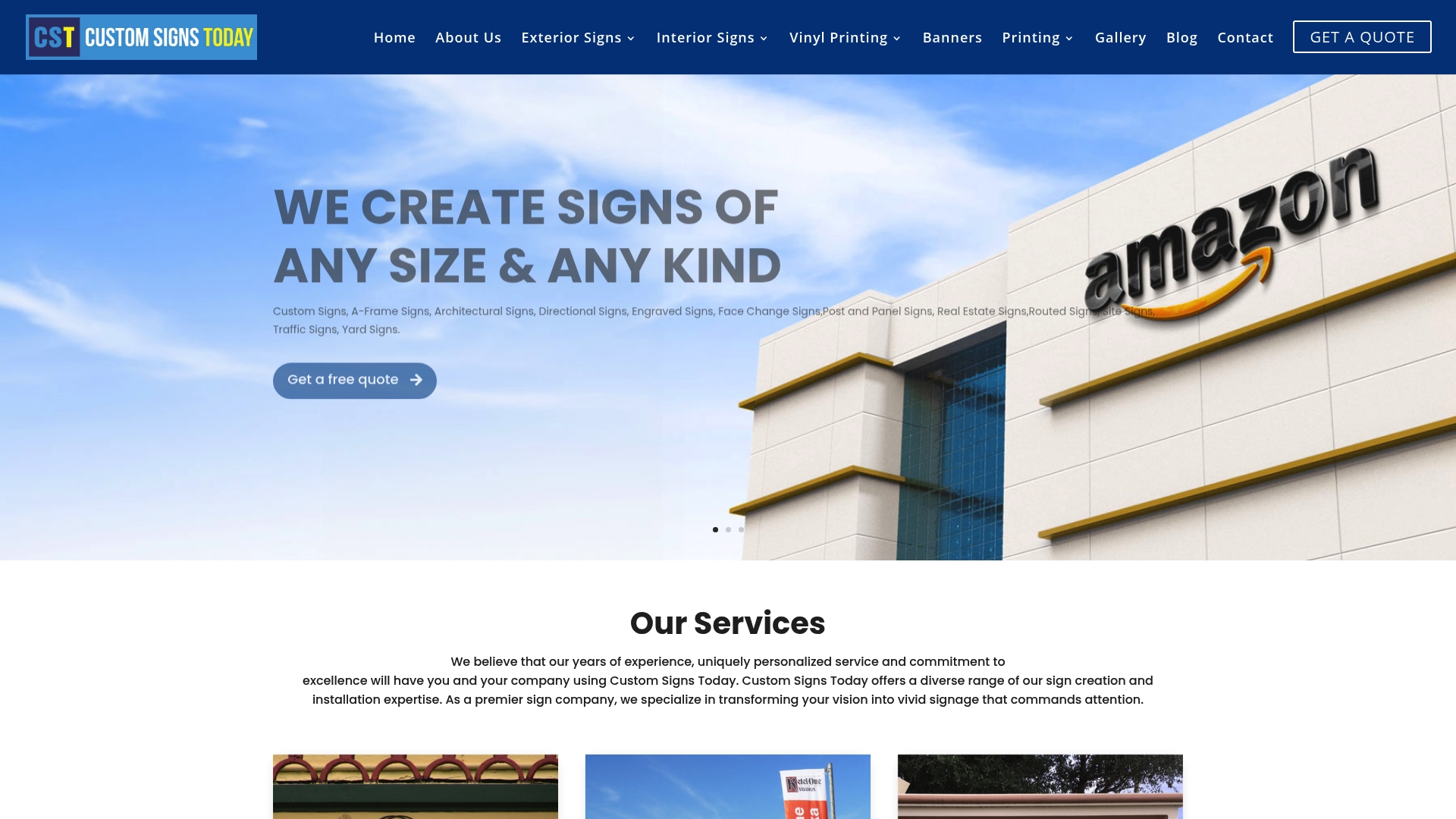
Customsignstoday produces custom signage built specifically for real estate agents and brokerages across West Palm Beach and Florida. From face change signs that let you update listings while keeping your brand consistent, to site signs that anchor your presence on every property, to vehicle lettering that turns your car into a moving billboard, every product is built for durability and brand impact. Request a free quote and get signage that works as hard as you do.
FAQ
What is real estate branding?
Real estate branding is the combination of your digital presence, visual identity, and client experience that makes you recognizable and trusted in your market. It goes well beyond a logo to include your Google Business Profile, photography, signage, and the stories you tell about your clients.
Why does digital entity branding matter more than visual design?
A strong digital entity, including a complete Google Business Profile and consistent NAP data, determines whether buyers and sellers can find you at all. A $200 logo with strong local SEO outperforms a $10,000 custom logo with no digital presence.
How does professional photography affect real estate income?
Agents who use professional photography earn twice the commission compared to those who do not. Quality visuals signal professionalism to sellers and increase buyer engagement with listings.
How long does it take to build a recognizable real estate brand?
Building a memorable brand requires years of consistent effort, not a single campaign or logo change. Iconic personal brands in real estate, like Sue “Pinky” Benson, were built through sustained, disciplined repetition across every touchpoint.
What role does signage play in a real estate brand strategy?
Custom signage builds local visibility and reinforces market presence in ways that digital channels cannot replicate. Yard signs, site signs, and vehicle lettering put your brand in front of the exact neighborhoods where you want to generate listings and referrals.