
Choosing the right signage to strengthen your brand visibility can feel overwhelming for small and medium businesses. With countless options from digital displays to traditional vinyl signs, how do you select solutions that genuinely engage customers and boost sales? This guide walks you through essential evaluation criteria, compares major signage types, and helps you avoid costly mistakes. You’ll discover practical strategies to make informed decisions that align with your branding goals and budget, ensuring your signage investment delivers measurable returns.
Table of Contents
- How To Evaluate Signage Design For Branding Impact
- Top Signage Types To Boost Your Brand In 2026
- Comparing Digital And Static Signage: Which Drives Stronger Branding?
- Common Signage Mistakes To Avoid For Smooth Branding Success
- Explore Custom Signage Solutions To Elevate Your Brand
Key takeaways
| Point | Details |
|---|---|
| Design simplicity wins | Effective signs deliver one clear message readable within five seconds using high contrast and minimal fonts. |
| Digital outperforms static | Digital signage drives 400% more views and 83% recall compared to static signs at 50% recall. |
| Hybrid approaches balance budgets | Combining digital and static signs optimizes branding flexibility while controlling costs for SMBs. |
| Common mistakes cost visibility | Cluttered designs, poor materials, and bad placement reduce effectiveness and waste investment. |
| Strategic upgrades boost sales | Well-planned signage improvements can increase sales from 7% to over 30% depending on implementation. |
How to evaluate signage design for branding impact
Before investing in any signage, you need to understand the foundational design principles that separate effective signs from wasted money. Your signage must communicate instantly because potential customers typically decide whether to engage with your business within seconds of spotting your sign.
Start with simplicity as your guiding principle. Signage design principles emphasize one clear message visible within five seconds, using high contrast colors for instant readability, limiting fonts to two maximum (ideally sans-serif for legibility), and applying visual hierarchy so key information stands out. These fundamentals ensure your message cuts through visual noise in busy commercial environments.
Viewability determines whether your beautiful design actually works in the real world. Calculate letter height based on typical viewing distances, using the standard ratio of one inch per 25 feet. A sign viewed from 100 feet away needs four-inch letters minimum. Consider ambient lighting conditions and placement context to avoid glare, shadows, or physical obstructions that render your sign invisible at critical moments.
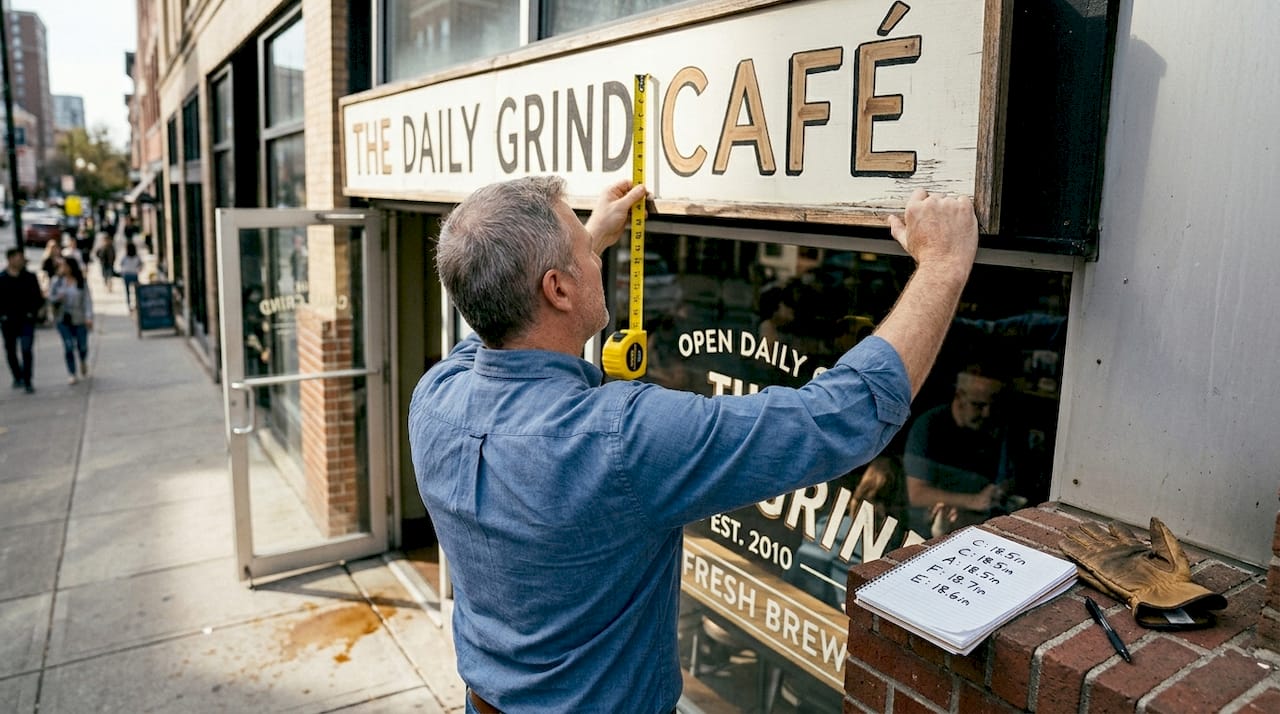
Pro Tip: Walk your property at different times of day to identify optimal sign placement. Morning glare, afternoon shadows, and evening lighting dramatically affect visibility, so test conditions before committing to installation locations.
Implementing effective sign design principles requires balancing aesthetics with function. Your brand colors might look stunning in your logo, but if they create low contrast on a sign, readability suffers. Similarly, decorative fonts that match your brand personality can become illegible at distance. Make strategic compromises that preserve brand identity while prioritizing communication clarity.
Follow these signage design tips for business success to create signs that actually drive customer action:
- Use color psychology strategically, with red creating urgency, blue building trust, and yellow grabbing attention
- Incorporate white space generously to prevent visual overwhelm and improve message absorption
- Align design elements consistently to create professional polish that reflects positively on your brand
- Test mockups at actual size and distance before production to catch readability issues early
Top signage types to boost your brand in 2026
Understanding your signage options helps you match solutions to specific branding challenges and budget realities. Each signage type offers distinct advantages depending on your message update frequency, location requirements, and customer engagement goals.
Static signs represent the traditional approach with proven longevity. These permanent or semi-permanent signs work best for core branding messages that remain consistent over years. Vinyl banners, aluminum panels, and acrylic displays deliver cost-effective upfront investment with minimal ongoing expenses. You get straightforward, reliable branding that withstands weather and requires little maintenance. The tradeoff comes when you need to update messaging, requiring complete sign replacement rather than simple content changes.
Digital signage transforms customer engagement through dynamic content capabilities. Business signage ROI data shows digital signs boost engagement 35-40% and sales 25-32%, while general signage updates yield 7-10% sales increases. These electronic displays command attention through movement, color changes, and rotating messages that keep content fresh. Initial costs run higher than static alternatives, but the ability to update content instantly without production delays or installation labor creates long-term value. Digital signs excel in high-traffic locations where capturing attention among competing stimuli matters most.
Face change signs offer a hybrid solution combining static durability with update flexibility. These systems use interchangeable panels or inserts that let you swap messages without replacing the entire sign structure. Small businesses appreciate this middle ground, getting professional presentation quality with the ability to refresh seasonal promotions, pricing updates, or special announcements. Installation costs fall between static and digital options, making face change systems accessible for budget-conscious brands wanting more versatility than permanent signs provide.
Vinyl signs deliver outdoor durability with extensive customization options. Weather-resistant materials withstand sun, rain, and temperature extremes while maintaining color vibrancy for years. You can apply vinyl directly to walls, windows, vehicles, or standalone structures, creating cohesive branding across multiple touchpoints. The versatility extends to temporary applications like event signage or permanent installations for storefront identification.
Pro Tip: Choose your signage type based on message update frequency and available budget. If your offers change monthly, digital or face change systems prevent constant replacement costs. For evergreen branding like company names and logos, static signs provide unbeatable value.
Explore custom signs that combine these technologies strategically. Many successful businesses use static signs for permanent branding elements while deploying digital or face change systems for promotional messaging that needs regular updates.
Comparing digital and static signage: which drives stronger branding?
The digital versus static debate centers on measurable performance differences that directly impact your bottom line. Understanding these distinctions helps you allocate signage budgets for maximum return.
Engagement metrics reveal dramatic differences in customer attention capture. Digital signage ROI studies document 400% more views for digital displays, with 83% message recall compared to static signs at 50% recall. Movement naturally draws human eyes, and digital signs exploit this biological response. Customers not only notice digital displays more frequently but also remember the messages longer, creating stronger brand impressions that influence purchase decisions.
Sales impact translates engagement advantages into revenue growth. Digital signage can boost sales by up to 32% through strategic placement and compelling content, while static sign updates typically generate 7-10% increases. The gap widens in retail environments where impulse purchases drive revenue. Digital displays promoting limited-time offers or highlighting specific products create urgency that static signs cannot match. However, both approaches significantly outperform having no signage at all, so the choice depends on your specific goals and constraints.
| Factor | Digital Signage | Static Signage |
|---|---|---|
| Upfront Cost | Higher initial investment | Lower upfront expense |
| Engagement Rate | 400% more views, 83% recall | Standard views, 50% recall |
| Sales Impact | 25-32% increase potential | 7-10% increase typical |
| Update Flexibility | Instant content changes | Physical replacement required |
| Payback Period | Under 18 months typically | Varies by application |
| Best Use Case | High-traffic, dynamic messaging | Permanent branding, budget-conscious |
Cost analysis extends beyond initial purchase prices to include total ownership expenses. Digital signs demand higher upfront investment for hardware, installation, and content management systems. Static signs cost less initially but require complete replacement for message updates, accumulating expenses over time if you change promotions frequently. Digital systems typically achieve payback in under 18 months for businesses updating content monthly or more often, after which ongoing costs remain minimal.
Flexibility advantages make digital signage particularly valuable for businesses with seasonal promotions, rotating inventory, or multiple locations requiring coordinated messaging. You can update content remotely across all displays simultaneously, ensuring consistent branding without travel or installation labor. Static signs limit you to physical updates requiring production time, installation scheduling, and potential business disruption.
Pro Tip: Hybrid strategies deliver optimal results for most SMBs. Use static signs for permanent elements like business names and core branding, then deploy digital or face change systems for promotional content requiring regular updates. This approach balances budget constraints with engagement benefits.
Implement effective signage campaign planning to coordinate static and digital elements strategically. Consider your business signage installation timeline to ensure all components launch together for maximum impact.
Common signage mistakes to avoid for smooth branding success
Even well-intentioned signage investments fail when businesses overlook fundamental implementation errors. Recognizing these pitfalls before spending money saves frustration and protects your branding reputation.
Information overload represents the most frequent design mistake. Business owners try cramming every service, product, and contact detail onto one sign, creating visual chaos that communicates nothing effectively. Sign design mistakes include overloading information, poor contrast, ignoring permits, and bad placement, all of which reduce effectiveness. Your sign needs one primary message supported by minimal secondary information. Anything beyond that dilutes impact and confuses viewers who process your sign in seconds while driving or walking past.
Readability failures stem from poor color contrast and inappropriate font choices. Light text on light backgrounds or decorative scripts that look elegant up close become invisible at typical viewing distances. Always test contrast ratios and font legibility at actual installation distances before production. What works on your computer screen rarely translates directly to outdoor signage viewed from 50 feet away.
Compliance oversights create legal headaches and unexpected expenses. Local jurisdictions enforce specific signage codes covering size limits, placement restrictions, lighting regulations, and permit requirements. Installing signs without proper permits can result in fines, removal orders, and damaged community relationships. Research regulations early in your planning process and factor permit costs and timelines into your budget and schedule.
Ignoring signage fundamentals results in lost brand visibility and wasted investment.
Material mismatches doom signs to premature failure. Outdoor signs need weatherproof materials resistant to UV fading, moisture damage, and temperature extremes. Indoor signs can use lighter materials but still require durability appropriate to their environment. Cheap materials might save money initially but replacement costs quickly exceed any savings when signs fade, warp, or deteriorate within months.
Placement problems sabotage otherwise excellent signs. Obstructions like trees, poles, or building features block sightlines. Glare from sun or artificial lighting makes signs unreadable at critical times. Inadequate mounting height or setback distances prevent proper viewing angles. Walk your property at different times and approach from multiple directions to identify optimal locations before installation.
Pro Tip: Conduct a comprehensive site audit before finalizing sign placement. Photograph potential locations throughout the day to assess lighting conditions, identify obstructions, and confirm sightlines from key approach angles.
Rebranding coordination failures occur when businesses update logos or messaging without planning signage changes simultaneously. Outdated signs displaying old branding undermine rebranding investments and confuse customers. When planning brand updates, create a signage replacement timeline and budget as part of your overall strategy. Explore signage design tips for small business to coordinate updates efficiently. Learn how to design property signage that supports cohesive branding across all customer touchpoints.
Explore custom signage solutions to elevate your brand
After understanding signage principles, options, and pitfalls, partnering with experienced professionals simplifies implementation and maximizes your return on investment. Custom Signs Today specializes in tailored signage solutions that align with your specific branding needs and budget realities.
Our comprehensive custom signs services cover everything from initial design consultation through final installation. We help you select optimal signage types based on your update frequency, traffic patterns, and budget constraints. Whether you need digital displays for dynamic messaging, static signs for permanent branding, or face change signs options that balance flexibility with affordability, we guide you through decisions that deliver measurable results.
Professional guidance ensures your signage complies with local regulations while implementing design principles that maximize visibility and engagement. We handle permit applications, site surveys, and installation coordination so you can focus on running your business. Our site signs solutions create cohesive branding that strengthens customer recognition and drives sales growth. Expert services eliminate guesswork and prevent costly mistakes that plague DIY signage projects.
Frequently asked questions
How can I measure the effectiveness of my business signage?
Track sales data before and after signage installation to quantify revenue impact directly attributable to new signs. Compare foot traffic counts, conversion rates, and average transaction values across the implementation period. Digital signs offer built-in analytics tools that measure viewer engagement, dwell time, and content interaction rates, providing granular performance data. Maintain consistent branding across all touchpoints and actively monitor customer feedback through surveys or reviews mentioning your signage. Use signage campaign planning frameworks to establish baseline metrics before installation and track improvements systematically.
What is the best type of signage for small businesses on a budget?
Static vinyl signs deliver excellent value for budget-conscious businesses needing durable outdoor branding without ongoing costs. Face change signs provide a cost-effective middle ground when you need occasional message updates without digital display expenses. These hybrid systems let you refresh promotional content seasonally while maintaining professional presentation quality. Prioritize high-traffic locations for your initial signage investment to maximize visibility and customer engagement per dollar spent.
How often should I update my business signage to maintain brand relevancy?
Update static signs every three to five years or whenever major brand changes occur, such as logo redesigns, company name modifications, or significant service expansions. Digital signs support frequent content updates, from daily specials to seasonal promotions, keeping your messaging fresh and relevant. Replace weathered or faded signs immediately regardless of age, as deteriorated signage damages brand perception more than no signage at all. Monitor competitor signage in your area to ensure your displays maintain comparable quality and impact.