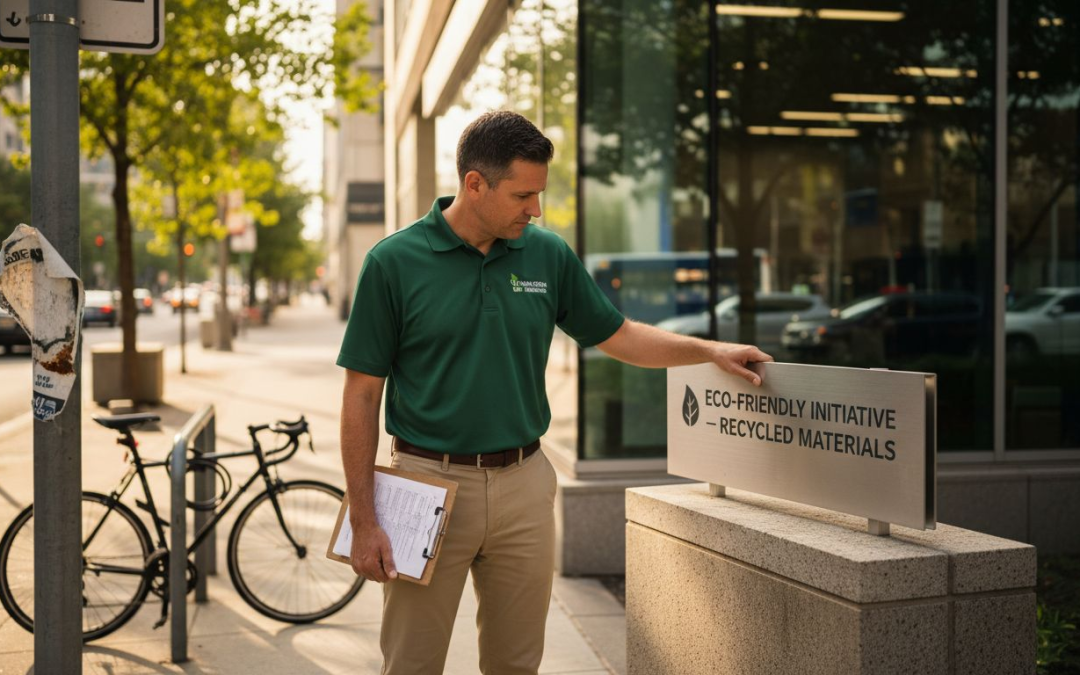
Finding signage that aligns with both eco-friendly values and practical business needs can feel challenging for many American marketing managers who care about their community and the environment. True sustainability in signage goes beyond simply choosing green materials. It means taking a holistic approach that supports social equity, environmental health, and long-term economic benefit. This overview reveals what genuinely defines sustainable signage and offers insights to help businesses create a lasting positive impact while enhancing their brand image.
Table of Contents
- What Defines Sustainability in Signage
- Types of Eco-Friendly Signage Materials
- Key Features of Sustainable Sign Fabrication
- Compliance and Greenwashing Risks in 2026
- Cost, ROI, and Common Mistakes to Avoid
Key Takeaways
| Point | Details |
|---|---|
| Sustainability Dimensions | Sustainable signage integrates environmental health, economic viability, and social responsibility into its design and production processes. |
| Material Choices | Opt for eco-friendly materials like recycled aluminum and bamboo to enhance sustainability without compromising quality. |
| Financial Implications | While initial costs may be higher, sustainable signage can yield long-term savings and improve brand reputation, making it a strategic investment. |
| Greenwashing Risks | Companies must ensure transparency and rigor in sustainability claims to mitigate legal risks and maintain brand credibility. |
What Defines Sustainability in Signage
Sustainability in signage transcends traditional environmental considerations, encompassing a holistic approach that balances ecological responsibility, economic practicality, and social impact. Sustainable practices in signage require businesses to think beyond mere material selection and consider the entire lifecycle of their visual communication solutions.
At its core, sustainable signage integrates three critical dimensions:
- Environmental Health: Using recycled, renewable, or low-impact materials
- Economic Viability: Creating signs that deliver long-term value and durability
- Social Responsibility: Designing signs that positively contribute to community aesthetics and engagement
The environmental aspect involves selecting materials with minimal carbon footprint, such as biodegradable substrates, low-VOC inks, and manufacturing processes that reduce waste. This means considering not just the sign’s immediate production, but its entire journey from raw material extraction to potential future recycling.
Economic sustainability means investing in signage solutions that provide extended lifecycle performance. Sustainable resource management demands signs that remain functional and visually appealing for longer periods, reducing frequent replacement costs and associated environmental impacts.
Social sustainability extends beyond mere visual communication – it involves creating signs that enhance community spaces, reflect local cultural values, and contribute positively to the urban or commercial landscape. This approach transforms signage from a purely functional element into a meaningful community asset.
Pro tip: Evaluate potential signage solutions not just by their immediate cost, but by their comprehensive sustainability score across environmental, economic, and social dimensions.
Here’s a summary of how sustainable signage strategies impact business outcomes:
| Strategy Area | Business Benefit | Long-Term Impact |
|---|---|---|
| Eco-friendly materials | Reduces environmental liabilities | Enhances brand trust |
| Lifecycle design | Cuts replacement costs | Improves durability |
| Community focused design | Boosts local engagement | Strengthens reputation |
Types of Eco-Friendly Signage Materials
Navigating the landscape of sustainable signage requires understanding the diverse range of environmentally responsible materials that can transform visual communication. Recyclable signage materials have evolved significantly, offering businesses innovative options that reduce environmental impact without compromising design quality.
Key eco-friendly signage materials include:
- Recycled Aluminum: Lightweight, durable, and infinitely recyclable
- Bamboo Substrates: Rapidly renewable and biodegradable
- Reclaimed Wood: Provides unique aesthetic with minimal environmental footprint
- Bioplastic Composites: Made from plant-based renewable resources
- Recycled Plastic Panels: Reduces waste and provides excellent durability
The environmental performance of these materials goes beyond simple material selection. Materials with low environmental impact require comprehensive evaluation of their entire lifecycle, from production through potential future recycling.
Manufacturers are increasingly developing advanced materials that combine sustainability with performance. Recycled aluminum, for instance, requires significantly less energy to produce compared to virgin metal, while maintaining structural integrity and visual appeal. Bamboo substrates offer a remarkable alternative to traditional wood, growing exponentially faster and sequestering more carbon during production.

Beyond material selection, sustainable signage also involves considering manufacturing processes, transportation emissions, and end-of-life disposal strategies. This holistic approach ensures that eco-friendly materials deliver genuine environmental benefits throughout their entire lifecycle.
Pro tip: Request environmental impact documentation from your signage provider to understand the true sustainability profile of your chosen materials.
Compare common eco-friendly signage materials at a glance:
| Material | Main Advantage | Typical Drawback |
|---|---|---|
| Recycled Aluminum | High durability | May cost more upfront |
| Bamboo Substrate | Rapid regrowth | Limited outdoor lifespan |
| Bioplastic Composite | Plant-based sourcing | Lower structural strength |
| Reclaimed Wood | Unique appearance | Variability in supply |
Key Features of Sustainable Sign Fabrication
Sustainable sign fabrication represents a comprehensive approach that goes far beyond traditional manufacturing processes. Sustainable materials and infrastructure demand innovative strategies that consider environmental impact at every stage of production.
Key features of sustainable sign fabrication include:
- Lifecycle Assessment: Evaluating environmental impact from raw material extraction to final disposal
- Low Carbon Manufacturing: Minimizing energy consumption and greenhouse gas emissions
- Waste Reduction: Implementing circular design principles
- Renewable Resource Utilization: Prioritizing materials with minimal environmental footprint
- Energy-Efficient Production: Using clean energy and optimized manufacturing techniques
The environmental design process requires a holistic approach that integrates multiple sustainability considerations. Manufacturers must now consider not just the immediate production costs, but the long-term ecological consequences of their fabrication choices.
Sustainability leadership strategies emphasize the importance of systemic thinking in sign fabrication. This means looking beyond individual material choices to understand how each decision impacts the broader environmental ecosystem. Advanced fabrication techniques now incorporate bio-inspired design principles, seeking to mimic nature’s efficiency and regenerative capabilities.
Technology plays a crucial role in sustainable sign fabrication. Cutting-edge techniques like 3D printing with recycled materials, laser cutting with minimal waste, and digital design optimization are transforming traditional manufacturing processes. These innovations allow businesses to create visually stunning signs while dramatically reducing their environmental footprint.
Pro tip: Request a comprehensive sustainability report from your sign fabricator to understand the true environmental impact of your signage production.
Compliance and Greenwashing Risks in 2026
The landscape of sustainability claims is rapidly evolving, with unprecedented scrutiny emerging around corporate environmental communications. Emerging liability landscapes reveal complex legal challenges for businesses making sustainability assertions.
Key greenwashing risks include:
- Regulatory Investigations: Increased governmental oversight of sustainability claims
- Litigation Exposure: Higher potential for class action lawsuits
- Shareholder Activism: Growing investor demands for transparent reporting
- Reputation Damage: Potential brand credibility loss from misleading statements
- Financial Penalties: Substantial fines for unsubstantiated environmental claims
The compliance landscape demands rigorous validation of every sustainability statement. Organizations must develop comprehensive documentation processes that provide verifiable evidence for each environmental claim, moving beyond superficial marketing language.
Navigating greenwashing risks requires a multifaceted approach integrating legal, communications, and sustainability expertise. Companies must implement robust governance frameworks that scrutinize environmental messaging, ensuring alignment between stated commitments and actual practices. This involves creating cross-functional teams dedicated to maintaining accuracy and transparency in sustainability communications.
Technology and third-party verification will play increasingly critical roles in mitigating greenwashing risks. Advanced data tracking, independent audits, and transparent reporting mechanisms will become standard practices for businesses seeking to demonstrate genuine environmental commitment.
Pro tip: Develop a comprehensive sustainability claim verification protocol that includes legal review, scientific validation, and independent external assessment.
Cost, ROI, and Common Mistakes to Avoid
Sustainable signage represents a strategic investment with nuanced financial implications that extend far beyond traditional cost calculations. Sustainability dividend strategies demonstrate that comprehensive ROI measurement requires a holistic approach to evaluating environmental investments.
Common financial challenges and strategic considerations include:
- Initial Investment Costs: Higher upfront expenses for sustainable materials
- Long-Term Savings: Reduced replacement and maintenance expenses
- Brand Reputation Enhancement: Potential premium pricing opportunities
- Operational Efficiency: Reduced waste and energy consumption
- Compliance Risk Mitigation: Avoiding potential regulatory penalties
The financial evaluation of sustainable signage demands a sophisticated understanding of both tangible and intangible returns. Traditional ROI calculations often fail to capture the complete value proposition of environmentally responsible design strategies.
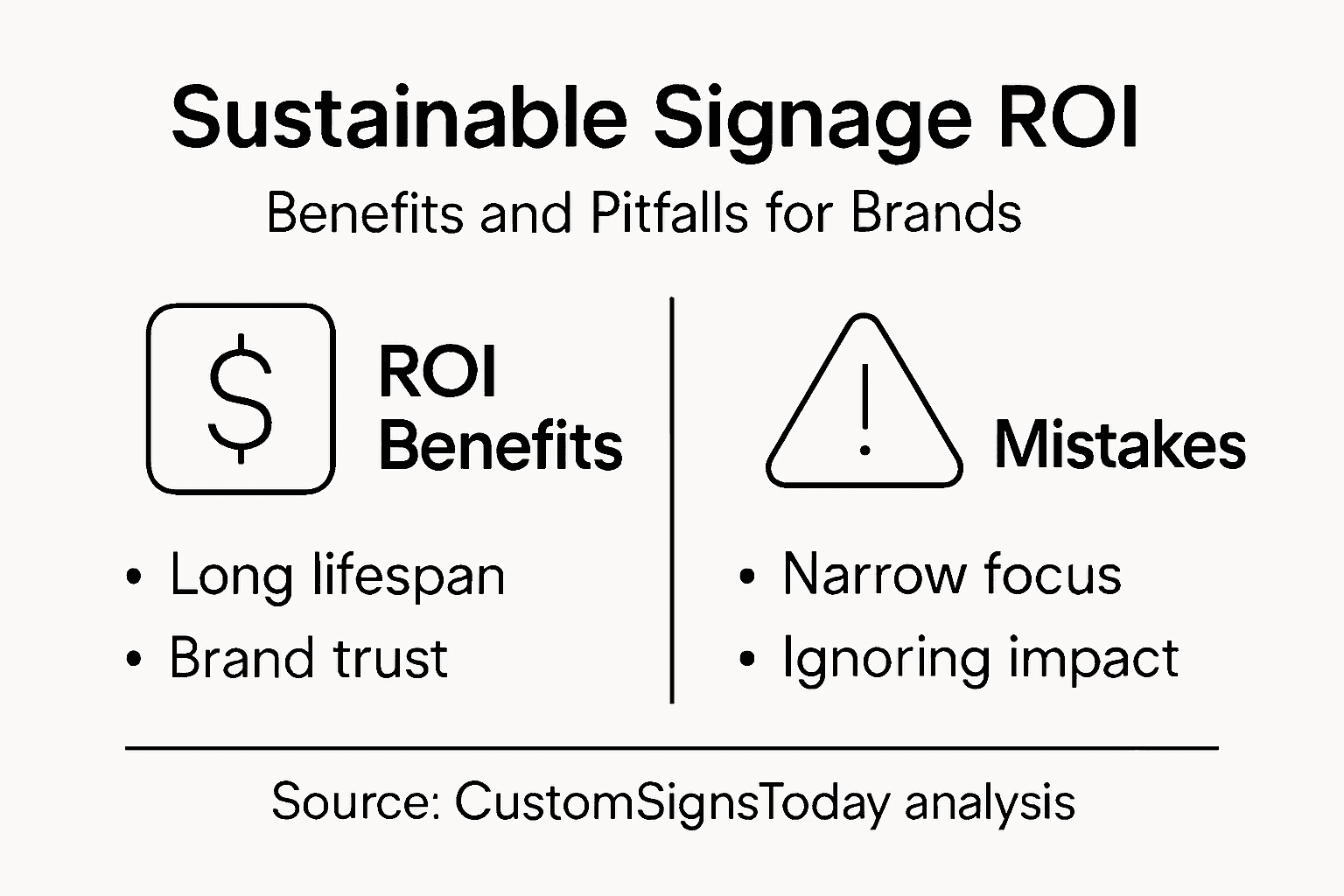
Return on Sustainability Investment methodologies reveal that strategic sustainability investments can generate significant competitive advantages. Companies must move beyond simplistic cost comparisons and develop comprehensive frameworks that account for operational efficiency, market differentiation, and long-term brand value.
Critical mistakes to avoid include narrow financial thinking, underestimating intangible benefits, and failing to align sustainability investments with core business objectives. Successful organizations integrate sustainability metrics into their strategic planning, viewing environmental investments as opportunities for innovation and market leadership.
Pro tip: Develop a multi-dimensional ROI assessment that includes financial, environmental, and reputational metrics to capture the full value of sustainable signage investments.
Elevate Your Brand with Truly Sustainable Signage Solutions
Struggling to find signage that balances environmental responsibility with long-lasting impact Explore sustainable visual communication options designed to enhance your brand’s reputation while reducing ecological footprint CustomSignsToday offers customized signage crafted from eco-friendly materials and built with durability in mind to help you achieve a real sustainability advantage This means you get signs that perform well for your business and contribute positively to community aesthetics without compromise Discover how using recycled and renewable materials along with expert fabrication techniques can transform your signage into a powerful sustainability asset
Take action now by exploring our extensive range of services at CustomSignsToday and discover options tailored to your sustainability goals Browse through our Uncategorized category for inspiration and find innovative environmental signage solutions designed to boost your brand’s trust and ROI Don’t wait let us help you make your signage project a leader in eco-conscious design Contact us today and request a free quote to start your journey toward impactful sustainable signage
Frequently Asked Questions
What is sustainability in signage?
Sustainability in signage involves a holistic approach that balances environmental responsibility, economic viability, and social impact, including the use of eco-friendly materials and long-term design strategies.
How can eco-friendly materials impact my signage?
Using eco-friendly materials, such as recycled aluminum and bamboo substrates, reduces environmental impact while enhancing brand reputation and trust among consumers.
What are some key features of sustainable sign fabrication?
Key features include lifecycle assessments, low carbon manufacturing, waste reduction, renewable resource utilization, and energy-efficient production techniques.
How do I evaluate the ROI of sustainable signage investments?
Evaluate ROI by considering both tangible and intangible benefits, including long-term savings, brand reputation enhancement, operational efficiency, and compliance risk mitigation.
Recommended
- Innovations in Signage Materials: Impact on Retail –
- Understanding Types of Promotional Signage for Businesses –
- Branding With Custom Signage: Boost Your Business Impact –
- Branding With Outdoor Signs for Business Success –
- Sustainable Natural Bathroom Design Trends 2025 2026
- Protective Coating Trends 2025: Innovations for Infrastructure