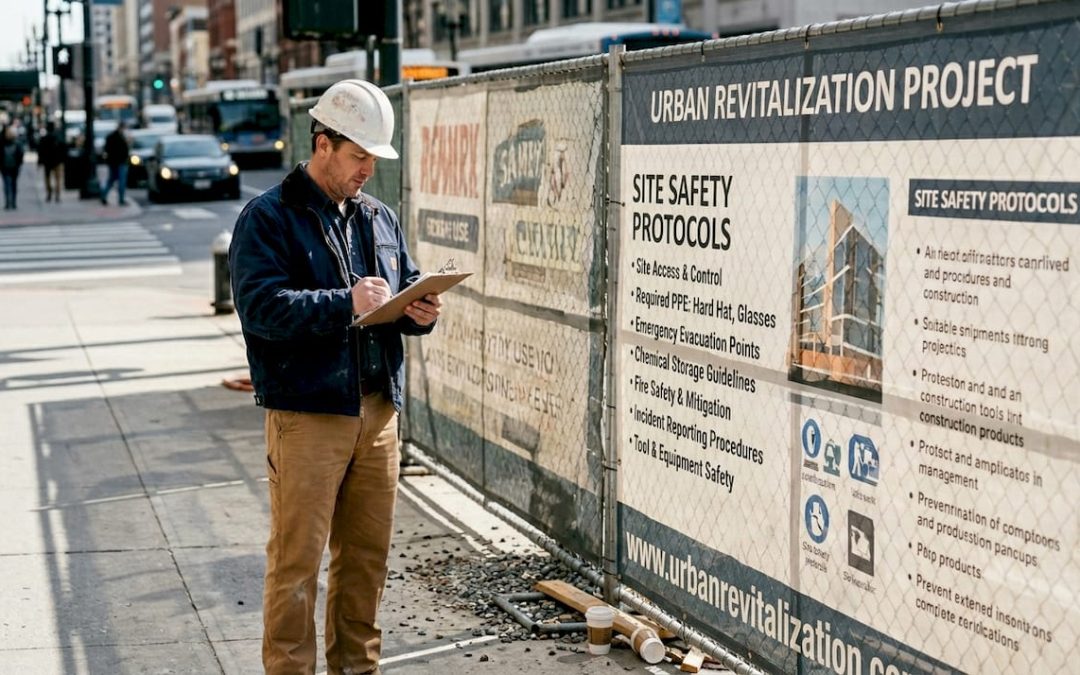
You might think all outdoor banners are created equal, but mesh banners bring something completely different to the table. Unlike solid vinyl banners, mesh banners feature perforated material that allows wind to flow through, making them ideal for high-traffic outdoor locations where weather can turn promotional displays into liabilities. If you’re planning an outdoor event, construction site branding, or large-scale advertising campaign, understanding mesh banners can save you money and headaches while delivering impressive visibility. This guide breaks down exactly what mesh banners are, their advantages and limitations, and how to use them effectively for your business promotions.
Table of Contents
- Key takeaways
- Understanding what a mesh banner is
- Advantages and limitations of mesh banners for business use
- Mesh banners vs vinyl banners: a practical comparison for event advertising
- Choosing and using mesh banners effectively for your business events
- Explore custom mesh banners and sign solutions
- FAQ
Key Takeaways
| Point | Details |
|---|---|
| Wind permeable design | Mesh banners allow wind to pass through the material, reducing pressure on grommets and mounting points for better outdoor durability. |
| Print quality tradeoff | The perforated surface reduces print sharpness and color vibrancy compared with vinyl due to the holes interrupting ink coverage. |
| Large scale suitability | They are best for large outdoor campaigns such as construction fencing, festivals, and building wraps where wind flow matters. |
| Wind speed guidance | A pro tip recommends assessing local average wind speeds to choose material, with mesh favored when winds exceed about 15 mph. |
| Ratio balance | Mesh banners use roughly a 70 to 30 solid to hole ratio, balancing visibility with wind flow. |
Understanding what a mesh banner is
A mesh banner is made from perforated vinyl allowing wind to pass through while displaying graphics, creating a unique solution for outdoor advertising challenges. The material consists of woven polyester fabric with small holes distributed across the surface, typically in a grid pattern that balances visibility with airflow. This construction fundamentally changes how the banner interacts with environmental conditions compared to traditional solid materials.
Business owners commonly deploy mesh banners in several high-impact scenarios. Construction sites use them for perimeter fencing branding, where wind would quickly destroy solid banners. Outdoor events like festivals and sports tournaments benefit from mesh banners on scaffolding and temporary structures. Building wraps for renovations or grand openings leverage mesh banners to cover entire facades without creating dangerous wind sails. The mesh banner overview shows how these applications take advantage of the material’s core strength.
The wind resistance advantage comes from simple physics. When wind hits a solid vinyl banner, pressure builds up behind the surface, creating enormous stress on grommets and mounting points. Mesh banners let approximately 30% of wind pass through the perforations, dramatically reducing this pressure. This means your banner stays intact during storms, requires less robust mounting hardware, and lasts longer in challenging outdoor environments.
Contrast this with vinyl banners, which offer a completely solid surface. Vinyl delivers superior print quality and vivid colors because ink sits on an uninterrupted surface. However, that same solid construction becomes a liability in windy conditions, where the banner acts like a sail. Understanding this fundamental trade off between wind performance and print quality helps you choose the right material for your specific promotional needs.
Pro Tip: Calculate your location’s average wind speed before selecting banner material. Areas with consistent winds above 15 mph strongly favor mesh construction, while calmer locations can use vinyl for better graphics.
Advantages and limitations of mesh banners for business use
Mesh banners excel in outdoor environments where wind poses a constant threat to promotional displays. The perforated construction allows these banners to withstand sustained winds that would shred vinyl alternatives within days. This durability translates directly to cost savings, as you replace banners less frequently and avoid emergency repairs during weather events. Event organizers particularly appreciate this reliability when planning outdoor festivals or trade shows where banner failure could undermine professional credibility.
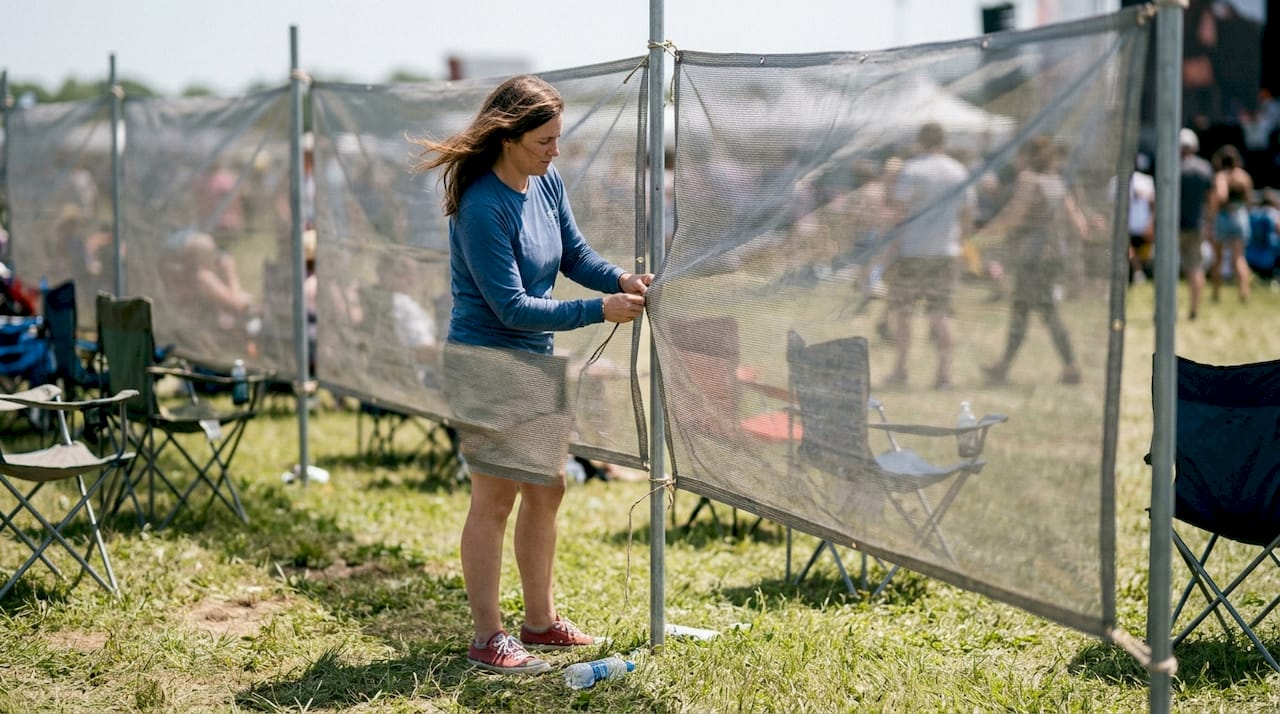
The airflow benefit extends beyond simple survival. Reduced wind load means you can use lighter mounting systems, saving installation time and costs. Scaffolding and temporary structures don’t need reinforcement to support mesh banners, unlike the heavy-duty anchoring required for large vinyl displays. This flexibility opens up advertising opportunities on structures that couldn’t safely support solid banners.
However, mesh banners have a 70/30 solid-to-hole ratio which balances visibility with wind flow but impacts print sharpness. The perforations interrupt the printed image, creating a slightly softened appearance compared to vinyl’s crisp detail. Colors appear less saturated because you’re viewing ink through a surface with 30% missing material. For large-scale branding visible from a distance, this trade off works fine. For detailed product photography or intricate logos meant for close viewing, the quality loss becomes problematic.
Physical vulnerability presents another consideration. While mesh banners resist wind beautifully, the perforated material snags more easily on sharp edges, protruding hardware, or rough surfaces during installation. A careless installer can create tears that propagate through the mesh structure. The banner material types comparison shows how different materials handle various stress factors.
Privacy represents a frequently overlooked limitation. The same holes that allow wind passage also permit visibility through the banner from both sides. Construction sites trying to screen work areas or events seeking to create visual barriers find mesh banners inadequate. The 30% perforation means observers can see through the material, especially when lighting conditions favor the viewer’s side. Vinyl banners provide complete opacity when privacy matters.
The visibility-to-wind-permeability ratio creates the central design challenge. Manufacturers can adjust hole size and spacing, but increasing wind flow always reduces print coverage. A 60/40 ratio offers better graphics but less wind resistance. An 80/20 ratio maximizes wind flow but severely compromises image quality. Most commercial applications settle on the standard 70/30 balance as the sweet spot for outdoor promotional use.
Key advantages:
- Superior wind resistance extends banner lifespan in outdoor conditions
- Reduced mounting stress allows lighter installation systems
- Lower replacement frequency decreases long-term promotional costs
- Versatile placement options on structures unable to support solid banners
Primary limitations:
- Diminished print sharpness and color saturation compared to vinyl
- Increased vulnerability to snagging and tearing during handling
- Inadequate privacy screening due to perforated construction
- Less effective for detailed graphics or close-range viewing
Mesh banners vs vinyl banners: a practical comparison for event advertising
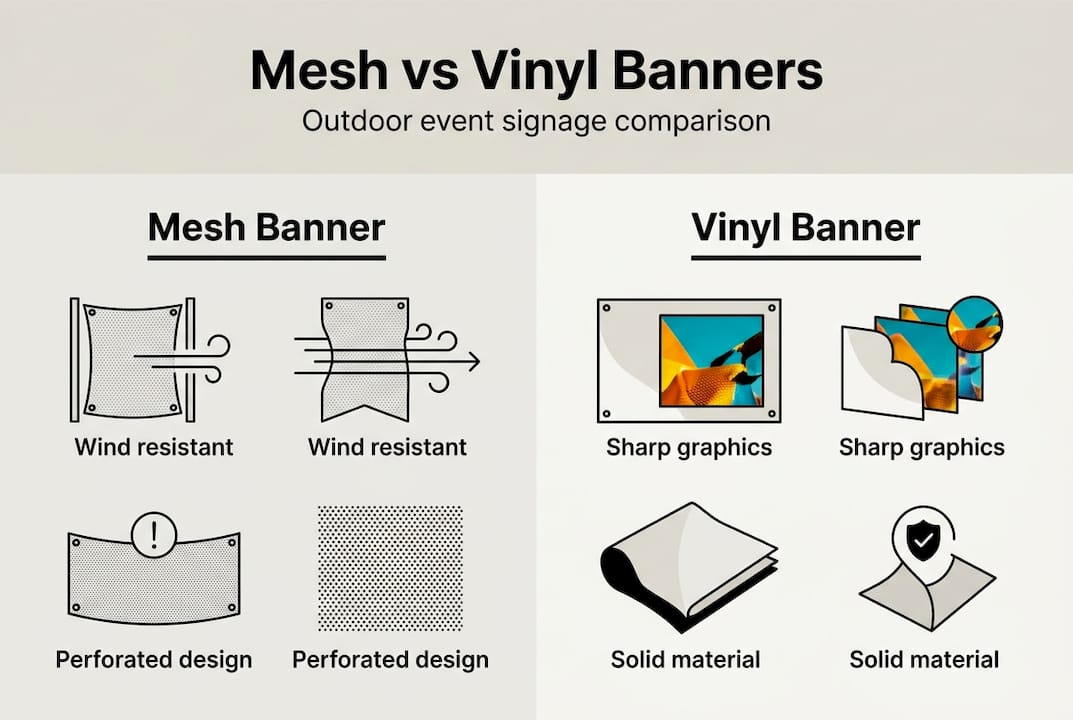
Choosing between mesh and vinyl banners requires understanding how each material performs across critical factors that affect your promotional success. The vinyl banner guide explains that mesh banners provide better wind flow but have less vivid print compared to vinyl banners, establishing the fundamental trade off you’ll navigate.
| Feature | Mesh Banners | Vinyl Banners |
|---|---|---|
| Wind resistance | Excellent; allows 30% airflow through perforations | Poor; solid surface creates wind sail effect |
| Print quality | Good; softened details due to holes | Excellent; crisp, vivid colors on solid surface |
| Durability | High in wind; vulnerable to snagging | High in calm conditions; tears in sustained wind |
| Best use cases | Construction sites, outdoor events, building wraps, windy locations | Indoor displays, short-term outdoor use, retail promotions, calm environments |
| Viewing distance | 20+ feet optimal; perforations less noticeable from distance | Any distance; maintains quality at close range |
| Privacy | Low; see-through perforations | Complete; opaque surface blocks visibility |
| Cost | Moderate; slightly higher material cost but longer lifespan | Lower initial cost; may require frequent replacement outdoors |
| Installation | Easier; lighter weight and reduced wind load | Requires robust mounting in outdoor settings |
| Maintenance | Simple cleaning; inspect for snags regularly | Wipe clean easily; check for wind damage |
Durability differences manifest most clearly in real-world outdoor deployments. A construction company installing perimeter branding for a six-month project faces constant wind exposure. Mesh banners typically survive the entire duration with minimal maintenance, while vinyl alternatives often require replacement after major storms. This longevity advantage offsets mesh banners’ slightly higher initial cost through reduced replacement frequency.
Print quality considerations depend heavily on viewing context. A banner mounted 40 feet up on scaffolding looks nearly identical whether mesh or vinyl from ground level. The perforations become invisible at that distance, and the slightly muted colors don’t significantly impact brand recognition. Conversely, a retail promotion banner positioned six feet from customers shows obvious quality differences, with vinyl delivering the professional appearance that close-range applications demand.
The outdoor signage comparison reveals how environmental factors should drive material selection. Coastal areas with constant ocean breezes strongly favor mesh construction. Urban canyons where wind tunnels between buildings create unpredictable gusts benefit from mesh’s forgiving nature. Protected courtyards or indoor-outdoor transition spaces can safely use vinyl for superior graphics.
Cost analysis must consider total ownership expenses, not just purchase price. A vinyl banner costing $150 that requires replacement three times annually totals $450, while a $200 mesh banner lasting the full year saves $250. Installation labor compounds these differences when you factor in emergency replacements after storm damage versus planned annual updates.
Pro Tip: For events lasting less than one week in calm weather, vinyl banners deliver better visual impact at lower cost. For permanent or semi-permanent outdoor installations exceeding two weeks, mesh banners provide superior value through extended durability.
Choosing and using mesh banners effectively for your business events
Selecting the optimal mesh banner starts with understanding mesh ratio options and matching them to your specific promotional environment. The standard 70/30 solid-to-hole ratio works for most applications, but specialized scenarios benefit from adjusted perforations. High-wind coastal locations or elevated installations above 20 feet might justify an 80/20 ratio prioritizing wind flow over print density. Conversely, partially sheltered locations with moderate wind could use a 60/40 ratio for improved graphics while maintaining adequate airflow.
Size selection directly impacts both visibility and installation complexity. Larger banners create more impressive visual impact but exponentially increase wind load even with perforations. A 10×20 foot mesh banner experiences significantly more stress than two 10×10 foot banners covering the same area, because wind pressure increases with surface area. Breaking large promotional spaces into multiple smaller banners often provides better durability and easier handling during installation.
Graphic complexity requires careful consideration given mesh banners’ inherent print limitations. Bold, simple designs with high contrast work beautifully on mesh material. Large logos, short text blocks, and solid color fields remain clearly visible despite perforations. Detailed product photography, gradient backgrounds, or intricate patterns suffer noticeably on mesh surfaces. Adjust your design approach to emphasize clarity and simplicity rather than photographic realism.
Installation best practices:
- Inspect mounting surfaces for sharp edges, protruding screws, or rough textures that could snag mesh material during installation
- Secure all edges and grommets firmly to prevent flapping, which accelerates wear and creates noise in windy conditions
- Leave slight slack in the banner rather than stretching it drum-tight, allowing material to flex with wind gusts without tearing
- Use appropriate grommet spacing for your banner size, typically every 18 to 24 inches along edges for optimal support
- Apply proper installation reduces snagging and extends mesh banner life by following professional mounting techniques
- Position banners away from tree branches, building corners, or other obstacles that could contact and damage the material
Maintenance extends mesh banner lifespan significantly when performed regularly. Outdoor banners accumulate dirt, pollen, and environmental debris that dulls colors and clogs perforations. Gentle cleaning with mild soap and water every four to six weeks maintains appearance and ensures holes remain open for proper airflow. Avoid pressure washers or harsh chemicals that can damage the mesh structure or fade printed graphics.
Inspection routines catch small problems before they become banner-destroying failures. Monthly checks for loose grommets, developing tears, or mounting hardware issues allow quick repairs. A small tear caught early can be reinforced with banner tape, while an ignored tear propagates across the entire surface within weeks. The outdoor signage installation guide provides detailed maintenance schedules based on environmental exposure levels.
Graphic design optimization compensates for mesh banners’ print limitations through strategic choices. Increase font sizes by 15 to 20% compared to vinyl banner designs to maintain readability through perforations. Use sans-serif typefaces with thick strokes rather than delicate serif fonts that lose definition. Boost color saturation in your design files by 10 to 15% to counteract the muting effect of perforated material. These adjustments ensure your message remains clear and impactful despite the material’s inherent characteristics.
Pro Tip: Request a small test print on mesh material before committing to large banner production. Viewing your actual design on perforated material reveals potential issues with color, detail, or readability that aren’t apparent on screen or vinyl samples.
Explore custom mesh banners and sign solutions
When you’re ready to implement mesh banners for your next outdoor promotion, working with experienced signage professionals ensures optimal results. Custom banners from Custom Signs Today provide tailored solutions matching your specific environmental conditions, graphic requirements, and budget constraints. Their team helps you navigate mesh ratio selections, size optimization, and design adjustments that maximize impact while working within mesh material’s characteristics.
Beyond mesh banners, comprehensive signage solutions enhance your overall promotional strategy. Site signs complement mesh banners for construction projects, creating cohesive branding across multiple touchpoints. Vehicle wraps, directional signage, and indoor displays work together with outdoor mesh banners to build consistent brand presence. Understanding why invest in banners for business reveals how strategic signage deployment drives customer engagement and revenue growth across industries.
Professional design services bridge the gap between your vision and mesh-optimized graphics that actually work in real-world conditions. Experienced designers understand how to simplify complex logos, adjust color profiles, and scale typography for perforated materials. This expertise prevents costly mistakes where beautiful designs fail to translate effectively to mesh banners, saving you time and money through getting it right the first time.
FAQ
How durable are mesh banners in harsh weather?
Mesh banners resist wind exceptionally well due to perforations allowing airflow, making them far more durable than vinyl in sustained wind conditions. However, they can tear if snagged on sharp objects during installation or if mounting hardware fails. Proper installation following professional guidelines greatly improves durability, often extending banner life to 12 months or more in challenging outdoor environments.
Can mesh banners display detailed or photo-quality images?
Mesh banners soften fine details and reduce color vibrancy due to the 30% perforation interrupting the printed surface. They work well for bold logos, simple graphics, and large text visible from a distance. Photo-quality images, intricate patterns, or designs requiring close-up viewing perform poorly on mesh material and should use vinyl or fabric alternatives instead.
Are mesh banners suitable for privacy screening?
Mesh banners provide minimal privacy because perforations allow visibility through the material from both sides, especially when lighting favors the viewer. Construction sites needing work area screening or events requiring visual barriers should choose solid vinyl banners or dedicated privacy fencing. Mesh banners prioritize wind flow over opacity, making them ineffective for privacy applications.
What is the typical cost difference between mesh and vinyl banners?
Mesh banners typically cost 15 to 25% more than comparable vinyl banners due to specialized material and manufacturing processes. However, their extended lifespan in outdoor conditions often provides better total value. A mesh banner lasting 12 months costs less than replacing vinyl banners three or four times annually, making mesh the economical choice for long-term outdoor installations despite higher upfront investment.
How do I clean and maintain mesh banners?
Clean mesh banners every four to six weeks using mild soap, water, and a soft brush or cloth to remove dirt and environmental debris. Rinse thoroughly and allow to air dry completely before storage if removing seasonally. Inspect monthly for developing tears, loose grommets, or mounting issues, addressing problems immediately to prevent propagation. Avoid pressure washers, harsh chemicals, or abrasive cleaning tools that damage mesh structure or fade graphics.