
{
“@type”: “Article”,
“image”: {
“url”: “https://csuxjmfbwmkxiegfpljm.supabase.co/storage/v1/object/public/blog-images/organization-6408/1774140175664_Manager-examining-banner-materials-in-office.jpeg”,
“@type”: “ImageObject”,
“caption”: “Manager examining banner materials in office”
},
“author”: {
“url”: “https://customsignstoday.us”,
“name”: “Customsignstoday”,
“@type”: “Organization”
},
“@context”: “https://schema.org”,
“headline”: “What material are banners made of: 2026 guide to custom banners”,
“publisher”: {
“url”: “https://customsignstoday.us”,
“name”: “Customsignstoday”,
“@type”: “Organization”
},
“inLanguage”: “en-US”,
“articleBody”: “Discover what materials banners are made of and how to choose the right option for durability, weather resistance, and marketing impact in 2026.”,
“description”: “Discover what materials banners are made of and how to choose the right option for durability, weather resistance, and marketing impact in 2026.”,
“datePublished”: “2026-03-22T00:42:57.767Z”
}
Choosing the right banner material can make or break your marketing campaign. While many assume all banners are essentially the same, the material you select dramatically affects durability, visual impact, and cost effectiveness. A vinyl banner might survive years of outdoor weather, while a fabric option delivers stunning indoor visuals but fails quickly outside. Understanding banner materials helps you select the right option for specific marketing environments and goals, ensuring your investment delivers maximum branding impact. This guide will explain common banner materials, their features, and how to choose the best one for your needs.
Table of Contents
- Key takeaways
- Understanding common banner materials and their features
- Comparison of banner materials: Advantages, disadvantages, and ideal uses
- How to choose the best banner material for your marketing needs
- Summary of banner materials and quick reference for marketers
- Explore custom banner solutions for your business
- What material are banners made of? Frequently asked questions
Key Takeaways
| Point | Details |
|---|---|
| Material variety matters | Selecting the right banner material improves durability, visual impact, and cost effectiveness across contexts. |
| Mesh improves wind resistance | Mesh banners allow airflow through perforations, dramatically reducing wind stress on mounting points while preserving visibility. |
| Fabric for indoor visuals | Fabric banners offer richer print quality for indoor displays but are less weather resistant outdoors. |
| Environment guides choice | Choose materials based on environment and display location to maximize branding and minimize replacements. |
Understanding common banner materials and their features
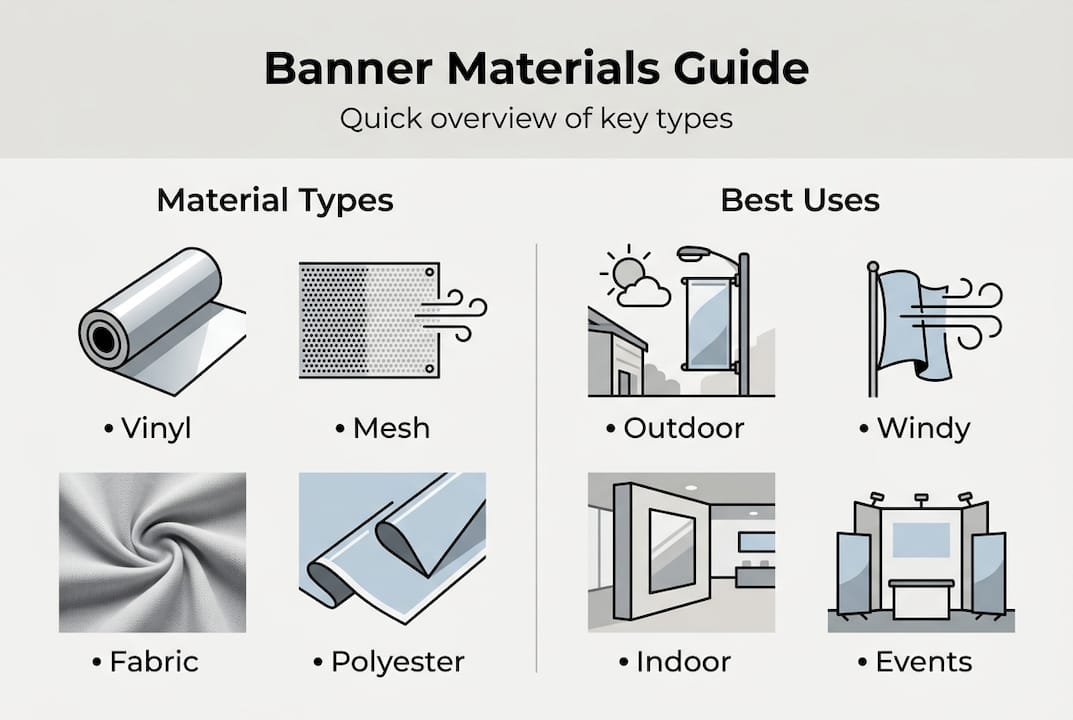
Most banners are made of vinyl, fabric, mesh, or polyester, each engineered for specific applications. Vinyl dominates outdoor signage because of its exceptional weather resistance and durability. Standard vinyl banners typically weigh between 13-18 oz per square yard, providing substantial strength against wind, rain, and UV exposure. This material maintains color vibrancy for years when properly manufactured with UV-resistant inks.
Mesh vinyl banners solve a critical problem for outdoor installations. Traditional solid vinyl acts like a sail in wind, creating stress on mounting points and increasing tear risk. Mesh banners allow 35-45% airflow through thousands of tiny perforations, dramatically reducing wind resistance while maintaining visual impact. These banners typically use 8-11 oz vinyl-coated polyester with 1000 denier rating, balancing strength with airflow. Construction sites, building wraps, and highway-facing installations benefit most from mesh construction.
Fabric banners offer superior print quality and visual appeal. The textile surface accepts ink differently than vinyl, producing richer colors and eliminating the glossy reflection that can reduce readability in certain lighting. However, fabric lacks vinyl’s weather resistance. Most fabric banners use polyester blends that wrinkle less than pure cotton but still absorb moisture and fade faster outdoors. These work beautifully for trade shows, retail displays, and indoor events where appearance matters more than weather protection.
Weight and denier ratings provide objective measures of material strength. An 8 oz banner weighs 8 ounces per square yard, while 18 oz vinyl offers more than double the material density. Denier measures fiber thickness in the weave. A 1000 denier mesh uses thicker threads than 500 denier, creating stronger fabric less prone to tearing. Understanding these specifications helps you match material strength to your installation requirements.
Different materials suit different display environments. High-wind locations demand mesh construction, while indoor corporate events call for fabric elegance. Permanent outdoor installations need heavy vinyl, but temporary promotional banners can use lighter materials. Learning about banner materials helps you avoid mismatches that waste money and compromise your marketing message.
Comparison of banner materials: Advantages, disadvantages, and ideal uses
Each banner material brings distinct advantages and limitations to your marketing toolkit.
| Material | Weight Range | Primary Advantage | Main Limitation | Best Use Case |
|---|---|---|---|---|
| Solid Vinyl | 13-18 oz | Maximum weather resistance | Heavy, catches wind | Permanent outdoor signage |
| Mesh Vinyl | 8-11 oz | 35-45% airflow reduces wind load | Slightly lower print quality | Windy outdoor locations |
| Fabric | 6-9 oz | Superior print vibrancy | Poor weather resistance | Indoor events and displays |
| Polyester | 4-8 oz | Lightweight, wrinkle resistant | Less durable than vinyl | Short-term promotions |
Solid vinyl banners dominate outdoor advertising for good reason. The material withstands rain, snow, and intense sunlight without degrading. Modern vinyl formulations include UV inhibitors that prevent color fading for 3-5 years outdoors. The non-porous surface resists moisture absorption, preventing mold and mildew. However, vinyl’s strength becomes a weakness in high winds. The solid surface catches wind like a sail, creating tremendous stress on grommets and mounting hardware. Large vinyl banners in exposed locations often tear at mounting points or pull free entirely.
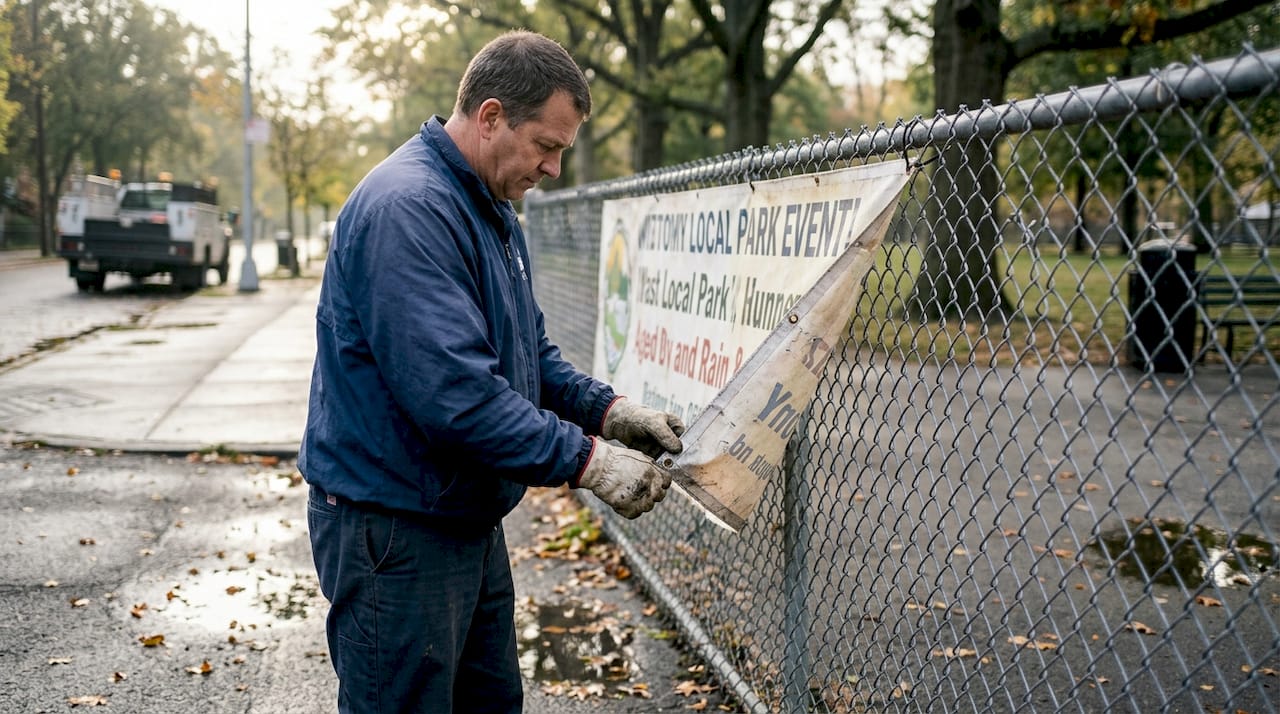
Mesh banners solve the wind problem elegantly. By allowing 35-45% of wind to pass through the material, mesh construction dramatically reduces the forces trying to tear the banner down. This makes mesh ideal for construction site fencing, building wraps, and any installation facing consistent wind exposure. The perforations do slightly reduce image sharpness compared to solid vinyl, but modern printing techniques minimize this effect. For most outdoor applications, the durability advantage far outweighs any minor visual compromise.
Fabric banners excel where appearance trumps durability. The textile surface produces deeper, richer colors than vinyl, with a matte finish that eliminates glare. Fabric drapes naturally, creating an elegant presentation impossible with stiff vinyl. Trade show booths, retail displays, and corporate events showcase fabric banners effectively. The material also folds compactly for transport without creasing permanently. However, fabric absorbs moisture, stains easily, and fades quickly in sunlight. Outdoor use should be limited to protected areas or very short durations.
Exploring different types of banner materials reveals how environmental factors should drive your selection. Consider durability, price, appearance, and installation environment together rather than optimizing for any single factor.
Pro Tip: For windy outdoor locations, choose vinyl mesh to extend banner lifespan and reduce damage risk. The airflow design can triple the service life compared to solid vinyl in exposed positions, easily justifying any modest price difference.
How to choose the best banner material for your marketing needs
Selecting the optimal banner material requires systematic evaluation of your specific requirements.
Follow this five-step process:
-
Assess the display environment. Determine whether your banner faces indoor or outdoor conditions. Outdoor installations must account for wind exposure, direct sunlight, and precipitation. Indoor banners avoid weather but may face different challenges like HVAC airflow or frequent handling. Locations near coastlines need extra corrosion resistance, while high-altitude sites experience more intense UV exposure.
-
Evaluate wind conditions specifically. Wind causes more banner failures than any other factor. Measure or estimate typical wind speeds at your installation site. Areas with consistent winds above 15 mph benefit dramatically from mesh construction that allows airflow, reducing the sail effect by up to 45%. Building corners, rooftops, and open fields create particularly challenging wind conditions.
-
Define your timeline and budget. Temporary promotions lasting days or weeks can use lighter, less expensive materials. Permanent installations justify premium materials that cost more upfront but last years longer. Calculate cost per day of display rather than just initial price. A $200 vinyl banner lasting three years costs far less per day than a $75 fabric banner needing replacement every six months outdoors.
-
Determine size and weight constraints. Larger banners require stronger materials and more robust mounting systems. A 3×6 foot banner can use lighter materials than a 10×30 foot installation. Consider your mounting infrastructure. Existing fence posts or building facades may limit the weight they can safely support. Heavier materials need more grommets and stronger attachment points.
-
Prioritize visual quality requirements. High-end retail, corporate branding, and close-viewing applications demand superior print quality. Fabric delivers the richest colors and finest detail. Highway-visible banners or construction site signage prioritize durability and visibility over subtle color gradations. Match material capabilities to viewing distance and audience expectations.
Understanding how to create effective business banners involves material selection as a foundational decision. The right material enables your design to perform as intended across its entire service life.
Consider how different banner types serve distinct marketing functions. Vinyl banners provide the versatility and durability most businesses need for outdoor promotions, while specialized materials optimize specific applications.
Pro Tip: Always confirm material specifications with your supplier to ensure suitability for local weather conditions. Regional climate variations affect material performance significantly, and experienced suppliers can recommend proven solutions for your specific location.
Summary of banner materials and quick reference for marketers
This reference table consolidates the key specifications to guide your material selection:
| Material Type | Typical Weight | Airflow | Outdoor Durability | Indoor Appearance | Primary Applications |
|---|---|---|---|---|---|
| Heavy Vinyl | 15-18 oz | 0% | 3-5 years | Good | Permanent outdoor signs |
| Standard Vinyl | 13-15 oz | 0% | 2-3 years | Good | General outdoor banners |
| Mesh Vinyl | 8-11 oz | 35-45% | 2-4 years | Good | High-wind outdoor locations |
| Fabric | 6-9 oz | 5-10% | 3-6 months | Excellent | Indoor events, trade shows |
| Light Polyester | 4-6 oz | 0-5% | 1-3 months | Fair | Temporary indoor promotions |
Keep these essential reminders in mind when selecting banner materials:
- Match material weight to installation duration and conditions
- Mesh construction prevents 80% of wind-related failures in exposed locations
- Fabric delivers superior visual impact but requires protected environments
- Higher oz ratings indicate stronger, more durable materials
- UV-resistant inks and coatings extend outdoor banner life significantly
- Professional installation matters as much as material quality for longevity
The right material choice directly supports branding impact and reduces costs from damage or premature replacement. A banner that tears after two months wastes your entire investment in design, printing, and installation. Conversely, overbuying material strength for a short-term indoor promotion unnecessarily inflates costs. Matching material capabilities to actual requirements optimizes your marketing budget.
Consider how banners support property marketing campaigns where durability and professional appearance directly affect sales outcomes. Real estate banners face extended outdoor exposure, making material selection crucial for maintaining credibility throughout lengthy sales cycles.
Weather resistance varies dramatically by material. Vinyl withstands rain, snow, and temperature extremes that destroy fabric in weeks. Mesh vinyl combines weather resistance with wind management. Fabric requires protection from moisture and direct sunlight. Understanding these limitations prevents disappointing failures and supports realistic performance expectations.
Print quality differences matter more for some applications than others. Fabric’s superior color depth and detail resolution justify its limitations for high-end retail and corporate branding where visual impact drives results. Construction site banners and directional signage prioritize visibility and durability over subtle color accuracy. Match material capabilities to your specific visual requirements and viewing conditions.
Explore custom banner solutions for your business
Now that you understand banner materials and selection criteria, putting this knowledge into action requires a reliable production partner. Custom Signs Today specializes in helping marketing professionals and business owners select and produce high-quality banners optimized for specific applications. Whether you need weather-resistant vinyl banners for permanent outdoor installations or premium fabric options for corporate events, expert guidance ensures your material choice aligns with your marketing goals and environmental conditions.
The company offers comprehensive custom banner solutions including material consultation, professional design support, and production services for banners of any size. This integrated approach helps you avoid common material selection mistakes that compromise banner performance and waste marketing budgets. Understanding why businesses invest in banners reveals how proper material selection maximizes return on investment by extending banner life and maintaining professional appearance throughout the display period. Professional assistance ensures your banners deliver maximum marketing impact with materials proven for your specific conditions.
What material are banners made of? Frequently asked questions
What is the most durable banner material for outdoor use?
Heavy vinyl (15-18 oz) provides the longest outdoor lifespan, typically 3-5 years with UV-resistant inks. Mesh vinyl offers comparable durability with superior wind resistance for exposed locations. Both options far outlast fabric or lightweight polyester outdoors.
Can mesh banners be used indoors?
Mesh banners work perfectly indoors despite being designed for outdoor wind resistance. The perforations are barely visible from normal viewing distances. However, solid vinyl or fabric typically costs less for indoor-only applications where wind management provides no benefit.
How does the weight (oz) of banner material affect its performance?
Heavier materials (higher oz ratings) provide greater tear resistance, longer lifespan, and better wind resistance. An 18 oz vinyl banner withstands stress that would tear a 10 oz banner. However, heavier materials cost more and require stronger mounting systems for larger sizes.
Are fabric banners suitable for long-term outdoor displays?
Fabric banners degrade rapidly outdoors, typically showing significant fading and deterioration within 3-6 months. Moisture absorption causes mold, mildew, and structural weakening. Reserve fabric for indoor use or very short outdoor events in protected locations. Vinyl provides far better value for extended outdoor display.
What are the price differences between vinyl and fabric banners?
Vinyl typically costs 20-40% less than fabric for comparable sizes. However, vinyl’s superior outdoor durability makes it dramatically more cost-effective for extended outdoor use. Fabric’s price premium buys superior visual quality for indoor applications where its appearance advantages justify the additional cost.
Why do some outdoor banners use mesh instead of solid vinyl?
Mesh construction allows wind to pass through the banner rather than creating sail-like forces that stress mounting points. This 35-45% airflow reduction prevents most wind-related failures in exposed locations. Different types of promotional banners serve different purposes, with mesh optimized specifically for high-wind outdoor environments where solid vinyl would fail prematurely.