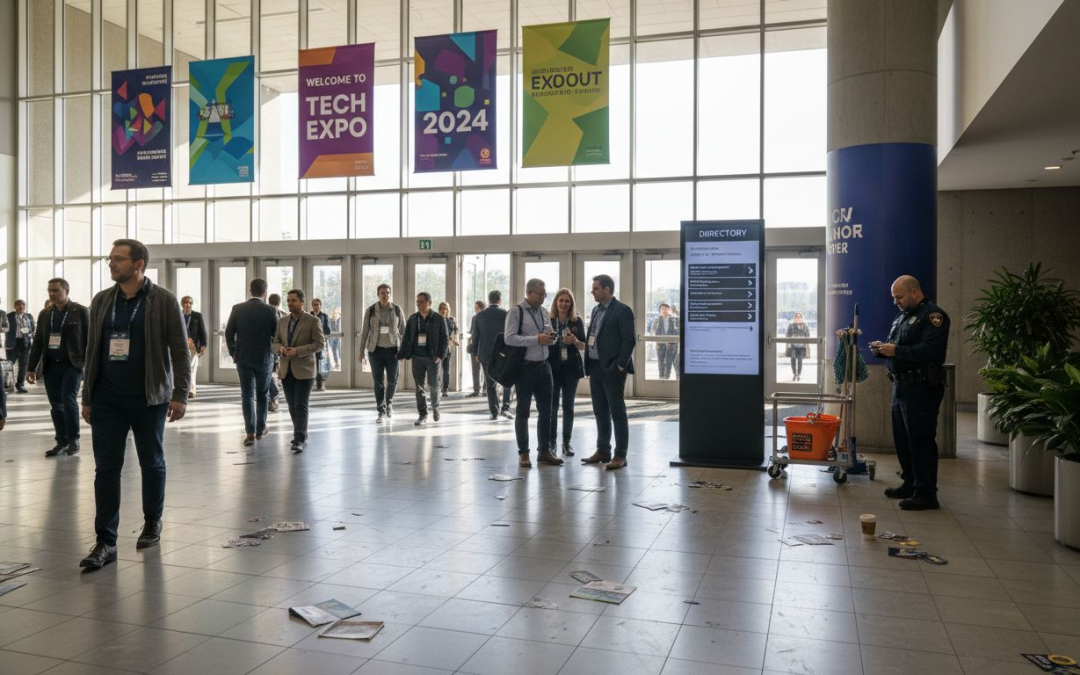
Every event organizer knows the stress of watching attendees wander aimlessly, searching for registration, restrooms, or key sessions. Clear, impactful signage can be the difference between confusion and a seamless experience. As local events in cities across the United States grow, bold and effective event signage does more than guide—it shapes perceptions, supports sponsors, and fuels engagement. Discover how strategic visual communication elevates every aspect of attendee interaction.
Table of Contents
- Defining Event Signage And Its Role
- Main Types Of Event Signage Solutions
- How Signage Attracts And Guides Attendees
- Signage’s Effect On Branding And Engagement
- Common Mistakes And Key Compliance Issues
Key Takeaways
| Point | Details |
|---|---|
| Importance of Signage | Event signage is crucial for guiding attendees, reinforcing branding, and enhancing the overall experience. |
| Types of Signage | A mix of printed static, digital, outdoor, and specialized signage should be used based on venue and audience needs. |
| Attracting and Guiding Attendees | Effective signage attracts potential attendees and navigates guests efficiently through the event space. |
| Compliance and Safety Considerations | Ensuring signage meets accessibility standards and communicates safety measures is essential to protect attendees and minimize liability. |
Defining Event Signage and Its Role
Event signage goes far beyond simple posters or directions taped to walls. Event signage refers to strategically designed visual communication systems that guide, inform, and engage attendees throughout your event space. This includes everything from entrance banners that set the tone as guests arrive, to directional signs that prevent people from getting lost, to branded displays that reinforce your event’s message and identity. Think of signage as your silent ambassador working 24/7 to communicate with every single person who walks through your doors.
The role of event signage is multifaceted. First, it serves a wayfinding function, helping attendees navigate unfamiliar spaces efficiently. At a corporate conference with multiple breakout sessions, attendees need clear directional signage to locate ballrooms, registration areas, and restrooms without asking staff members repeatedly. Second, signage reinforces your event’s branding and messaging. Custom banners displaying your event title, sponsor logos, and key themes create visual consistency that attendees remember long after they leave. Third, event signage manages flow and controls the attendee experience. Signs can direct traffic away from congested areas, highlight featured speakers or sponsors, or draw attention to food stations and networking zones. According to research on signage design and symbols, the main purpose of signage is to communicate information aiding decisions or to promote products or services, which directly applies to how event signage influences attendee behavior and satisfaction.
What makes event signage particularly powerful is that it works before, during, and after your event planning. Pre-event signage on storefronts, community bulletin boards, and digital displays attracts people who might not know about your event. During the event, directional signs and informational displays keep everything running smoothly while reinforcing your brand. Post-event signage can direct attendees toward feedback forms, survey links, or information about future events. The effectiveness of your signage depends on placement, visibility, and consistency. Professional design principles for event signage ensure that your signs capture attention without overwhelming your space or creating visual clutter.
Most event organizers underestimate how much signage impacts the attendee experience. Poor signage leads to confusion, frustration, and people leaving early. Excellent signage creates a polished, professional atmosphere where attendees feel welcomed and guided. The visibility and effectiveness of your signage depends directly on design quality, material durability, and strategic placement throughout your venue.
Pro tip: Start your event signage planning by mapping your venue and identifying critical wayfinding points like entrances, registration, restrooms, and main session areas, then design signage that creates a clear visual hierarchy so attendees instinctively know where to go without stopping to read every sign.
Main Types of Event Signage Solutions
Event organizers today have more options than ever when it comes to signage. The type you choose depends on your venue layout, budget, audience size, and the specific message you need to communicate. Understanding the different categories will help you make informed decisions that maximize your attendance and create a cohesive attendee experience.
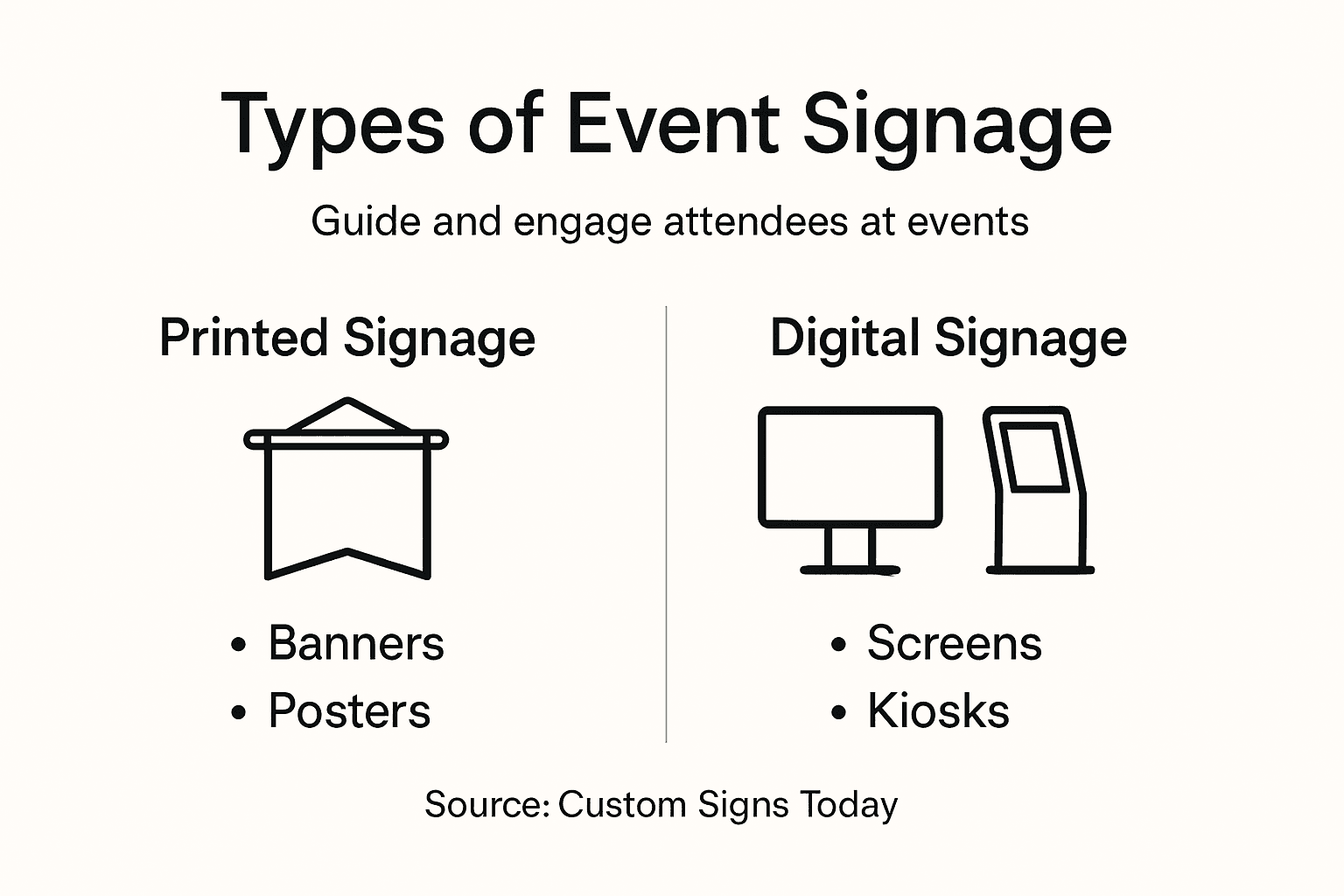
Printed Static Signage remains the backbone of most event strategies. This includes banners made from vinyl or fabric that hang from ceilings or walls, directional signs printed on cardboard or foam board, sidewalk A-frame signs that catch attention outside your venue, and table tents for registration areas or sponsorship displays. Static signage works exceptionally well because it requires no power, never malfunctions, and creates a tangible, professional appearance. Custom banners featuring your event logo, sponsor names, and key messaging serve double duty by both guiding attendees and reinforcing your brand identity. For outdoor events, durable vinyl banners withstand weather conditions better than paper alternatives. The beauty of static signage is its versatility. You can produce signs in virtually any size or shape, whether you need small directional arrows or massive entrance banners that greet attendees as they arrive.
Digital Signage Displays represent the modern evolution of event communication. These are electronic screens ranging from small kiosks to massive video walls that display dynamic content. Digital signage uses electronic display technologies to show multimedia content and is widely applied in event environments, with options including networked systems with centralized remote content management and standalone units. Corporate conferences frequently use digital displays to show real time schedules, sponsor advertisements, speaker countdowns, or wayfinding maps that update throughout the day. Commercial grade signage displays are designed for continuous use with extended lifespans, making them ideal for multi day events where reliability matters. Many event organizers position digital screens in high traffic areas like registration zones or between breakout sessions. The advantage? You can change messaging instantly without reprinting anything. If a session gets delayed, you update the screen in seconds. Digital displays also engage younger audiences who expect interactive, modern technology at professional events.
Outdoor Event Signage requires special consideration for weather durability and visibility. Guide to outdoor event signage ensures your signs withstand elements while capturing attention from a distance. Materials matter here. Weather resistant vinyl banners, corrugated plastic signs, and aluminum frames all perform better than standard paper or cardboard. Outdoor directional signs need to be larger and bolder since attendees view them from farther away and often while moving. Sandwich board signs positioned at parking areas help attendees locate your event entrance. Light colored text on dark backgrounds or vice versa ensures readability in daylight. For evening events, consider backlit signage or reflective materials that maintain visibility after dark.
Specialized Signage serves specific functions at events. This includes wayfinding kiosks with touchscreen maps for large venues, sponsor recognition displays that showcase contributing companies, information boards explaining session topics or speaker backgrounds, and feedback stations directing attendees toward surveys or comment cards. Some events use QR code signage that links to mobile apps, event schedules, or networking platforms. Exit signs ensure attendees know where to go when sessions end. Registration signage clearly marks where to check in. These specialized solutions address unique venue challenges and keep your event running smoothly.
- Printed static signage is cost effective, reliable, and creates strong brand presence
- Digital displays offer flexibility to update messaging and engage tech savvy attendees
- Outdoor signage requires weather resistant materials and strategic placement
- Specialized signage solves specific navigation and information needs
The most successful events typically use a combination of these types. A large corporate conference might use massive printed banners for branding, digital displays for real time updates, outdoor signage to draw people in from the parking lot, and wayfinding kiosks inside the venue. A community event might focus on affordable printed directional signs and a few key branded banners. Your budget, venue, and event goals determine the optimal mix.
Here’s a comparison of the main event signage types and their best use cases:
| Signage Type | Ideal Setting | Main Advantage | Typical Limitation |
|---|---|---|---|
| Printed Static | Indoors/Outdoors, any size | Delivers strong branding | No real-time updates |
| Digital Displays | High-traffic, modern venues | Instant messaging updates | Higher initial cost |
| Outdoor Durable | Parking lots, entrances | Withstands weather | Needs bold, large design |
| Specialized/Kiosk | Large venues, info stations | Interactive guidance | May require tech support |
Pro tip: Choose printed signage for branding and wayfinding, then add one or two digital displays in high traffic areas for real time updates and sponsor rotation, which gives you professional flexibility without excessive expense.
How Signage Attracts and Guides Attendees
Signage operates on two levels at events. First, it attracts people who don’t yet know about your event. Second, it guides those who have already arrived. Understanding how signage performs both functions helps you design a strategy that fills your venue and keeps everyone moving smoothly.
Attraction starts before attendees ever step foot inside your venue. External signage is your first marketing touchpoint. Street level banners, sandwich board signs, and parking lot directional signs catch the attention of passersby who might not have registered online or received your promotional materials. A bold, branded banner visible from the parking lot tells potential attendees that something is happening here right now. Community events especially benefit from this approach. A farmers market putting up bright signage on major intersections near the venue can increase foot traffic by drawing curious neighbors. Corporate events use similar tactics. A conference center with a massive entrance banner, sponsor logos prominently displayed, and clear directional signs positioned at key access points signals legitimacy and professionalism. Attendees seeing these visual cues feel more confident about attending. The color, typography, and overall design quality of your external signage communicate volumes about your event’s caliber before anyone walks through the door.
Once attendees arrive, signage guides them through a carefully orchestrated journey. Wayfinding signage reduces confusion and frustration. Effective signage communicates through clarity, visibility, appropriate messages, symbols, legible fonts, and contrasting colors, ensuring attendees navigate efficiently from parking to entrance to registration to session areas. Think about your attendee’s perspective. They pull into the parking lot unsure where to go. Clear directional signs pointing toward the main entrance eliminate guesswork. They enter the building uncertain about registration. A prominent check in sign with an arrow guides them to the right table. They finish registration and need to find the keynote session. Branded wayfinding signs throughout the venue create a clear path. This frictionless experience keeps attendees moving and significantly impacts satisfaction. Poor wayfinding creates stress. Attendees wander, get lost, spend time asking staff for directions, and potentially miss sessions or leave early feeling frustrated.
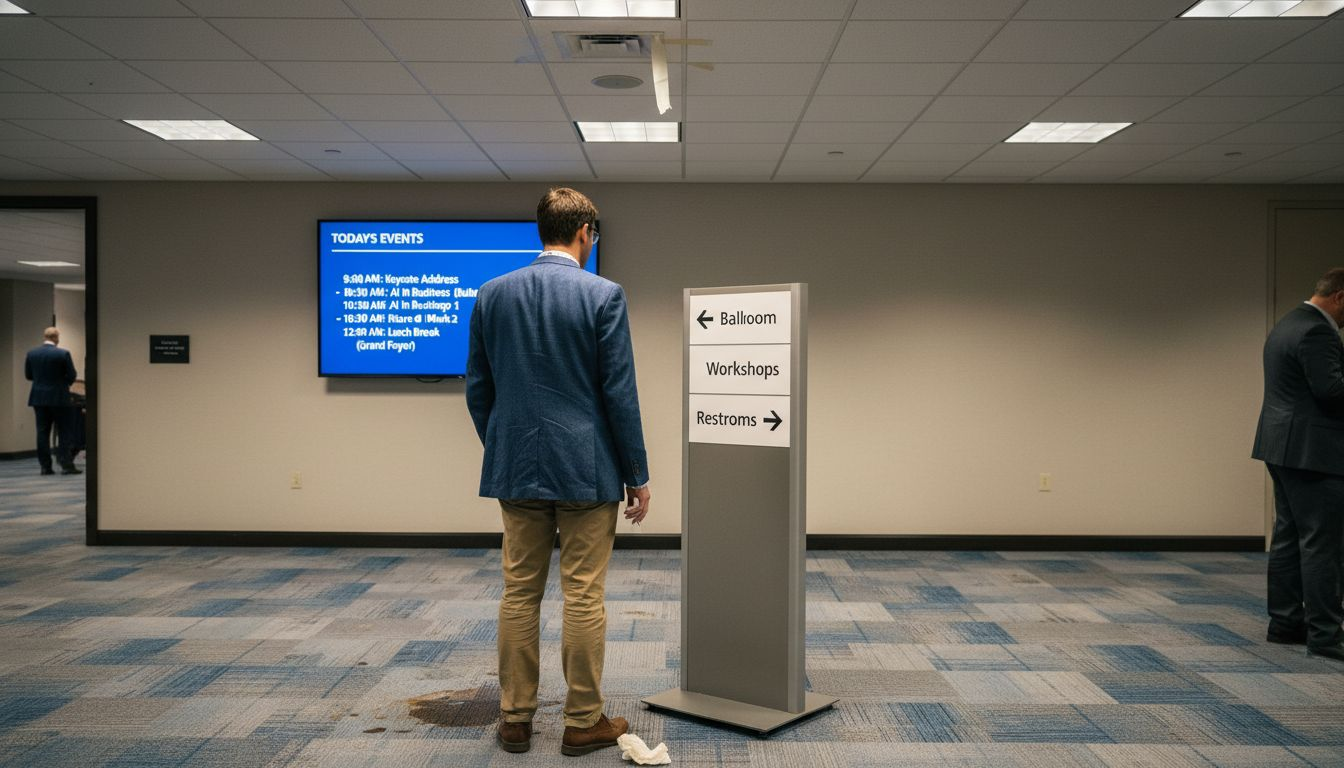
Strategic sign placement influences attendee behavior and flow. Interpretive signage serves to inform, educate, and engage visitors by conveying clear and compelling messages, influencing how attendees navigate and appreciate your event venue. Sponsorship recognition signs positioned in high traffic areas encourage sponsors to attend and feel valued. Information signs explaining session topics or speaker backgrounds help attendees make better choices about which sessions to attend. Exit signs positioned at session ends guide the crowd toward refreshment areas or networking zones rather than creating bottlenecks. Feedback signs near exits direct attendees toward surveys or comment cards. This strategic placement doesn’t just guide people. It actively shapes their experience and behavior. A sign promoting a sponsor’s booth increases booth traffic. A sign highlighting networking opportunities increases networking participation. A sign directing people toward your event app increases mobile engagement.
The psychology of signage matters tremendously. Visual hierarchy on your signs determines what information attendees process first. Large, bold lettering for the most important information like “Registration Here” ensures people see what matters most. Contrasting colors make signs pop and attract attention even from a distance. Consistent branding on all signage creates a cohesive experience that reinforces your event’s identity. Attendees moving from the parking lot through the entrance to registration to session areas see the same logo, color scheme, and typography throughout. This consistency builds familiarity and professionalism.
Signage also manages crowd dynamics. By strategically positioning directional signs, you can influence traffic flow away from congested areas toward underutilized spaces. This prevents bottlenecks and distributes attendees throughout your venue. A conference might use signs directing people toward less crowded refreshment stations. A community event might use signs guiding people toward different exhibit areas to prevent overcrowding in any single location.
Pro tip: Place your most important directional signs at decision points where attendees naturally pause or look around, and use high contrast colors with large lettering so signage works whether attendees are moving quickly or standing still.
Signage’s Effect on Branding and Engagement
Your event signage is far more than functional decoration. It is a powerful branding tool that shapes how attendees perceive your event, remember your organization, and engage with your message. Strategic signage transforms a generic venue into a branded environment that communicates your values, builds emotional connections, and amplifies your event’s impact long after it concludes.
Signage reinforces brand identity at every touchpoint. When attendees enter your event, the first thing they see is your branded entrance banner. The colors, logo, typography, and overall design create an immediate impression. A professional, cohesive visual experience signals that your organization takes quality seriously. This matters tremendously because attendees make judgments in seconds. If your signage looks polished and well designed, attendees assume your event will be equally professional. Conversely, cheap or poorly designed signage undermines your credibility before sessions even begin. Throughout the venue, consistent branding on directional signs, sponsor recognition displays, and information boards reinforces your event’s identity repeatedly. Attendees see your logo dozens of times during the event. This repetition is not accidental. Cognitive research shows that repeated exposure to a brand increases familiarity and trust. By the time attendees leave, your event’s visual identity has become imprinted in their memory. Months later, when they see your logo again, they recall the positive experience they had at your event.
Sponsorship signage creates brand visibility that justifies sponsor investment. Sponsors contribute significant money to your event. They expect visibility in return. Strategic sponsor signage positioned in high traffic areas like registration zones, refreshment stations, or near main session entrances ensures sponsors receive prominent exposure. Sponsorship leveraging activities significantly enhance event brand image and consumer awareness, making sponsor signage a critical component of event success. When sponsors see their name and logo displayed prominently throughout your venue, they feel their investment is valued. They become invested in your event’s success. They often attend themselves, bring clients, and recommend your event to others. This creates a virtuous cycle where good sponsorship signage leads to stronger sponsor relationships and increased sponsorship revenue in future years. For attendees, sponsor signage creates awareness of companies supporting the event. Some attendees may not have heard of a sponsor before attending your event. The signage introduces them to that brand in a positive context. This is precisely why sponsors value event participation.
Engagement signage transforms passive observation into active participation. Event marketing creates immersive brand experiences that engage attendees emotionally and cognitively, and signage plays a key role by creating meaningful, interactive brand environments that communicate brand stories and values. Signage highlighting your organization’s mission or values invites attendees to reflect on what your organization stands for. Signs promoting networking opportunities encourage attendees to meet each other. Signs directing people toward your mobile app increase app downloads and engagement. Signs promoting photo opportunities with your branded backdrop create user generated content that extends your event’s reach on social media. Interactive signage with QR codes lets attendees access additional information, register for follow up sessions, or participate in contests. This active engagement deepens the emotional connection between attendees and your brand. They are not passive observers. They are participants in your event experience. This participation creates stronger memories and higher likelihood of future attendance.
Signage extends your event’s impact beyond the physical venue. When attendees take photos at your branded photo backdrop, they share those images on social media. Your event signage appears in hundreds of posts, reaching thousands of people who never attended. Digital signage displaying real time social media feeds during your event encourages more attendees to post and tag your event. Signage directing people to leave reviews on event platforms generates feedback that attracts future attendees. Exit signage promoting your next event or inviting attendees to sign up for your mailing list captures contact information for ongoing marketing. What starts as physical signage at your event becomes digital marketing content that continues working long after the event concludes.
Pro tip: Make your primary branded elements larger and more prominent than secondary information, and ensure your event hashtag appears on multiple signs throughout the venue to encourage social media sharing that extends your brand reach beyond attendees.
Common Mistakes and Key Compliance Issues
Event organizers often overlook critical compliance and safety issues when planning signage. These oversights can have serious consequences, from legal liabilities to reduced accessibility for attendees with disabilities. Understanding common mistakes and compliance requirements protects your attendees, shields your organization from liability, and ensures your event welcomes everyone.
Safety and Emergency Communication Failures represent one of the most dangerous signage mistakes. Poor event signage management can lead to health and safety risks such as unclear emergency exits, inadequate crowd control, and failure to communicate hazards, which may result in accidents or legal liabilities. Many event organizers focus so heavily on branding and wayfinding that they neglect critical safety signage. Emergency exit signs must be clearly visible, properly illuminated, and positioned where panicked attendees can locate them instantly. If your event has a fire alarm or emergency procedures, signage explaining these procedures must be prominently displayed. Hazard warnings about slippery floors, low ceilings, electrical equipment, or other dangers must be communicated through signage before attendees encounter them. A simple oversight like failing to mark a step or wet floor can result in injuries and lawsuits. During the COVID-19 pandemic, many event organizers learned this lesson the hard way when they failed to communicate health and safety protocols through signage. Attendees arriving at your event should see clear guidance about health requirements, distancing, and safety measures before they enter. This communication protects attendees and demonstrates your organization’s commitment to their wellbeing.
Accessibility Compliance Violations exclude people with disabilities from fully participating in your event. Compliance with the Americans with Disabilities Act (ADA) requires signage at events to meet specific visual and tactile standards to ensure accessibility for people with disabilities. Common mistakes include non-compliance with size, contrast, placement, and tactile features. Many organizers create signage that looks beautiful but violates ADA standards. Small font sizes may look elegant but are unreadable for people with low vision. Light colored text on light backgrounds, while stylish, fails to provide the contrast needed for accessibility. Signage positioned too high or too low becomes inaccessible to people in wheelchairs. Tactile signage with Braille lettering is often missing entirely from event venues, excluding blind attendees from accessing critical information. These are not minor oversights. The ADA is federal law. Violations can result in lawsuits, substantial penalties, and damage to your organization’s reputation. Beyond legal obligations, accessibility failures send a message to disabled attendees that they are not welcome. Inclusive signage demonstrates that your organization values all attendees and takes their participation seriously. This commitment to accessibility often attracts additional attendees and generates positive word of mouth.
Overcrowded or Cluttered Signage defeats the purpose of communication. Event organizers sometimes cover venues with so much signage that attendees become overwhelmed. Too many competing messages create visual chaos that prevents any single message from registering. Signs placed too close together or overlapping become unreadable. Signs with fonts that are too small or low contrast blend into the background. The solution is strategic restraint. Prioritize the most important messages. Remove redundant signage. Use visual hierarchy to guide attention toward critical information. Space signs appropriately so each one stands out. Quality over quantity applies to signage. Five well designed, strategically placed signs outperform twenty poorly designed signs scattered haphazardly throughout your venue.
Maintenance and Durability Failures create unprofessional appearances. Signs getting damaged, faded, or bent during setup undermine your event’s credibility. Vinyl banners with wrinkles or creases look cheap. Signs with peeling paint or worn lettering suggest lack of attention to detail. Selecting high quality materials and maintaining them properly keeps your signage looking professional throughout your event. For multi day events, conduct daily inspections. Replace damaged signs immediately. Clean signs if they accumulate dust or debris.
Language and Clarity Issues confuse attendees. Signage using jargon, unclear abbreviations, or ambiguous language leaves attendees uncertain about what information you are conveying. A sign saying “Session 3B” means nothing to attendees who do not have a program. A sign saying “North Ballroom” confuses attendees who do not know your venue’s layout. Use clear, simple language that any attendee can understand. Include directional arrows or map references. Test your signage with people unfamiliar with your venue to catch clarity problems before your event.
Below is a summary of common event signage mistakes and their possible consequences:
| Mistake Type | Typical Cause | Major Impact | Prevention Strategy |
|---|---|---|---|
| Safety Oversight | Poor sign placement | Increased legal liability | Audit emergency signage |
| Accessibility Fail | Ignoring ADA standards | Excludes disabled attendees | Consult accessibility experts |
| Visual Clutter | Overlapping messages | Attendee confusion | Prioritize key info |
| Durability Issues | Cheap materials | Loss of professional image | Use quality materials |
| Unclear Language | Jargon usage | Misguided attendee actions | Simplify wording, test signs |
Pro tip: Before finalizing your signage design, have someone unfamiliar with your event read every sign and follow the directions to identify unclear messaging, then consult an accessibility professional to ensure all signage meets ADA compliance requirements.
Elevate Your Event Attendance with Custom Signage Solutions
The article highlights how effective event signage solves the key challenge of attracting and guiding attendees while reinforcing your brand identity to boost attendance and engagement. Common pain points include confusion caused by poor wayfinding, insufficient external advertising, and signage that fails to create an emotional connection or clear navigation. By leveraging professionally designed banners, directional signs, and digital displays, you can create a seamless experience that captivates your audience from the moment they spot your event to when they leave, enhancing their overall satisfaction.
At Custom Signs Today, we offer a comprehensive range of high-quality, durable signage tailored to meet these exact needs. Whether you require large entrance banners, weather-resistant outdoor signs, or dynamic digital displays, our custom solutions help you deliver clear messaging and strong branding that sets your event apart. Discover how our Uncategorized signage categories provide versatile options perfect for event organizers looking to maximize attendance and impact.
Ready to transform your event experience with signage designed to attract, guide, and engage every attendee? Visit https://customsignstoday.us today to explore your custom sign options and request a free quote. Don’t wait until your next event is here—start planning your visual communication strategy now to secure higher attendance and lasting brand impressions.
Frequently Asked Questions
How does signage impact event attendance?
Signage attracts potential attendees by serving as a marketing touchpoint before the event and helps guide those who arrive, ensuring they navigate the venue smoothly.
What types of signage are most effective for events?
Effective signage includes printed static banners, digital displays for real-time updates, outdoor signage for visibility, and specialized signs for wayfinding and information.
Why is proper signage placement important?
Proper signage placement minimizes confusion and frustration for attendees, guiding them effectively through the venue and improving their overall experience, which can lead to higher satisfaction and retention.
How can signage enhance brand recognition at events?
Signage reinforces brand identity through consistent visuals, such as logos, colors, and messaging, making a lasting impression on attendees and fostering brand recall long after the event.