
TL;DR:
- Signage regulations ensure safety, community character, and economic protection through enforceable design and placement standards. Non-compliance leads to fines, liability, and project delays, emphasizing the importance of understanding layered federal, state, and local rules. Proper documentation and proactive planning help businesses avoid costly mistakes and build community trust.
Signage regulations are established rules that govern how signs must be designed, placed, and maintained to protect public safety, preserve community character, and support local economies. Business owners, event planners, and real estate professionals who ignore these rules face fines, forced sign removal, and liability exposure that can far outweigh the cost of compliance. Why signage regulations exist is not a bureaucratic mystery. The answer sits at the intersection of traffic safety, neighborhood economics, and legal accountability. Understanding the framework gives you a real competitive advantage.
Why signage regulations exist: safety above all else
Public safety is the primary reason signage rules carry legal weight. STOP signs and hazard warnings are regulatory signs that require drivers and pedestrians to take specific actions. Without enforceable standards, those signs become suggestions, and the consequences are measurable.
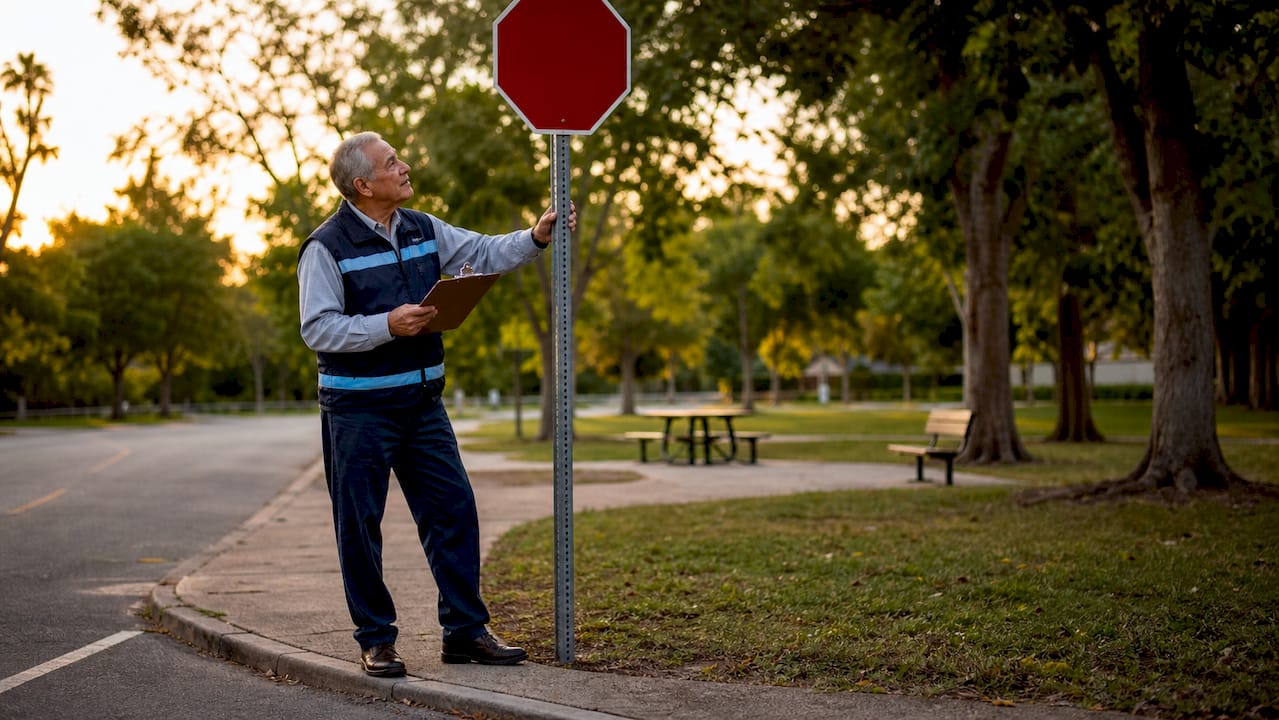
50% of traffic fatalities occur at night. That single statistic explains why retroreflectivity standards, sign height requirements, and material specifications are not optional. A sign that fades, tilts, or gets obscured by vegetation stops doing its job exactly when drivers need it most.
The Occupational Safety and Health Administration (OSHA) applies the same logic inside workplaces. OSHA signage requires ANSI color codes and placement at hazard decision locations to pass inspections. Red signals prohibition or danger. Yellow signals caution. Orange signals warning. These color assignments are not aesthetic choices. They are a visual language that workers recognize instantly, regardless of literacy level.
Here is what compliance looks like in practice for business owners and event planners:
- Visibility: Signs must be readable from a required minimum distance, day and night.
- Legibility: Font size, contrast, and letter spacing follow defined standards.
- Placement: Signs go at decision points, not after the hazard has already passed.
- Materials: Outdoor signs must meet retroreflectivity and durability thresholds.
- Maintenance: Faded, damaged, or obscured signs trigger citations and liability.
Pro Tip: Keep a dated photo log of every exterior and safety sign on your property. If an incident occurs, that documentation is your first line of defense against liability claims.
Non-compliance carries financial consequences beyond fines. Highway projects that fail signage standards risk project decertification and withheld reimbursements from federal funding programs. For a real estate developer or general contractor, that outcome can stall an entire project.
How signage rules protect community aesthetics and local economy
Safety is the floor. Aesthetics and economics are the ceiling. Municipal codes balance public health, traffic safety, free speech, and appearance to protect local economy and quality of life. Spokane’s municipal code is a clear example of how cities use signage rules as economic instruments, not just safety tools.
Visual clutter distracts drivers and damages economic vitality by reducing neighborhood appeal. A block lined with oversized, mismatched signs signals disorder to potential customers and investors. Property values follow perception, and perception follows what people see from the street.
“Communities use signage regulations as economic instruments to preserve property values by controlling visual impact.” — Spokane Municipal Code, Section 17C.240.010
The economic benefits of well-regulated signage environments include:
- Higher foot traffic in districts where streetscapes feel organized and welcoming.
- Stronger property values in neighborhoods with consistent visual standards.
- Preserved historic character in districts where sign size and material rules protect architectural identity.
- Reduced driver distraction, which lowers accident rates and insurance costs for nearby businesses.
Real estate professionals feel this directly. A commercial listing in a well-regulated corridor commands a different price than one in a visually chaotic strip. Knowing the local sign code before you list or develop a property is not optional due diligence. It is basic professional practice. You can learn more about designing property signage that meets both regulatory and marketing goals before you commit to a sign order.
Federal, state, and local signage rules: how they stack
The regulatory environment for signage operates in three layers, and each layer adds requirements on top of the one below it. Understanding the stack prevents costly surprises.
| Regulatory Level | Primary Authority | Key Focus Areas |
|---|---|---|
| Federal | MUTCD 11th Edition (effective jan. 18, 2026) | Uniform sign design, color, retroreflectivity, placement |
| State | State DOT supplements to MUTCD | Climate-specific materials, state route markers, local road types |
| Local/Municipal | City and county ordinances | Size limits, setbacks, lighting, aesthetic design, permit requirements |
The MUTCD 11th Edition sets the national baseline. States then add supplements that address regional conditions. Florida’s standards account for hurricane-grade wind loads. Minnesota’s address snow and ice visibility. Local ordinances layer on top of both, controlling the details that affect your specific storefront, event venue, or development site.
For multi-location businesses and event planners operating across state lines, this stack creates real complexity. A banner that meets size requirements in one county may violate the ordinance in the next. The safest approach is to align your signage program to the strictest applicable standard across all your locations. That single policy eliminates the need to audit every jurisdiction separately.
Pro Tip: Before ordering signage for a new location or event venue, request the local sign ordinance from the city or county planning department. Most municipalities post it online. Reading two pages now saves weeks of permit delays later.
Ignoring federal standards carries the steepest consequences. Non-compliance with MUTCD requirements risks funding clawbacks and liability exposure that no business can absorb quietly. The FHWA’s guidance on sign face maintenance makes clear that a degraded sign is a regulatory violation, not just a cosmetic problem.
Why compliance matters for business owners and event planners
Understanding the rules is one thing. Building a compliance practice into your operations is another. Here is a practical framework for staying on the right side of signage law.
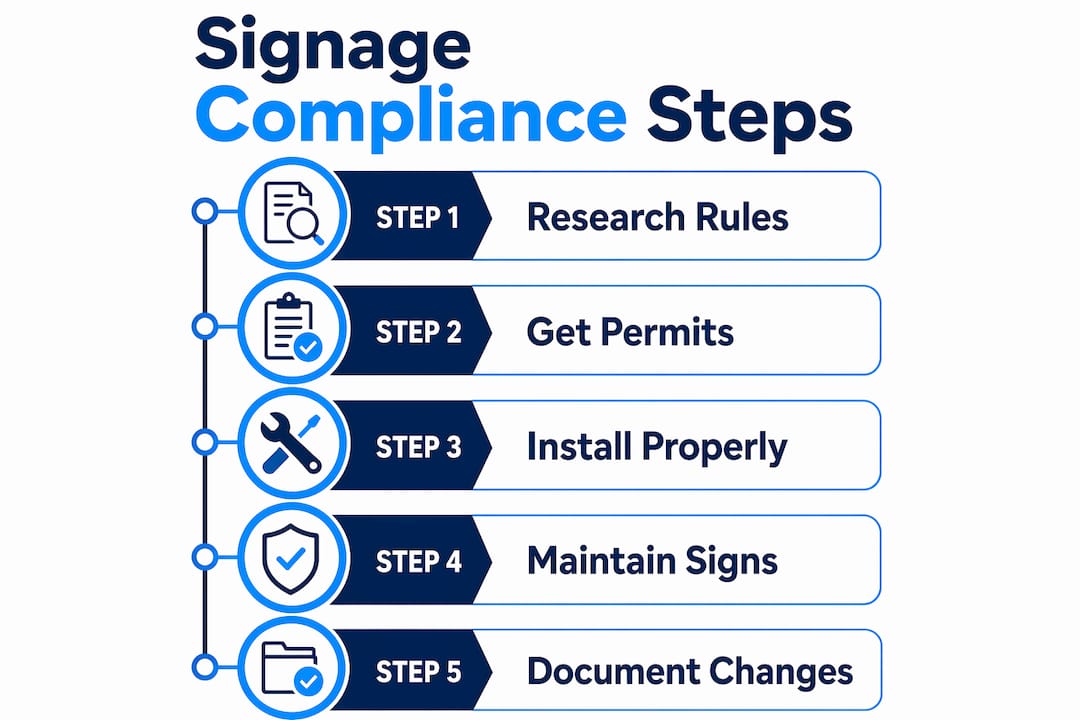
- Audit your current signage. Walk every sign on your property or event site. Check for fading, physical damage, obstructions, and placement accuracy. Document what you find with photos and dates.
- Pull the applicable permits. Most permanent signs require a permit before installation. Temporary event signs often require a separate permit with a defined display window. Missing a permit is the most common and most avoidable violation.
- Use standardized symbols where required. ISO 7010 pictograms reduce cognitive load and improve hazard recognition regardless of language or literacy. For events with international attendees or multilingual workforces, standardized symbols are not just compliant. They are effective.
- Maintain documented inspection logs. Documented maintenance logs and inspections are your proof of compliance if an incident or citation arises. A log with no entries is as damaging as no log at all.
- Review signage before every lease renewal or event contract. Regulations change. A sign that was compliant three years ago may not meet current standards. Build a review into your regular business calendar.
For real estate professionals, compliant safety signs for realtors reduce liability on active listings and construction sites. A property with clear, code-compliant signage signals professionalism to buyers, tenants, and inspectors alike.
Pro Tip: Non-standard or poorly documented signage programs can jeopardize your insurance defense if a visitor is injured on your property. Your insurer may deny coverage if you cannot demonstrate that signs met applicable standards at the time of the incident.
Signage compliance also builds community goodwill. A business that respects local sign codes signals to neighbors and municipal officials that it is a long-term, responsible operator. That reputation has real value when you need a variance, a permit expedited, or a neighbor’s support for a new development.
Key takeaways
Signage regulations exist to protect public safety, preserve community character, and shield businesses from legal and financial liability across federal, state, and local jurisdictions.
| Point | Details |
|---|---|
| Safety is the core purpose | Standards for visibility, placement, and materials prevent accidents and save lives. |
| Aesthetics protect economic value | Well-regulated signage environments support property values and attract customers. |
| Three regulatory layers apply | Federal MUTCD, state supplements, and local ordinances each add distinct requirements. |
| Documentation is your legal shield | Maintenance logs and inspection records protect you if an incident or citation occurs. |
| Compliance builds business reputation | Respecting sign codes signals professionalism and earns goodwill with regulators and neighbors. |
The part most business owners miss until it costs them
I have watched business owners spend thousands on a sign, install it without a permit, and then spend twice that amount on removal, fines, and a replacement that finally meets code. The frustration is real. But the mistake is almost always the same: treating signage as a marketing decision and ignoring the regulatory dimension entirely.
The businesses that handle this well do one thing differently. They treat the sign code as a design constraint from the start, not a checklist to run through after the sign is already built. When you know the size limits, setback requirements, and material standards before you brief a sign vendor, you get a sign that works legally and visually. You also get it faster, because you are not cycling through permit rejections.
The other thing I see consistently is underestimating the value of documentation. A business with a clean inspection log and dated photos of every sign on its property is in a fundamentally different legal position than one that cannot prove its signs were compliant on the day an incident occurred. That difference shows up in insurance claims, liability suits, and regulatory audits. The log takes ten minutes a quarter to maintain. The legal exposure it prevents can be enormous.
Signage regulations are not obstacles. They are the shared rules that make visual communication work for everyone on the street, including your customers.
— Yossi
Get compliant, custom signage from Customsignstoday
Customsignstoday works with business owners, event planners, and real estate professionals across West Palm Beach and South Florida to produce signage that meets regulatory standards without sacrificing visual impact. Whether you need face change signs that update your message while keeping your existing frame, or site signs built to meet local permit requirements, the team at Customsignstoday brings the product knowledge and local market experience to get it right the first time.
Every order starts with a conversation about your compliance requirements, your location, and your brand goals. Customsignstoday produces signs in materials rated for Florida’s climate, sized to your local ordinance, and designed to perform from day one. Request a free quote and get signage that works on every level.
FAQ
What are signage regulations?
Signage regulations are legally enforceable rules that govern the design, size, placement, materials, and maintenance of signs on public and private property. They exist at the federal, state, and local levels, with each layer adding specific requirements.
Why are signage rules important for business owners?
Non-compliant signs expose businesses to fines, forced removal, permit denials, and liability claims. Compliant signage also builds credibility with customers, neighbors, and municipal officials.
What is the MUTCD and why does it matter?
The Manual on Uniform Traffic Control Devices (MUTCD) is the federal standard for traffic and highway signage in the United States. The 11th Edition took effect on january 18, 2026, and sets the baseline that all state and local rules must meet or exceed.
How do local ordinances differ from federal signage rules?
Federal rules set minimum standards for safety and uniformity. Local ordinances add restrictions on sign size, lighting, setbacks, and design aesthetics that reflect the specific character and zoning goals of each community.
What happens if i install a sign without a permit?
Installing a sign without the required permit typically results in a stop-work order, a fine, and a mandatory removal of the sign at your expense. You will then need to reapply for a permit before reinstalling a compliant version.